Nestled amidst the mountains and forests of the Cao Bang border region, Pac Bo today remains lush green with trees and its headwaters crystal clear. More than 85 years ago, on January 28, 1941, after thirty years away from his homeland, Nguyen Ai Quoc returned to his motherland. From that historic step, a great journey began – preparing the strategy, building up forces, and gathering the strength of the people's hearts to lead to the August Revolution and the autumn of independence in 1945.
Khanh Nhu/Present:Hong ToaiSeptember 1, 2026
*****
Nestled amidst the mountains and forests of the Cao Bang border region, Pac Bo today remains lush green with trees and its headwaters crystal clear. More than 85 years ago, on January 28, 1941, after thirty years away from his homeland, Nguyen Ai Quoc returned to his motherland. From that historic step, a great journey began – preparing the strategy, building up forces, and gathering the strength of the people's hearts to lead to the August Revolution and the autumn of independence in 1945.
There are places that go down in history because of major events. There are also places that, at first glance, seem like just a stream, a hillside, a small house nestled in the heart of the forest, but hold the memories of moments that changed the destiny of an entire nation. Pac Bo is one such place.
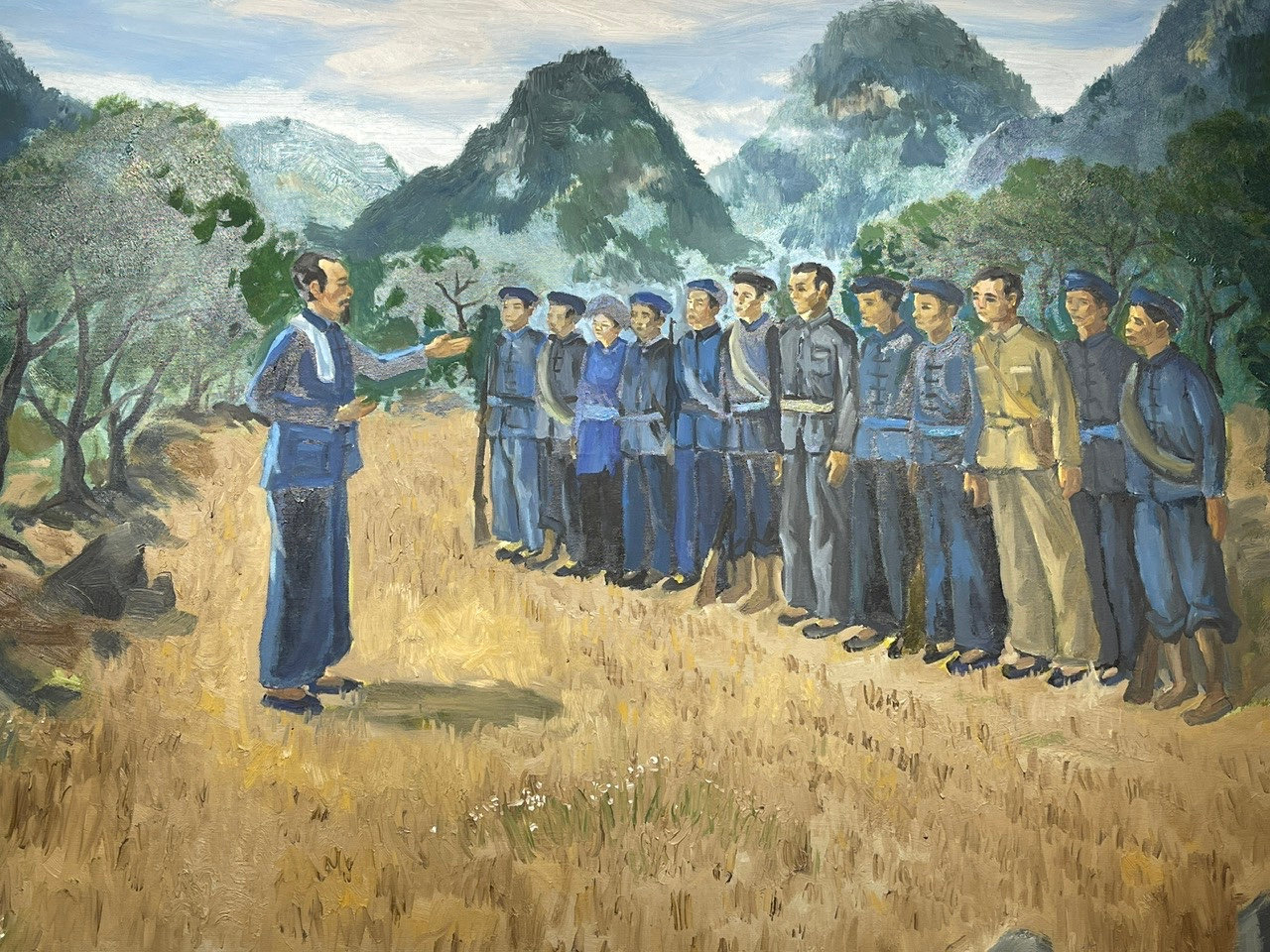
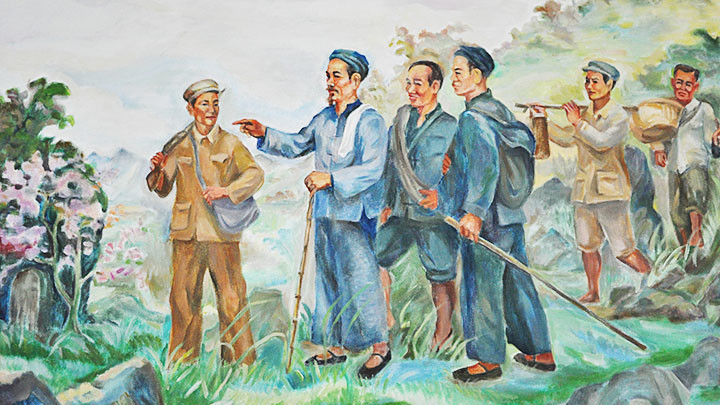
Upon first arriving in Pac Bo, amidst the deep green of Cao Bang's mountains and forests, listening to the gentle murmur of the upstream water flowing over the rocks, I was filled with an indescribable feeling. As a journalist from Nghe An – the birthplace of President Ho Chi Minh – who had the opportunity to write about him for many years, I knew Pac Bo through books, documents, and historical stories. But only when standing in this remote border region did history feel so close: On January 28, 1941, after thirty years of wandering in search of a way to save the country, Nguyen Ai Quoc took his first steps back to his homeland.
Uncle Ho returns to Vietnam (January 28, 1941). Painting: TRINH PHONG, Photo: KN
The poet Tố Hữu later wrote about that moment in deeply moving verses:
"
Uncle Ho has returned to his homeland! Remembering and cherishing the warm embrace of that land. For thirty years, my feet never rested. "And we've only just arrived."
Excerpt from the poem "Following in Uncle Ho's Footsteps" by To Huu
Thirty years had passed since the young Nguyen Tat Thanh left Nha Rong Wharf in 1911, traveling through many countries and continents in search of a path to national liberation. When that path became clearer, Nguyen Ai Quoc returned not to end his journey, but to directly join his compatriots in preparing for the struggle for independence.
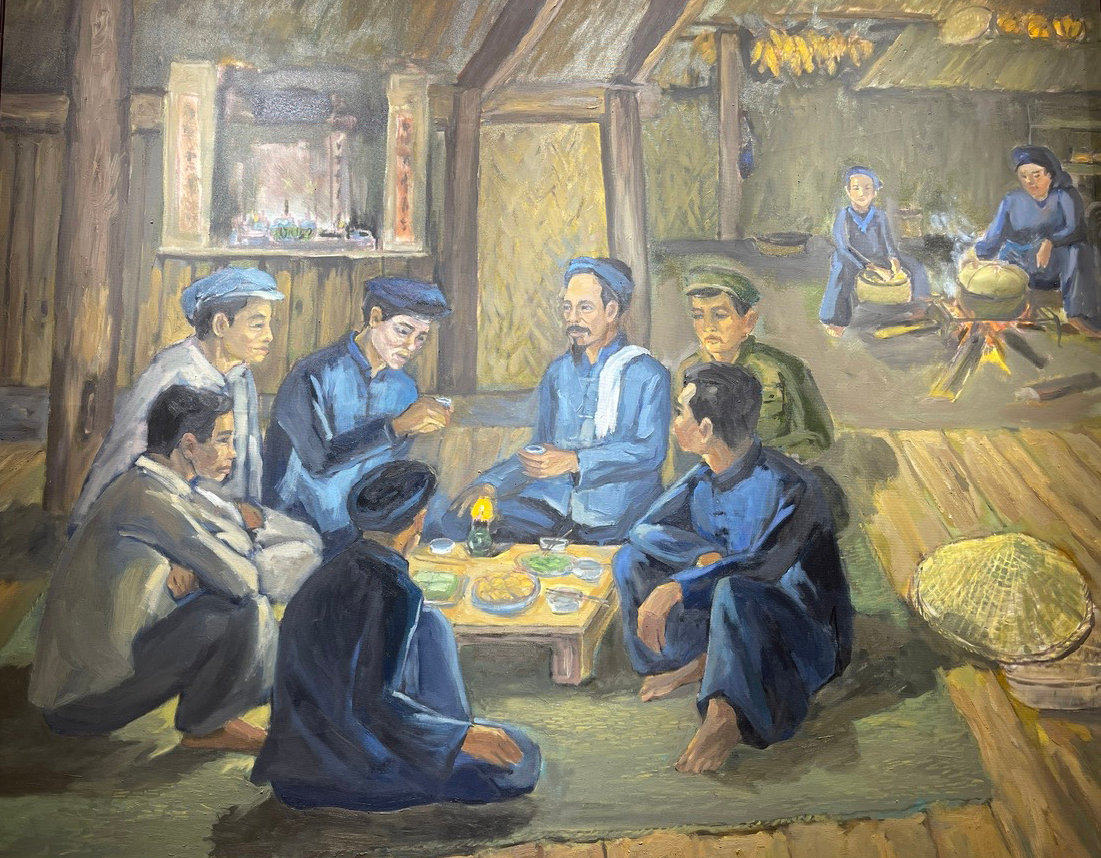
Following the path to Mr. Ly Quoc Sung's house, surrounded by mountains and forests, a question kept recurring in my mind: Why, after thirty years away from his homeland, having traveled through many lands and interacted with major centers of the world, did Nguyen Ai Quoc choose a small house high in the mountains as his residence in the early days of his return? From January 28th to February 7th, 1941, he lived here. The simplicity of the house, situated in the quiet mountain landscape, made the distance of 85 years seem shorter.
Leader Nguyen Ai Quoc attended a cordial meal at the home of Mr. Ly Quoc Sung on the first day of his return, January 28, 1941. Photo by KN.
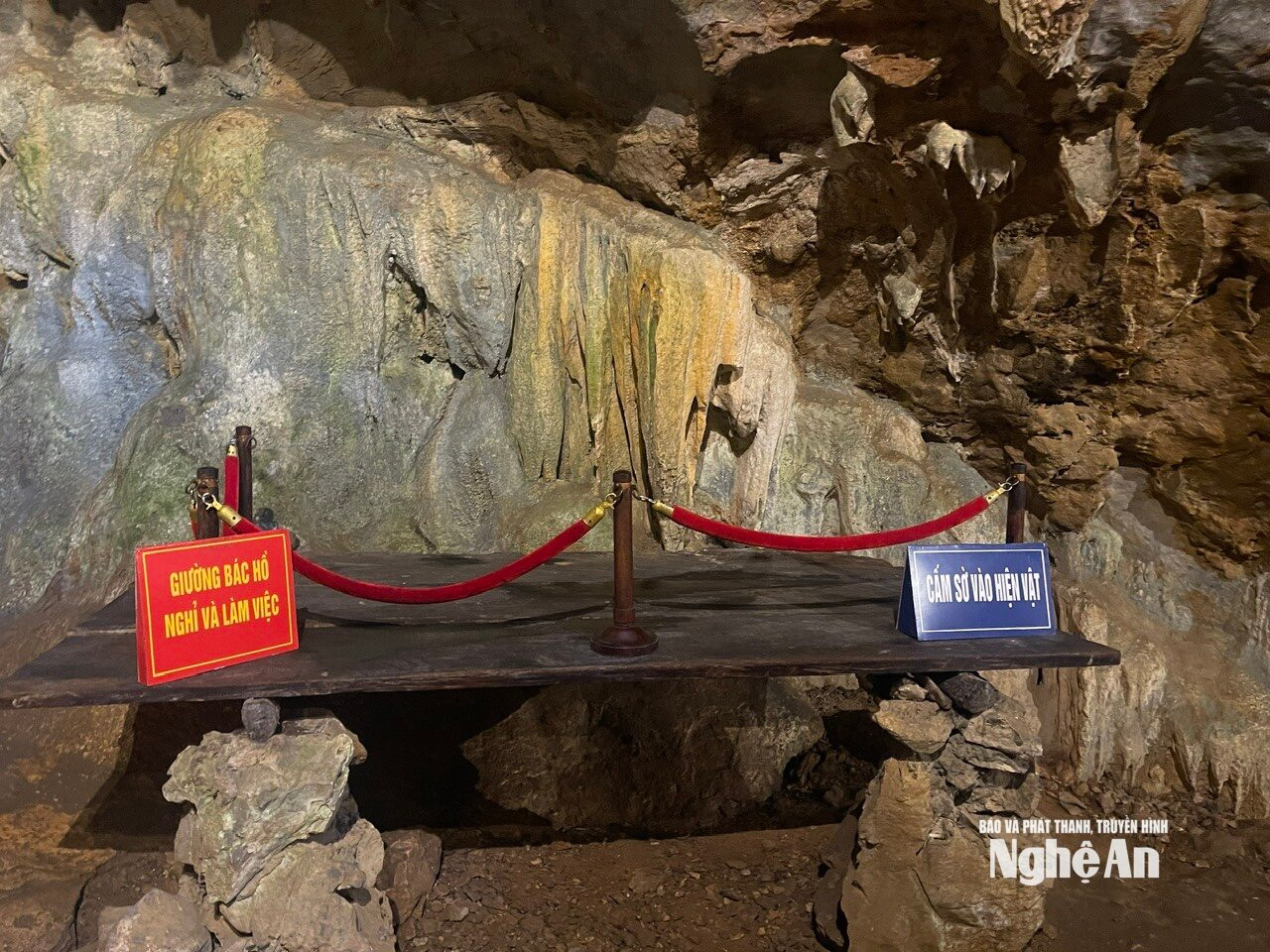
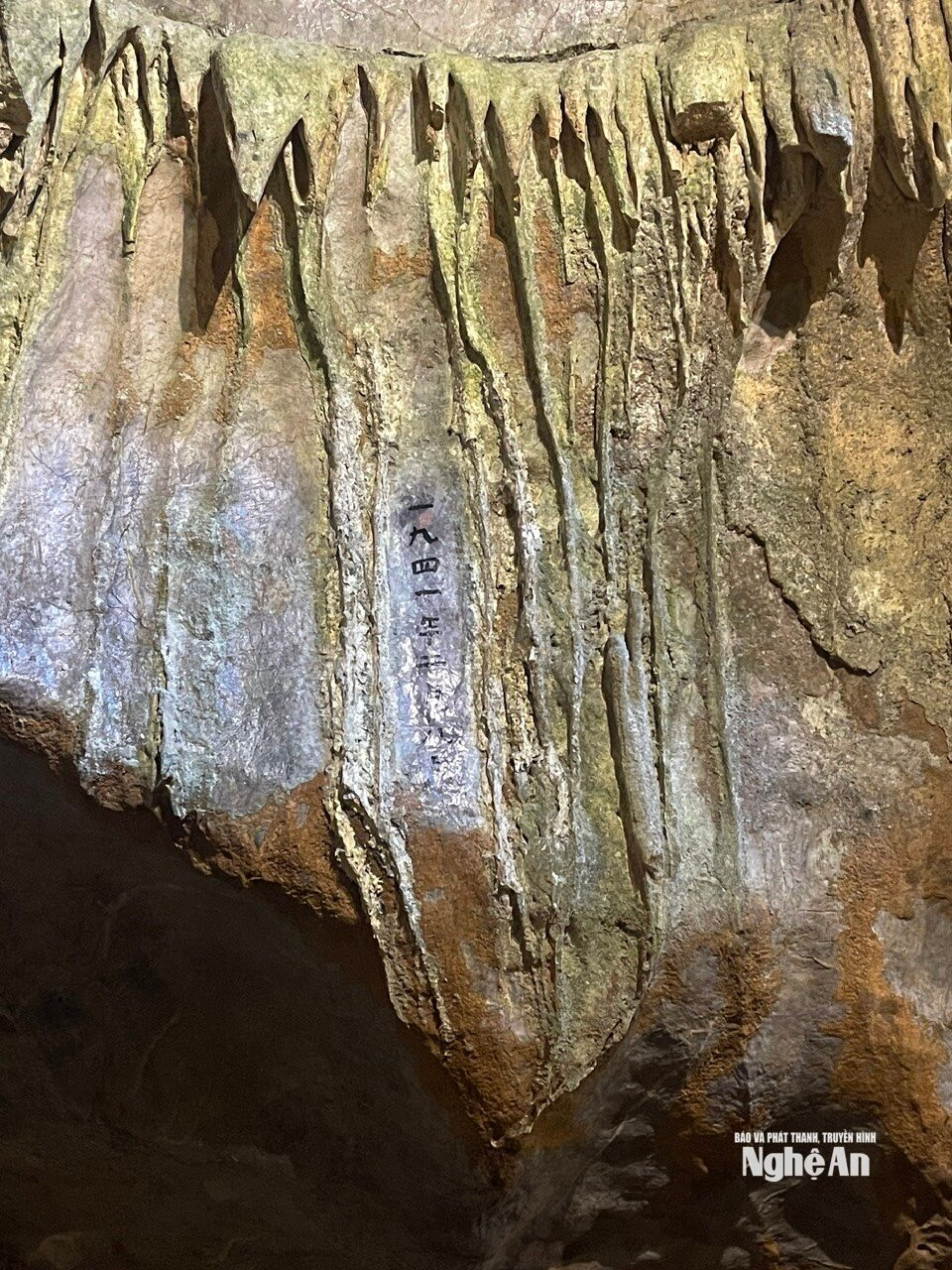
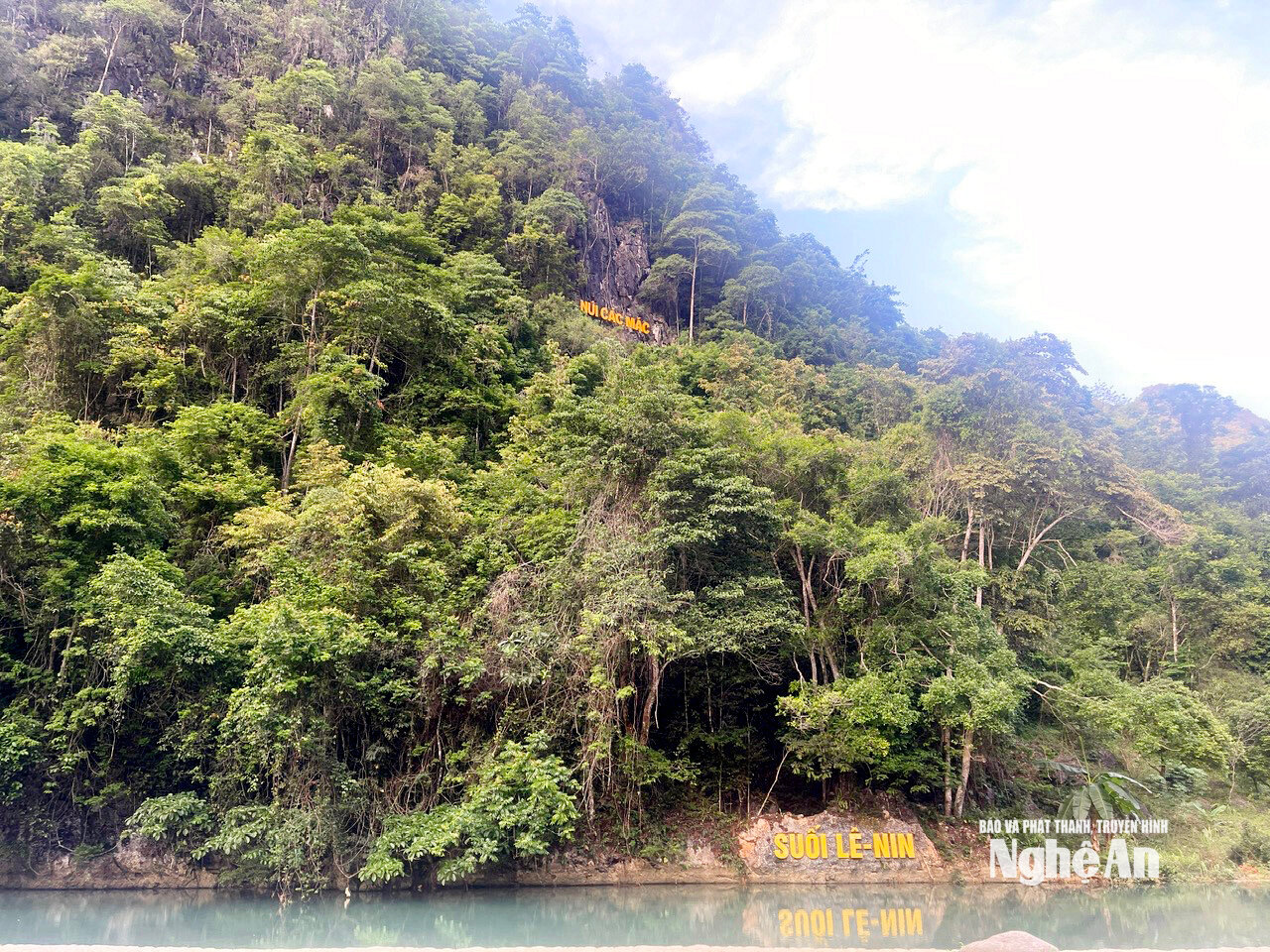
On February 8, 1941, under the name Gia Thu, he moved into Coc Bo Cave – a small, secluded cave nestled in the rugged mountains. His only belongings were a wicker suitcase containing documents, a typewriter, and a simple sleeping place. During the day, he often worked by the stream that would later be named Lenin Stream; the mountain above was named Marx Mountain.
Standing inside Coc Bo Cave, I was speechless. In our generation's imagination, Ho Chi Minh was a great figure in national history, a man of immense stature whose admiration grew the more we learned about him. Yet before us was a small, simple dwelling nestled amidst the mountains and forests of the border region. This contrast was more moving than any explanation: a man who harbored such profound aspirations for the nation's destiny had lived and worked in such deprived conditions.
Lenin Stream - Karl Marx Mountain. Photo by KN
Amidst those hardships, he maintained a serene demeanor, as captured in his poem "Impromptu Poem at Pac Bo":
"
In the morning, I go to the stream; in the evening, I return to the cave. Rice porridge with bamboo shoots and vegetables is still available. A precarious stone table where the history of the Party is being translated. "The revolutionary life is truly glorious."
President Ho Chi Minh
Standing by the Lenin stream, the line of poetry, "On precarious stone slabs, translating the history of the Party," suddenly ceased to be just a line I had read. On those very stones, Nguyen Ai Quoc worked, translating documents to serve the training of cadres. That feeling returned when I and my colleagues went up to border marker 108. Amidst the high mountains and deep forests of the border region, it was difficult to imagine the harsh conditions under which he and his comrades lived, worked, maintained contact, and built the movement more than eighty years ago.
A team of reporters from Nghe An Newspaper, Radio, and Television at Milestone 108 - the place where leader Nguyen Ai Quoc first set foot back in his homeland. Photo by KN
The questions arising from that very journey make the story of why Nguyen Ai Quoc chose Pac Bo even more worth exploring. According to historian Nong Hai Pin, former Head of the Propaganda Department of the Cao Bang Provincial Party Committee, the choice of Pac Bo demonstrates Nguyen Ai Quoc's strategic vision for building a revolutionary base.
Researcher Nong Hai Pin - Former Head of the Propaganda Department of the former Cao Bang Provincial Party Committee. Photo by KN.
"
Pac Bo possessed crucial conditions: its border location was favorable for clandestine activities, a mass movement and revolutionary base had already been established, and it had the potential to develop forces from Cao Bang down to Viet Bac and connect with the nationwide movement.
Historian Nong Hai Pin
The terrain may have sheltered the revolution during perilous times, but a base that wants to stand firm and develop cannot rely solely on high mountains or deep caves. The most enduring support remains the people's hearts. Pac Bo means "headwaters." Perhaps there are few encounters between a place name and history that evoke so many associations. For it was from these "headwaters" that a revolutionary current was ignited, which four years later merged into the torrent of the August 1945 General Uprising.
In Pac Bo, Nguyen Ai Quoc and his comrades blended into the lives of the Tay, Nung, Dao, and Mong ethnic groups; they learned their languages, respected their customs, and believed in their patriotism. The concept of revolution was propagated and explained using familiar images so that the people could understand, believe, and participate. From there, revolutionary bases were gradually established; the movement spread from Ha Quang to other localities in Cao Bang and then gradually expanded.
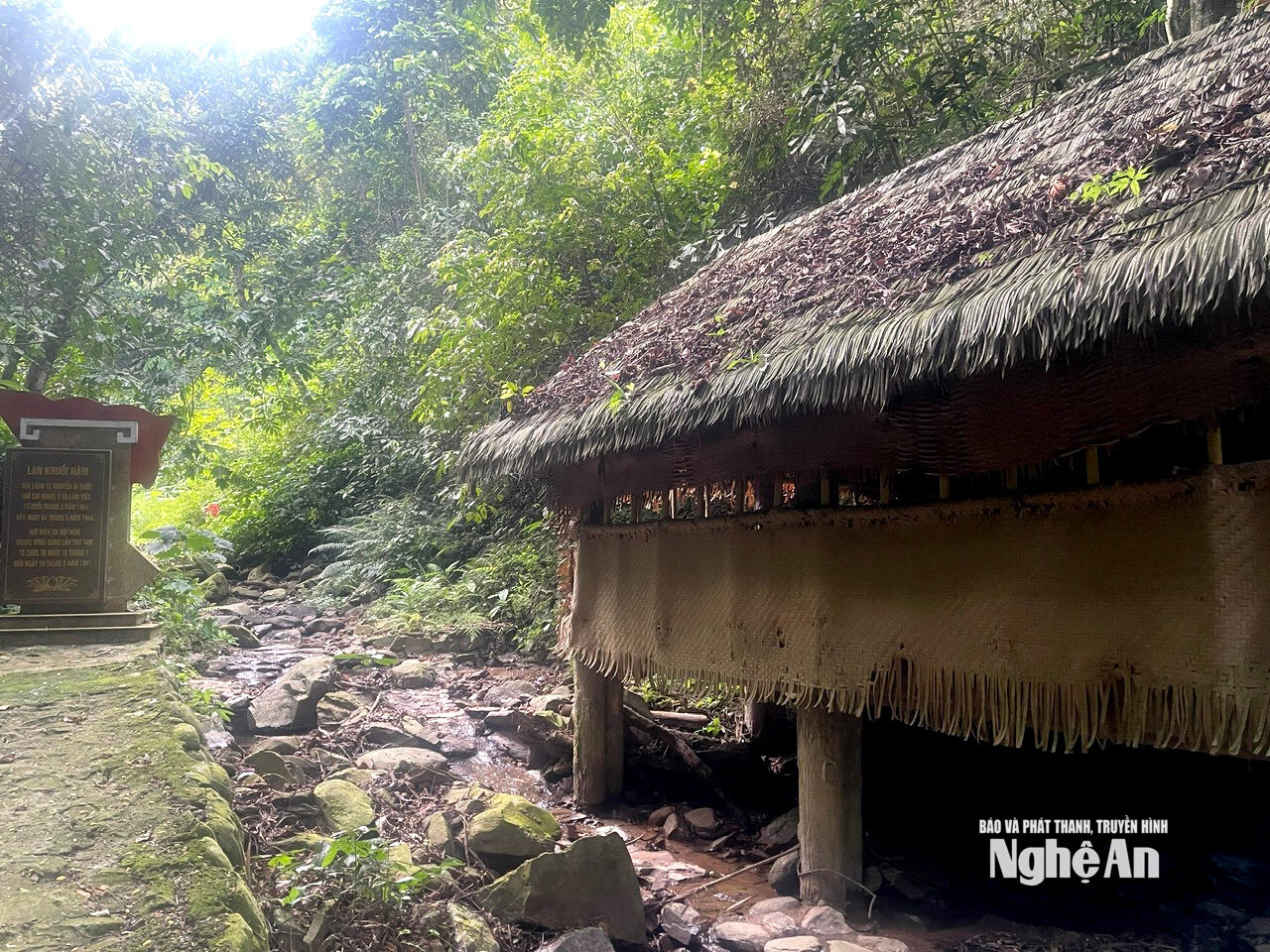
In May 1941, at Khuoi Nam, Nguyen Ai Quoc convened and chaired the 8th Central Committee Conference. The conference placed the task of national liberation at the forefront – a strategically significant choice that met the most urgent demands of the country at that time. It was also from this conference that the Vietnam Independence League, abbreviated as Viet Minh, was established.
Lan Khuoi Nam, the venue for the 8th Central Committee Conference. Photo by KN
Speaking to us about the significance of the event, Mr. Dao Van Mui, Director of the Management Board of Special National Monuments in Cao Bang province, emphasized the value of President Ho Chi Minh's ideology of uniting forces under the banner of national independence.
"
The Viet Minh Front was an organization that united patriotic forces. Nguyen Ai Quoc not only relied on workers and peasants but also placed special emphasis on arousing the patriotic spirit of intellectuals, scholars, patriotic landowners, and other social classes, all working towards the ultimate goal of national independence.
Mr. Dao Van Mui - Director of the Management Board of Special National Monuments of Cao Bang Province
This is also a clear manifestation of the ideology of national unity. This ideology is evident in the way Nguyen Ai Quoc approached his compatriots, built national salvation organizations, trained cadres, and won over influential, knowledgeable, and patriotic individuals. When national independence became the greatest common ground, people from many different social classes could converge into a single force.
Along with building political forces came the process of organizational and personnel preparation. Nguyen Ai Quoc wrote, translated, and compiled many documents to propagate and enlighten the masses, and to train cadres, such as *History of Our Country*, *Women's National Salvation*, and *Children's National Salvation*... By the end of 1944, President Ho Chi Minh instructed the establishment of the Vietnam Propaganda and Liberation Army. On December 22, 1944, the army, with its first 34 soldiers, was established in Cao Bang under the command of Comrade Vo Nguyen Giap.
The founding ceremony of the Pac Bo Guerrilla Team. Photo: KN
The correct political line, the strength of national unity, and the preparation of organization and forces created the conditions for the revolution to advance to a decisive moment. From the spring of 1941 to the autumn of 1945, the country traversed an extraordinary path. On September 2, 1945, at Ba Dinh Square, President Ho Chi Minh, on behalf of the Provisional Government, read the Declaration of Independence, giving birth to the Democratic Republic of Vietnam.
Amidst the throngs of people in that August autumn, perhaps no one could have seen all the paths that had converged on Ba Dinh Square. Some paths passed through prisons and uprisings; others began in villages, revolutionary bases, and stemmed from the silent sacrifices and patriotism of millions of Vietnamese people. And among those paths, there was one journey that began with the return to the Cao Bang border in the spring of 1941.
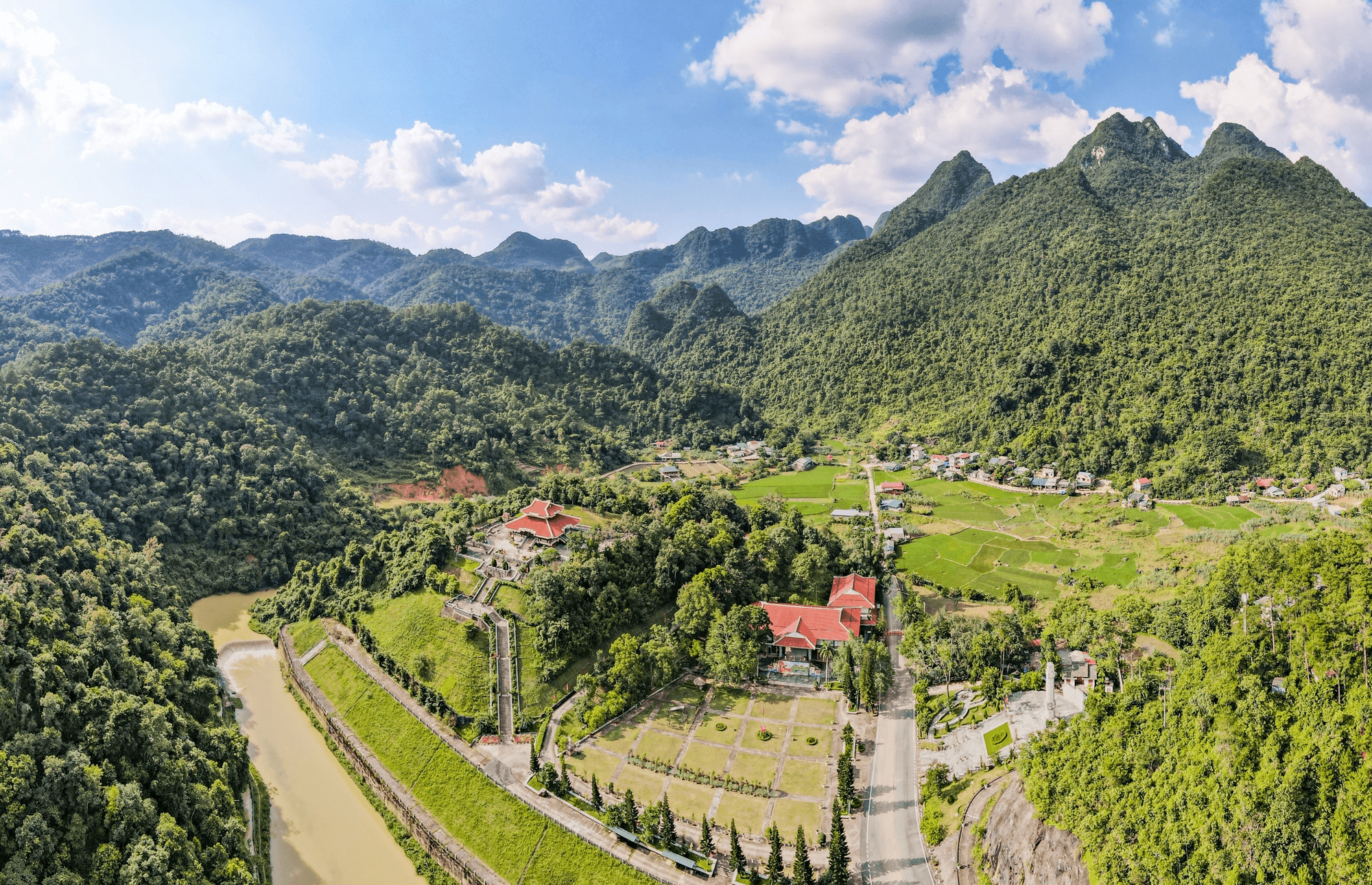
Eighty-five years have passed. Pac Bo today is different from the remote area of the early 1940s. The roads built through the mountains and villages are becoming increasingly spacious, clean, and beautiful. In 2012, the Pac Bo Historical Site was classified as a Special National Monument, becoming a significant destination for those seeking to connect with their roots.
Pac Bo National Special Historical Site. Source: Internet
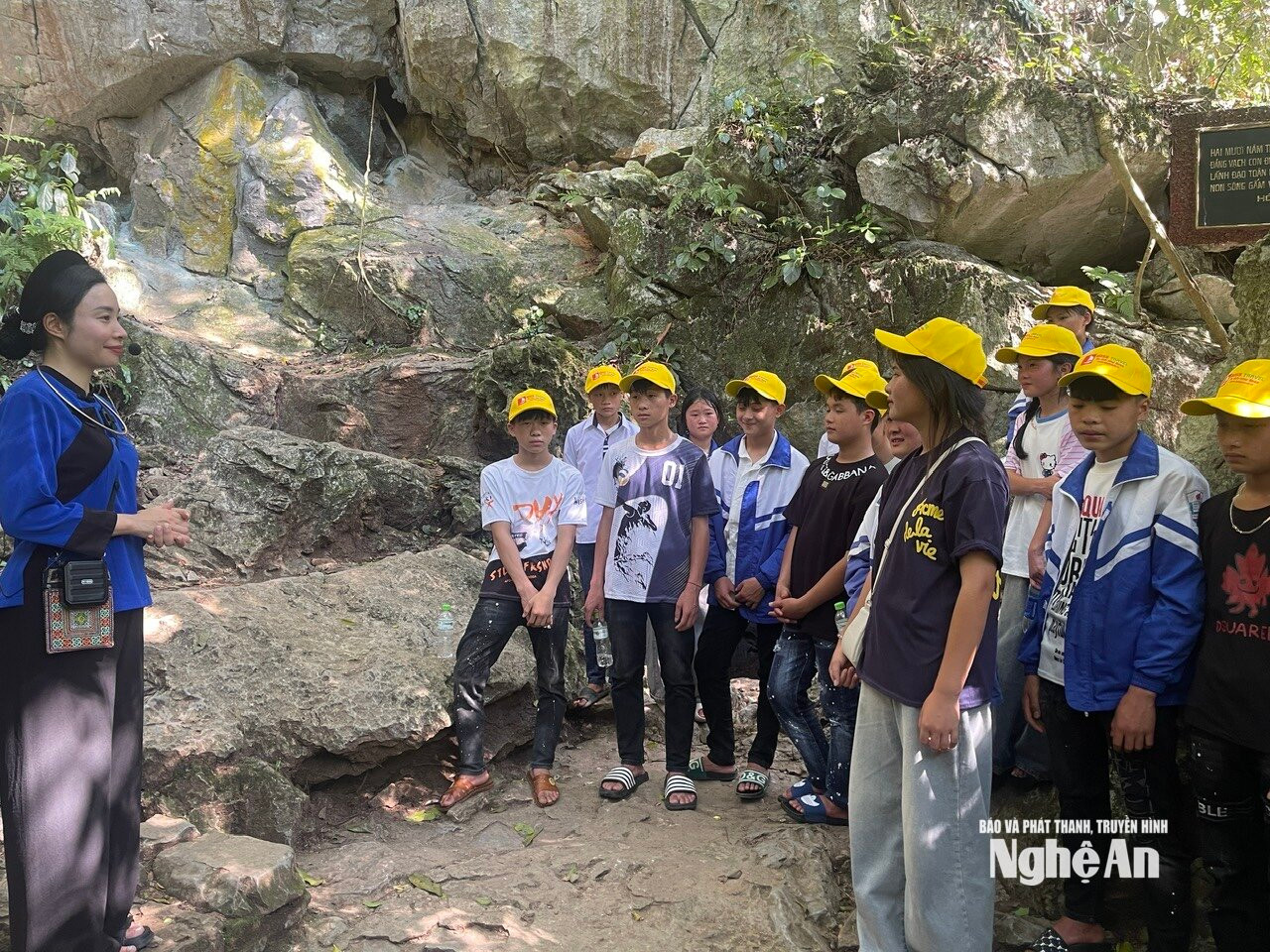
But today, Pac Bo is not only told through Coc Bo Cave, Lenin Stream, Khuoi Nam hut, Mr. Ly Quoc Sung's house, or the preserved artifacts. During our time working here, we met tour guides from the historical site who have been dedicated to telling stories about Uncle Ho for many years. Some stories have been recounted countless times to numerous groups of visitors, but each time they are told, the respect and emotion remain intact. It is this sentiment that allows the explanations to go beyond simply providing information about a historical site, making history more accessible through the memories, pride, and love of the people who are daily preserving and passing on the story of Uncle Ho on the land of Pac Bo.
Those stories lingered in the mind of the reporter from Nghe An, the homeland of President Ho Chi Minh. For me personally, after many years of writing about President Ho Chi Minh in his homeland, standing for the first time in the place where he returned to the country after thirty years of separation, I felt more clearly the continuation of a journey: from the homeland where he was born to the land that welcomed him back to directly lead the revolution.
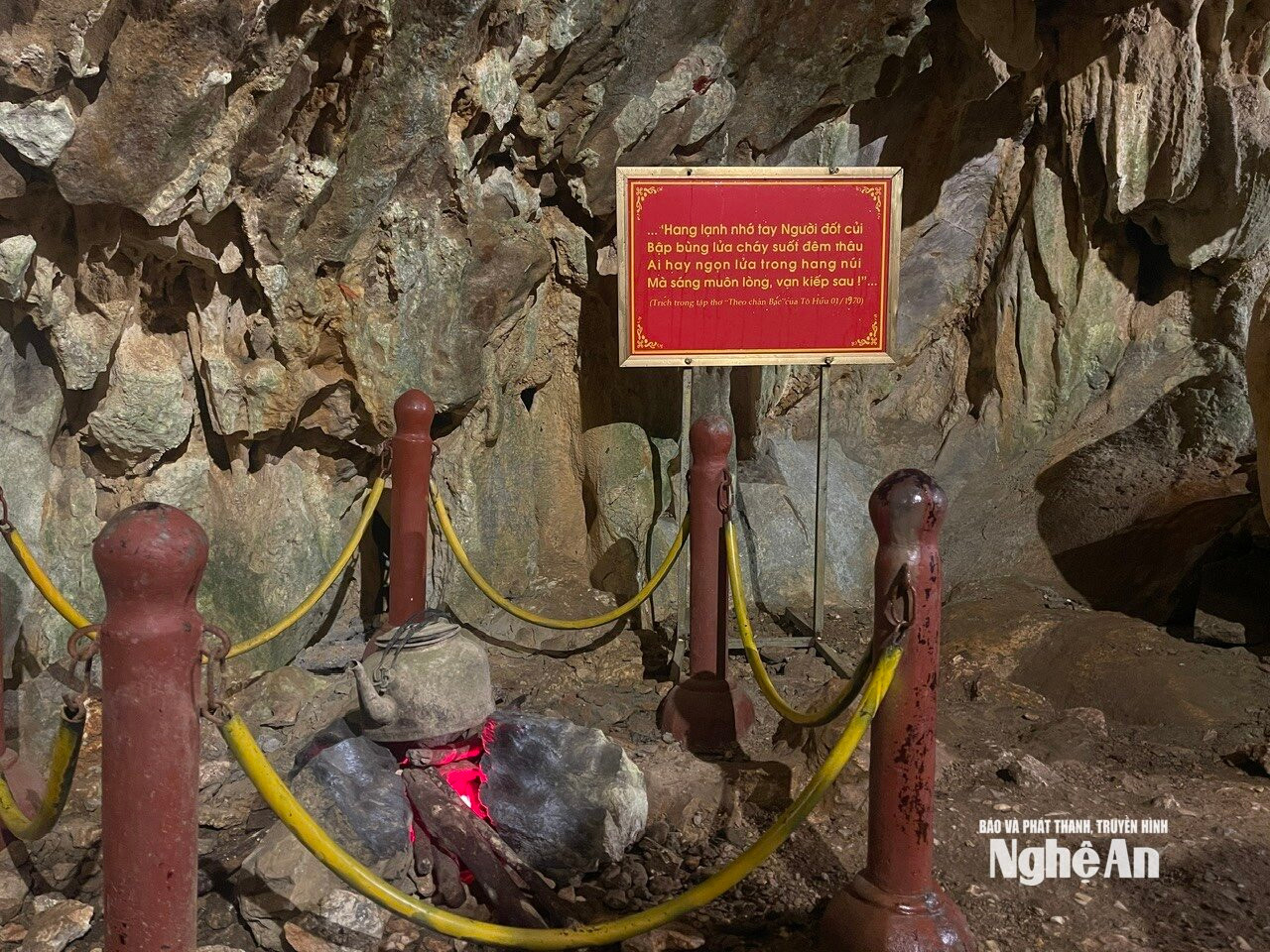
The wooden platform where leader Nguyen Ai Quoc slept during his time living in Coc Bo Cave.The hearth, where He lit a fire to warm Himself on cold nights.
A tour guide at the Pac Bo National Special Historical Site recounts the days when Leader Nguyen Ai Quoc lived in Coc Bo cave to visitors. Photo: KN
Therefore, upon leaving Pac Bo, what remains is not just the caves, the streams, or the places where he and his comrades lived and carried out revolutionary activities. More profoundly, it is the contrast between an extremely simple and difficult life and the momentous decisions of the Vietnamese Revolution that originated from this very place.
From Pac Bo to Ba Dinh took just over four years, but behind that period lay thirty years of Nguyen Ai Quoc's quest to save the nation, the preparation of strategies, organization, and forces; the training of cadres, the gathering of people from various social strata, and the sacrifices of countless individuals for a common goal - national independence.
The Lenin Stream still flows today, crystal clear amidst the green mountains and forests of Pac Bo. Eighty-five years ago, that same source witnessed the initiation of another stream – the stream of patriotism, of the strength of national unity, and of the aspiration for independence and freedom. That stream flowed through arduous years, merging with the torrent of the August Revolution before converging at Ba Dinh Square in the historic autumn of 1945.
Lenin Stream. Source: Internet
And from that autumn, the Vietnamese people embarked on a journey to preserve the values of independence, cultivate the strength of national unity, and continue their aspiration to build an increasingly prosperous, civilized, and happy Vietnam.
Your comment has been submitted and will be displayed after being reviewed by the editorial team. The editorial board reserves the right to edit comments to comply with the newspaper's content guidelines.


.jpg)
.jpg)