
From the illiteracy eradication movement to mass literacy campaigns in Nghe An.
On November 20th, we often remember chalk and blackboards. But in the historical archives of Nghe An, time-worn documents tell the story of teachers who never stood on a podium. These were the officials who received their salaries in rice to eradicate illiteracy in the past, and today, they are the pioneers tirelessly spreading digital skills. They are the special teachers of the "Popular Education Movement" throughout history.
A glorious memory from the time of education was the "Competition to Eradicate Illiteracy" campaign (1948).
At the Nghe An Provincial Historical Archives Center, original documents about the Popular Education Movement still retain their full value. A prime example is the document "Six-Month Program for the Eradication of Illiteracy" issued by the Nghe An Popular Education Department, which was reviewed on June 12, 1948, in response to the call for patriotic emulation.
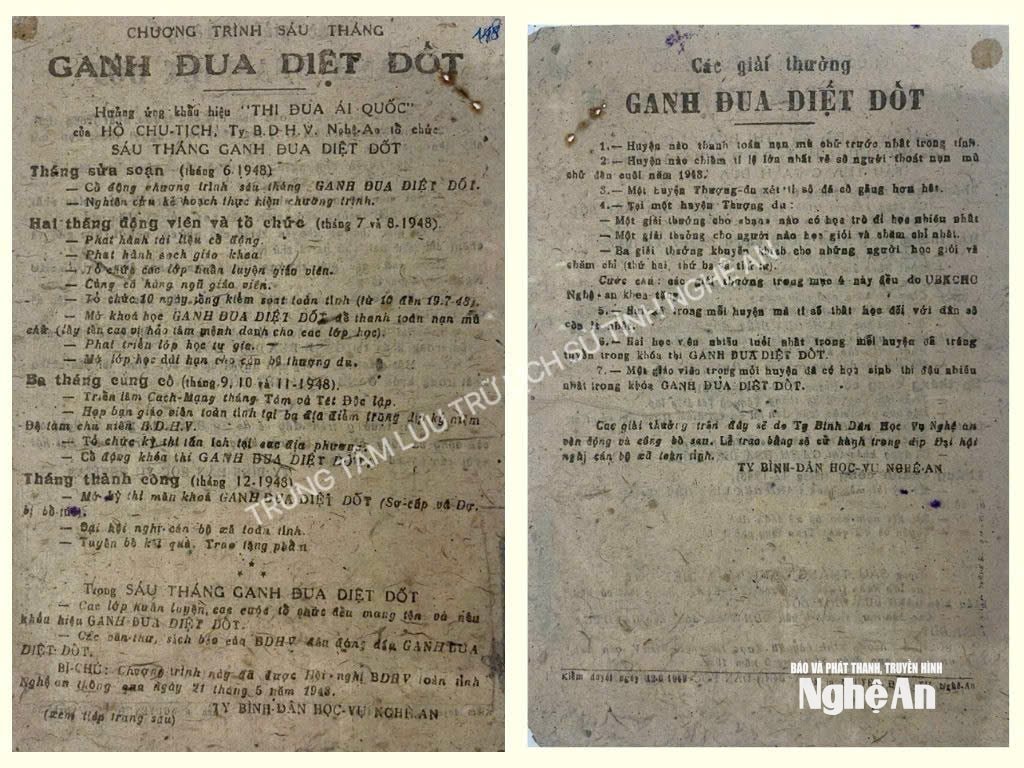
Documentary research reveals the scientific and systematic organizational thinking of the previous generation. Instead of acting on fleeting impulses, the campaign was outlined with a strategic four-stage roadmap, much like a military battle: beginning with the "Preparation Month" (June 1948); culminating in "Two Months of Mobilization and Organization" with the "Ten-Day Comprehensive Control of the Entire Province"; followed by "Three Months of Consolidation"; and concluding with the "Month of Success" at the end of 1948.
This determination was also clearly demonstrated through the "Awards for Eradicating Illiteracy" program. The government at the time offered specific prizes to encourage the entire population, ranging from awards for the district that "eradicated illiteracy first," to awards for the district with the "most students attending school," and special awards for "the two oldest students in each district." This detail demonstrates a learning society without age limits, where all segments of the population enthusiastically participated in the patriotic emulation movement and nation-building.
The spirit of setting an example and systematic organizational work (1949-1950)
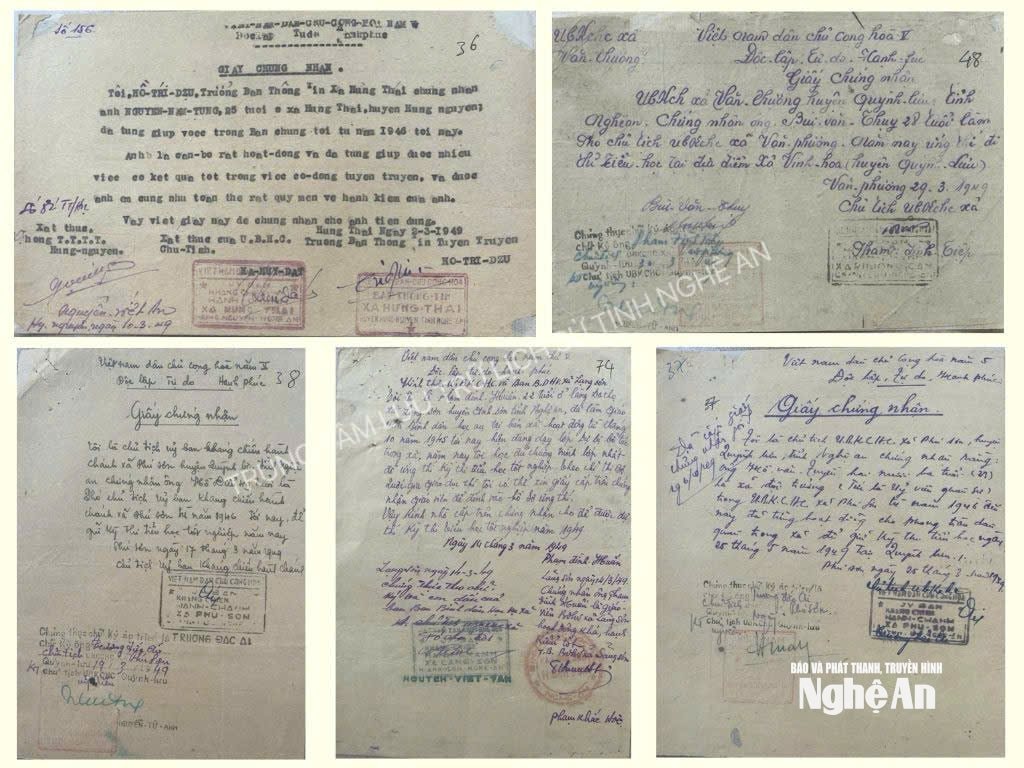
The activities of wartime education are authentically recreated through carefully preserved original documents. In 1949, the spirit of learning spread strongly thanks to the exemplary conduct of the cadres. The "Certificates" from this period still bear the handwritten signatures of the commune chairman confirming that the "commune militia commander" and the "vice chairman" of the commune were allowed to "attend the primary school examination." The fact that the heads of the commune's government and military apparatus set aside their busy work to take the exam is clear evidence of the view that if cadres want to lead the people, they must first conquer "the enemy of ignorance."
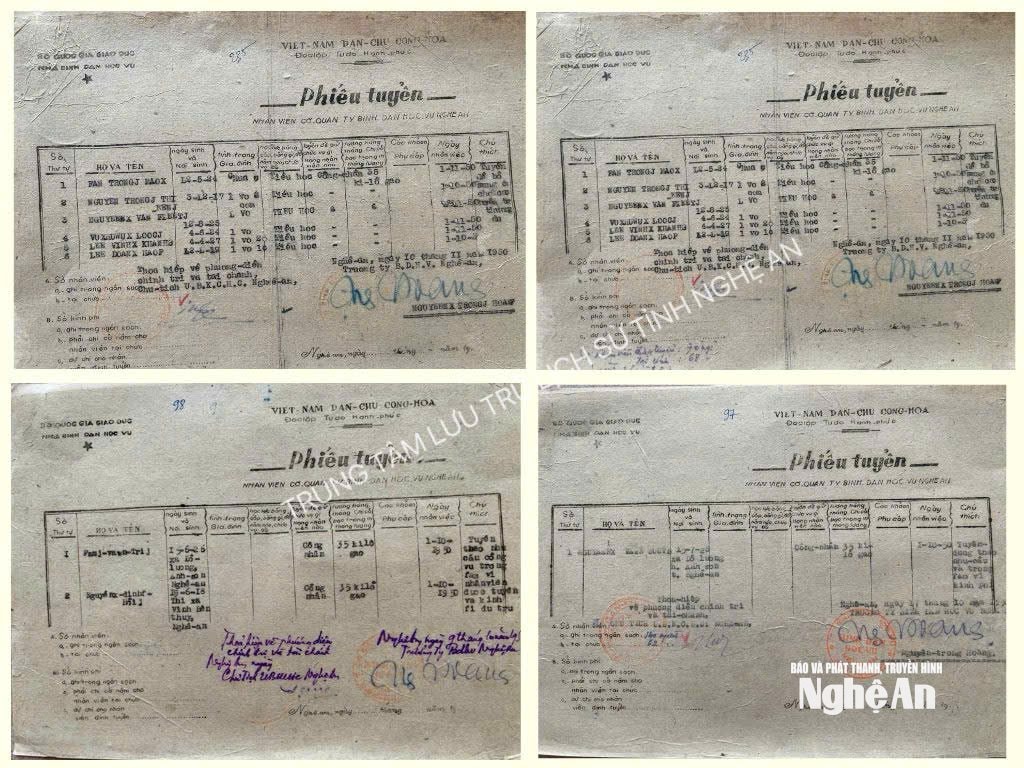
Following this period, by 1950, personnel management became increasingly organized. The "Recruitment Forms" for the Nghe An Provincial Department of Popular Education clearly stipulated recruitment standards and benefits, with a specific salary of 35 kg of rice per month. The payment of in-kind compensation in the context of the resistance economy demonstrated the government's great effort to ensure the livelihoods of cadres so they could remain committed to the movement.
The courage to face the truth and the determination to overcome difficulties (1951)
However, the campaign to eradicate illiteracy was not always smooth sailing. At the end of 1951, faced with the reality that the Popular Education Movement was "gradually declining" and "currently at a standstill," the Nghe An Administrative Resistance Committee issued a "CALL TO ACTION."
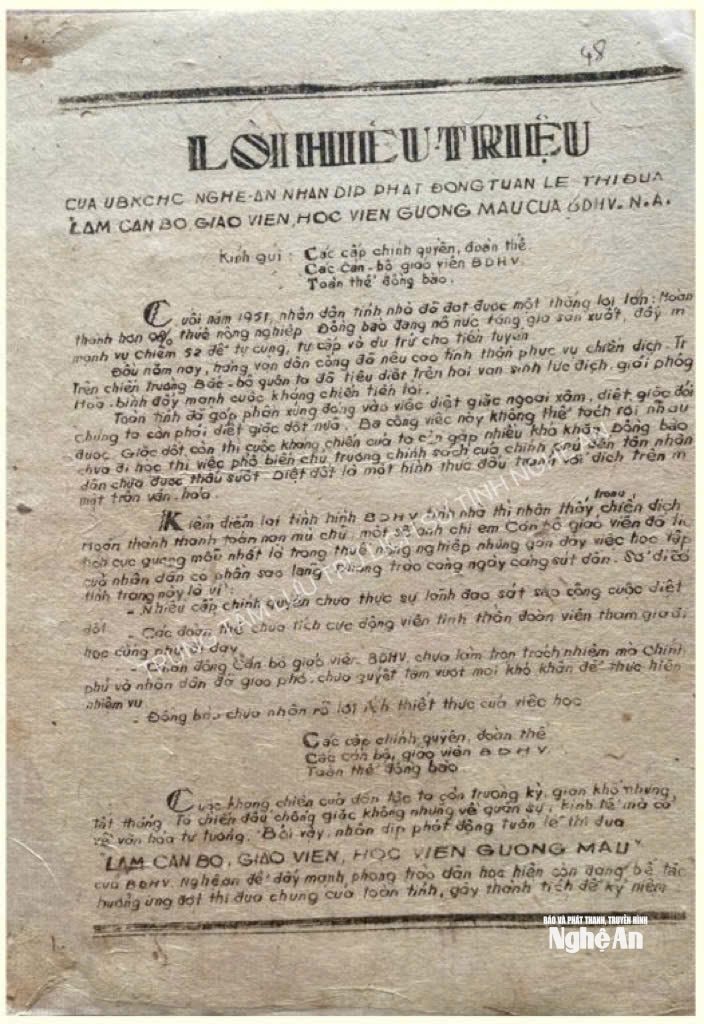
This document demonstrates the unwavering political resolve of the revolutionary government, not concealing its shortcomings but frankly pointing out the cause: "The people have not yet recognized the practical benefits of learning." Undeterred by difficulties, the appeal firmly affirms the guiding principle: "Eradicating illiteracy is a form of struggle against the enemy on the cultural front."
Based on that understanding, the province launched a widespread political campaign through the "Week of Emulation to Be Exemplary Cadres, Teachers, and Students." This frank approach to acknowledging limitations and innovating working methods created a crucial turning point, leading the movement through a period of decline and to victory.
The Flame of 2025: Aspirations from the "Digital Popular Education" Movement
More than 70 years later, the spirit of learning among the people of Nghe An is strongly resurfacing in a new context. On the morning of June 11, 2025, at the launching ceremony of the "Digital Literacy Movement," the Chairman of the People's Committee of Nghe An province, Le Hong Vinh, emphasized the contemporary message that today, a society that does not master technology is a backward society.
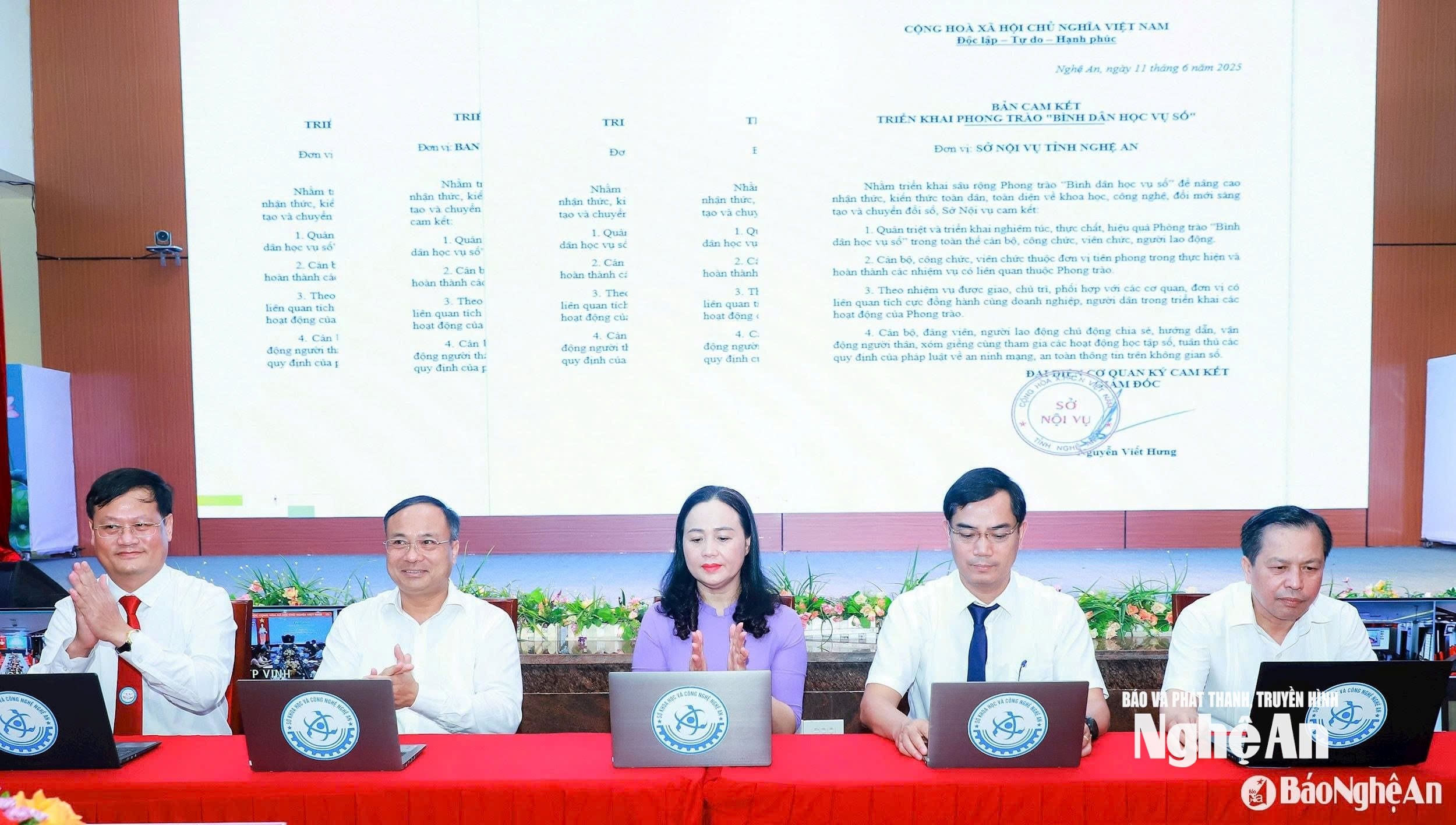
That call awakened the aspirations of the entire province, aiming towards the goal of popularizing digital skills so that "no one is left behind." The national online learning platform is located at [address].binhdanhocvuso.gov.vnOfficially launched, it opens up learning opportunities anytime, anywhere for the people. This commitment is concretized by the image of the Director of the Department of Internal Affairs and leaders of various departments and agencies solemnly signing the emulation agreement, demonstrating a high level of determination to help Nghe An break through in the digital age.
The Ministry of Interior is a model and a leader in realizing the policy.
In accordance with the directives of the Provincial People's Committee, the Department of Internal Affairs has identified its core and pioneering role in the province's digital transformation. This spirit has been promptly concretized in Official Letter No. 6909/SNV-VP dated October 9, 2025, on the implementation of the National Digital Transformation Day.
In this document, the Department's leadership issued a strong directive, requiring all officials, civil servants, and employees to proactively participate in digital skills training courses. Online learning platforms such asonetouch.mic.gov.vn,mobiedu.vnand especially the "AI Training Portal for the Community" at the addressaicongdong.ptit.edu.vnThis requirement was thoroughly disseminated to every individual. It was not merely an administrative task but also aimed to inspire a spirit of self-learning and self-research – a beautiful tradition of the old Popular Education Movement.
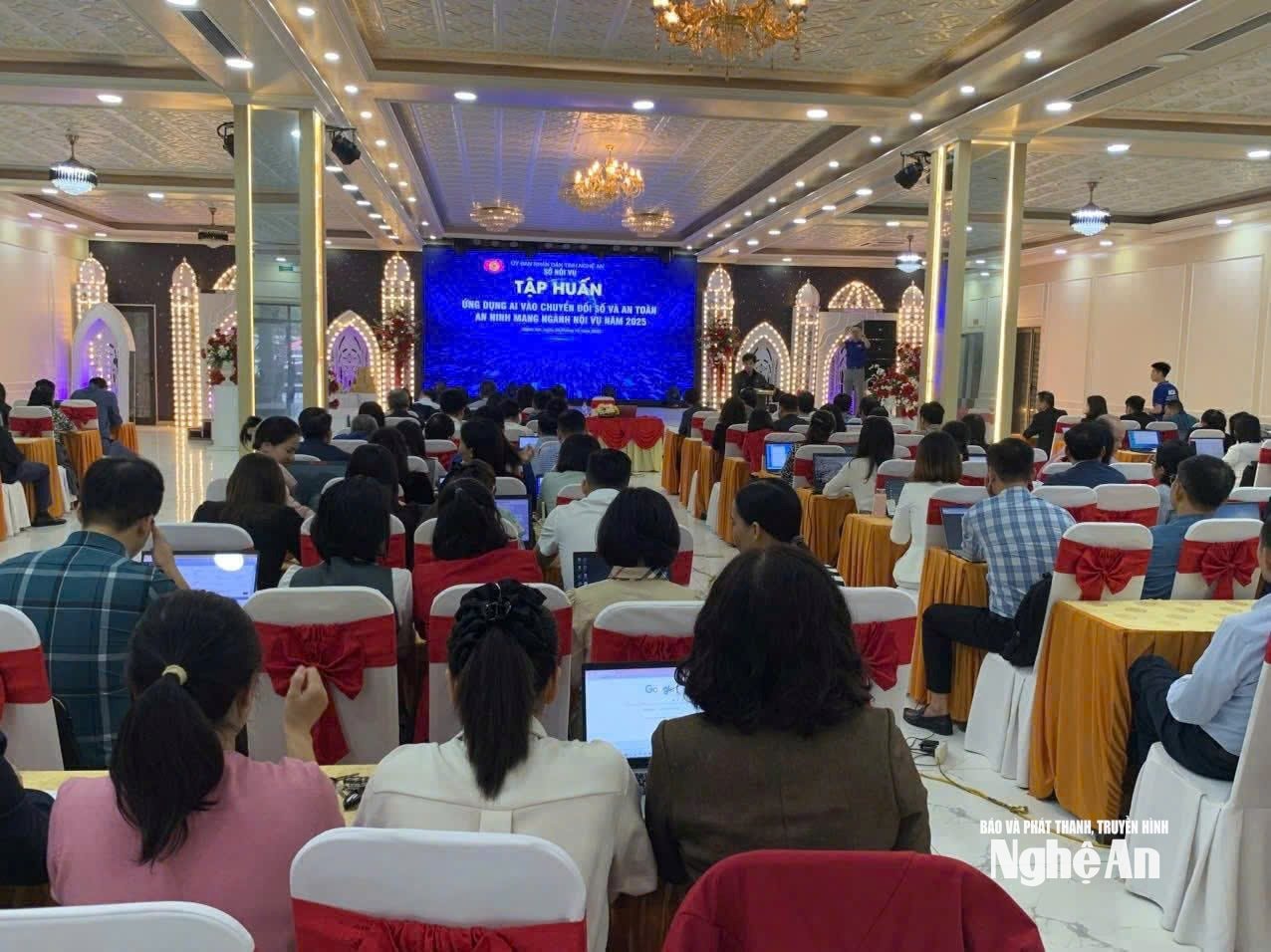
From directives to practical action, there has been a significant transformation. Just 20 days after the issuance of the document, on October 29, 2025, the Department of Internal Affairs successfully organized a training conference on the application of artificial intelligence (AI) in digital transformation and information security. The serious participation of nearly 150 officials and employees at the conference clearly demonstrated their determination to master the technology and meet the requirements of "Digital transformation for all citizens, comprehensive and complete."
Alongside human resource training, the Department is focusing its resources on implementing the "Building a Historical Archive System for Nghe An Province, Phase 2024-2025" project. This is a concrete step towards digitizing specialized data in accordance with the Government's Project 06. For the Provincial Historical Archives Center, applying digital technology to preserve and promote the value of archival documents is the most fundamental and practical solution to bring historical heritage closer to the people in the digital age.
From the old-school literacy teachers who received their salaries in rice to today's AI-promoting technology experts, even though the tools have changed from chalk to keyboards, from blackboards to digital screens, they all share a sacred mission: to broaden the intellectual horizons of the people. If the old literacy campaign illuminated the path to knowledge for millions of Vietnamese people, today's digital literacy campaign is opening a new door to knowledge, where data and technology merge to serve the development of humanity and society.
On the occasion of Vietnamese Teachers' Day, November 20th, we would like to express our gratitude to all those who have, are, and will continue to sow the seeds of knowledge in the studious land of Nghe An. The flame of "Popular Education" will forever burn brightly, guiding us into an era of national progress.


