
From barren land to a commercial clean vegetable farming area in Na Ty village.
The rice fields, once abandoned due to drought and barrenness in Na Ty village, Muong Quang commune, are now covered in the green of safe vegetables. Thanks to natural and organic farming methods, vegetables from Na Ty village not only meet the local demand for clean food but also become a sought-after commodity in the market, providing a stable income for the Thai ethnic people here.
.jpg)
These days, in Na Ty village, along the village road are rows of lush green vegetables: firm, tightly rolled cabbages, vibrant green mustard greens, abundant eggplants, green beans, and peas harvested for their shoots… all neatly arranged in plots. In the fields, the villagers are busy harvesting vegetables to take to the market, sell directly from the fields to people in the area, or send them by truck to other communes.
Ms. Lang Thi Phuong, a resident of Na Ty village, said that vegetables are harvested regularly, about every two days. “We don’t harvest much, just a few cabbages, a few kilograms of beans, one or two kilograms of eggplant, but each time we sell it, we earn 100-120 thousand dong. It gives us extra money for household expenses and shopping,” Ms. Phuong shared. For many households here, vegetables are not a large source of income, but they are a regular, sustainable, and integral part of their daily lives.
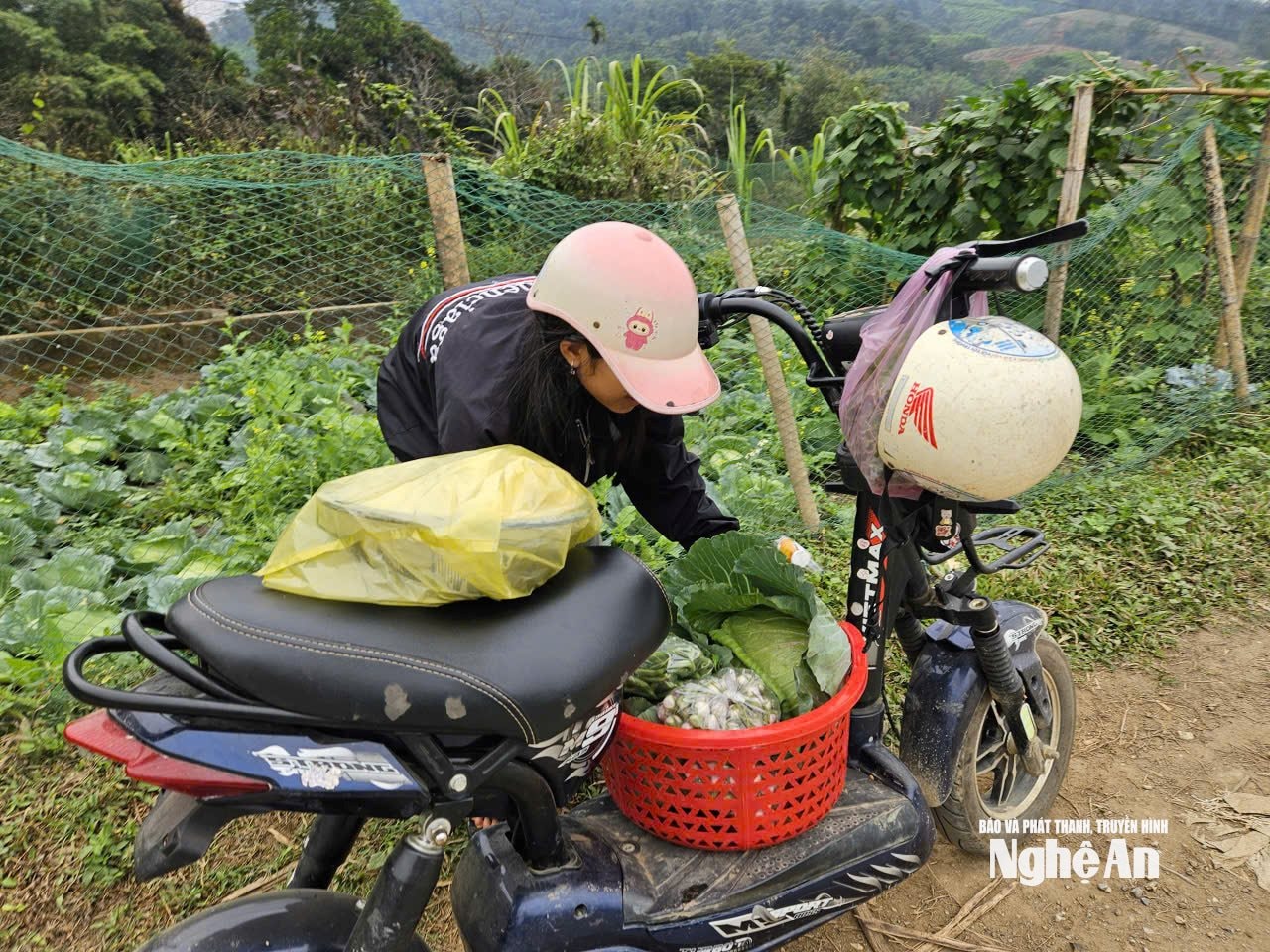
The clean vegetable farming area in Na Ty village currently has about 20 households participating, cultivating vegetables on an area of nearly 6 hectares. A common feature is the natural farming method, minimizing the use of chemicals. Each family proactively composts a pit of animal manure in their garden. The manure is composted using microbial enzymes, combined with readily available materials such as straw, leaves, and animal waste, for at least 30 days to completely decompose, creating a nutrient-rich source of organic matter for the soil.
Ms. Luong Thi Hong, one of the households that participated in vegetable farming from the very beginning, said that the villagers unanimously agreed to implement the "four no's" principle: no herbicides, no pesticides, no chemical fertilizers, and no growth stimulants. "Growing vegetables this way is much harder. Because we don't spray pesticides, we have to go to the fields at night or early in the morning to catch insects by hand. But in return, the vegetables are safe, consumers trust them, and they sell more easily," Ms. Hong said.
.jpeg)
To ensure a consistent supply of vegetables to the market, the villagers plant in staggered cycles. As soon as one row is harvested, another is planted, so the vegetable garden always has produce. The vegetables are mainly sold directly in the fields or at the local market. Many people from neighboring communes also come directly to the vegetable gardens in Na Ty village to buy, because they are confident about the origin and farming methods.
Thanks to growing safe vegetables, the income of households in Na Ty village is becoming increasingly stable. On average, each household earns between 3 and 5 million VND per harvest. Although not a large sum of money, this is a regular source of income, suitable for the production conditions of the highlands. More importantly, people can proactively secure a source of clean food for their families, contributing to improving the quality of meals and reducing living expenses.
Few people know that the lush green vegetable fields of today were once barren, dry land with no reliable irrigation. According to Mr. Hoang Van Minh, head of Na Ty village, this area was practically abandoned and nothing could be grown there. "The villagers regretted leaving the land uncultivated, but without irrigation and with such poor soil, they had no choice but to leave it fallow," Mr. Minh said.
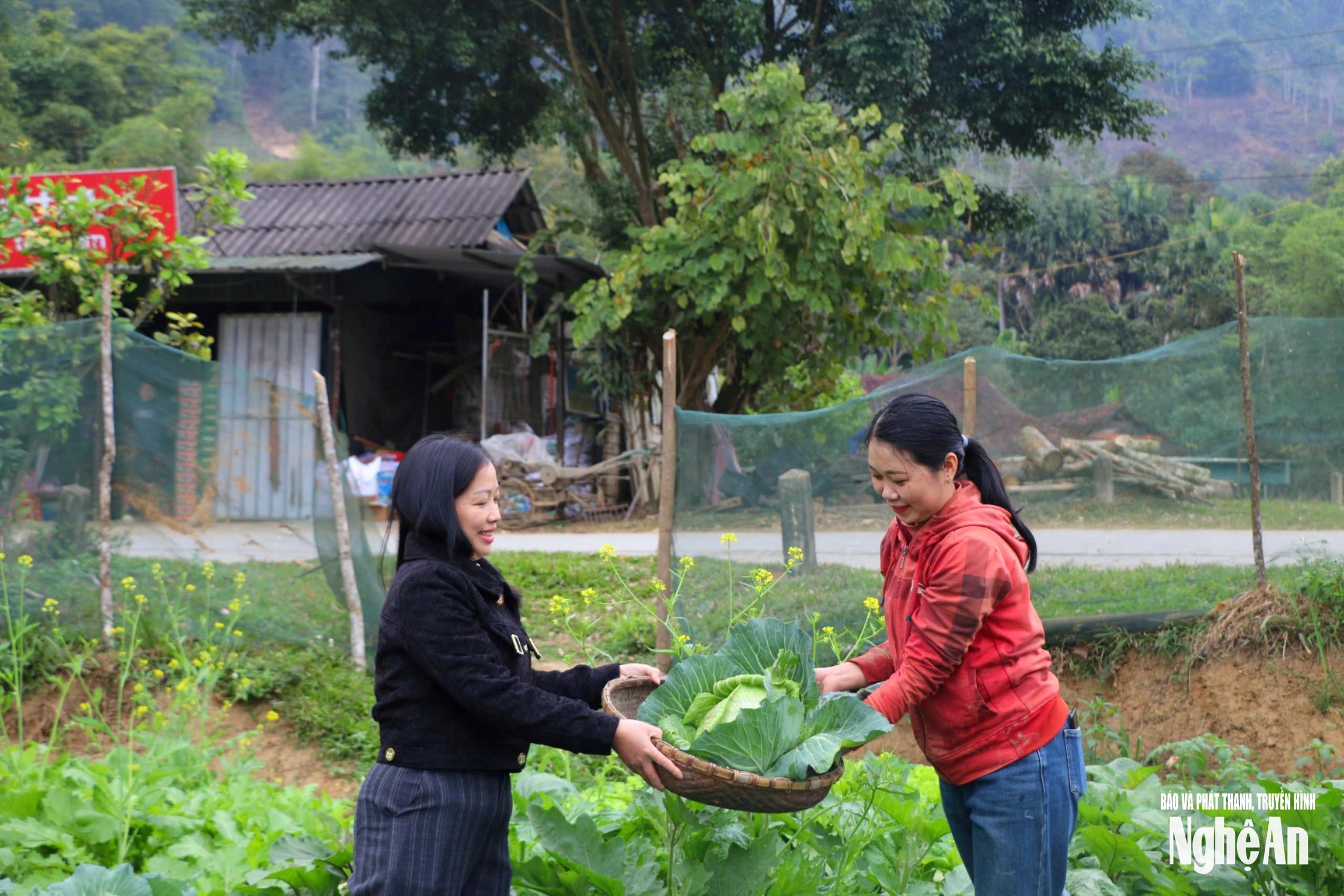
The turning point began in 2023, when the Women's Association of Muong Quang commune mobilized its members to improve land for vegetable cultivation. The village committee actively propagated information, provided guidance, and fostered consensus among the people. Pioneering households pooled their money to buy pipes to bring water from their homes to the fields, dug holes, and enclosed them with tarpaulins to create water reservoirs for irrigation. With water and organic fertilizer, the land gradually improved, and the vegetables took root and grew well.
Starting with a few successful trial households, the model quickly spread. To date, the entire village has dozens of households specializing in organic vegetable farming to supply the market. Previously barren fields have now become areas dedicated to growing clean, organic vegetables, providing a stable livelihood for the people. Mr. Luong Hai Quang, a clean vegetable farmer in Na Ty village, shared: “Before, we had to buy vegetables from elsewhere, without knowing their origin or quality. Now, the villagers can grow their own clean vegetables, ensuring food security for their families and selling to people in the commune and neighboring communes.”
The reality in Na Ty village shows that as people become increasingly concerned about safe food, naturally grown vegetables are finding their own niche. Without the need for elaborate signage or advertising, vegetables from Na Ty village sell well because buyers can see the growing process firsthand, select the vegetables directly from the fields, and trust in the honesty of the producers.
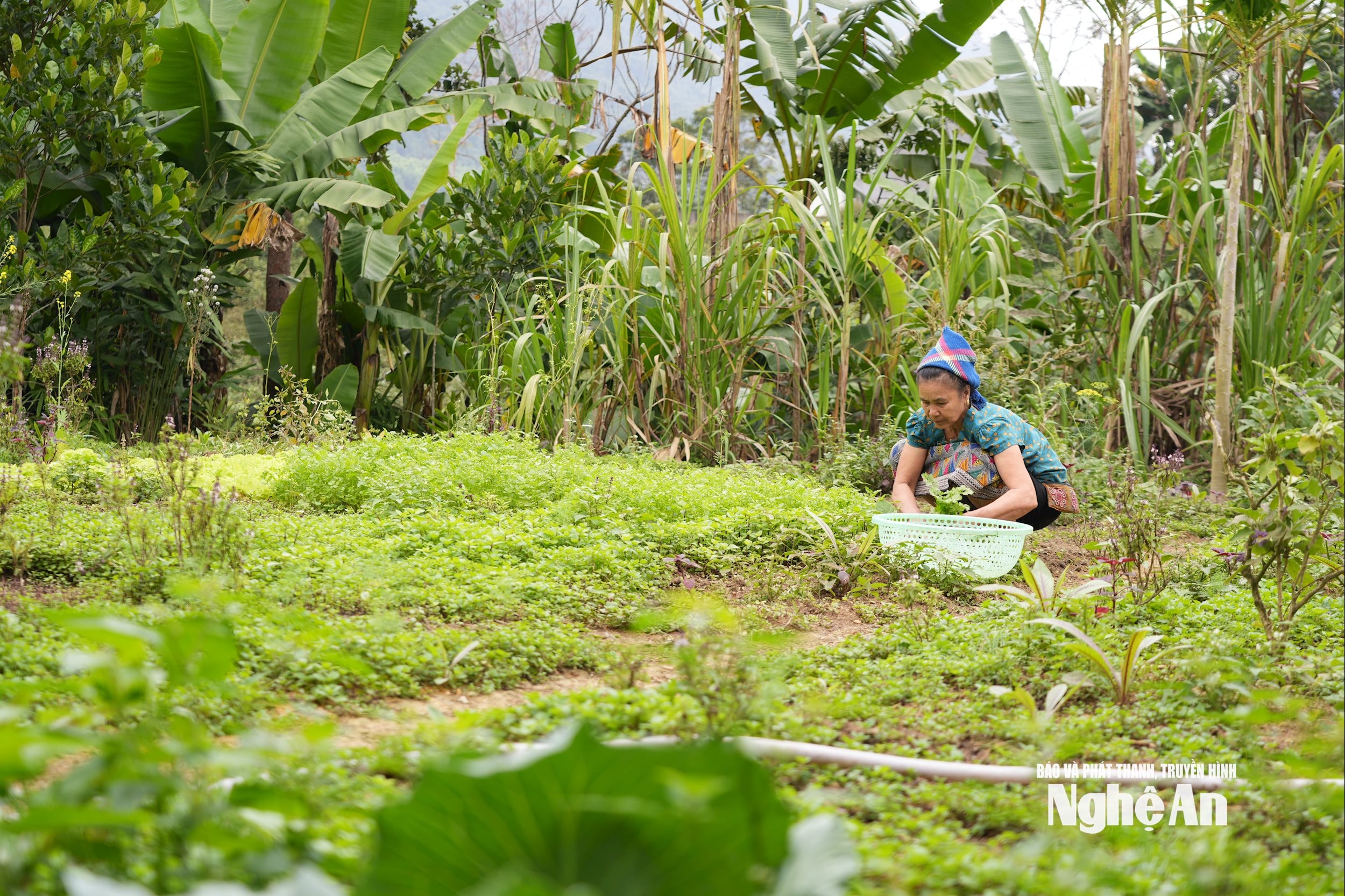
From plots of land once abandoned due to drought, Na Ty village has now developed into a clean vegetable farming area for sale to the market. This model not only helps the villagers earn an additional livelihood but also gradually changes the way agriculture is practiced in Muong Quang commune, towards safe farming practices that are linked to the actual needs of the market…


