
From the pages of a book to the journey of conquering a passion for technology.
When it comes to science, engineering, and technology competitions in schools, many people still have doubts about the practical application of the products. In particular, many remain skeptical about whether students from mountainous regions can conquer international-level competitions. However, the journey of the teachers and students of Tra Lan 1 Primary School has helped change those perceptions, through their tireless efforts and passion for science and technology.

Thanh Quynh(Perform)/Present:Hong Toai• March 21, 2026
*****
When it comes to science, engineering, and technology competitions in schools, many people still have doubts about the practical application of the products. In particular, many remain skeptical about whether students from mountainous regions can conquer international-level competitions. However, the journey of the teachers and students of Tra Lan 1 Primary School has helped change those perceptions, through their tireless efforts and passion for science and technology.
Nghe An newspapers, radio, and television had a conversation with Mr. Nguyen Nhu Phung, a teacher at Tra Lan 1 Primary School - who won third prize at the Creative Teachers' Festival.Nguyen Khanh Lam, a student in class 5A1 at Tra Lan 1 Primary School, Con Cuong commune, won second prize in the 2025 National Robotics Competition and a prestigious trophy at the 2025 World Robotics Competition.
Teacher Nguyen Nhu Phung:When I brought my students to participate in the 2025 World Robotics Competition, I was very aware of our starting point. We come from a school in a mountainous region, where conditions are still very limited, with outdated equipment, limited funding, and students having few opportunities to compete in an international environment.
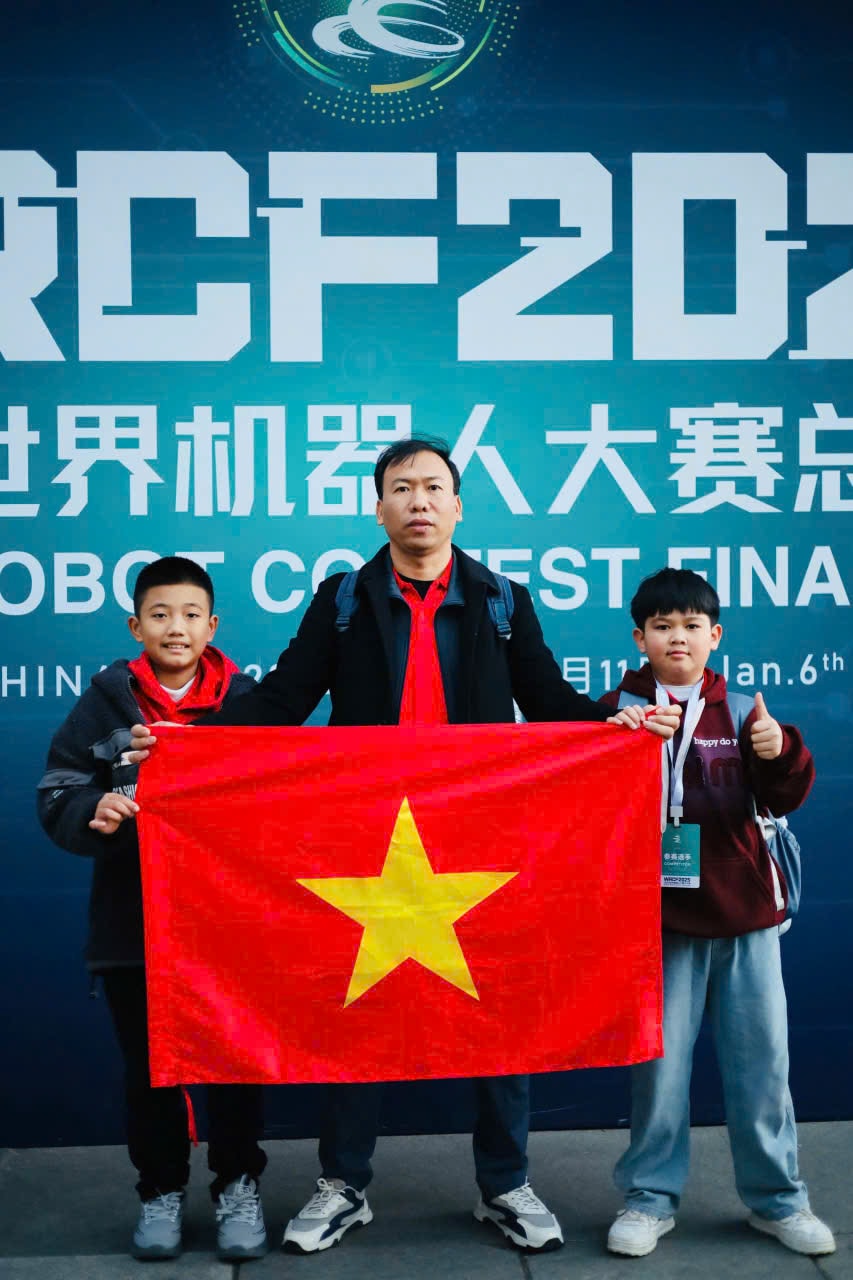
However, I don't feel inferior about myself or my students. My students are intelligent, hardworking, and passionate. I think simply: We're not there to compare our circumstances, but to compare our abilities and spirit. If we keep focusing on the gap, we'll probably never have enough confidence to step out of our comfort zones.
Therefore, the way I overcame that mindset was through thorough preparation. Preparation in terms of expertise, skill development, and mental preparation for competition for the students. I told them that in an international competition, no one asks where you're from. What people care about is the product you create, how you solve problems, and your work ethic throughout the competition.
When the competition began, my students and I stopped thinking about whether we were from the mountains or the city. The only thing I thought about was doing our best. If we achieved good results, it would be a well-deserved reward. If we didn't get what we hoped for, it would be a valuable lesson. But no matter what, we couldn't give up.
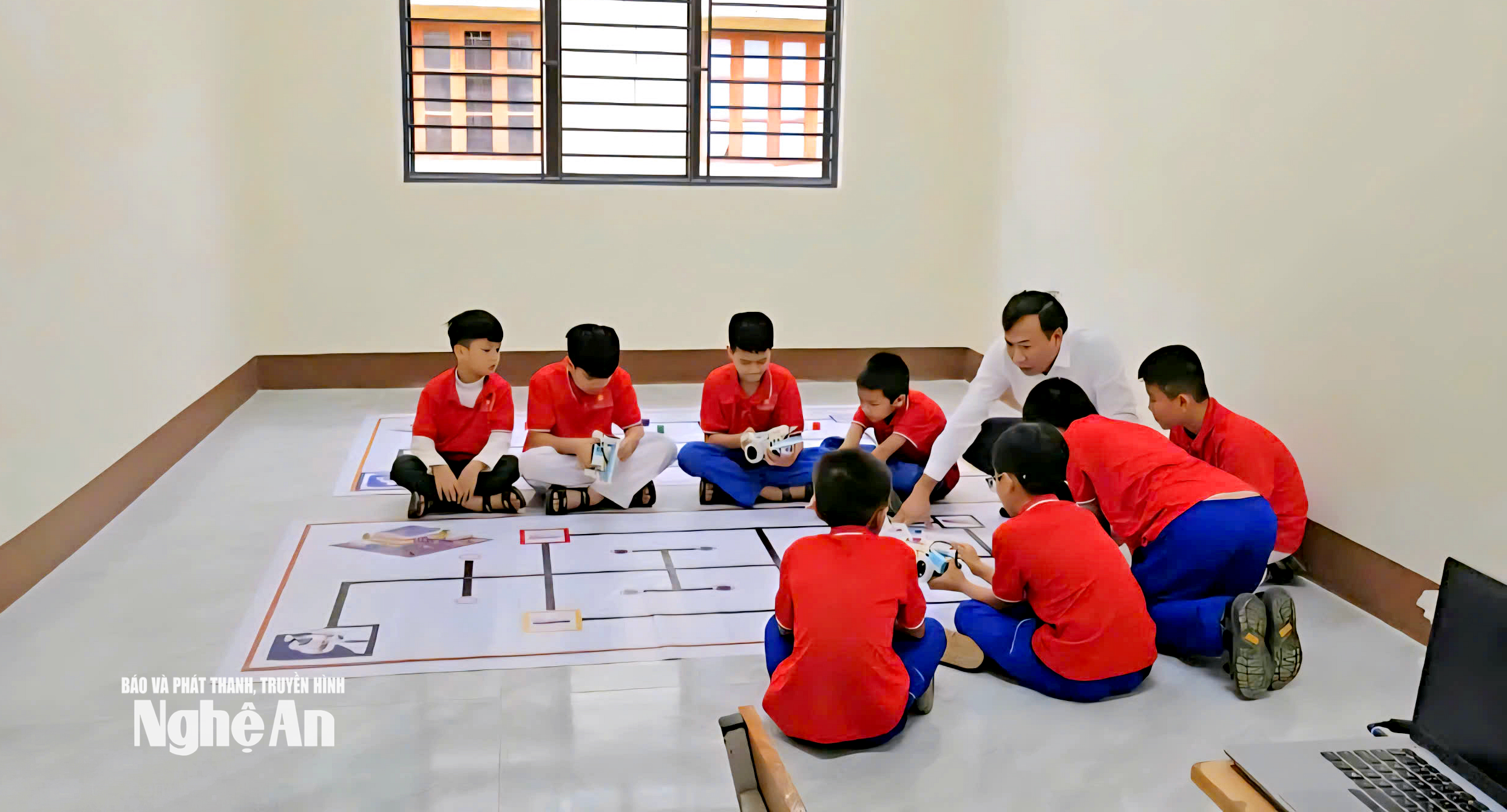
For us, the most daunting gap isn't geographical distance, but the gap in mindset. When we believe our students can do it and help them believe in themselves, self-doubt will gradually disappear.
Teacher Nguyen Nhu Phung:I understand why some people think robotics is just a trend. They want the products from competitions to be put into practical use the very next day.
If you only look at the "final product," you might see it as just a model for competition. But judging robotics from that perspective, in my opinion, is missing the true essence of engineering education.
A robot on a model board might just be a prototype. But the entire process of creating it is a miniature simulation of the real-world process: research - design - testing - optimization. This is exactly how a mechanical engineer works, how the automation industry operates, or how a tech startup team develops a product. Therefore, the real value doesn't lie in the robot itself. The value lies in the process.
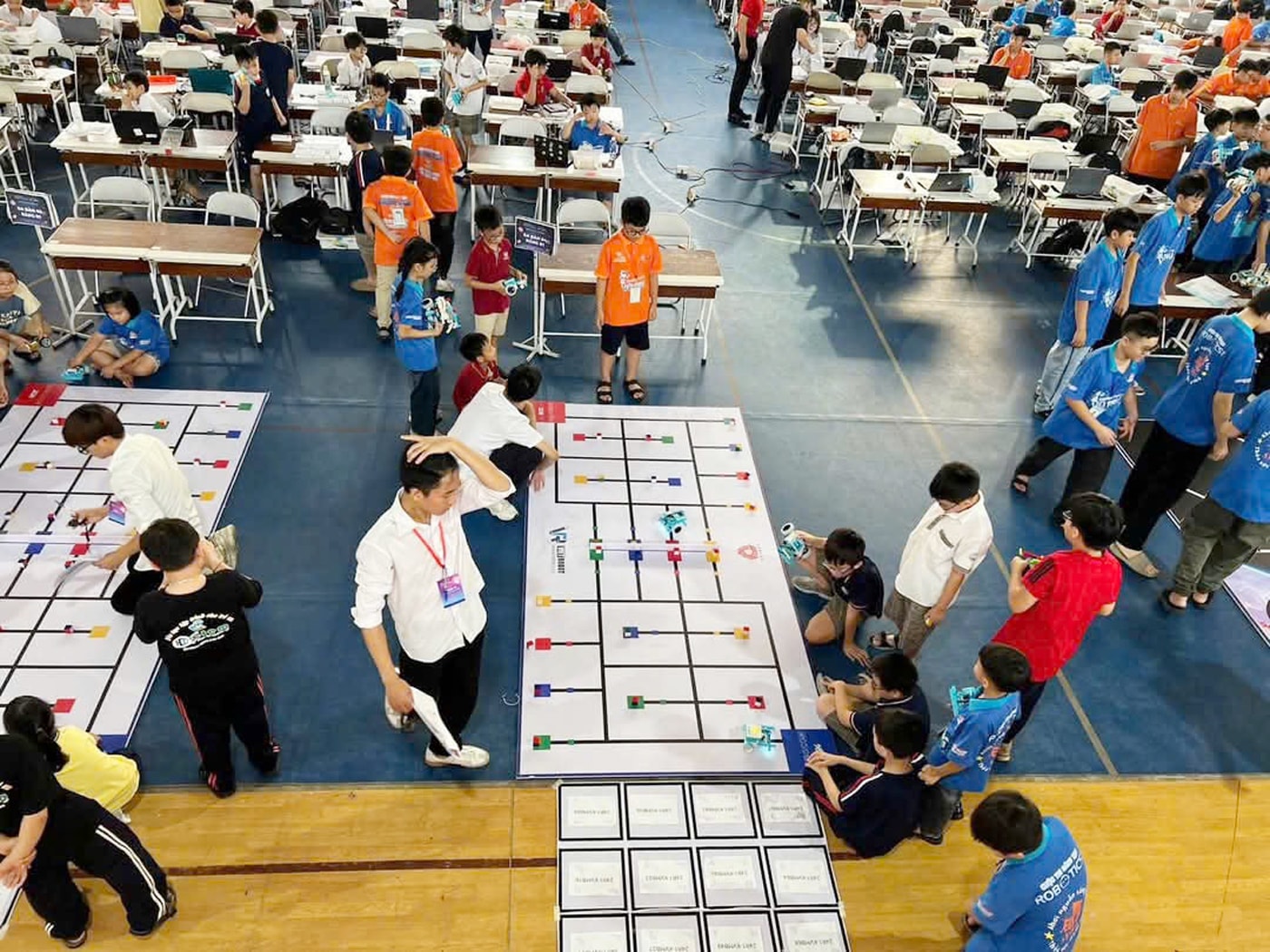
During this process, students develop systems thinking by viewing a problem as a whole with many interconnected elements. Alongside this, they learn algorithmic thinking, understanding that every action must follow logic and sequence. Particularly important is the skill of problem-solving using the analysis-trial-error-correction-retry loop. They learn teamwork, clear assignment of tasks, and accountability for their work. More importantly, they learn perseverance and a spirit of optimization: not stopping at simply "working," but finding ways to "work better."
Robotics also helps students shift from being technology consumers to being technology masters. Instead of just using phones or computers, they understand that they can program, control, and create a system that operates according to their own ideas.
Globally, robotics competitions don't aim to create commercially viable robots immediately. The longer-term goal is to prepare the workforce – engineers, researchers, and technology entrepreneurs – for the next 10-20 years. In Vietnam, I've observed that students who receive formal robotics training tend to be self-learners, able to read technical documents (including in English), and possess strong presentation and teamwork skills. These are highly sought-after abilities by businesses.
If a product is only considered "practical" when it can be applied immediately, then that's the story of specialized vocational training. General education, however, must first and foremost build a foundation for critical thinking. Robotics, in my opinion, is fulfilling that role perfectly.
.png)
I don't consider robotics a fad. It only becomes a fad when it's organized for the sake of events without a proper training philosophy. When implemented systematically and with clear direction, robotics is the spark for a long-term engineering journey.
The robot might only run on a model. But the students' growth and maturity after creating it is the real value – and that value will stay with them for life. In my opinion, the greatest value of a competition lies not in the product itself, but in the growth and maturity that comes from the process of creating it!
Teacher Nguyen Nhu Phung:I don't start by having students assemble robots right away. For me, robotics is first and foremost about thinking. Therefore, the starting point is always programming. I introduce them to Scratch – a drag-and-drop programming language suitable for young children. If you ask them to write complex code from the beginning, they will be intimidated and find it difficult to approach. But with Scratch, learning becomes more intuitive and effortless.
Through this, students grasp core programming concepts such as execution sequence, conditions, loops, variables, and event handling. Once they understand these principles, they develop fundamental logical thinking. At that point, controlling the robot is simply an expansion of the "output": Instead of controlling a character on a screen, they control a real-world robot.
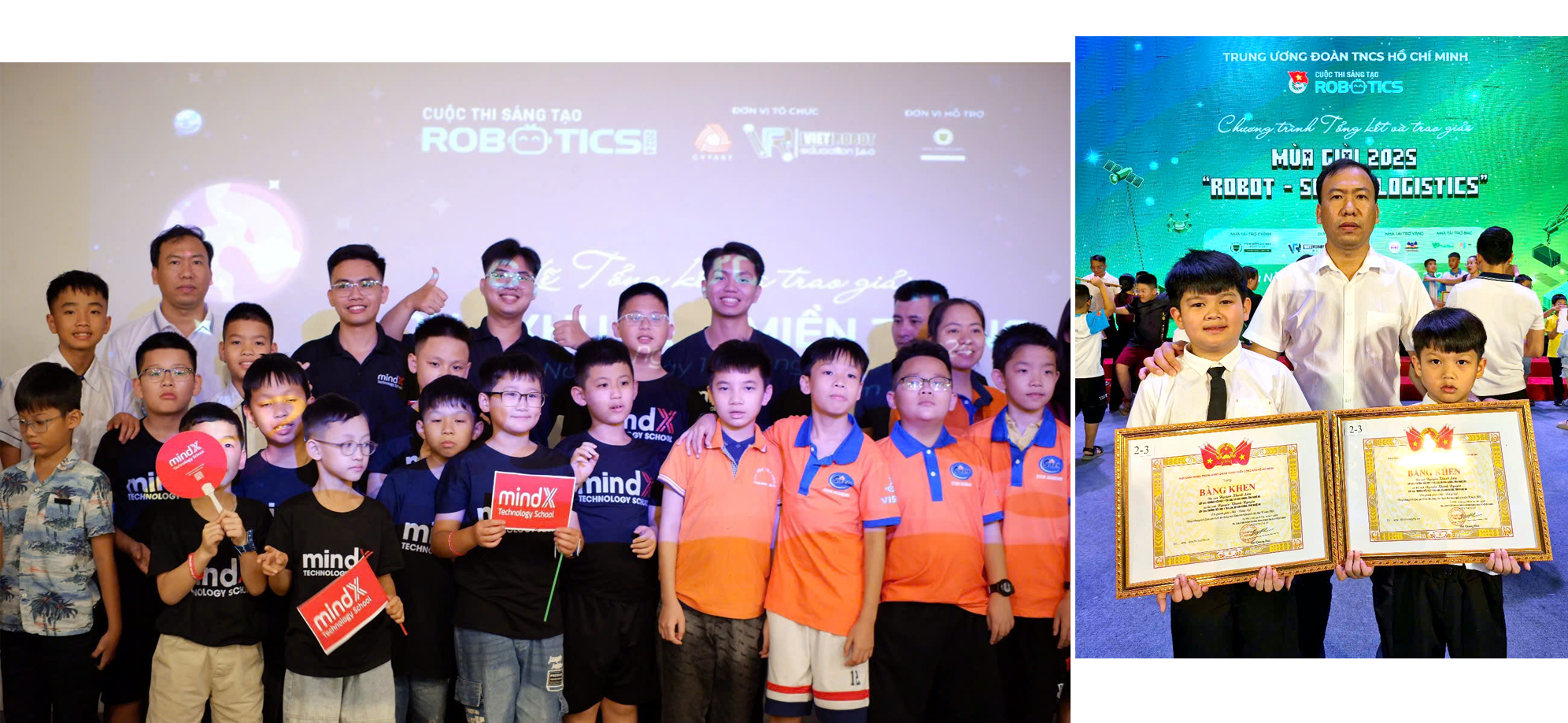
Nguyen Khanh Lam (on the left) won second prize in the 2025 National Robot – Smart Logistics Competition.
In addition, I took advantage of the process of preparing for youth informatics competitions to further hone my algorithmic foundation. For me, competing is not just about winning prizes, but also a way to systematically train logical thinking. Once I have a solid algorithmic foundation, transitioning to robotics will be much easier.
I often tell my students, "Robots aren't smart. Programmers are the smart ones." Therefore, I focus on teaching them how to think before teaching them how to assemble things. Once they understand the essence of programming, they become more confident and no longer intimidated by technology or machines.
My method can be summarized as: Understand programming first - build robots later. This allows students to approach technology naturally, without pressure, while still having a solid foundation to go further when entering larger competitions.
The idea that teachers do the work for their students is completely wrong. The competing teams have to go through many rigorous rounds, from designing and assembling robots to programming and handling complex technical situations that arise throughout the competition. What I equip my students with is the foundation of knowledge, methods, and the spirit to take control of their own competition.
.png)
PV:For Nguyen Khanh Lam, what is the most memorable moment from her journey with her coach and teammates throughout the competition? And what is the biggest thing she has gained from her time involved with Robotics?
Nguyen Khanh Lam:What I remember most are the times the robot malfunctioned right before the competition. The whole team was very worried, because even a small mistake could affect the entire performance. The atmosphere was incredibly tense. But each time, we heard the instructor say, "Calm down, there's still time!" Seeing him, somehow, gave us a sense of reassurance to calm down. Afterwards, the whole team sat down together to check each part, fixing every small error. Only when the robot was working correctly again did we breathe a sigh of relief.
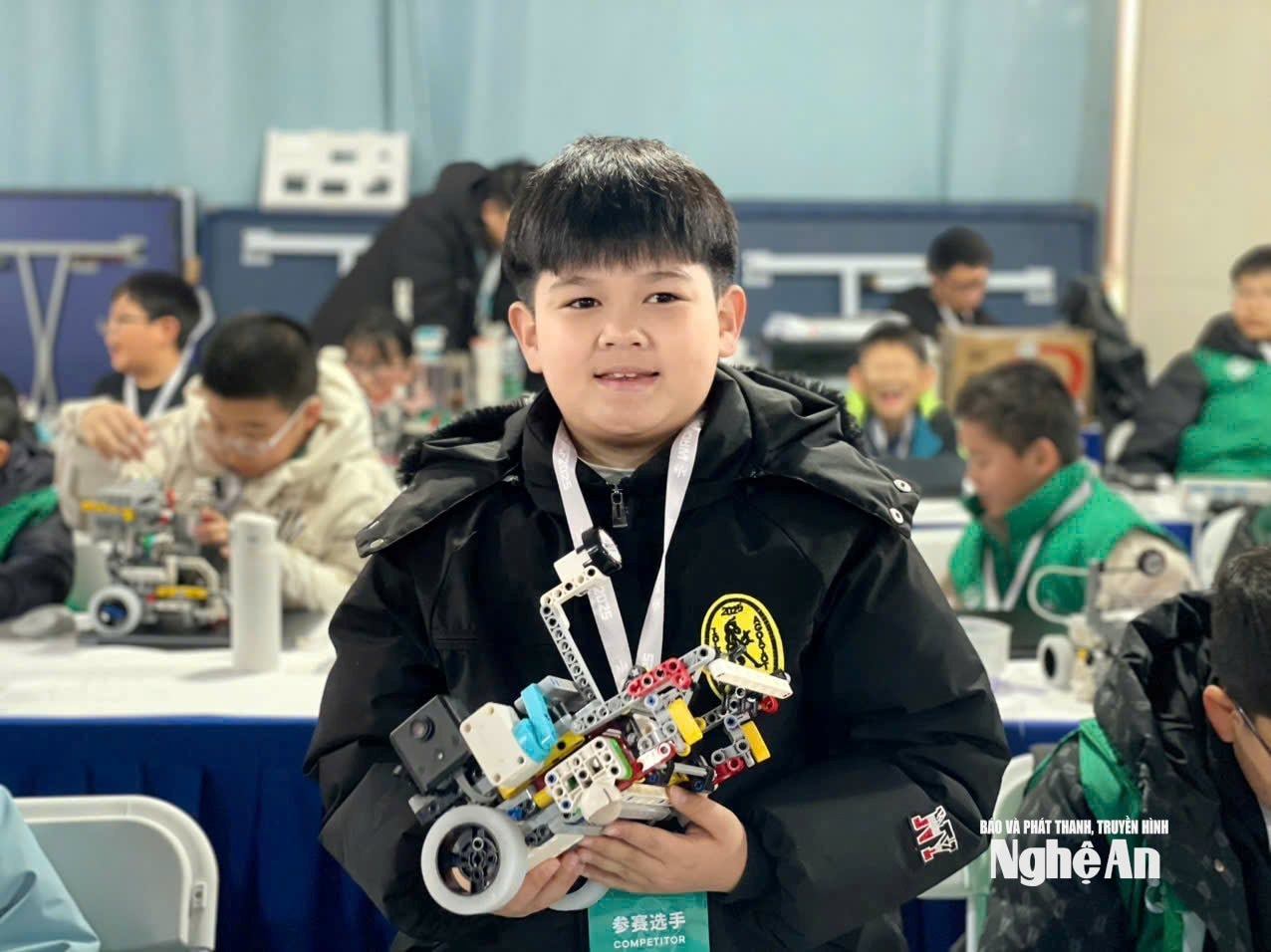
What I learned from each of these experiences was the importance of perseverance and teamwork. In a team, if one person gets discouraged, the whole group will be affected. Therefore, everyone must try to keep each other's spirits up.
I understand that success doesn't come from an individual, but from the collaboration and shared responsibility of the entire team. And perhaps that's the biggest lesson Robotics has taught me.
PV: It is known that there was a time when I wasn't truly focused on Robotics, and my instructor had to sternly remind me, even considering stopping the training. What made you change and become more determined?
Nguyen Khanh Lam:There were times when I was too playful and not focused enough, so the teacher reprimanded me very strictly. He said that if I didn't show determination, he would stop letting me study Robotics.
Hearing that made me very sad. I went home and kept thinking about it. I was afraid that if I didn't try hard enough, I would lose the opportunity to do what I love. And I also thought about my teammates; if I wasn't serious, it would affect everyone.
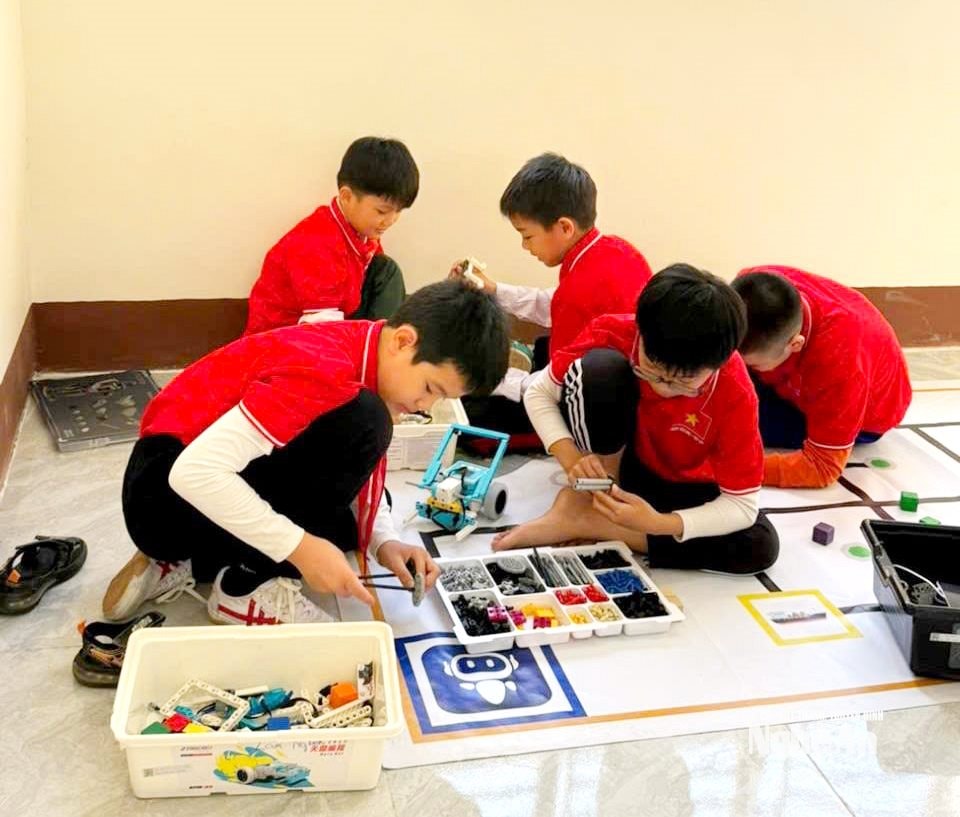
After that, I promised myself I wouldn't give up halfway. I started rearranging my time, doing my assignments more thoroughly, and trying to concentrate more when working on the robot.
I think what changed me was that I didn't want to miss the opportunity and didn't want to disappoint my teacher. When you truly like something, you have to try to hold onto it.
Teacher Nguyen Nhu Phung:I want to send you all a very simple message: Don't be afraid of technology.
Many students think that robotics, programming, or science and engineering are too difficult fields, only for the truly exceptional. But that's not true. Everyone starts from the basics, from simple lines of code, from the times the robot malfunctioned and had to start over.
During my teaching career, I've encountered many students who were initially quite shy, even those who weren't particularly strong in math. But with the right guidance, opportunities to experiment, and permission to make mistakes, they progressed very quickly. Technology doesn't require students to be excellent from the start. The most important thing is perseverance.
If they're still hesitant, they can start small: controlling a character's movement in Scratch, programming the robot to take 10 steps in a straight line. When they can do small things, they will gradually gain confidence to do bigger things.
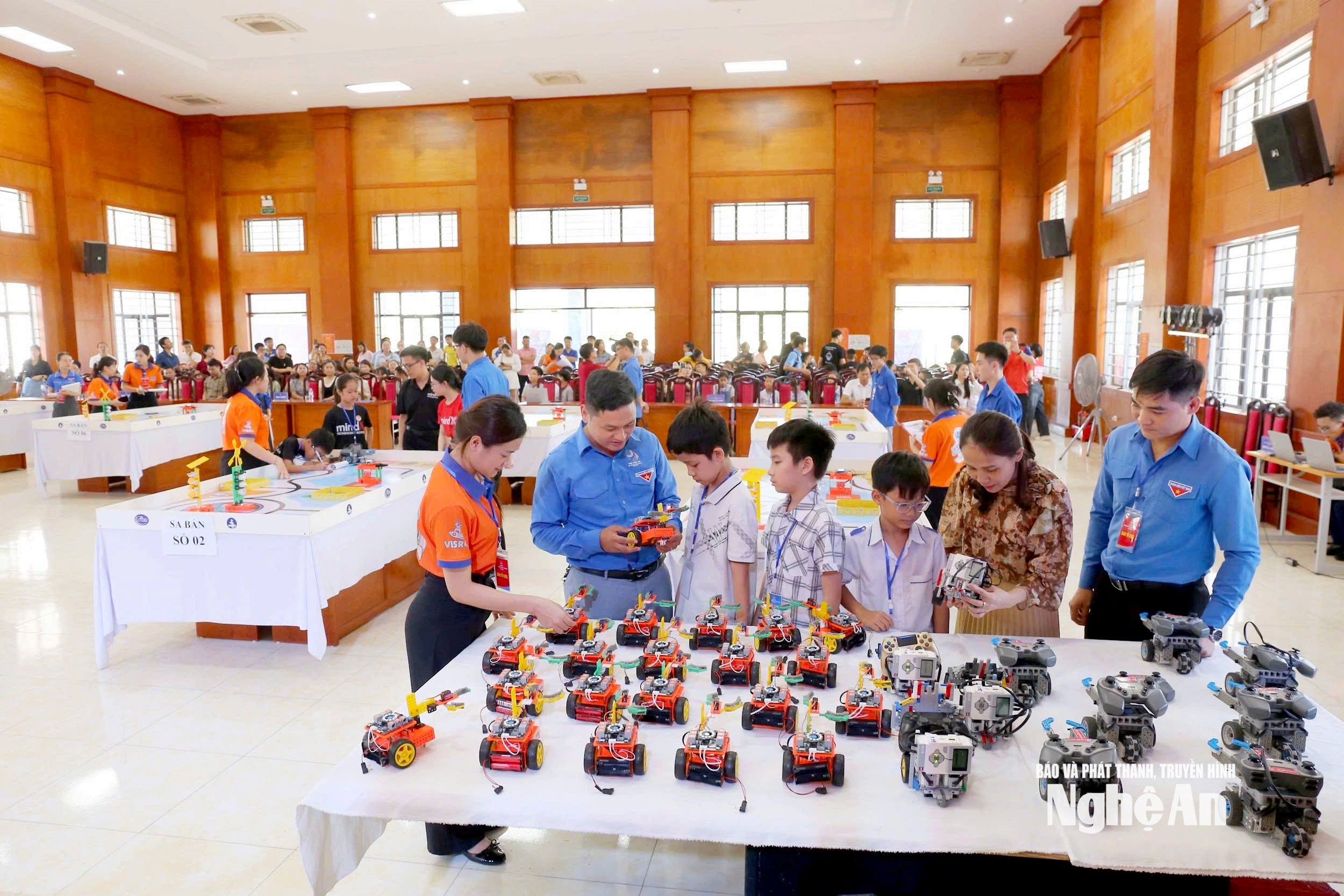
I also want the students to understand that their starting point, whether in the countryside or the city, doesn't determine their potential. What matters is whether they dare to start.
If you're still afraid, give it a try. Science and technology aren't unfamiliar. They're always there, waiting for you to step forward.
Nguyen Khanh Lam:I want to say, don't think that just because you live in a mountainous or rural area you can't do it. I also started with very simple things. Just try hard and don't give up, and you can achieve things you never thought possible.
I think the most important thing is to dare to try. When you start, things won't be as difficult as you think. And if you really like technology, just give it a try. Who knows, after small efforts each day, you might go further than you imagine.


