
Australia joins the AFF Cup: Challenging Vietnam and Thailand to claim the title.
The Southeast Asian Football Federation (AFF)'s plan to invite the Australian national team to participate in the regional championship is creating a historic turning point, directly threatening the dominant position of traditional footballing powers.
The appearance of the Australian team in the AFF Cup is expected to elevate the professional level and commercial value of the region's premier tournament. However, the participation of a team that regularly competes in the World Cup will undoubtedly disrupt the existing order, creating immense pressure on title contenders like Vietnam and Thailand.
Scenarios that could break the bipolar world order in Southeast Asia.
For almost a decade, the AFF Cup has been virtually the exclusive domain of Vietnam and Thailand. From 2018 to 2024, these two countries took turns dominating, each winning two titles. More broadly, Thailand leads in history with 7 titles, followed by Singapore (4 times), Vietnam (3 times), and Malaysia (1 time).
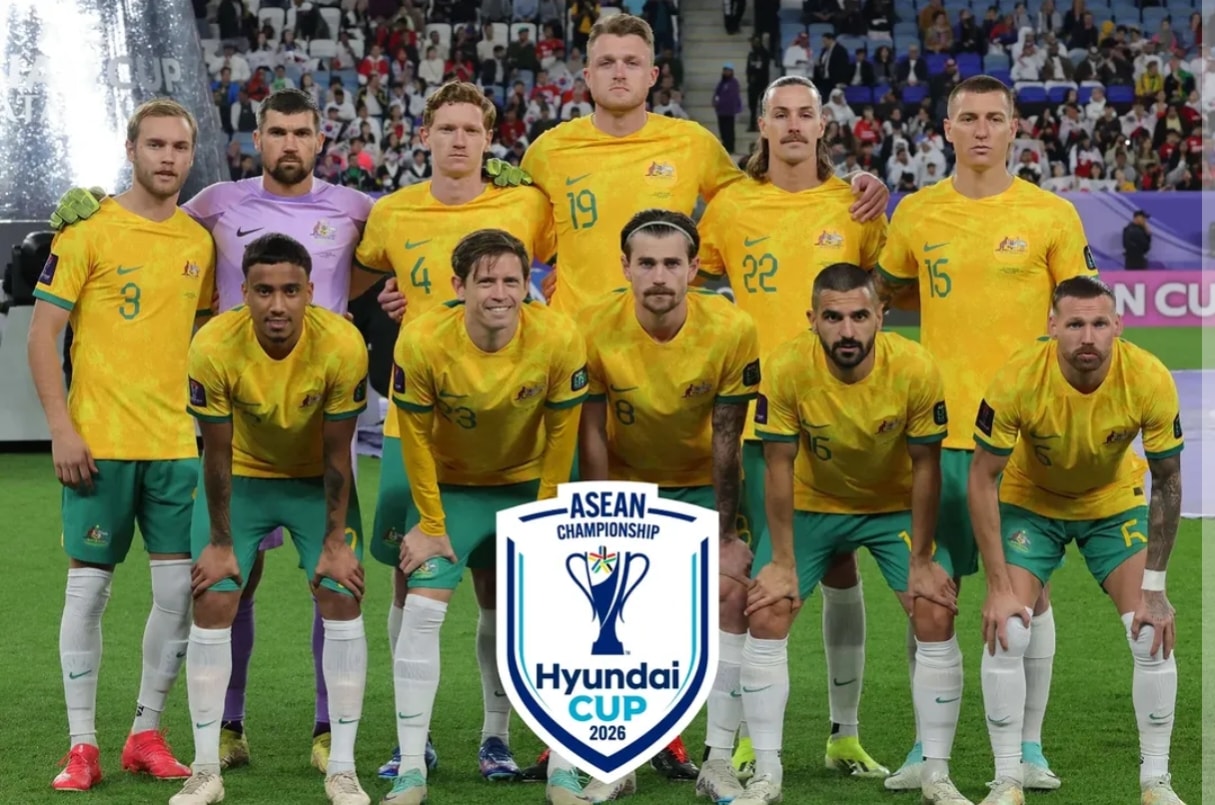
Notably, Indonesia holds the unfortunate record of being runners-up six times without ever winning the silver trophy. The presence of Australia – ranked 27th in the world – will make the dream of ending the championship drought for other teams more challenging than ever.
Challenges to Indonesia's ambitions
Indonesian media had already issued early warnings about the Australian team's arrival. Accordingly, the Indonesian Football Federation (PSSI) had been preparing training plans since the end of May to ensure new coach John Herdman had the strongest possible squad for the tournament taking place from July 24th to August 26th.

Although Australia has been a member of the AFF since 2013, they have previously only sent youth teams or women's teams to participate. Including a men's national team in this tournament presents a significant organizational challenge, especially considering the new FIFA ASEAN Cup is also scheduled to start in September and October of the same year.
Human resources challenges and professional realities
One point worth noting is that because the AFF Cup is not part of the FIFA Days system, teams will have difficulty calling up stars currently playing in Europe. Australia will likely only be able to field a team of players currently playing in the A-League. Similarly, Indonesia will also be lacking a quality squad of naturalized players.
For the 2026 AFF Cup, the draw has determined the two official groups:
| Table A | Table B |
|---|---|
| Vietnam | Thailand |
| Indonesia | Malaysia |
| Singapore | Philippines |
| Cambodia | Myanmar |
| Play-off winners (Brunei/Timor Leste) | Laos |
Although the difference in skill level between the Australian national team (A-League version) and the top teams in the region may not be too great, the intensity of the championship race will certainly increase. This is an opportunity for Southeast Asian football to compete against higher standards and to assert the strength of existing powerhouses against a continental-level opponent.


