
Vietnam national team with a 3-4-3 formation: stable wings, but lacking depth.
Coach Kim Sang-sik has established two wing positions with Cao Pendant Quang Vinh and Truong Tien Anh in a 3-4-3 formation, but the cohesion and depth – especially on the right wing – remain issues that need to be addressed.
In the 3-4-3 formation built by coach Kim Sang-sik, the Vietnamese team has two wing-backs: Cao Pendant Quang Vinh on the left and Truong Tien Anh on the right. This forms the foundation for the three-center-back system to maintain width and transitional speed. However, the coordination in passing combinations and the depth of personnel on the flanks remain unfilled gaps.
The Quang Vinh – Tien Anh wing duo in the 3-4-3 formation.
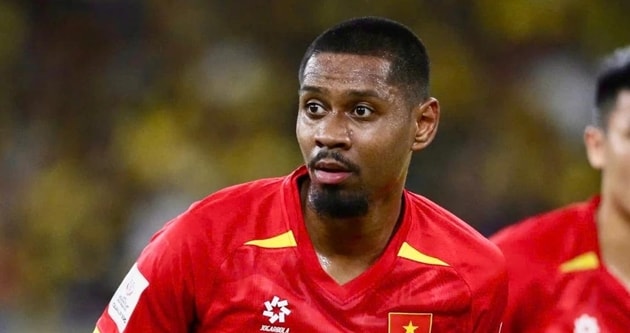
In principle, this duo provides balance. Cao Pendant Quang Vinh possesses stamina and a European-style playing ability with strong tackling and tackling – helping to reinforce the defense from afar on the left wing. When the team has possession, he proactively pushes forward, combining with one-two passes and crossing, adding depth to the attack on the flank.
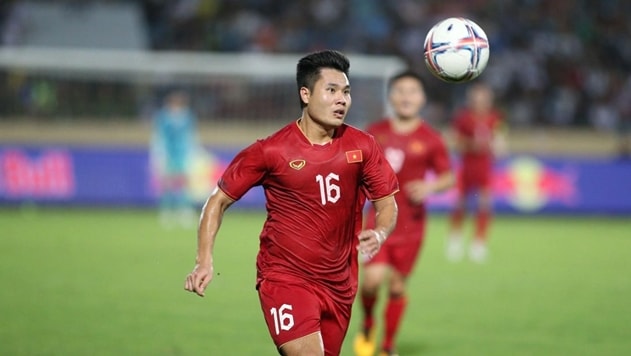
On the opposite side, Truong Tien Anh stands out for his intense movement, consistently contributing to both attack and defense. He possesses accurate crosses and low passes. The stamina and speed of both players are essential for the 3-4-3 formation to function according to coach Kim Sang-sik's philosophy of emphasizing proactive play.
The bottleneck lies in coordination and passing selection on both flanks.
The left wing still needs more time to "click". In the matches against Nepal, even though he was allowed to push forward, Quang Vinh sometimes missed the mark in the final moments – a sign that the understanding with the attacking winger wasn't yet smooth. This is understandable: he has only had 3 training camps and 5 matches with the Vietnamese national team, so he is still in the process of adapting both culturally and in terms of playing style.
On the right wing, the challenge isn't about physical fitness but about versatility. Tien Anh is a quality crosser at his club, but since the Vietnamese national team lacks a tall, strong center forward to exploit aerial balls, crosses to the end of the wing need to be more creative. When the opponent is defending the flank, relying solely on crosses is easily predictable.
Depth on the flanks: a worrying weakness.
While the central axis demands stability, the flanks require both quantity and quality of rotation options. On the left, Khuất Văn Khang is currently a backup option, but he is focusing on the U23 team and needs more time to bridge the skill gap. Nguyễn Văn Vĩ is "planned" to play as an attacking midfielder, so his ability to cover the left wing remains uncertain.
The right flank is even thinner. Coach Kim Sang-sik admitted he doesn't have a satisfactory backup plan for Truong Tien Anh. With Van Thanh injured and Xuan Manh deployed as a center-back, Tien Anh is practically the only option. Le Van Do being called up for a trial is one solution, but his ability to make a difference at the national team level remains questionable.
Impact on the 3-4-3 system
In a 3-4-3 formation, the two flanks are the "pivot" for both attack and defense. When the wings are strong enough, the formation maintains attacking width, establishes triangular passing combinations along the wing, and supports pressing immediately after losing possession. Conversely, if one wing is understaffed or lacks flexibility, the entire structure is prone to breakdown during transitions: the center-back on the right flank becomes more exposed, and the central midfielder is stretched to provide cover.
Therefore, optimizing the flanks not only increases the chances of creating opportunities from crosses, but also enhances the stability of the "rest defense"—the remaining defensive block when the team pushes forward. This is the foundation for the Vietnamese team to maintain the initiative against opponents who know how to stifle the flanks.
Short-term priorities
- Improving coordination on the left wing: enhancing the rhythm of passing for Cao Pendant Quang Vinh after 3 training camps and 5 matches, especially in the final touches.
- Diversify your options on the right wing: reduce reliance on crosses when the opponent is blocking the flank, and prioritize more creative passes.
- Adding depth: finalize backup options for both wings early; for the right wing, find solutions when Van Thanh is injured and Xuan Manh plays center back; realistically assess Le Van Do's adaptability at the national team level.
The overall picture
Coach Kim Sang-sik has found a promising wing-back pairing for the 3-4-3 formation with Quang Vinh and Tien Anh. The next crucial step is to improve the quality of their finishing touches and expand their rotation options. Once the flanks are properly reinforced, the three-center-back system will be fully effective: more proactive, balanced, and sustainable in the face of future challenges.


