
Watermelon-colored snow in the Arctic
Snow in some parts of the Arctic has a watermelon-pink color due to outbreaks of red algae in the frozen water.
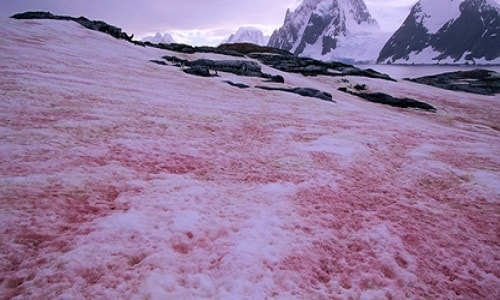 |
| Watermelon-pink snow caused by algal blooms in the Arctic. Photo: Huffington Post. |
According to the Huffington Post, Arctic explorers observed the appearance of pink snow, also known as watermelon snow, centuries ago. This is the result of red algae blooms in frozen water. Algal blooms are a phenomenon where the number of algae in water increases dramatically, causing oxygen levels in the water to drop, and the water surface to turn colors such as purple, pink, blue, or red.
In a study published in Nature Communications on June 22, scientists discovered that algal blooms are causing ice to melt faster. The algae are thriving because climate change is melting Arctic ice into liquid form, creating a favorable environment for them to thrive.
The presence of red algae reduces the reflectivity of snow (albedo), or its ability to reflect light instead of absorbing it to generate heat. Over a 100-day period, studies showed that snow containing red algae was 13% less reflective than white snow.
Melting ice is one of the main conditions for the growth of algae on snow. Large-scale melting events like the one in 2012 (97% of Greenland's ice melted) are likely to occur with increasing frequency in the near future as a consequence of global warming. Snow surfaces containing red algae absorb more sunlight, causing the ice to melt faster.
"Algae need liquid water to bloom. Therefore, the melting of snow and ice on the surface controls the abundance of algal species. The more ice melts, the more algae there will be," said Steffi Lutz, lead author of the study at the University of Leeds, England.
According to VNE
| RELATED NEWS |
|---|


