
The exchange rate fluctuated by only 1% in the first quarter.
At the seminar "The Path of Exchange Rates in 2016" held on the afternoon of January 18th, Mr. Bui Quoc Dung, Director of the Monetary Policy Department of the State Bank of Vietnam (SBV), emphasized that the exchange rate between the Vietnamese Dong and the US Dollar will be flexible but will still be subject to intervention by the SBV.
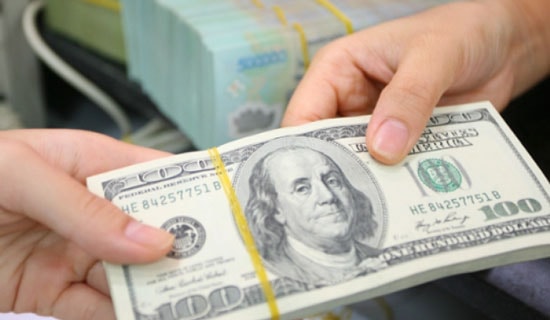 |
| Illustrative image |
The State Bank of Vietnam (SBV) representative also conveyed the message that the target exchange rate range for the first three months of the year will fluctuate by only about 1%. After two weeks of the SBV applying the new exchange rate management method, the central exchange rate of the VND has been fluctuating daily in response to developments in the world market such as the sharp depreciation of the Chinese Yuan (CNY) impacting the depreciation of some Asian currencies, the decline in Chinese stocks, and the rise in the USD index…. “The exchange rate in the domestic market has decreased by about 50-60 dong compared to the end of 2015, foreign exchange transactions in the market are proceeding smoothly, and market liquidity is good,” Mr. Dung informed.
According to Dr. Le Xuan Nghia, under the new exchange rate management method, the State Bank of Vietnam announces the central exchange rate daily, closely following the supply and demand of foreign currency domestically and internationally. Therefore, the central exchange rate fluctuates, sometimes increasing and sometimes decreasing. Domestically, in 2016 and subsequent years, the total foreign currency inflow into Vietnam will still be greater than the total foreign currency outflow. In other words, the supply and demand for foreign currency are basically in surplus if Vietnam can overcome the hoarding of foreign currency.
In the international market, the US Federal Reserve (FED) has begun a cycle of raising interest rates. The Chinese yuan has depreciated by 1.3% compared to the beginning of the year and by 5.9% compared to before the implementation of the new exchange rate mechanism on August 11, 2015 (interbank spot exchange rate). "The introduction of the new exchange rate management mechanism is a response to the rapid changes in the international economic and financial landscape, including the movements of the Chinese yuan," Mr. Nghia commented.
Meanwhile, Mr. Bui Quoc Dung assessed: “Theoretically, an increase in the exchange rate will make exported goods cheaper, creating conditions to enhance the competitiveness of domestic goods in the international market. However, adjusting the exchange rate upwards can make import costs more expensive, increase national debt obligations, and put pressure on inflation…”. Therefore, in managing the exchange rate, the State Bank of Vietnam must consider multi-faceted factors to maximize the overall benefits for the economy, contributing to achieving macroeconomic goals such as controlling inflation, sustainable macroeconomic development, minimizing the burden of foreign debt, and stabilizing domestic interest rates,” Mr. Dung said.
According to a representative from the State Bank of Vietnam (SBV), in 2016, the SBV will use forward contracts as a technical measure to guide the target exchange rate range for businesses and the market to understand. “The SBV has sold 3-month forward foreign exchange derivatives to credit institutions at a price 1% higher than the exchange rate as of December 31, 2015. Through this, the SBV is sending the message that the target exchange rate range in the first three months of the year will fluctuate by only about 1%,” Mr. Dung emphasized.
According to Kinhtedothi
| RELATED NEWS |
|---|


