
USD exchange rate today, April 11, 2025: Lowest in 10 years
USD exchange rate today, April 11, 2025: The DXY index fell to 101.03 points. The USD dropped sharply after US President Donald Trump announced a 90-day pause on tariffs against most trading partners.
On the morning of April 11, 2025, the USD exchange rate at domestic commercial banks continued to fall sharply, moving away from its previous peak. This development shows a clear weakening trend of the US dollar in the market.
At 4:00 AM, the State Bank of Vietnam announced the central exchange rate at 24,964 VND/USD, a slight increase of 28 VND compared to the previous session. However, in reality, the exchange rates at banks recorded a significant decrease.
Specifically, Vietcombank listed the buying price at 25,580 VND and the selling price at 25,970 VND/USD, a decrease of 212 VND compared to yesterday.
VIB Bank offers the lowest cash buying rate at 25,340 VND/USD and the lowest transfer buying rate at 25,400 VND. On the selling side, VIB also has the lowest selling rate at 25,760 VND for both cash and transfers.
Conversely, OCB offered the highest cash purchase rate, reaching 25,860 VND/USD. For transfer transactions, VietinBank recorded the highest purchase rate at 26,025 VND/USD.
On the selling side, Saigonbank is quoting the highest rate at 26,200 VND/USD. Additionally, OCB and TPB both have the highest transfer selling rate at 26,182 VND.
On the free market, the USD exchange rate also fell sharply. By this morning, the exchange rate on the "black market" had decreased by 72 dong in both buying and selling directions, fluctuating around 26,064 - 26,154 dong/USD.
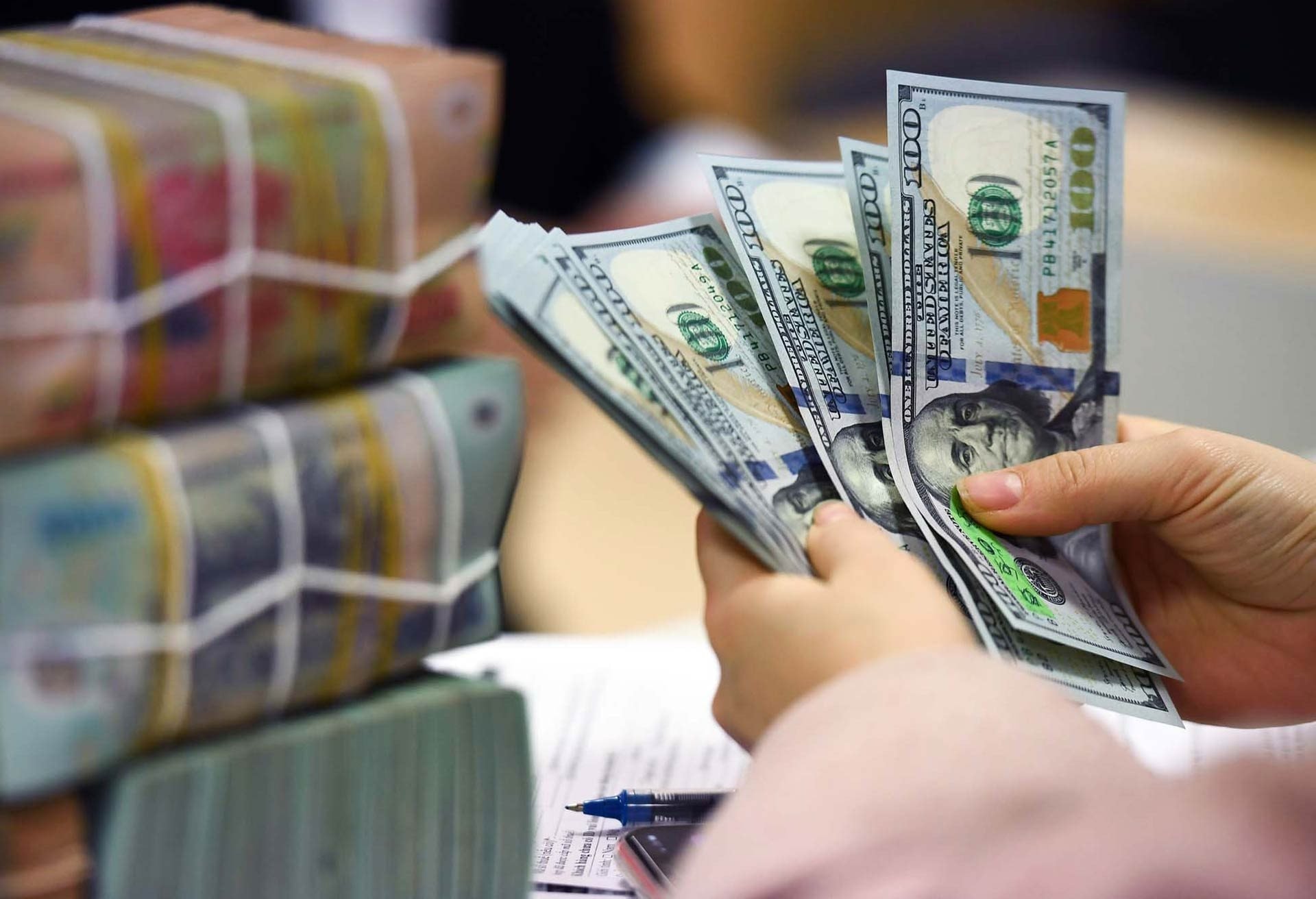
On the international market, the US dollar continued its significant weakening. The DXY index, which measures the strength of the USD against six major currencies, fell to 101.03 points. The USD declined sharply after US President Donald Trump announced a 90-day suspension of tariffs on most trading partners, except for China.
For China, tariffs have risen to 125%, and the total now stands at 145%, adding further pressure to trade relations between the world's two largest economies.
This volatility has caused the USD to depreciate sharply against many other currencies. The Swiss franc has risen by more than 3.6%, bringing its exchange rate to its lowest level in 10 years. Against the Japanese yen, the USD has fallen 3.46% this month, and the downward trend shows no sign of stopping.
In addition, data from the U.S. Department of Labor showed consumer prices fell in March, making it more difficult to maintain stable inflation amid the new tariffs taking effect.
The bond market also contributed to the weakening of the USD. The yield on 10-year US Treasury bonds fell to 4.376%, reducing the attractiveness of the greenback to investors.
In Europe, European Commission President Ursula von der Leyen confirmed a temporary pause in countermeasures against the US following President Trump's tariff suspension. The euro rose nearly 2.5% to $1.1221, reaching its highest level since July 2023.
The British pound also surged, reaching $1.2972, while the Australian dollar and the Swedish crown both rose by more than 1% against the US dollar. This was a volatile trading session and shows that the greenback is facing strong pressure from multiple sides.


