
The poverty rate in the mountainous areas of Nghe An province has decreased by an average of 2.29% per year.
The synchronized and effective implementation of national target programs for the 2021-2025 period has helped to rapidly and sustainably reduce the poverty rate in Nghe An. Particularly in mountainous areas, the poverty rate decreased by an average of 2.29% per year.
Adhering closely to the objectives set out in Plan No. 299/KH-UBND dated April 27, 2025, of the People's Committee of Nghe An province on the implementation of the National Target Program for Sustainable Poverty Reduction giai đoạn 2021-2025, Nghe An province has strived and achieved many important results.
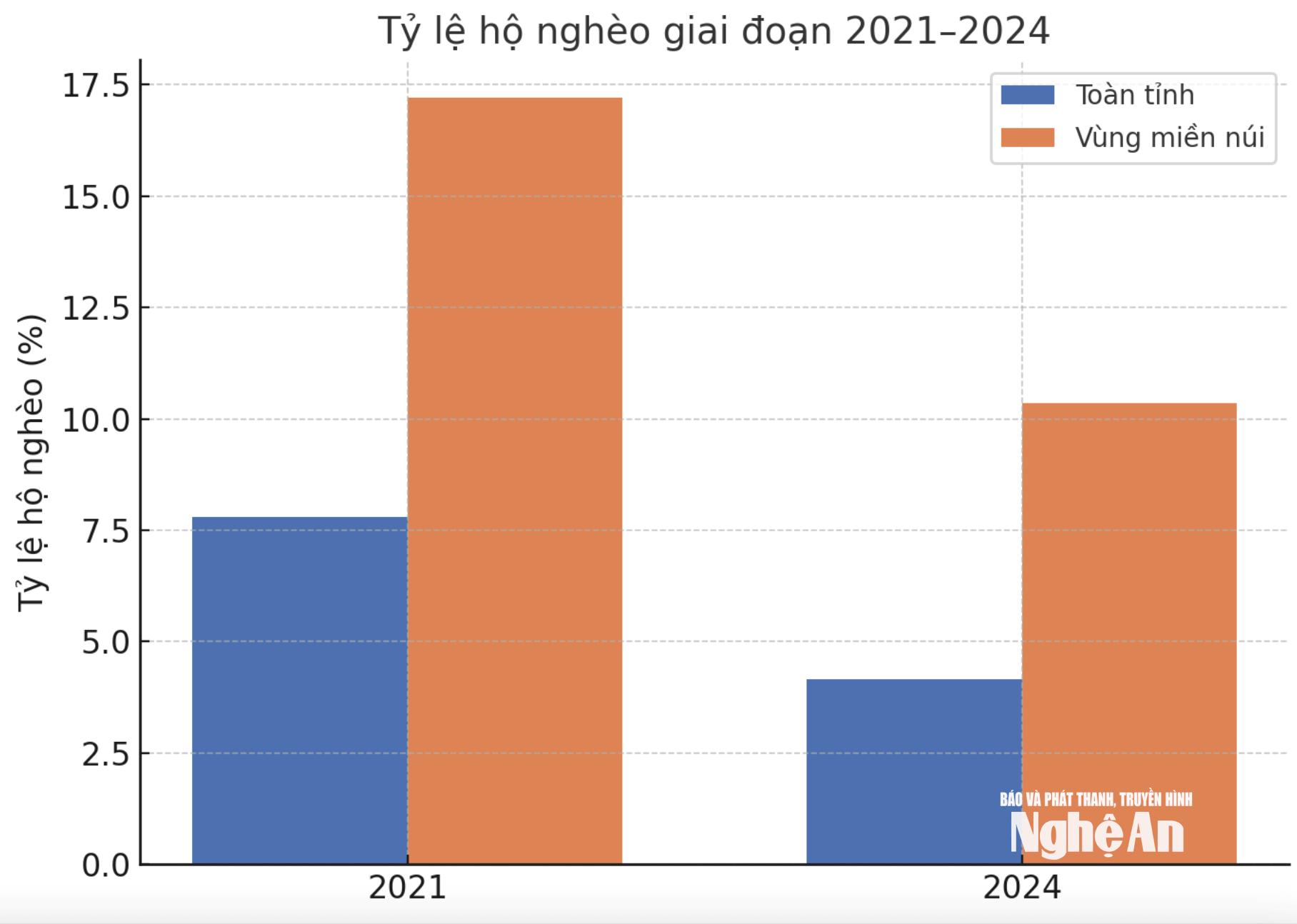
Specifically, during the period 2021-2025, from 2021-2024, the poverty rate across the province decreased from 7.80% to 4.16%, an average reduction of 1.21% per year. In mountainous areas alone, it decreased from 17.21% to 10.35%, an average reduction of 2.29% per year.
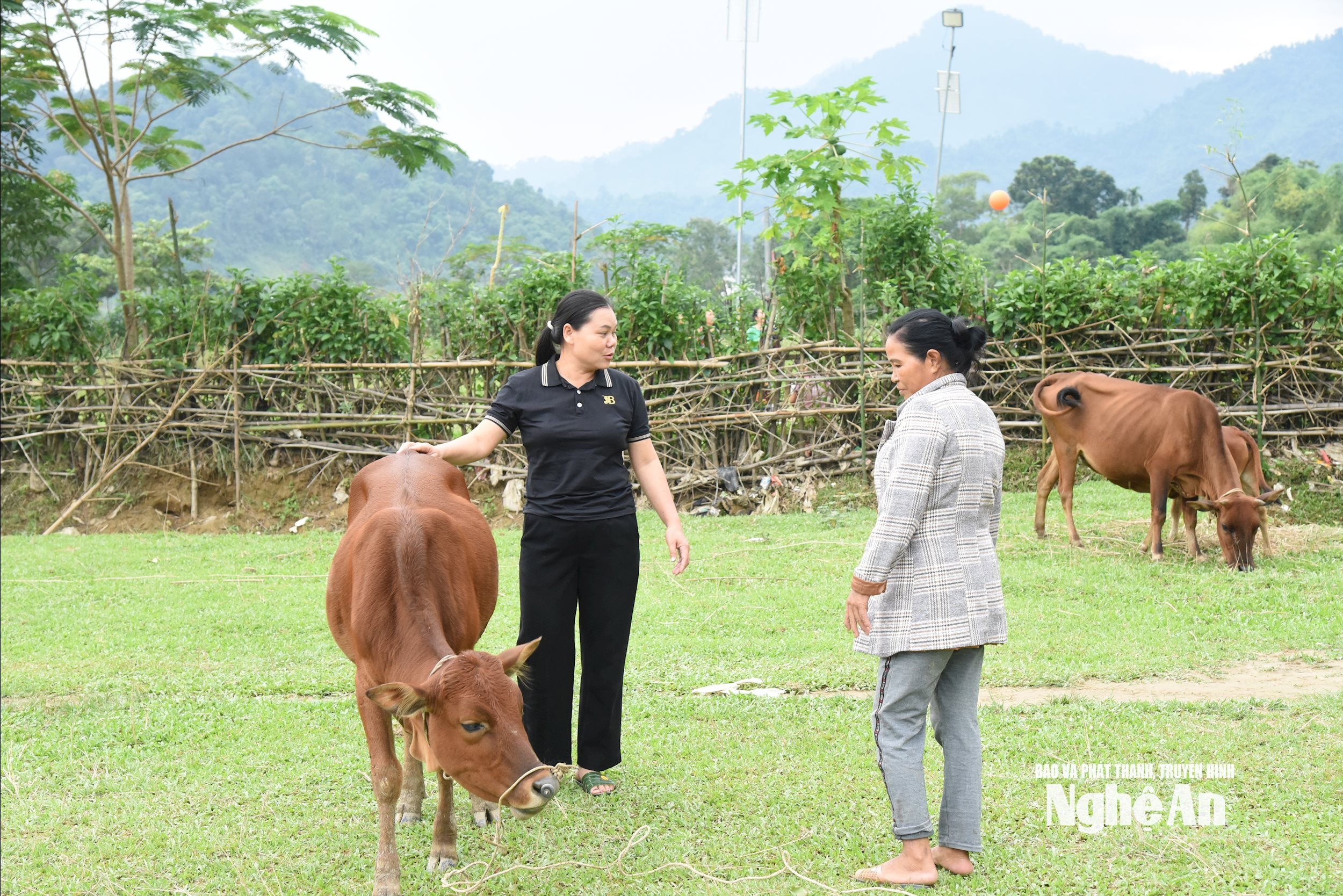
It is estimated that by the end of 2025, the poverty rate in the entire province will be 3.13% (an average decrease of 1.16% per year), and in mountainous areas it will be 8.66% (an average decrease of 2.15% per year), continuing to achieve the planned targets.
Regarding the poverty rate among ethnic minorities, it has decreased from 38.58% (in 2021) to 24.92% (in 2024), an average reduction of 4.55% per year, exceeding the set target. It is estimated that by the end of 2025, the rate will be 23.01%, an average reduction of 3.89% per year, achieving the planned target.
The targets and objectives for November 2025 have been basically completed, with 100% of poor districts receiving investment support for the development of inter-regional socio-economic infrastructure, serving people's lives, production, trade, goods circulation, and providing basic social services; prioritizing investment in essential infrastructure including: roads, schools, medical facilities, electricity infrastructure, and irrigation works.
The National Target Programs for the period 2021-2025 have supported the development and replication of over 15-20 poverty reduction models and projects that support the development of production, business, services, tourism, entrepreneurship, and business startups, aiming to create sustainable livelihoods, jobs, and income, adapting to climate change and epidemics for poor households, near-poor households, newly escaped poverty households; and people living in remote, disadvantaged areas.


