
The rabies vaccination rate in Nghe An is only below 30%.
(Baonghean.vn) - With an average of 10 deaths and 8,000 people receiving preventive treatment after being bitten by dogs each year, Nghe An is one of 16 provinces at high risk of rabies. Local authorities and relevant sectors need to coordinate solutions to mitigate the harm caused by this dangerous infectious disease.
Low vaccination rates
According to Mr. Ngo Duc Quynh, Deputy Head of the Department of Animal Husbandry and Veterinary Medicine, to achieve the highest immune effectiveness,vaccinate the dogs.Cats must account for at least 70% of the total population, and additional vaccinations must be given to any dogs and cats that are newly born or have been missed, especially in districts where there have been cases of human deaths due to rabies.
In November 2017, the Provincial People's Committee issued a plan for implementing the National Program for controlling and eventually eliminating rabies in Nghe An province for the period 2018-2021. Each year, the province allocates approximately 1 billion VND to implement the National Program for rabies control.
To enhance the immunity of livestock, the province organizes two vaccination campaigns annually in April-May and September-October. Communication and guidance on rabies prevention and control measures are regularly conducted through village and hamlet loudspeaker systems, posters, banners, workshops, specialized reports, and related training sessions.
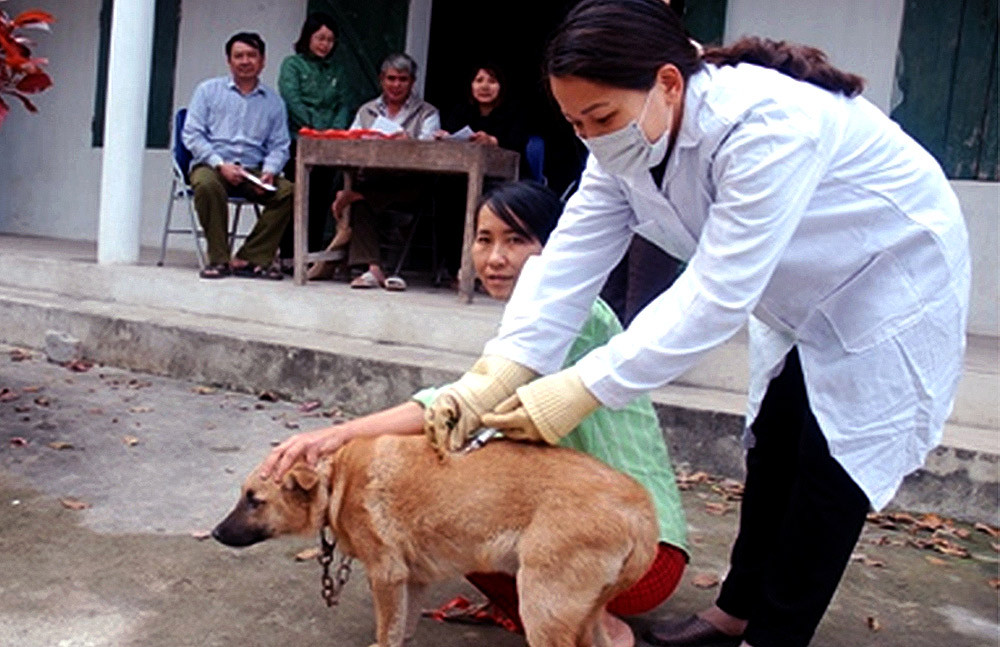 |
| Dog vaccination in Dien Chau. |
However, the current reality is that the vaccination rate against rabies remains extremely low despite the implementation of comprehensive measures. On average, the rabies vaccination rate in the province reaches less than 30% of the total dog population annually; in many years it has only reached over 25%, equivalent to less than 130 dogs; and in some mountainous districts such as Ky Son and Que Phong, vaccination rates are even completely absent.
According to Mr. Vo Dinh Khoa from the Do Luong District Agricultural Service Center, the current difficulty is the lack of support policies for cases of adverse events after vaccination for dogs and cats; in addition, pet owners have to pay 100% of the vaccination cost, which only includes 13,000 VND/dose of vaccine and 5,600 VND for the vaccination service per animal, but many households still do not vaccinate their pets.
Synchronizing multiple solutions
To ensure high effectiveness in rabies vaccination, local Party committees and authorities must actively participate, allocating sufficient personnel, equipment, and supplies to organize the vaccination program. In particular, strict action should be taken against those who violate regulations on dog ownership and rabies vaccination as stipulated in Government Decree No. 90/2017/ND-CP dated July 31, 2017; working groups should be established to strengthen inspection, supervision, and guidance on the implementation of rabies vaccination for dogs and cats in districts and cities, especially in areas with low rabies vaccination rates.
“Local authorities must compile a list of dog-owning households for management purposes by statistically counting the number of dogs in each household, monitoring the increase and decrease in the dog population to serve as a basis for developing plans and assigning vaccination targets. A written commitment must be made to households that own dogs not to let them roam freely, and that they must muzzle and leash their dogs when taking them to public places. Strict penalties will be imposed on households that do not comply, and they will be required to compensate for damages if their dogs bite people, according to current regulations. Dog owners must report their dog ownership to the neighborhood leader, village head, or hamlet head, and commit to keeping their dogs confined or leashed within their family's premises; when going outside, they must be accompanied by someone and wear a muzzle.”
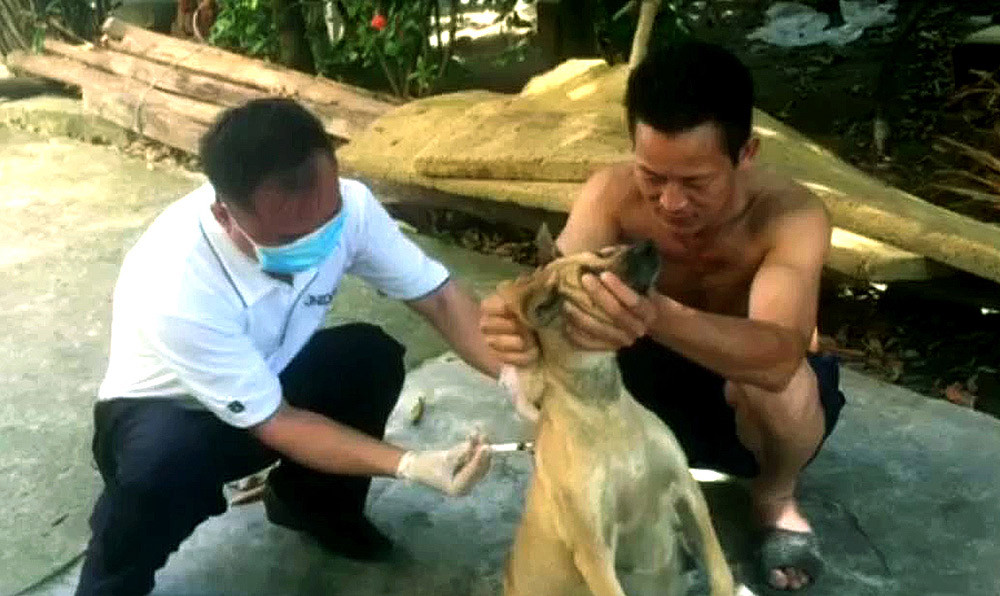 |
| Veterinarians are vaccinating livestock against rabies in Nghi Loc. |
The health sector must strengthen surveillance of rabies in humans, publicly disclose the addresses of medical facilities, especially those administering rabies vaccines to humans in the area, and direct people bitten by suspected rabid animals to immediately go to the nearest medical facility for wound treatment and timely vaccination and anti-rabies serum to prevent death from rabies. Organizations and individuals are strictly prohibited from using unapproved medical techniques or drugs that are not permitted for circulation to examine and treat people with rabies or those bitten by dogs or cats, including traditional medicine and family-inherited remedies.
In addition, improving professional capacity in rabies prevention and control also needs attention. Accordingly, it is necessary to strengthen training for veterinary and health officials on dog population management; investigation, surveillance, and diagnosis of rabies; communication skills regarding rabies; wound treatment techniques; post-exposure prophylaxis procedures; skills in catching rabid dogs; and measures for handling rabies outbreaks.Annually, effective monitoring of rabies prevalence is crucial to warn the community; mapping dog population distribution and the epidemiology of rabies in humans and animals is necessary to identify high-risk areas for rabies, prioritizing resources for rabies prevention and control; and strengthening research and collaboration with businesses to produce rabies vaccines, ensuring a domestic vaccine supply and reducing vaccine costs.
In particular, communes, wards, and towns in urban areas and areas with high tourist traffic are encouraged to establish rabies-free zones and facilities to ensure the safety of the community and tourists visiting the area.
Rabies is a zoonotic disease (transmitted between animals and humans). The incubation period in animals can range from a few days to several months, or even longer, but within 10 days of developing symptoms, the virus can infect humans and other animals. The rabies virus is abundant in the saliva of infected dogs, cats, and other animals, even before the animal shows clinical signs.


