
Vietnam U22 1 - 0 China U22: A successful start.
Vietnam U22 kicked off the Panda Cup 2025 at the Shuangliu Sports Centre in Chengdu. Hosts China U22 opted for a younger squad with 16 out of 30 players under 20, while Vietnam fielded a more experienced team; Quoc Viet started in the starting lineup.
Match developments
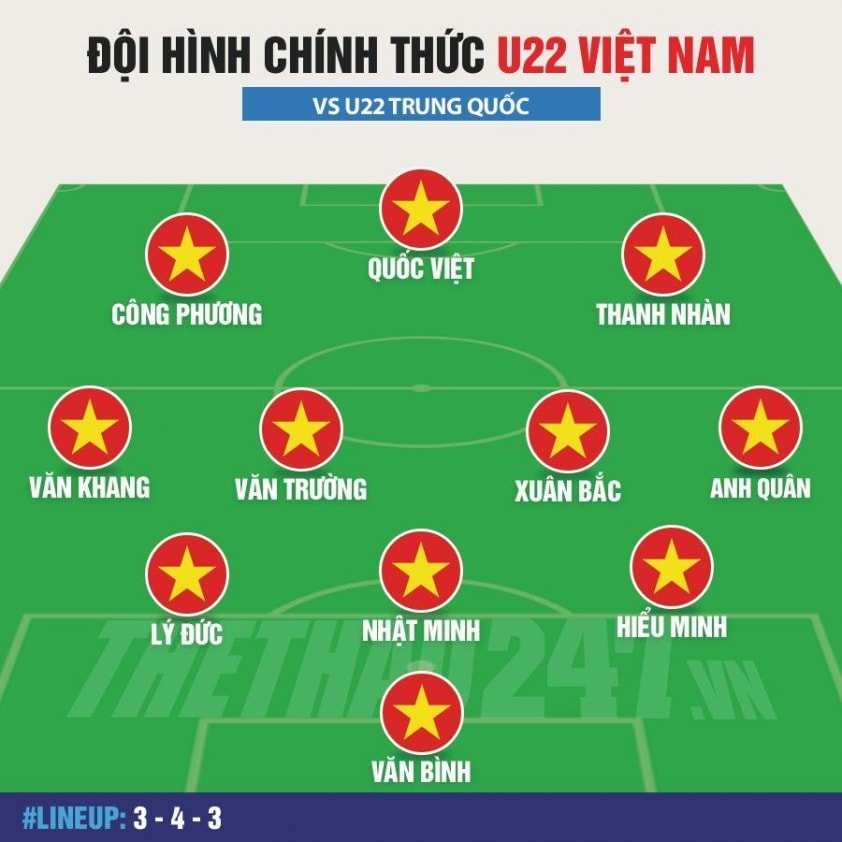
Interim head coach Dinh Hong Vinh fielded a lineup consisting of goalkeeper Cao Van Binh, a three-man central defense of Ly Duc, Hieu Minh, and Nhat Minh, a five-man midfield of Van Khang, Xuan Bac, Van Truong, and Anh Quan, and three forwards Quoc Viet, Thanh Nhan, and Cong Phuong.
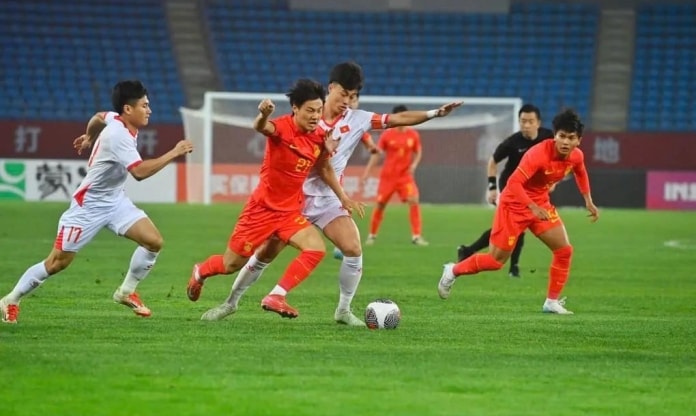
From the start of the match, the Vietnam U22 team faced immense pressure from the home team. In the 17th minute, goalkeeper Cao Văn Bình made a spectacular diving save after a close-range shot from Wang Bo Hao, a player currently playing in the Netherlands for FC Den Bosch.
In the 29th minute, he continued to shine by successfully blocking a one-on-one situation with striker Behram Abduweli, a former Chinese national team player.
Despite their best efforts, the Vietnam U22 team struggled to build attacks and failed to create any clear scoring opportunities in the first half, except for Thanh Nhàn's shot from a tight angle in the 44th minute, which was comfortably saved by goalkeeper Huo Shen Ping.
In the second half, the Vietnam U22 team made three substitutions to try and improve their game, but the China U22 team still controlled the ball better and created many dangerous scoring opportunities.
In the 74th minute, striker Bui Vi Hao was brought onto the field after nearly a year of injury treatment, marking a much-anticipated return.
The turning point came in the 81st minute, when Ngoc My skillfully dribbled down the left wing and delivered a cross that the opposing defender misjudged, creating an opportunity for Minh Phuc to score from close range, giving Vietnam U22 a 1-0 lead.
In the final minutes, the Vietnam U22 team maintained a solid defensive stance. In the 84th minute, Bui Vi Hao was fouled in the penalty area, but the referee did not award a penalty, causing a strong reaction from the Vietnamese players.
The match went into 5 minutes of added time, but the home team was unable to break through the resilient defense of the Vietnam U22 team.
In the end, coach Dinh Hong Vinh's team won 1-0, making a good start at the Panda Cup 2025 and sending many positive signals for their journey towards the upcoming SEA Games.
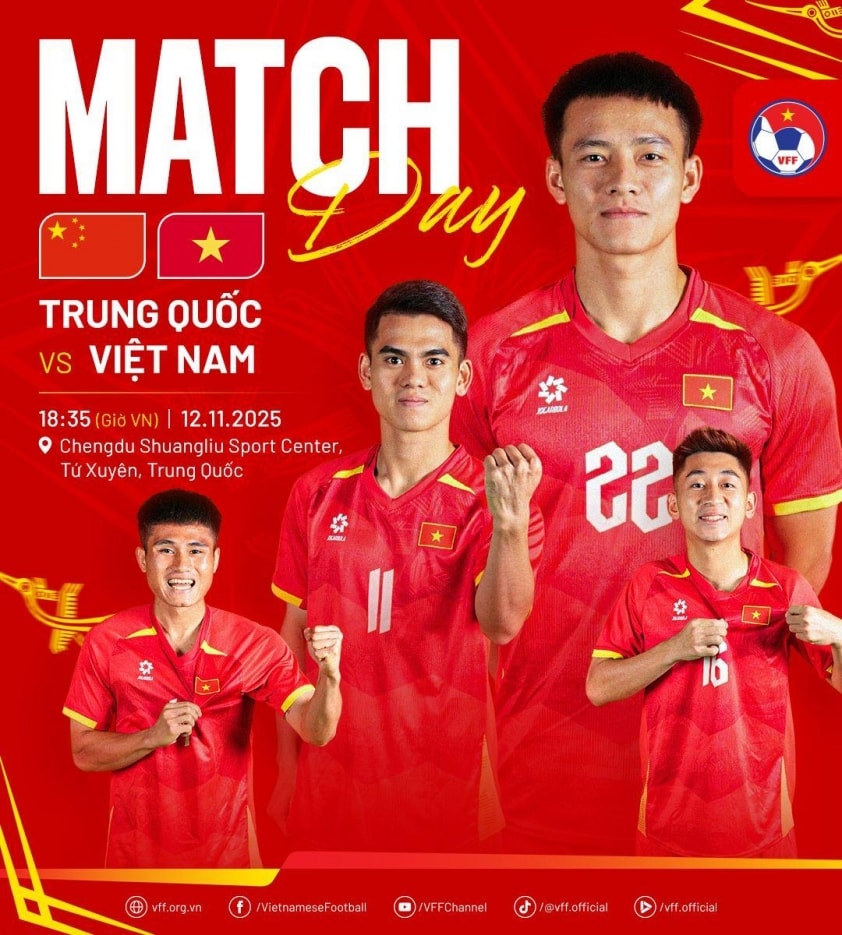
Match schedule and venue
| Time | 6:35 PM, November 12, 2025 |
|---|---|
| Location | Shuangliu Sports Centre, Chengdu, China |
| Tournament | Panda Cup 2025 Friendly Match |
Context: experience in confrontations and differences in strength
The Vietnam U22 team often performs well against Chinese teams at the youth level. In their most recent encounter in March, Vietnam U22 opened the scoring and displayed a convincing style of play before the match ended in a draw.
This time, the Chinese U22 team is not at full strength due to injuries and is undergoing a rejuvenation process, with 16 out of 30 players promoted from the U20 team. In line with their long-term goal of qualifying for the 2028 Olympics, players born in 2005 are being given more opportunities in international friendly matches.
Conversely, the Vietnam U22 team is aiming for the more immediate goal of the SEA Games 33 in December, so they are bringing their best players to China—the core group that won the 2025 Southeast Asian U23 Championship and qualified for the 2026 Asian U23 Championship. Many of these players have experience with the national team and regularly play in the V-League, creating an advantage in terms of match fitness and teamwork.
Team lineup and key highlights from Quoc Viet
According to pre-match information, Quoc Viet will start for the Vietnam U22 team. The expected starting eleven for both teams is as follows:
| Vietnam U22 (expected) | China U22 (expected) |
|---|---|
| Trung Kien Ly Duc Hieu Minh Nhat Minh Xuan Bac Thai Son Van Khang Cong Phuong Ngoc My Thanh Nhan Quoc Viet | Li Hao Peng Xiao Liu Haofan Alex Yang Bao Shinmieng Xu Bin Yang Haoyu Kuai Jiwen Chan Zheshi Wang Bohao Behram Abduweli |
The presence of Quoc Viet gives the U22 Vietnam team a familiar attacking threat, having played alongside many teammates in youth tournaments and in the V-League—a cornerstone for their fast-paced passing combinations and off-ball movement. On the other side, the home team boasts a group of players gaining experience at the U20 level, promising to bring energy and speed.
Key tactical points to note
The advantage of the Vietnam U22 team lies in its stable personnel structure: many players have competed together in the 2025 Southeast Asian U23 Championship and the 2026 Asian U23 Championship qualifiers, thus forming a good understanding in terms of formation and transitions.
For the Chinese U22 team, the rejuvenation process could create a sudden change in the pace of play. However, the lack of international experience of some U20 players will be a test when facing the experienced Vietnamese team.
The opening match often determines the psychological trajectory of the entire tournament. A solid start in terms of tactics and discipline will help the Vietnam U22 team achieve their set goals.
Statistical perspective and confrontational context
- Most recently (in March), the Vietnam U22 team opened the scoring and played better, with the match ending in a draw.
- China's U22 team is missing several key players due to injury, while also reinforcing its squad with U20 players (16 out of 30) in preparation for the 2028 Olympics.
- The Vietnam U22 team aims for the 33rd SEA Games in December, bringing with them the core players who won the 2025 Southeast Asian U23 Championship and qualified for the 2026 Asian U23 Championship.
Impact and expectations
If they maintain the pace and organization seen in recent tournaments, the Vietnam U22 team has a solid foundation to aim for an opening victory at the Panda Cup 2025. The difference in experience and cohesion is a clear advantage, while the home team possesses great motivation from its young squad. The match is highly anticipated due to the contrasting development philosophies: one side focuses on short-term goals (SEA Games 33), while the other lays the foundation for a longer-term destination (Olympic 2028).


