
The CH-7 stealth UAV undergoes its first test flight in China.
According to CASC, the CH-7 stealth UAV has completed its first test flight at an airfield in Northwest China, confirming its basic flight characteristics and entering the flight testing phase. Open data shows that the announced versions have a wingspan of 22–26 m, a ceiling of 13,000–15,000 m, and a combat radius of approximately 2,000 km (depending on the version).
According to information from the China Academy of Aerospace Science and Technology No. 11 (CASC), the CH-7 stealth unmanned aerial vehicle (UAV) has completed its first test flight at an airfield in northwestern China. CASC stated that the flight aimed to verify the effectiveness of the overall design and advancements in key technological breakthroughs, thereby officially bringing the CH-7 into the flight testing phase.
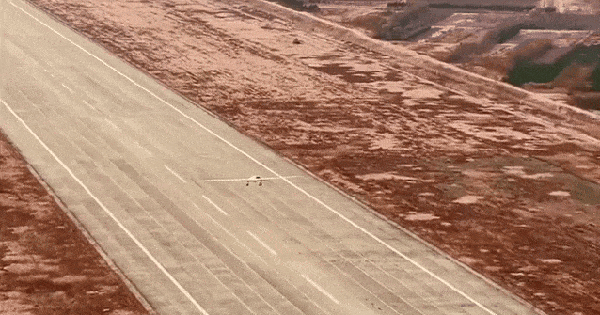
Overview: Milestone flight testing and verification objectives
CASC representatives stated that the first flight is a particularly important milestone for any aircraft. At this stage, the focus is not on testing overall performance, but rather on confirming fundamental flight characteristics and the degree of compatibility between the actual aircraft and the previously established simulation model.
According to CASC, the flight results showed that the CH-7 operated according to its design parameters and matched the simulation model. The developer emphasized that this was only a test of the most basic flight characteristics.
Technical analysis: wing configuration and points to test.
Tailless wing aerodynamic configuration
The CH-7 is described as a large "flying wing" UAV, using a tailless flying wing configuration with a high aspect ratio. According to CASC, this is one of the factors that makes the control system more complex and potentially problematic for directional stability, thereby increasing the risk of the first test flight.
In that context, the items requiring early confirmation typically focus on basic control, stability, and adherence to the planned flight path—qualities that CASC says were verified during the recent flight.
Task sensor
According to the developer's description, the CH-7 incorporates high-performance technologies, including electro-optical and infrared sensors. CASC states that the platform is geared towards ground observation and data support missions in complex combat conditions, while emphasizing characteristics such as endurance, high ceiling, and high cruising speed.
Initial test results: confirmation of basic flight characteristics.
CASC stated that the basic flight characteristics have been confirmed, including: automatic takeoff and landing, maneuver control, and trajectory tracking. The developer assessed the UAV's performance as consistent with the previously established design parameters and simulation models.
In the coming period, according to CASC, the CH-7 will continue flight performance testing and verification of the functionality of its mission payload.
Specifications from open data sources: differences between display versions
The open-source data cited in the article shows that the CH-7 was previously published with parameters at different times, some of which were stated as "estimates" at a later stage.
| Public version/source | Wingspan | Speed | Flying ceiling | Operating hours | Operational radius | Note |
|---|---|---|---|---|---|---|
| CH-7 (open data, 2018) | 22 m | 920 km/h | 13,000 m | Around 3 PM | 2,000 km | Uses a single "turbocharger" engine (as described in the source). |
| Redesigned (China Airshow 2022) | Estimated at approximately 26 meters | Not specified | Estimated distance: approximately 15 km | Not specified | Not specified | Maximum takeoff weight is approximately 10 tons. |
Loads and weapons: clues from publicly available images.
The article states that publicly available images and models do not show any external weapon hardpoints. Therefore, the source concludes that the CH-7 is “most likely” equipped with an internal weapons bay for carrying anti-radiation missiles or long-range precision strike weapons.
At the level of information currently available, this is speculation based on visual cues in publicly available documents; details regarding weapon type, number carried, or compartment configuration are not yet stated in the source data.
Things to monitor in the next testing phase.
- Flight performance testingAccording to CASC, this section will continue after the basic flight characteristics have been confirmed.
- Verify mission loadVerify the sensor systems and mission functions under realistic flight conditions.
- Directional stability and controllabilityCASC points out that the tailless wing configuration and high aspect ratio make the control system complex and pose potential directional stability issues—this is often a critical issue requiring data accumulation through multiple test flights.
With the first test flight completed according to information released by CASC, the CH-7 has moved from the design presentation and demonstration phase to the flight testing phase, where performance parameters and the completeness of the mission payload will be verified through subsequent flights.


