
Ukrainian Vampire UAV and FPV neutralize Russian tanks in a tunnel.
Video 7.12 shows Ukraine using FPVs in conjunction with Vampire UAVs to destroy tanks in podiers, hitting communication antennas and ammunition depots in the Kursk direction.
According to a video released by the Ukrainian State Border Guard Service on December 7, Ukrainian forces conducted a series of UAV attacks in the Kursk direction, including the destruction of a Russian tank hidden in a turret. The operation used a combination of suicide FPV drones and Vampire UAVs to target Russian armored vehicles, fortifications, communication antennas, and ammunition depots.
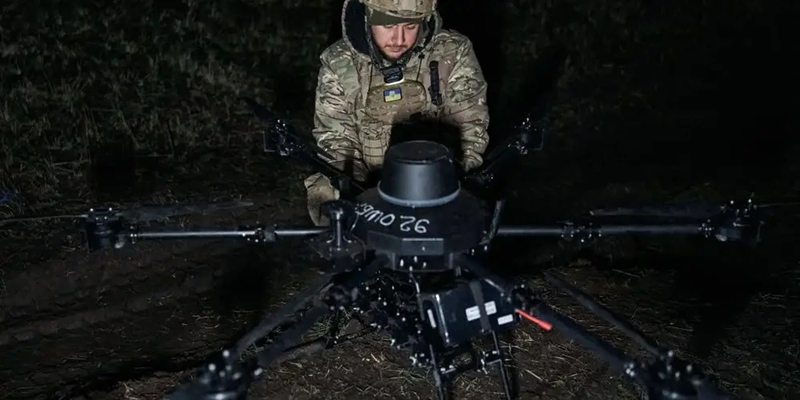
Overview: Objectives and Approach
During the operation, a Russian tank was positioned in a caponier – a sheltered bunker designed to reduce the risk of aerial detection and minimize damage from artillery. The Ukrainian Vampire UAV group neutralized this target after just minutes of reconnaissance and control. Subsequent attacks targeted nearby fortifications, communication antennas, and an ammunition depot, maintaining the pace of the assault and limiting the enemy's ability to reinforce their defenses.
Technical analysis: limitations of old-style fortifications
Caponier bunkers are designed to withstand attacks from above, especially artillery fire or projectiles with a top-penetrating trajectory. However, UAVs can fly low, slip through gaps, approach from behind the bunker, or enter through the bunker entrance to strike weak points such as the rear of the vehicle or the back of the turret – areas with thin armor. Thermal imaging cameras on reconnaissance UAVs help detect heat sources from the engine, tracks, or gun barrel, making the vehicle visible on the control screen even when camouflaged or hidden deep inside the bunker.
Suicide FPV drones: the spearhead of attack.
The FPV suicide drone acts as the initial strike, hurtling towards the target at speeds exceeding 100 km/h, carrying a shaped-charge warhead similar to the RPG-7. Real-time video feeds allow the operator to fine-tune the attack precisely at the moment of impact, increasing the probability of hitting armor weak points and sensitive equipment.
Vampire UAV: The "miniature bomber" delivers the final blow.
The Vampire UAV is a heavy, reusable multi-rotor platform (6 or 8 rotors) capable of carrying a payload of approximately 15–20 kg. Thanks to its sensitive thermal imaging camera, the Vampire operates effectively even at night or in poor visibility conditions. With its hovering capability, this UAV accurately drops high-explosive or thermobaric munitions into fortifications, trenches, and infantry positions, delivering explosives into narrow openings such as ventilation shafts or tunnel entrances – something difficult for artillery to do.
Two-layer firepower tactic
The combination of FPV suicide bombers and Vampires creates a two-tiered attack chain: FPVs penetrate the enemy lines, while Vampires "clean up" the remaining targets. This operational approach combines reconnaissance, attack, and suppression within a single UAV system, directly impacting how traditional fortifications can be neutralized on the battlefield.
Attacking the "nerve center" of the battlefield.
After destroying the tank in the bunker, a suicide FPV drone was controlled to attack a Russian communications antenna, disrupting communications. Hitting the communication station made it difficult for the unit to receive orders, call for fire support, or issue warnings, creating an information "blind spot." Simultaneously, an ammunition depot was attacked, causing a chain reaction of explosions; the loud blasts and the extent of the destruction had a psychological impact on the defending forces.
Cost-effective
Ukrainian border guards have neutralized two more shelters. Each drone strike demonstrates a cost advantage: a small suicide drone costing around $500 can destroy an ammunition depot containing millions of dollars worth of supplies.
Technical Summary: Suicide FPV and Vampire UAV
| Ingredient | FPV suicide bomber | Vampire UAV |
|---|---|---|
| Main role | The opening move, attacking the weak point through direct contact. | Follow up with a precise barrage of bullets into the fortifications/bunkers. |
| Speed/Kinematics | Over 100 km/h | Suspended aircraft, multi-rotor (6 or 8) |
| Load/ammunition | The shaped-charge warhead is similar to that of the RPG-7. | 15–20 kg; high-explosive or thermobaric projectile |
| Control | Real-time via video signal | Real-time, thermal imaging support. |
| Reusability | Disposable | Reusable |
Previous context
Previously, the Vampire UAV destroyed a Russian warehouse near Bakhmut in August, demonstrating its effectiveness even in environments with complex electronic warfare systems. Also in August, Ukraine's Deputy Prime Minister for Innovation and Technology, Mykhailo Fedorov, released a video of a room containing a large number of Vampire UAVs ready for delivery; accordingly, 270 were ready to be deployed to the front lines to support counter-offensive operations.
Evaluate
The events of December 7th showed that old-style fortifications like caponier bunkers revealed their limitations when faced with low-flying, real-time controlled UAVs capable of thermal imaging observation. The "two-layer firepower" FPV-Vampire model helps maintain the pace of attack, disrupts communications, and creates chain damage to depots, thereby directly affecting the effectiveness of on-site defenses.


