
The People's Committee of Nghe An province has approved 05 sanitary protection zones for areas supplying drinking water for water resource exploitation projects.
The Provincial People's Committee has just issued Decision No. 282/QD-UBND dated January 28, 2026, approving five sanitary protection zones for water intake areas for water resource exploitation projects to produce and supply clean water for domestic use in the province.
Accordingly, the five water resource exploitation projects include:
(1) Nho Lam Water Plant, operated by Nho Lam Clean Water Joint Stock Company, is located in Nha Le Canal, the section flowing through Dong Xuong hamlet, Tan Chau commune, with an extraction capacity of 2,500 m³.3/day and night.
(2) Long Thanh Water Plant, operated by the Center for Rural Water Supply and Environmental Sanitation of Nghe An Province, is located in Nha Le Canal, flowing through Giap Ngoi hamlet, Hop Minh commune, with an extraction capacity of 3,500 m³.3/day and night.
(3) The Do Luong Water Supply Station, operated by Nghe An Water Supply Joint Stock Company, is located in the Lam River section flowing through Luong Son commune and has an extraction capacity of 10,000 m³.3/day and night.
(4) Yen Thanh Water Plant operated by Yen Thanh Water Supply Joint Stock Company at Canal N8 section flowing through Yen Thanh commune has a capacity of 2,500 m³3/day and night.
(5) Dien Chau Water Plant operated by Dien Chau Water Supply Joint Stock Company at Bung River section flowing through Dien Chau commune has a capacity of 2,000 m³3/day and night.
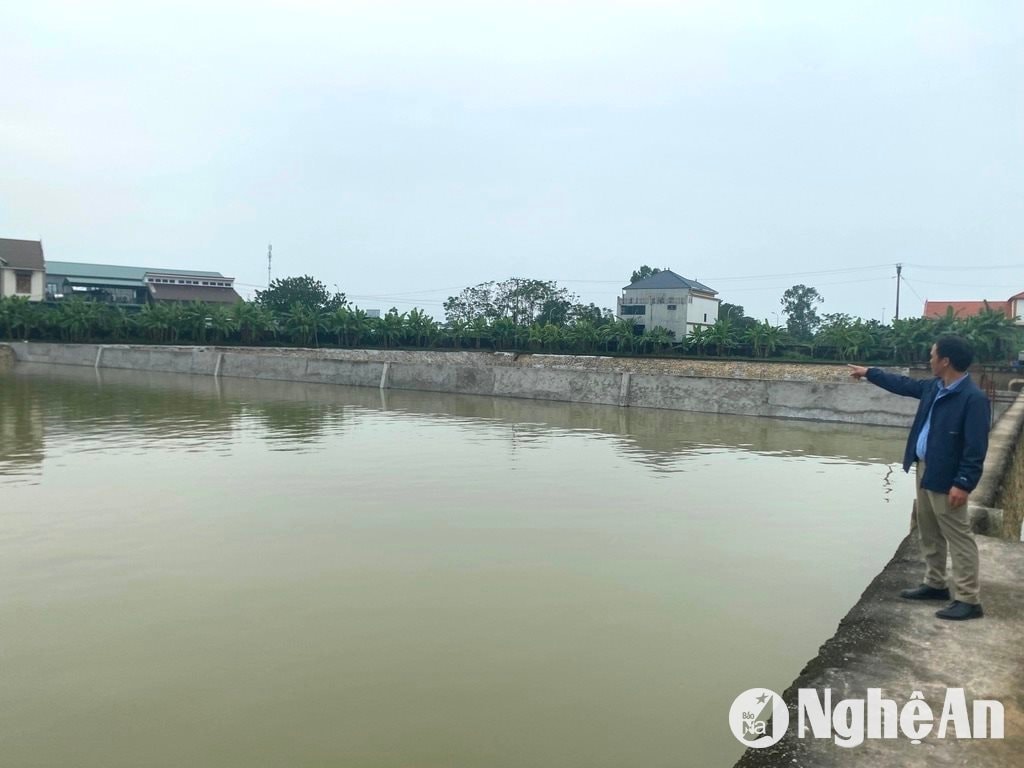
The Provincial People's Committee directs organizations directly managing and operating water supply for domestic use to comply with regulations on water source protection corridors and requirements for water resource protection as prescribed by law.
In addition, they must install and protect the sanitary protection zone for the water intake area of their facility; protect the water source they are directly exploiting and using; and monitor and supervise activities within the sanitary protection zone of the water intake area of their facility.
In case of detecting acts causing pollution or posing a risk of pollution, failing to ensure the safety of water extraction from the facility, or other violations of water resource laws within the sanitary protection zone of the water intake area of the water extraction facility, it is necessary to promptly stop them and report them immediately to the nearest local authorities for handling.
The presiding authority shall coordinate with local authorities where water resource exploitation projects are located and relevant agencies to determine the boundaries of the sanitary protection zone for the water intake area of the project on the ground after approval and publication.
- For local authorities (where water resource exploitation projects are located), the Provincial People's Committee requires that within 30 working days from the date of receiving the decision approving the sanitary protection zone for the domestic water intake area, they must send a notification regarding the plan to determine the boundaries of the sanitary protection zone on the ground to the organization or individual investing in, managing, and operating the water exploitation project, and coordinate in determining the boundaries, scope, and location of the signposts indicating the sanitary protection zone for the domestic water intake area on the ground. After completing the determination of the boundaries of the sanitary protection zone for the domestic water intake area on the ground, the commune-level People's Committee shall send a notification to the Department of Agriculture and Environment regarding the completion results.
Simultaneously, the agency will determine the boundaries of the sanitary protection zone for domestic water intake areas on the ground; inspect and monitor activities within the sanitary protection zone of domestic water intake areas of water exploitation facilities in the area; and receive information and resolve issues arising related to the sanitary protection zone of domestic water intake areas of water exploitation facilities in the area within its jurisdiction.
- The Provincial People's Committee also requires organizations, individuals, and households living and conducting production, business, and service activities within the protected area for drinking water sources to comply with regulations on water source protection corridors and water resource protection as stipulated in the law on water resources, the law on environmental protection, and other relevant legal regulations.


