
Ukraine puts armed ground combat robots into service.
Ukraine has officially approved the Droid NW 40 unmanned ground combat robot, equipped with close-range weapons, to reduce soldier casualties and build an unmanned combat ecosystem combining drones and robots.
Ukraine has officially commissioned armed unmanned ground combat robots, marking a new step in the modernization of its armed forces amid a protracted conflict and increasing reliance on technology.
The Droid NW 40 ground combat robot and its new role on the battlefield.
According to Business Insider, the new system approved by Ukraine belongs to the UGV (Unmanned Ground Vehicle) category, operating remotely. The robot is capable of maneuvering across various terrains and is equipped with a grenade launcher, allowing it to perform close-range fire support missions for ground forces.
The approval for deployment indicates that the system has passed the necessary testing phases and is qualified for actual battlefield deployment, no longer remaining at the conceptual or limited testing stage.
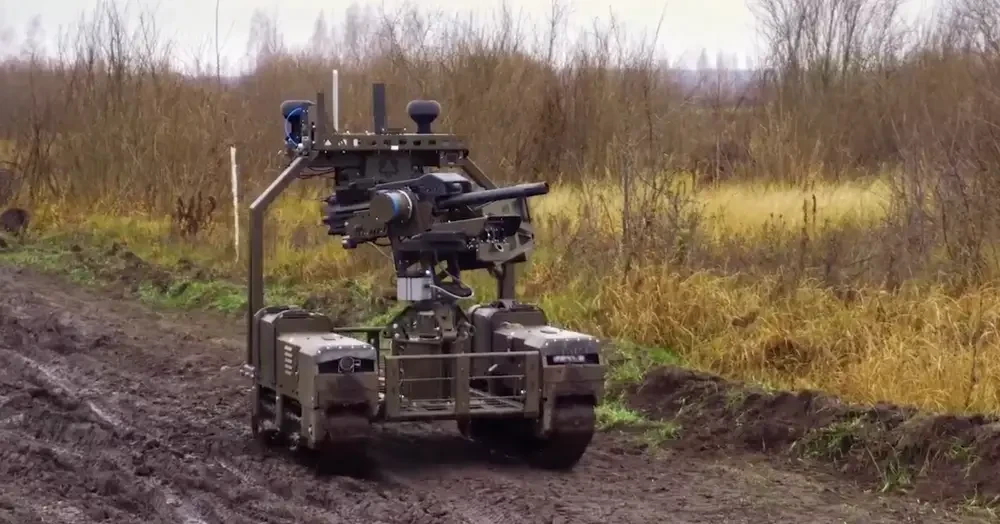
Design objective: reduce risk to soldiers, maintain firepower.
Business Insider, citing information from the manufacturer, reports that the Droid NW 40 is designed for high-risk missions where direct infantry deployment could lead to significant casualties. Instead of sending people into dangerous areas, the UGV system will assume frontline roles.
The usage scenarios outlined include:
- Fire reconnaissance in conditions where the enemy is likely to retaliate with heavy fire.
- Approaching the enemy's fortifications and defensive positions.
- Provide infantry support in close-quarters combat with grenade launcher fire.
- Operating in areas with intense firepower, where the risks to soldiers are particularly high.
The focus of deploying this system is to minimize human risk in the most dangerous situations, while maintaining combat effectiveness and the ability to sustain firepower on the front lines.
From the sky to the ground: Ukraine expands drone operations.
Throughout the conflict, Ukraine has extensively used aerial drones for a variety of purposes, from reconnaissance and fire control to precision strikes, jamming, and suppressing enemy fire. Drone flight has become a familiar part of daily combat operations.
The deployment of armed ground robots shows that Kyiv is expanding the concept of unmanned warfare, not just in the air but also deep into the ground. Thus, the unmanned combat space extends from the air to the ground contact line, creating a new layer of tools for commanders on the battlefield.
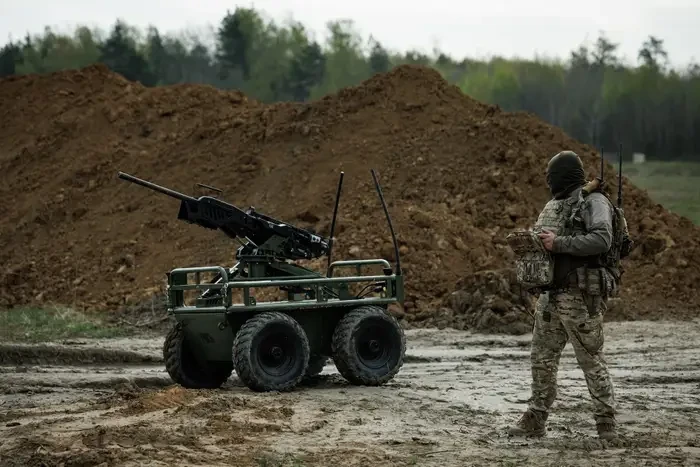
Tactical advantages of ground robots over flying drones
According to analysts cited by Business Insider, ground robots offer several notable advantages over the commonly used flying drone systems.
- Higher load:UGVs can carry heavier payloads, making them suitable for fire support weapons or additional equipment compared to small and medium-sized drones.
- Longer operating time:The ability to operate continuously for extended periods allows the robot to maintain a presence on the battlefield without having to return to base too often.
- Less dependent on weather and causes low-level interference:Ground robots are less affected by strong winds, rain, or low-altitude electronic jamming measures that significantly impact flying drones.
In the context of the Ukrainian battlefield becoming increasingly saturated with air defense systems and electronic warfare capabilities, armed UGVs are seen as a noteworthy supplementary option to airborne platforms, helping to diversify target approach methods and disperse risks.
A pragmatic approach to UGV development.
Business Insider notes that Ukraine's approval of armed ground robots reflects a pragmatic approach to modern warfare. Instead of prioritizing research and development programs that last for years, the country is focusing on solutions that can be quickly deployed to the battlefield.
Priority requests include:
- Easy to produce with existing resources.
- Easy to maintain under high-intensity warfare conditions.
- Flexibly adjust configurations to ever-changing battlefield conditions.
Many robotic systems have been developed with the participation of domestic technology companies, significantly shortening the design-to-implementation cycle. As shown in the image caption, robots are now being used in Ukraine for various tasks, including evacuating the injured.
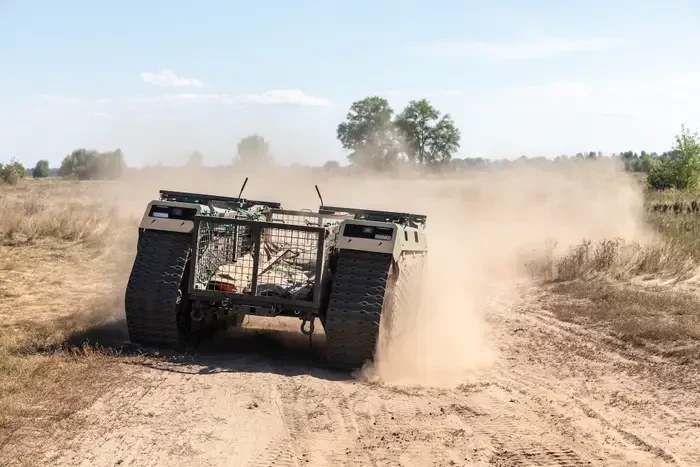
The unmanned warfare ecosystem and its long-term impact.
From a strategic perspective, the official entry of ground combat robots into service indicates that the Ukrainian armed forces are gradually forming an unmanned combat ecosystem. This ecosystem combines airborne drones, ground robots, and remote command and control systems.
According to the description, this is not just a temporary solution to meet the immediate needs of the current conflict, but also a foundation for long-term adjustments in combat doctrine. The gradual integration of unmanned platforms into combat formations could shape how forces are organized, tasks are allocated, and firepower is used in the future.
The appearance of armed ground robots in Ukraine reflects a general trend in modern warfare, where automation and unmanned systems are increasingly central. In this context, the Ukrainian battlefield is becoming one of the clearest real-world testing grounds for 21st-century high-tech combat models.


