
Ukraine uses drones to destroy Sea Dragon missiles, paving the way for attack on Kilo-class submarines.
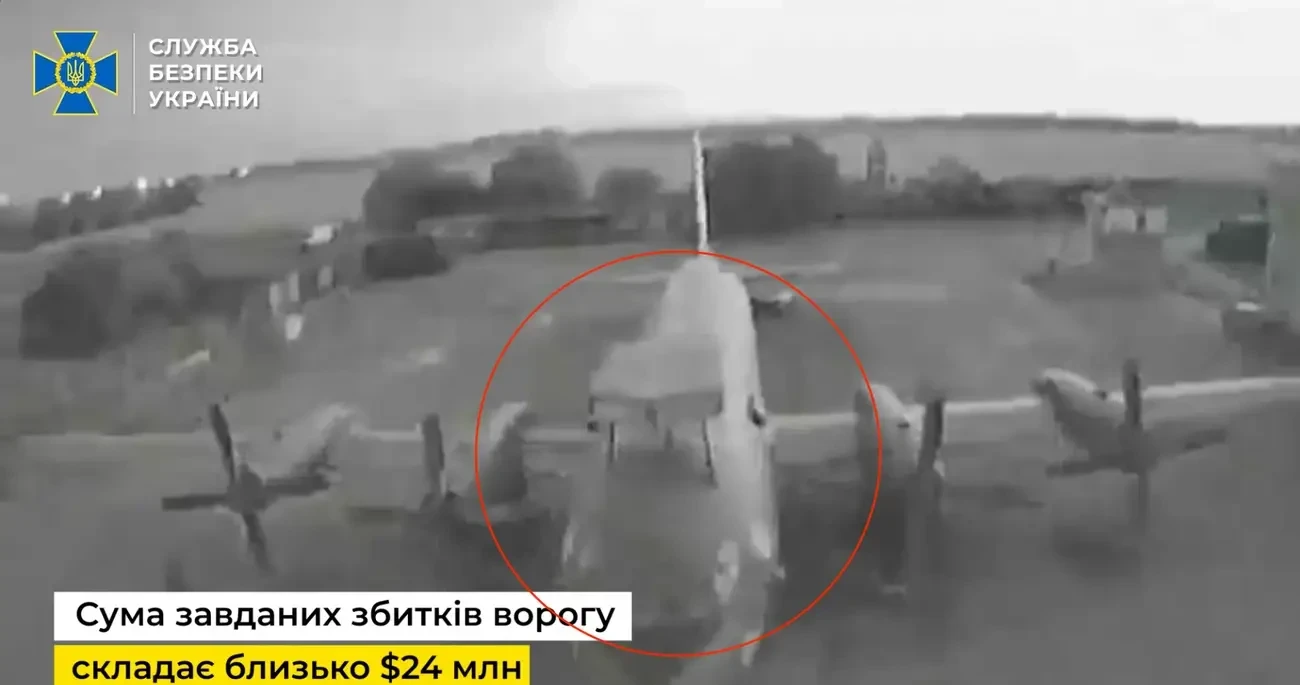
The SBU released video of a drone carrying an airburst warhead attacking an Il-38N Sea Dragon at the Yeysk base, considering this a crucial step before using the Sub Sea Baby unmanned vessel to attack Kilo-class submarines in Novorossiysk.
The Ukrainian Security Service (SBU) described a series of drone and unmanned vessel operations targeting Russian naval assets, including attacks on an Il-38N Sea Dragon reconnaissance aircraft and a Kilo-class submarine. According to the Ukrainian side, disabling anti-submarine reconnaissance capabilities was a crucial preparatory step before launching attacks on the submarine.
Operation overview: from Yeysk base to Novorossiysk port
The SBU released video showing a drone attacking a Russian Il-38N Sea Dragon reconnaissance aircraft while it was on the runway at Yeysk air base. The base is located on the eastern flank of the Sea of Azov, opposite the Russian-controlled city of Mariupol and about 225 km from the port of Novorossiysk.
According to the SBU, the Sea Dragon is a Russian-designed aircraft for detecting underwater threats and has been "actively countering the operations of unmanned vessels deployed by the SBU" in the Black Sea. Ukraine claims that in this region, Russia has only one aircraft of this class capable of detecting the Sub Sea Baby unmanned vessel as it approaches its target.
The SBU considered the attack on the Sea Dragon aircraft a crucial step before the subsequent main strike targeting Russian Kilo-class submarines at the port of Novorossiysk, one of Russia's major naval asset deployment sites. The Russian Ministry of Defense did not respond to inquiries regarding the Sea Dragon aircraft attack.
Strike on Il-38N Sea Dragon: warhead explodes in the air and targets anti-submarine reconnaissance.
In a video released by the SBU, a drone approaches the Sea Dragon while it is on the runway. According to the SBU's description, the drone carries an airburst warhead, designed to scatter more than 2,000 fragments toward its target.
The SBU stated that the explosion occurred directly above the aircraft's main equipment and radar bay, damaging the Sea Dragon engine. Given that the platform is used for detecting underwater threats, targeting the radar system and main equipment suggests Ukraine intended to weaken Russia's anti-submarine reconnaissance capabilities before deploying its unmanned vessels to attack targets at sea.
The Sub Sea Baby unmanned vessel and its target, a Kilo-class submarine.
After describing the attack on Sea Dragon, the SBU reiterated the attack they claimed to have carried out on a Russian Kilo-class submarine at the port of Novorossiysk in early December using the unmanned vessel Sub Sea Baby.
According to the SBU, the Sub Sea Baby is a variant of the Sea Baby unmanned surface vessel. The Sea Baby was originally equipped with explosive warheads and designed to ram directly into surface targets, while the Sub Sea Baby has been improved to operate underwater, expanding its reach to Russian warships and support vessels.
The Russian Black Sea Fleet denied that the attack caused significant damage to the diesel-electric Kilo-class submarines. Ukraine estimates a Kilo-class submarine costs around $400 million and is designed to carry up to four Kalibr cruise missiles. These missiles are described by Ukraine as highly accurate and are often compared to the US Tomahawk; Russia regularly uses Kalibr missiles to attack Ukrainian cities.
Summary table of the roles of some equipment in the operational sequence
| Equipment | Type | Ukraine's described role |
|---|---|---|
| Il-38N Sea Dragon | reconnaissance aircraft | Detecting underwater threats, countering unmanned vessels. |
| Sea Baby | Unmanned surface vessels | Carrying explosive warheads, it will ram directly into the target ship. |
| Sub Sea Baby | Unmanned underwater vessels | Attacks on Russian submarines and ships at Novorossiysk port. |
| Kilo-class submarine | Diesel-electric submarines | It can carry up to four Kalibr cruise missiles, according to Ukrainian estimates. |
Drone tactics over the Black Sea and the Sea of Azov
While using Sub Sea Baby to attack submarines in Novorossiysk, Ukraine simultaneously exploited the Sea Baby platform to put pressure on Russian oil tankers exporting energy. The SBU stated that it had repeatedly used explosive-laden Sea Baby to attack oil tankers belonging to Russia's "shadow fleet" in the Black Sea.
According to information provided by the SBU to Insider, the Sea Baby attacked the oil tanker Dashan on December 11th, causing "serious damage" to the vessel. Initial indications from the Ukrainian side suggest the attack completely crippled the Dashan.
The SBU stated that the Dashan, flying the flag of the Comoros Islands, was moving within Ukraine's exclusive economic zone towards Novorossiysk and frequently switched off its navigation equipment. During the December 11 attack, the ship was reportedly traveling at maximum speed and had its transponder switched off. The attack was carried out in coordination with the Ukrainian Navy and video footage recorded by Sea Baby shows multiple blows to the ship's hull.
According to the Ukrainian Military Intelligence Agency (HUR), several Western countries and the European Union have imposed sanctions on the $30 million Dashan tanker, which is used to transport Russian oil and frequently switches off its tracking devices. In late November, the SBU also used unmanned vessels to attack and damage two Russian oil tankers before they could load cargo at Novorossiysk.
"The Shadow Fleet" and the goal of reducing oil revenue.
The "shadow fleet," described by Ukraine, is a collection of hundreds of ships that Russia uses to transport oil in order to circumvent sanctions targeting energy exports, a key source of revenue for Russia. President Volodymyr Zelensky has repeatedly called on international partners to take stronger action to stop this fleet from operating.
Ukrainian security sources quoted said the SBU continues to implement measures aimed at reducing the flow of "petrodollars"—money from oil exports—into the Russian Federation's budget. In this context, drone attacks targeting oil tankers and energy infrastructure are part of the same approach.
Shifting the focus of attack: from land-based targets to sea-based targets.
In recent months, Ukraine has intensified its attacks on Russia's energy sector, using long-range drones to target oil refineries and other infrastructure across Russia. Simultaneously, several recent attacks on Russian oil tankers have been described as a sign of Ukraine shifting its tactics, increasingly targeting ships at sea rather than solely focusing on land-based targets.
The series of operations announced by the SBU – from using drones carrying air-detonated warheads to neutralize an Il-38N Sea Dragon anti-submarine reconnaissance aircraft at Yeysk, to deploying Sub Sea Baby to attack Kilo-class submarines and Sea Baby to strike the "shadow fleet" – demonstrates the increasingly prominent role of drones and unmanned vessels in confrontations in the Black Sea and the Sea of Azov. While the extent of the damage varies among stakeholders, the trend toward using unmanned platforms in naval warfare and attacks on economic and energy targets is clearly evident in the available information.


