
Ukraine used Flamingo missiles to attack a strategic ammunition depot in Volgograd.
Ukraine deployed FP-5 Flamingo cruise missiles with a range of 3,000km to attack a large weapons depot in Volgograd, causing a series of widespread secondary explosions.
Ukrainian armed forces have deployed FP-5 Flamingo long-range cruise missiles to destroy a large-scale strategic Russian ammunition depot in the Volgograd region. The Ukrainian General Staff confirmed the attack targeted a military facility near the village of Kotluban, causing widespread and intense secondary explosions.
Details of the raid on the strategic weapons depot.
According to official statements from Ukraine, the target of the attack was the barracks of the 57229/51st Army Unit. This is considered one of the largest ammunition storage sites of the Russian Army. "Several powerful explosions were recorded within the military facility, followed by a series of secondary explosions," the Ukrainian General Staff stated.
The Russian Ministry of Defense also confirmed Ukraine's use of Flamingo cruise missiles in the area. Despite noting the detonation of the missiles at their targets, Moscow stated that its air defense units destroyed five of the enemy missiles.
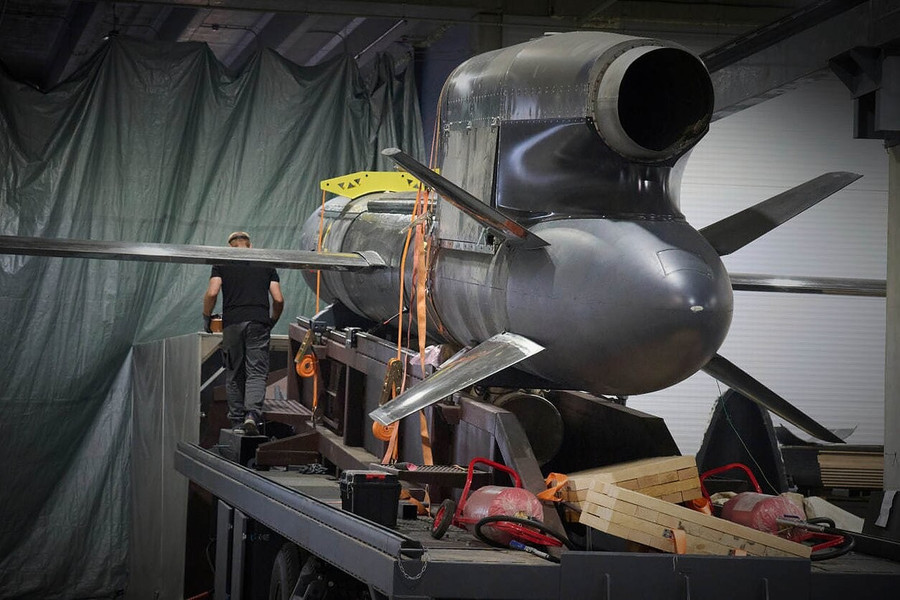
Technical analysis of the FP-5 Flamingo cruise missile
The FP-5 Flamingo missile is the latest domestically produced cruise weapon, making its first public appearance in late August 2025. This weapon is designed for low production costs but possesses remarkable technical specifications to penetrate modern defense systems.
In terms of combat capabilities, the FP-5 Flamingo possesses a 1,150kg penetrating warhead, allowing it to destroy fortified military structures. Its claimed range exceeds 3,000km, reaching a maximum speed of 950km/h. Notably, the missile's body is constructed from composite materials, optimizing weight and enhancing stealth capabilities against radar.
Electronic warfare resistance
Notably, the developers claim that Flamingo is "immune" to Russian electronic warfare systems. This allows the missile to maintain its precise trajectory even in heavily jammed environments. Currently, Ukraine is also researching the integration of various warheads into this missile family to diversify its attack targets.
Previously, Flamingo missiles were also reported to have participated in attacks on the Kapustin Yar weapons test site, where Russia deployed Oreshnik medium-range ballistic missiles. The continuous use of Flamingo missiles shows that Ukraine is boosting its long-range strike capabilities with domestically produced weapons.


