
Ukraine unveils the latest US Tempest air defense system.
The appearance of the Tempest air defense system developed by V2X Corporation marks a significant technological upgrade for Ukraine's mobile fire units.
A New Year's greeting video released by Ukrainian forces inadvertently revealed the presence of the US-made Tempest air defense system. This discovery suggests Ukraine is undergoing a significant technological upgrade for its mobile fire units, aimed at countering increasing low-altitude threats.
The unexpected appearance of the Tempest air defense system.
According to Defense Express, the video from the Ukrainian Air Force Command Center has attracted the attention of the open-source analysis community (OSINT). The system was quickly identified as Tempest, a completely new air defense system that had never been documented in previous publicly available aid packages.
Notably, Tempest is not an old weapon from the stockpile. It is a product of V2X – a US defense technology corporation – and was only unveiled at the AUSA military exhibition in October 2025. Its deployment in Ukraine is seen as an opportunity for real-world testing of a new 2025 design.

Flexible design for mobile warfare
Tempest is built upon lessons learned from the Russia-Ukraine conflict, where inexpensive unmanned aerial vehicles (UAVs) were widely deployed. The system offers flexible deployment capabilities in various configurations to meet battlefield requirements.
In its fixed or trailer-mounted configuration, Tempest protects high-value static targets such as substations, fuel depots, or command centers. However, the mobile variant integrated on light all-terrain vehicles or pickup trucks is the key highlight. This configuration allows air defense units to employ a "fire and retreat" tactic, quickly changing positions to avoid counterattacks.
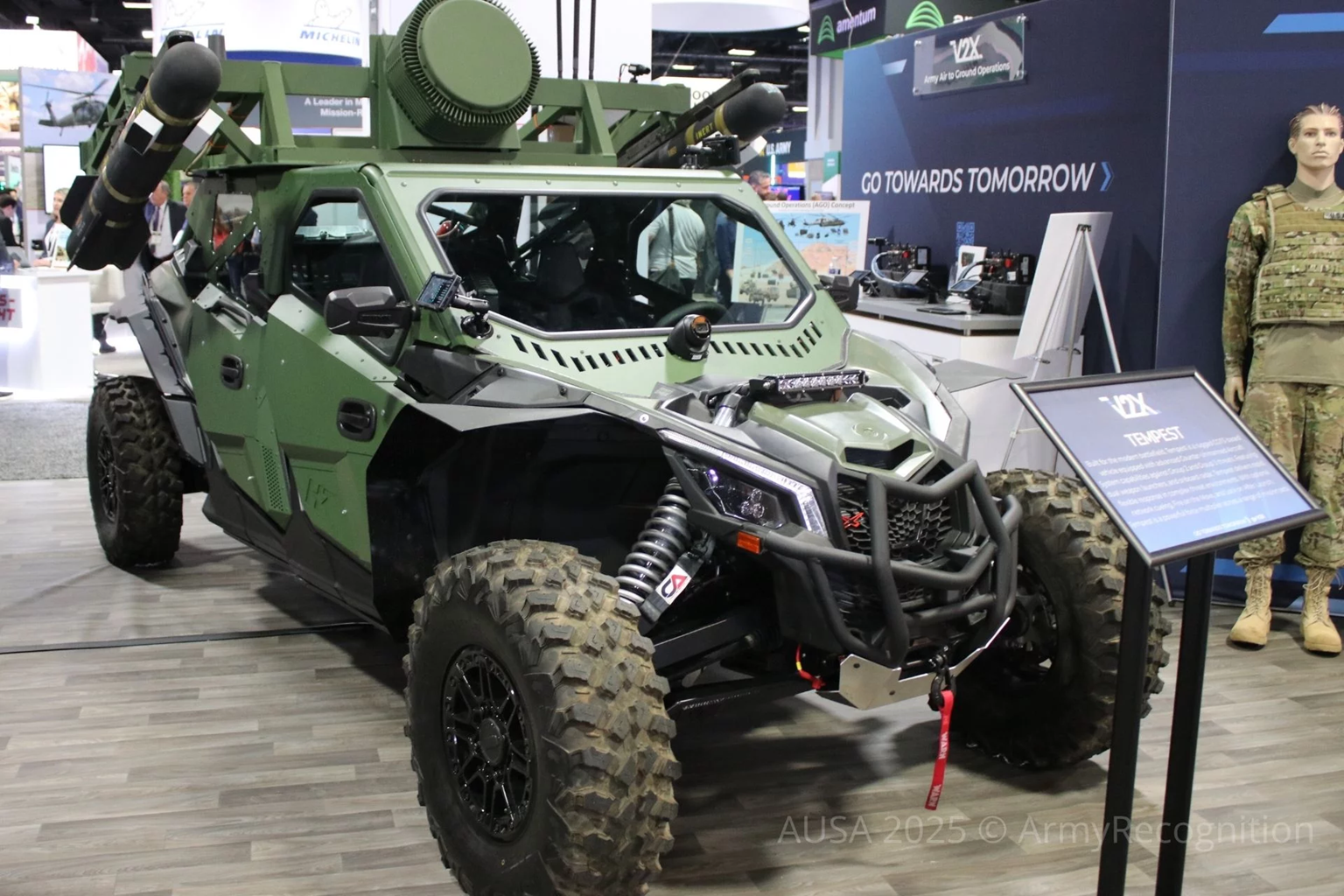
The introduction of Tempest into service enhances the effectiveness of mobile fire teams. Instead of relying solely on manual machine guns, air defense forces now have an automated tool to intercept kamikaze drones even in nighttime or bad weather conditions.
The power of the AGM-114L Longbow Hellfire missile.
The heart of the Tempest system is the AGM-114L Longbow Hellfire missile. This is a modern variant in the Hellfire missile family, possessing superior technical characteristics:
- Size:The length ranges from 1.63 to 1.75m, and the diameter is 0.178m.
- Weight:The total weight ranges from 45 to 48.5 kg, carrying a warhead weighing 8-11 kg.
- Efficiency:Effective range is 7-11km, maximum speed Mach 1.3 (approximately 450m/s).
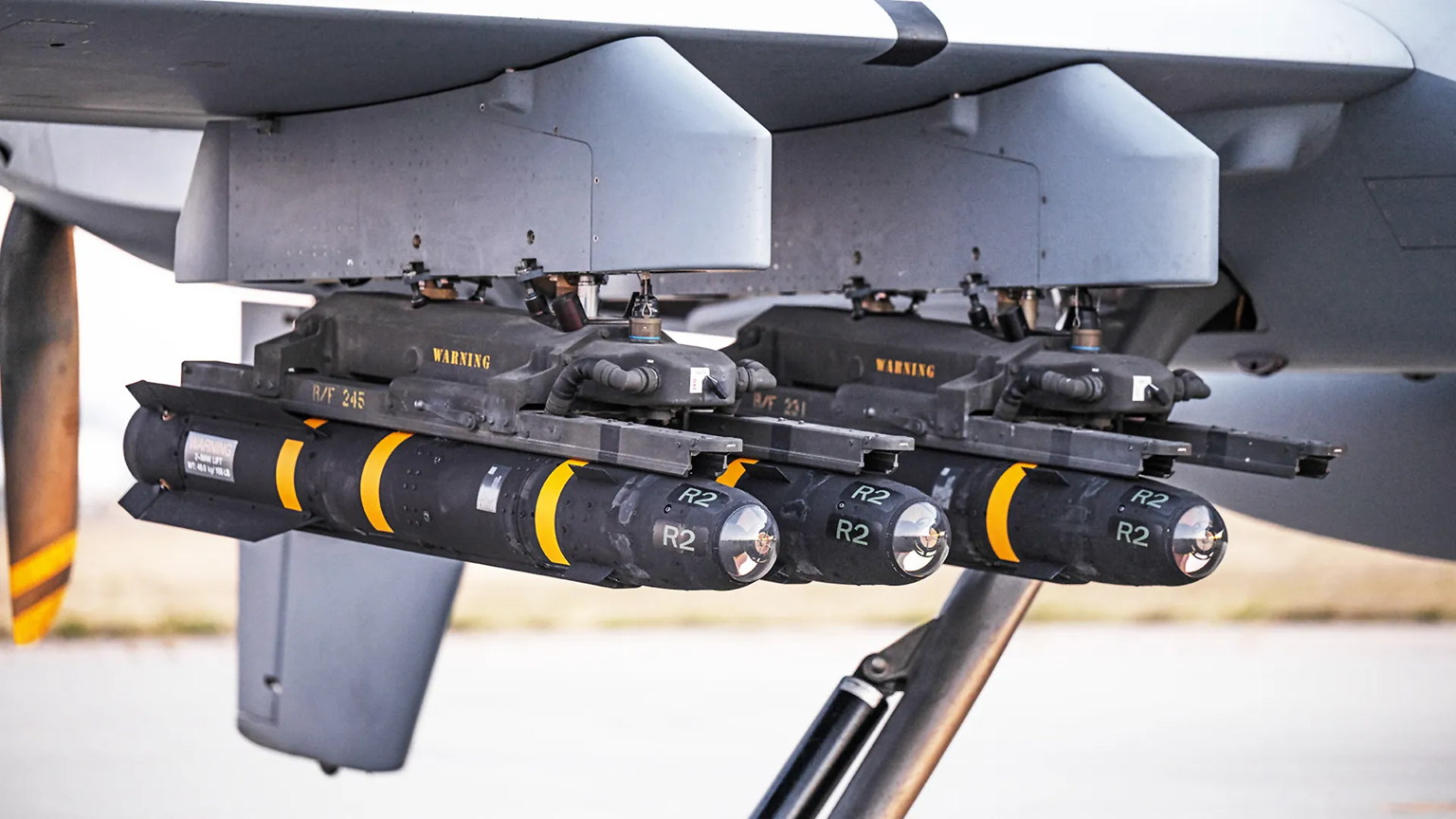
Unlike traditional laser-guided versions, the AGM-114L uses a millimeter-wave radar seeker. This mechanism allows the missile to operate on a "fire and forget" principle. After launch, the missile automatically finds its target without the need for continuous laser guidance from the operator, allowing the Tempest system to withdraw immediately or switch to another target.
The cost-effectiveness problem
Despite its technical advantages, Tempest also presents an economic asymmetry. An AGM-114L missile costs around $100,000, while target UAVs like the Shahed-136 or Geran-2 cost only between $20,000 and $50,000.
However, military experts argue that the value of a missile should be compared to the target it protects. If a $100,000 missile can prevent an attack on a multi-million dollar substation or protect civilian lives, then it remains the optimal choice. In the context of constantly threatened energy infrastructure, solutions like Tempest serve as a necessary line of defense to maintain the viability of critical infrastructure.


