
Ukraine deploys the Lima electronic warfare system to counter Russian missiles and UAVs.
The domestically produced Lima electronic warfare system helps Ukraine deflect thousands of UAVs and cruise missiles at a cost equivalent to a single Patriot PAC-3 missile.
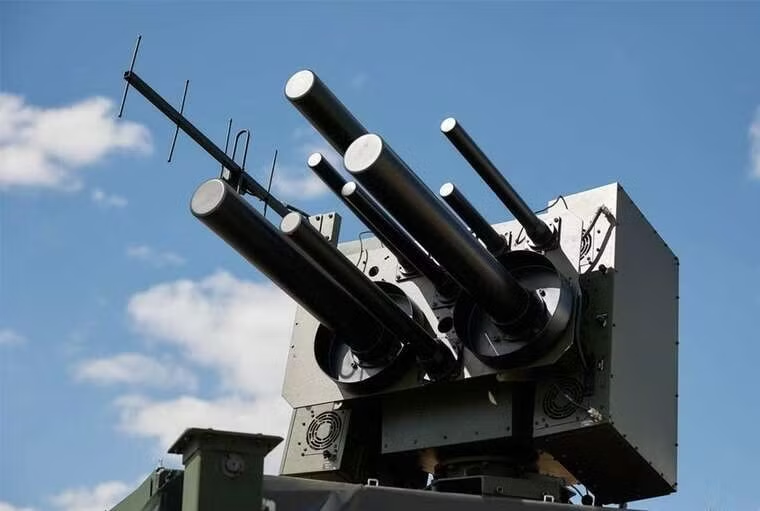
Amid a shortage of expensive interceptor missiles, Ukraine is accelerating the deployment of its domestically produced Lima electronic warfare (EW) systems to protect key areas. According to Politico magazine, this is a cost-effective alternative to neutralize airborne threats from the Russian Federation.

The operating mechanism and practical effectiveness of Lima.
Unlike traditional air defense systems, the Lima system does not directly destroy targets with firepower. Instead, it emits jamming signals and disrupts satellite navigation signals, forcing Russian drones and missiles to change course. The developer claims that over the past 18 months, Lima has assisted in jamming approximately 20,500 Geran drones and deflecting dozens of ballistic and cruise missiles.
Economically, protecting a major city with the Lima EW system costs approximately 5 million euros. This cost is roughly the same as a single Patriot PAC-3 interceptor missile, allowing Ukraine to optimize its military resources in a protracted conflict.
Limitations and potential risks
Despite its cost advantages, the Lima system still has significant drawbacks. When jammed and disoriented, enemy missiles or UAVs will still fall and potentially cause unintended damage to populated areas. The Ukrainian military believes that this system only reduces the probability of hitting its intended target rather than completely eliminating the threat from Russian weapons.
Notably, the effectiveness of EW systems is not absolute. During the May 24th attack, Ukrainian air defenses reported being powerless against several types of Russian missiles that no electronic warfare system could intercept. Furthermore, the recent frequent landings of Patriot PAC-3 missiles on city streets in Ukraine raise questions about interference from the domestic Lima system itself.


