
Can drinking plenty of water help with detoxification?
Nowadays, many people not only drink a lot of water upon waking up in the morning, but also drink as much water as possible throughout the day to detoxify, "nourish the kidneys," and increase longevity...
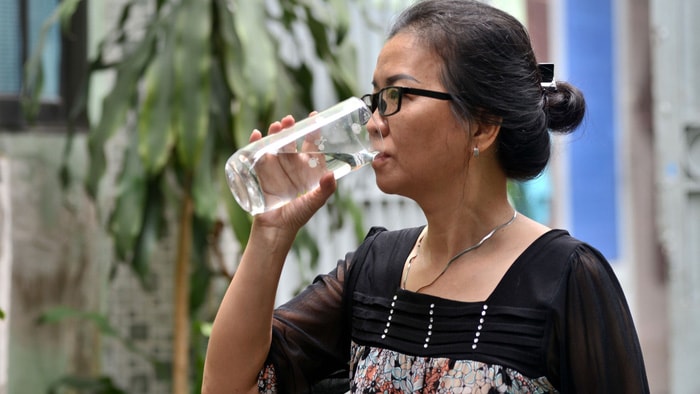
Drinking enough water every day is very good for the body - Photo: DUYEN PHAN
"Drinking the right amount of water is the first condition for the kidneys to function normally, and it is indispensable for 'protecting the internal environment' of the body. Ancient people paid attention to kidney excretion in old age, to the issue of 'nourishing kidney fluids' to increase longevity," said Professor Hoang Tuan.
Risk of heart failure and high blood pressure.
Given the current trend of many people drinking large amounts of water upon waking up to treat illnesses, Professor Hoang Tuan, former director of the 19-8 Hospital, warns that several decades ago, some people advocated the idea that "drinking a lot of water every morning can cure all diseases." This was based on subjective speculation, but many people, without careful consideration, applied it to themselves, drinking liters of water at once in the morning. Some nearly died from sudden heart attacks or high blood pressure after drinking such a large amount of water. Currently, this practice is being adopted by many people without knowing the consequences.
According to Dr. Cao Hong Phuc from Hospital 103, water is very beneficial for the body, but it's important to know how to drink enough. Currently, many people mistakenly believe that drinking as much water as possible is good and can be dangerous. Drinking too much water (over 3 liters a day) dilutes the electrolytes in the blood. Low electrolyte levels disrupt muscle and nerve cell function, leading to fatigue, lethargy, and a lack of motivation to exercise.
In particular, excess water in the blood can flood into nerve cells, leading to water intoxication. At this point, the cells swell, nerve cell membranes become less active, resulting in a significant decrease in concentration ability. Furthermore, drinking too much water increases the circulating volume in the blood vessels. This increased volume raises blood pressure, making it difficult to control and very dangerous for people with heart disease or heart failure, as drinking too much water puts extra strain on the heart, making it harder for the patient to breathe and causing further fatigue due to worsening heart failure. In addition, water also reduces digestive function, and the excessive amount of water entering the intestines dilutes digestive fluids. Therefore, the activity of digestive enzymes is significantly reduced...
Drink enough water.according to the body's needs
According to Professor Hoang Tuan, it might be reasonable and beneficial to revise the "extremist theory" (drinking a lot of water every morning to cure all diseases) to "drinking a 200ml glass of water every morning - a moderate amount - is a good method." Because 200ml can facilitate easy excretion, promote the process of eliminating old and new cells, prevent constipation, and detoxify... Drinking water should be according to the body's daily water needs and one must know how to drink it correctly.
Under normal physiological conditions, at ambient temperatures of around 20-25°C, an average intellectual worker needs 1.5-2 liters of water per 24 hours, depending on body size (average 1.7 liters). This amount is partly already present in food, vegetables, rice, soup, etc. Each person needs to drink an additional 1-1.2 liters of water daily. Working in hot summer conditions, sweating heavily, or performing strenuous work all require more water. In colder weather, with less sweating and lighter work, slightly less water is needed.
Drinking water properly and sufficiently involves not only avoiding harmful beverages but also adjusting your intake according to your changing health conditions. If you experience conditions such as urinary tract infections, high fever, diarrhea, poisoning, allergies, etc. – meaning a diuretic is needed rather than medication – you should increase your water intake. You can use lemon water, fruit juice, or diluted tea (with little sugar) to help your body eliminate toxins more easily. In these cases, frequent urination helps the illness heal faster and the person recover more quickly.
And it's important to know how to drink water properly; no one should increase their water intake when suffering from edema, high blood pressure, or heart failure. Conversely, you shouldn't reduce your water intake when your body is dehydrated due to diarrhea, excessive vomiting, or fever.small yellow...
Drinking too much water is harmful, but the habit of drinking too little water is also detrimental to personal hygiene. This leads to an increased concentration of harmful substances in urine, always increasing the urine's specific gravity, which can cause sedimentation in the kidneys and bladder, leading to stone formation in those organs. This is not to mention the negative consequences for the body due to the inability to eliminate waste products caused by water retention.
Correct and sufficient
According to Professor Hoang Tuan, drinking water correctly and sufficiently doesn't mean drinking a large amount at once (large jugs or liters), but rather drinking in small amounts throughout the day. When in the sun and very thirsty, one shouldn't drink a large quantity at once to quench thirst. Drinking too much water at once will suddenly increase the amount of water circulating in the blood, causing an "overload" on the heart, which can lead to dilated cardiomyopathy or heart attacks.sudden high blood pressure.


