Depleted uranium in the Gulf War: scale and consequences.
An estimated 320 tons of depleted uranium were used or remained in storage during the 1991 Gulf War, mostly from A-10s; this entails health and environmental risks and makes inventory management difficult.
Internal estimates from the U.S. Department of Defense in the 1990s indicated that the total amount of depleted uranium (DU) used or stockpiled in the 1991 Gulf War campaign area was approximately 320 tons. Much of this came from A-10 30 mm rounds, alongside 105/120 mm armor-piercing rounds and some from AV-8B Harrier rounds. While this figure has a margin of error, it reflects the enormous scale of DU use compared to subsequent conflicts.
Overview of DU deployment on the battlefield
DU is widely used due to two properties: very high density and pyrophoric properties (igniting when the core is torn apart during an impact). In the 1991 campaign, DU appeared in:
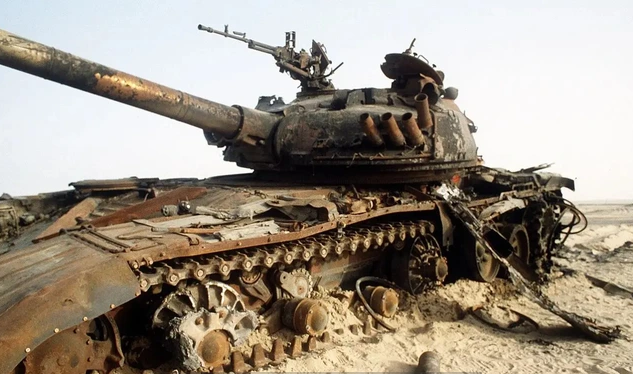
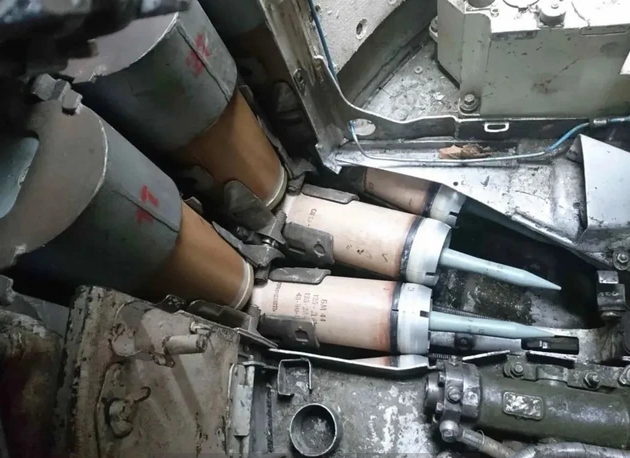
- Armor-piercing rounds for 105/120 mm tank guns: M900 (105 mm), M829 (120 mm), M829A1 (120 mm).
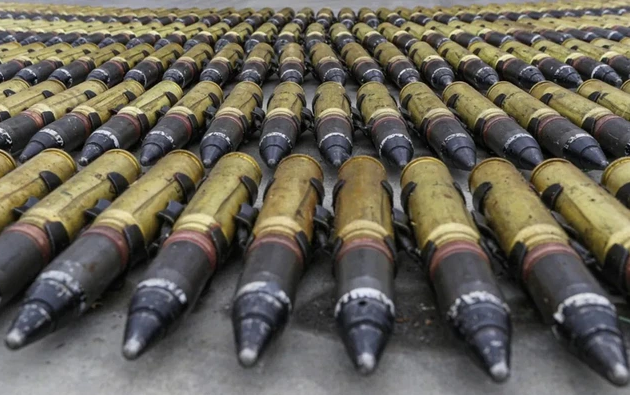
- 30 mm ammunition for the GAU-8 cannon mounted on the A-10.
- A portion of the ammunition for the Phalanx CIWS and AV-8B Harrier.
Specifications and scope of use
According to estimates at the time, the notable data included:
| Platform/System | Type of ammunition | Size | Quantity | Estimated DU volume |
|---|---|---|---|---|
| Tank artillery | M900; M829; M829A1 | 105 mm; 120 mm | 504 (M900); 6,700 (M829); 2,348 (M829A1) | Approximately 50.5 tons (total from anti-tank rounds) |
| A-10 (GAU-8) | Armor-piercing rounds | 30 mm | 783,514 tablets | Approximately 259 tons |
| AV-8B Harrier | PGU-20 | 25 mm | 67,436 tablets | Around 11 |
Preliminary aggregates indicate that nearly 320 tons of DU were released or remain in the campaign area. Estimates are based on allocation, inventory, and post-campaign reports, so there may be a margin of error.
Mechanism of action
DU was chosen because:
- Its very high density, heavier than tungsten of the same size as described in the source, helps increase kinetic energy and stabilize the projectile's trajectory when penetrating armor.
- Pyrophoric properties: A DU core torn apart in impact can ignite, causing secondary damage to the combat compartment, electronics, and fuel, increasing the probability of being rendered unusable.
Combat effectiveness and tactical application
In combat against armored forces, DU significantly increases armor penetration, described as a "game-changing" weapon. In air-to-ground combat, the A-10 with GAU-8 uses large volumes of DU ammunition to engage armored targets. On warships and in localized defense areas, some of the Phalanx CIWS ammunition also includes DU. Regarding 105/120 mm tank guns, the M900, M829, and M829A1 variants play a leading role in anti-tank warfare.
Health and environmental risks
When the uranium core breaks apart on a target, some of the DU breaks into fine fragments that can disperse in the air. These fine particles easily enter the respiratory tract if inhaled; the rest settles in the soil and water and enters the food chain.
In terms of radioactivity, DU has a lower activity than natural uranium but is still a heavy metal with similar chemical toxicity to lead; exposure to large amounts carries a risk of kidney damage. Post-conflict medical studies have noted a complex association between DU exposure and a number of health problems, but establishing a direct causal relationship is difficult due to a lack of data, follow-up time, and numerous confounding factors.
In the environment, DU is persistent in soil and marine sediments. Collecting large DU fragments is easier, while fine dust and dissolved compounds can cause long-lasting contamination, especially in bombardment areas, firing ranges, and decommissioned weapons depots. Decontamination requires significant resources and specialized technology.
Inventory and transparency challenges
Accurately determining the amount of DU (Duty-Fire) used and remaining is challenging. Estimates are based on allocation, import, export, and post-campaign reports; detailed tracking of every single round in the field is impossible. Some ammunition may remain in reserve or remain unfired, increasing the margin of error.
This makes it difficult to assess public health and environmental risks, and creates legal and diplomatic challenges when there is a demand for transparency regarding the consequences of war and pollution remediation.
Assessment and long-term consequences
The Gulf War demonstrated that DUs are a highly effective technical solution for armor penetration and increased lethality against armored targets and for ground attack missions. However, the estimated total of nearly 320 tons of DU involved raises questions about long-term costs: the risk of environmental contamination, exposure to civilians and soldiers, and the need for costly remediation.
With weapons of lasting impact, decisions to use them should not only consider short-term tactical effectiveness but also take into account post-war responsibility, the need for transparent record-keeping, and long-term environmental and population health monitoring programs.