
USS Paul Ignatius conducts live firing exercises with the Mk 45, testing its low-cost firepower.
USS Paul Ignatius (DDG 117) conducts live-fire exercises in surface fire support in the Atlantic under the command of the 6th Fleet, testing its ability to sustain low-cost firepower with the Mk 45 gun.
On December 4th, the US Navy destroyer USS Paul Ignatius (DDG 117) conducted live-fire exercises in the Atlantic Ocean while operating under the command of the 6th Fleet. The firing demonstrated an effort to maintain sustained operational capability and optimize costs amidst global pressure on tactical missile arsenals and the complex coastal combat environment.
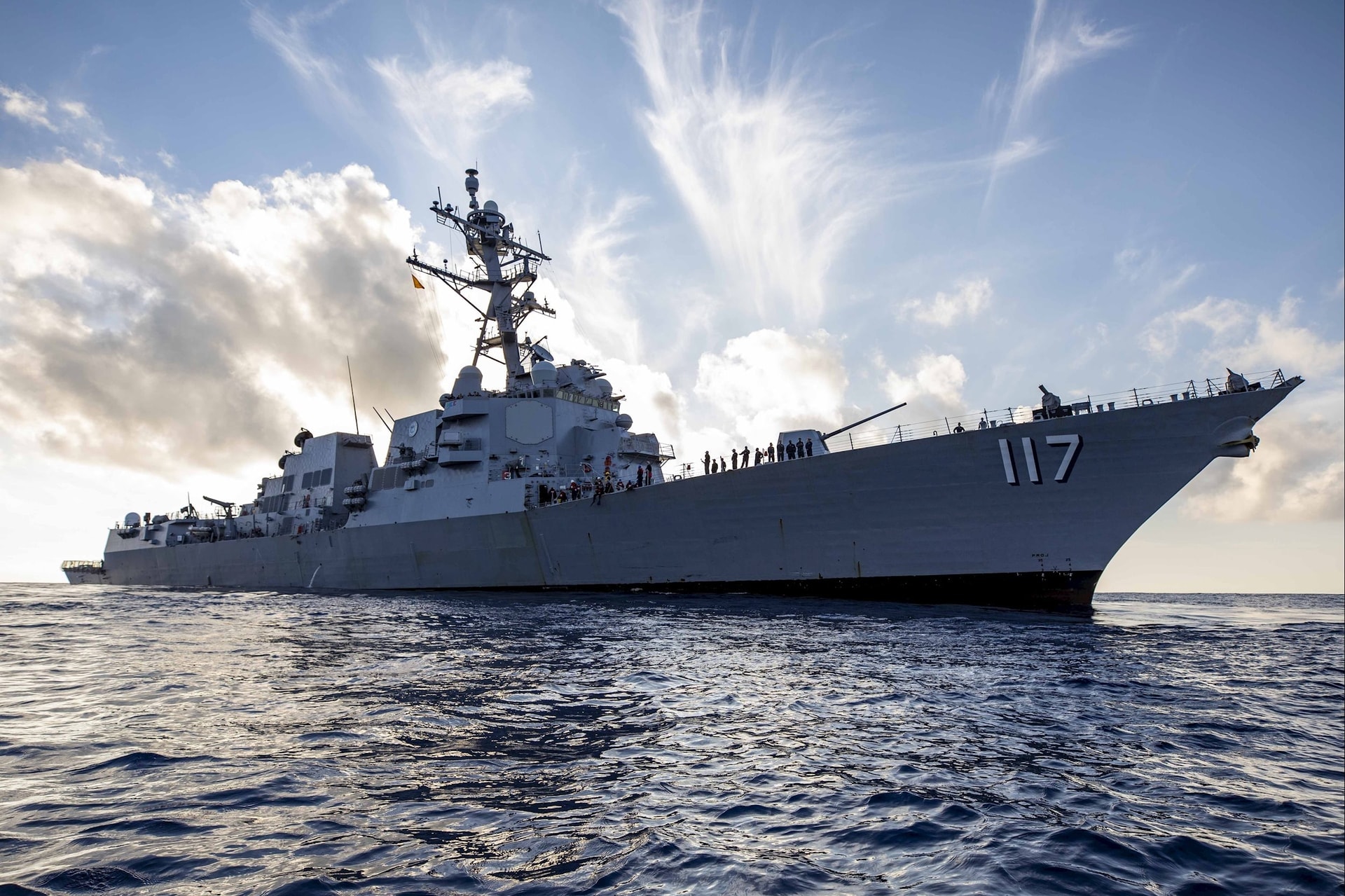
The core platform of the U.S. surface forces.
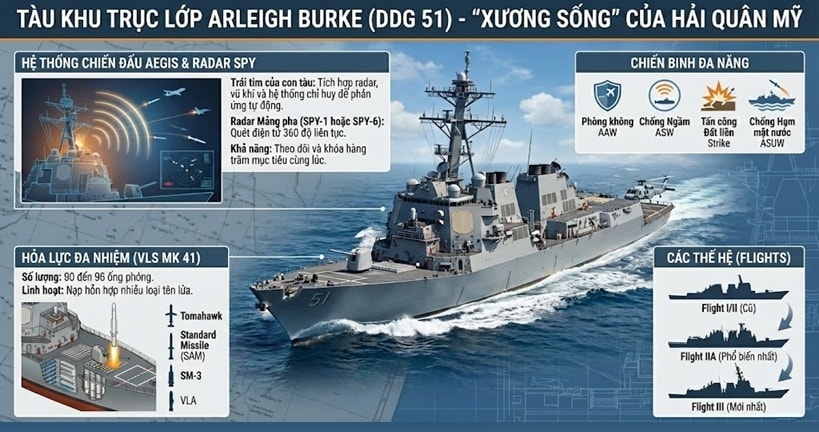
The USS Paul Ignatius, an Arleigh Burke-class ship, has been a cornerstone of the U.S. Navy for over three decades, renowned for its reliability, survivability, and combat effectiveness. In its Flight IIA variant, the ship integrates the Aegis combat system and AN/SPY radar, simultaneously tracking and engaging air, surface, and ballistic missile targets. Its 96 Mk 41 vertical launch system allows for the deployment of a diverse range of weapons, from Standard anti-aircraft missiles and Tomahawk land-attack missiles to ASROC anti-submarine weapons.
In terms of maneuverability, four LM2500 gas turbines enable the ship to reach speeds exceeding 30 knots (55.56 km/h), combined with a long operating range. The hull-mounted and towed sonar systems provide continuous underwater surveillance; close-range defense is handled by the Phalanx CIWS. The design, which reduces radar cross-section, compartmentalization, and reinforced blast-resistant bulkheads, enhances survivability in high-intensity combat.
The Arleigh Burke class has over 70 ships in service, with Flight III variants continuously under construction. With a length of approximately 155 meters, a full-load displacement of approximately 10,000 tons, and the capacity to carry two MH-60R helicopters, it is a multi-purpose destroyer capable of air defense, anti-ship, anti-submarine, ground attack, and ballistic missile interception. Some experts consider China's Type 055 to be a comparable competitor in terms of the number of launch tubes; however, considering its long-range missile defense capabilities against SM-3 and SM-6 missiles, the Arleigh Burke still holds an advantage in combat operations.
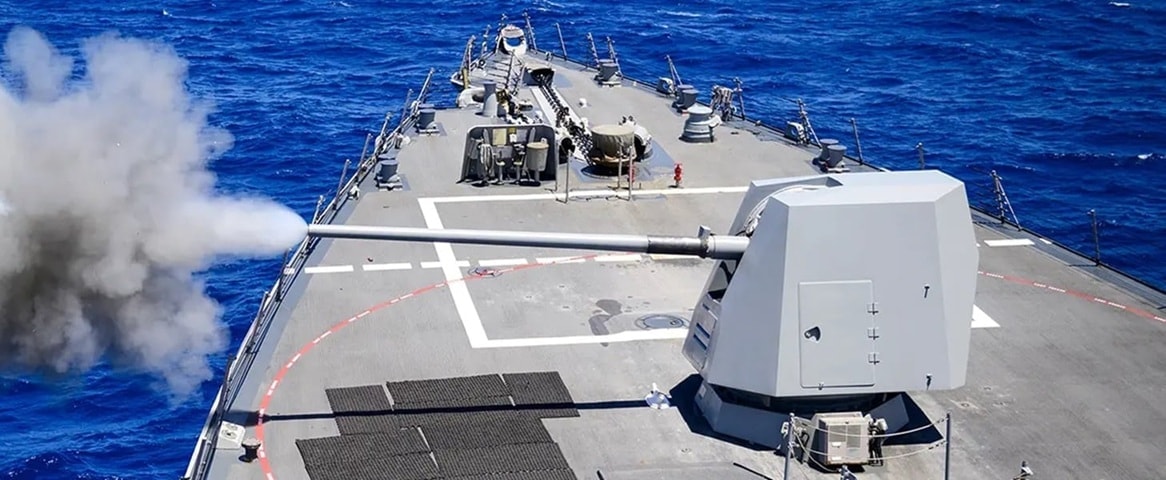
Mk 45 firing test: reinforcing low-cost firepower.
The highlight of the exercise was the Mk 45 127 mm naval gun. Under simulated conditions, the ship quickly transitioned from patrol to fire deployment, operating a closed-loop firing call-calculation-adjustment process between the bridge, the combat information center (CIC), and the gun crew.
The firing test assesses accuracy and command pacing as the ship simultaneously performs multiple roles: surface surveillance, regional air defense, and readiness to respond to unexpected targets. This is a fundamental requirement for Arleigh Burke-class ships in NATO's mixed combat formations.
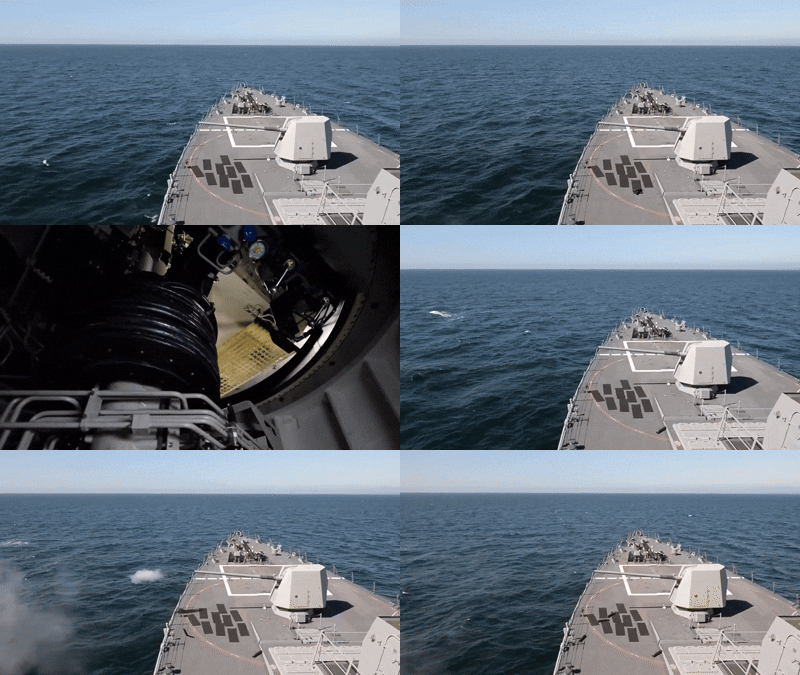
Smart ammunition, high rate of fire, and budget-friendly.
In the context of the increasing prevalence of UAVs, inexpensive suicide munitions, and low-flying targets, naval guns like the Mk 45 are making a comeback as an indispensable layer of firepower. Smart munitions such as the GPS-guided Excalibur N5 and the HVP hypervelocity rounds significantly increase range, accuracy, and interception capabilities, expanding the role of the gun from traditional direct fire to a multi-purpose platform for handling various target types at optimal cost.
According to RAND, in a highly threatening coastal environment, naval artillery with its large ammunition capacity and low cost offers greater economic efficiency than launching missiles costing hundreds of thousands of dollars to attack small targets. The Mk 45 has a firing rate of approximately 20 rounds per minute and can carry a large amount of ammunition, creating sustained firepower that missile systems struggle to provide. Many NATO countries have deployed naval artillery to counter UAVs or small vessels at a significantly lower cost than dedicated interceptor missiles.
Role with the Sixth Fleet
Based forward in Rota, Spain, the USS Paul Ignatius regularly patrols the Mediterranean Sea, the Black Sea (when conditions permit), the North Atlantic, and the waters around Africa. This continuous presence serves both as a deterrent and enhances coordination with European allies.
In joint exercises, the Mk-45's ability to provide shore fire support, engage small vessels, and defend low-altitude targets is a crucial component of joint operations. The deterrent effect is only sustainable when the fleet maintains real-world combat capabilities – as demonstrated by live-fire exercises like this one.
Overall, although often overshadowed by powerful radar and a formidable missile arsenal, the Mk 45 naval gun on the USS Paul Ignatius continues to demonstrate its role in the multi-layered firepower structure of the U.S. Navy. In a prolonged conflict scenario that could strain U.S. and NATO's tactical missile reserves, the inexpensive, high-rate-of-fire, and continuously operational firepower of naval guns is a key option for maintaining superior firepower at sea.


