
The role of the F-35 in Operation Midnight Hammer against Iran.
The US has revealed for the first time the role of the F-35A in Operation Midnight Hammer: acting as a SEAD and providing withdrawal support for the attack; Iran possesses the Bavar-373 but was unable to intercept it.
According to Defense Express (Ukraine), the US Air Force first disclosed the role of the F-35A in Operation Midnight Hammer, the attack on Iranian nuclear facilities in June of this year. The mission involved 125 aircraft, including seven B-2s, which dropped 14 GBU-57 bunker-busting bombs. The F-35A served as SEAD (Settlements of Enemy Air Defenses) and provided air support for the strike group as it left the area; US officers stated that Iranian air defenses were unable to intercept the fifth-generation fighters due to their stealth capabilities and electronic warfare. Independent assessments indicated that the level of damage to Iran's nuclear program was lower than expected.
F-35A's role: SEAD and withdrawal support.
Details of the F-35A's mission were published in the Aerospace and Air Force Journal. According to the journal, the F-35A conducted SEAD (Sealing Air Defense Identification) against Iranian air defenses and provided air support for the strike group as it departed the target. Colonel Charles Fallon, commander of the 388th Fighter Squadron, stated that the effectiveness of the attack confirmed the F-35's capabilities over the years and emphasized that the aircraft would be useful "for today's war and tomorrow's war, wherever it may be."
Lieutenant Colonel Aaron Osborne, commander of the 34th Expeditionary Fighter Squadron, stated that the F-35s effectively suppressed Iranian air defense missile positions; thanks to stealth technology and electronic warfare systems, the enemy was unable to attack these aircraft. He said Iran attempted to attack using "several advanced systems" but was unsuccessful. Defense Express noted that the exact nature of these "advanced systems" was not disclosed and suggested this might be a way to emphasize the F-35's role in the mission.
Campaign scale and objectives
Operation Midnight Hammer involved 125 aircraft. Seven B-2 bombers dropped 14 GBU-57 missiles to inflict maximum damage on Iran's nuclear program. Although the official declaration declared the mission a success, independent assessments suggest that the actual damage to the nuclear program was less than anticipated.
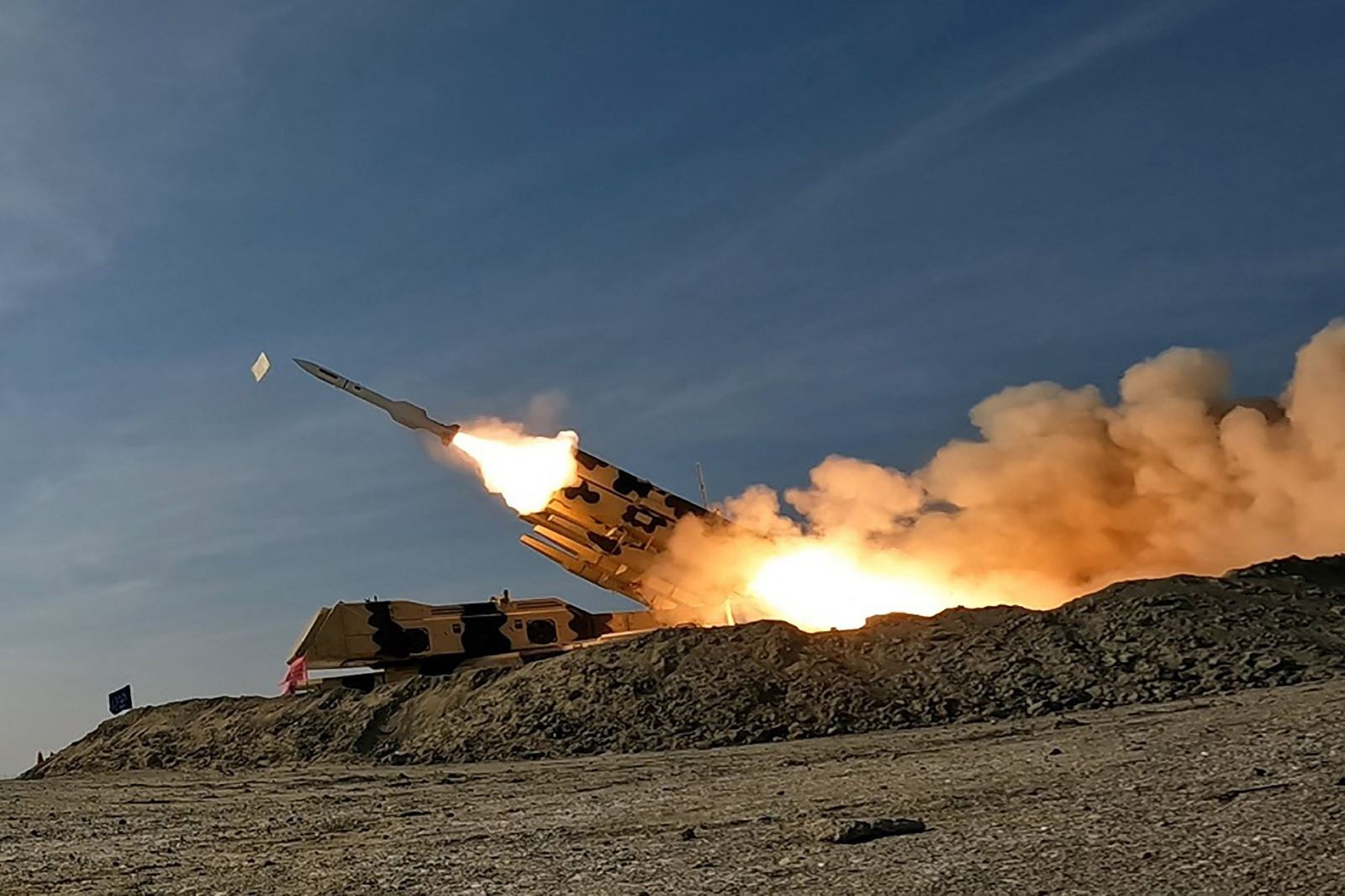
Bavar-373: Claimed and Actual Operational Specifications
According to Army Recognition, the Bavar-373 is a domestically developed surface-to-air air defense system developed by the Iranian Ministry of Defense, launched in August 2019 and currently in service with the Iranian armed forces. The system is designed to detect and intercept missiles, UAVs, and long-range, high-altitude aircraft, as well as destroy high-speed ballistic missiles. A standard system includes a vertical launch platform, two detection and guidance radars, Sayyad-4 missiles, and a command and control center; along with electro-optical sensors, cameras, and data links.
The Bavar-373 radar is claimed to be capable of countering electronic warfare and electromagnetic bombs, and can also detect anti-radiation missiles. The system can detect up to 100 targets, track 60, and engage 6 targets simultaneously; it is equipped with three types of missiles for different altitudes. The Bavar-373 can launch Sayyad-4B missiles with an interception range of up to 300 km. Iran has claimed that the system's performance is comparable to Russia's S-300.
| Category | According to the source |
|---|---|
| Range (stated) | 200–300 km; Sayyad-4B to 300 km (Army Recognition) |
| Target processing capability | Detect 100, track 60, attack 6 targets simultaneously (Army Recognition) |
| Resistance to pressure | Radar claims to counter electronic jamming and electromagnetic bombs; detect anti-radiation missiles (Army Recognition) |
| Main ingredients | Vertical launch platform, 2 radars, Sayyad-4 missiles, command center; electro-optical sensors and data link (Army Recognition) |
| The reality in Midnight Hammer | Defense Express reported that Iranian systems, including the Bavar-373, failed to intercept the F-35. |
| Notes on performance statements | The specifications and comparisons with the S-300 are mainly based on claims from Iran (Defense Express). |
Tactical aspects: stealth and electronic warfare
According to Lieutenant Colonel Aaron Osborne, the stealth capabilities combined with electronic warfare allow the F-35A to evade and neutralize Iranian air defenses. Defense Express emphasizes that details about the "advanced systems" used by Iran have not been disclosed, therefore the specific level of countermeasures cannot be determined from open sources.
Conclusion based on open source
Published data shows that F-35A aircraft served as SEAD (Seal Attack Defense) and provided withdrawal support for the strike group in a 125-aircraft operation, during which B-2 bombers dropped 14 GBU-57s. The Bavar-373 boasts impressive specifications on paper, but according to Defense Express, the operation did not record any F-35 interception capability. However, independent assessments of the overall effectiveness of the strike indicate that the damage to Iran's nuclear program was lower than expected.
Sources: Defense Express (Ukraine); Aerospace and Air Force Magazine; Army Recognition.


