
Business culture - an endogenous resource for sustainable development.
Resolution 80-NQ/TW of the Politburo on the development of Vietnamese culture affirmed that Vietnamese culture is the crystallization of the nation's finest values in the process of thousands of years of nation-building and national defense; it is an important endogenous resource that nurtures the intellect, soul, spirit, and character of the Vietnamese people.
In this context, business culture – an important part of cultural life – emerges as a key factor determining the competitiveness and sustainable development of businesses and, more broadly, of the entire national economy.
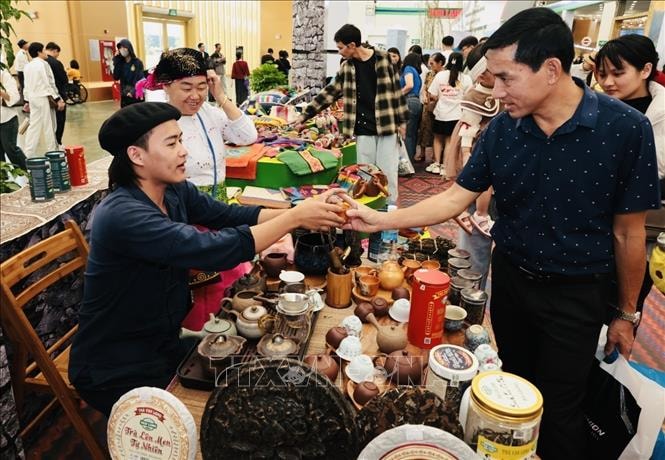
Business culture - the "soft key" of a business.
At the National Forum "Culture and Business in 2026," Dr. Can Van Luc, an economic expert, shared that businesses with strong cultures have a higher profitability rate, ranging from 1.3 to 1.8 times higher, and averaging about 1.5 times higher, compared to businesses without a clear cultural foundation. This figure shows that culture is not an "expense," but a "profitable asset." In the context of increasingly fierce global competition, intangible values such as trust, reputation, and standards become distinct advantages.
Many other experts also affirm that culture plays a very important role in helping businesses position their brands and spread Vietnamese culture to the world. More specifically, business culture will help shape the behavior and attitudes of employees in serving and caring for customers, creating "how the business operates" and shaping "how the business is perceived".
According to experts, business culture is reflected in how businesses treat customers, partners, employees, and society; in their management and decision-making methods; and in their sense of responsibility and professional ethics. Today, business culture is considered a core competitive advantage, a "soft key" that helps businesses integrate more deeply into the global value chain.
According to statistics, after 40 years of reform, the Vietnamese business community has undergone a spectacular transformation, continuously developing in scale, achieving significant accomplishments with its own business culture and philosophy, and establishing important advancements in quality, brand reputation, and contribution to the country. Currently, there are over 1 million active businesses nationwide. The private sector contributes approximately 60-65% of GDP; creating jobs for more than 30 million workers. Import and export turnover is projected to exceed US$920 billion by 2025, making Vietnam one of the world's top 20 trading economies.
Experts believe that in today's global business trends, consumers are increasingly interested in business culture. Successful and sustainable businesses rely not only on capital, technology, or market share, but also on a strong cultural foundation. Business culture has become a valuable "intangible asset," creating the identity, reputation, and long-term vitality of a business. In this context, business culture is not only a moral standard, but also a condition, a "ticket," for businesses to participate more deeply in the international market.
Building a team of ethically sound entrepreneurs.
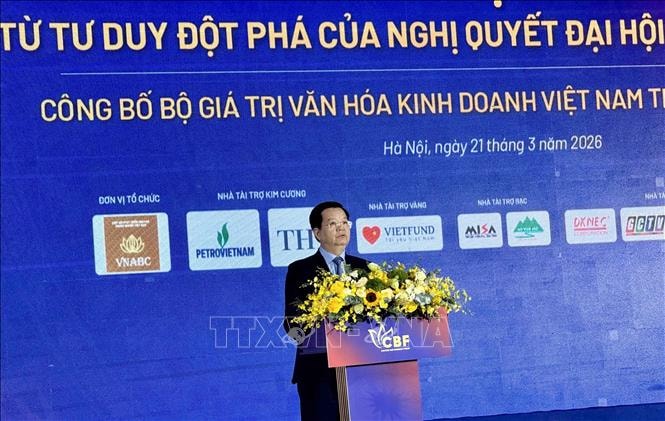
At the National Forum "Culture and Business in 2026," Deputy Prime Minister Mai Van Chinh affirmed that a strong economy is not only measured by GDP size, technological capacity, market share, or level of integration, but also by business culture; social responsibility; transparency; the spirit of innovation and the aspiration to contribute of businesses. In a modern economy based on knowledge, digital transformation, innovation, and globalization, culture is deeply ingrained, manifested in how businesses manage, how entrepreneurs behave, how we compete, cooperate, serve society, and becomes an endogenous resource, a soft power of the national economy in the new era.
Deputy Prime Minister Mai Van Chinh also emphasized that business culture is the most valuable and sustainable asset of an enterprise; it is the foundation for building a corporate brand. Technology may change; markets may fluctuate; products may become outdated, but culture and brand reputation are always sustainable values for a business to survive, develop long-term, and position itself.
According to Deputy Prime Minister Mai Van Chinh, in the context of deep global integration, the Vietnamese business community and entrepreneurs need to "look far ahead; think deeply, act big" to develop more strongly and sustainably. Accordingly, businesses that want to go far must go with a strong culture; those that want to achieve great things must value culture; and those that want to build strong brands must build them on sustainable values based on business ethics and social responsibility…
The 14th National Congress of the Party and the Politburo's Resolution No. 80-NQ/TW on the development of Vietnamese culture established a groundbreaking mindset. For the first time, the Party clearly defined: "Developing culture and human resources is a crucial foundation of endogenous resources, a great driving force, a pillar, and a regulating system for the rapid and sustainable development of the country." This perspective not only places culture on par with economics, politics, and society, but also emphasizes the regulating role of culture in all development activities, including the production and business activities of enterprises.
Many experts believe that the breakthrough of Resolution 80 lies not only in affirming the role of culture, but also in its new approach: placing culture on par with economics, politics, and society, while emphasizing the regulatory role of culture in all development activities. This is particularly significant for the business sector.
In the spirit of Resolution 80 of the Politburo, business culture is placed at the center of the country's sustainable development strategy, not only as an ethical standard but also as an important endogenous resource of the economy. The Resolution affirms that culture must "permeate" all fields, including production and business activities, thereby becoming a factor regulating market behavior, shaping competition standards, and improving the quality of development. From this spirit, it can be seen that business culture has become the foundation for building national prestige, brand, and competitiveness.
According to Deputy Minister of Culture, Sports and Tourism Trinh Thi Thuy, in the era of integration, business culture has become a core competitive advantage. The success or failure of a brand depends not only on technology or capital, but more fundamentally on integrity, transparency, and the cultural identity that the business builds and disseminates. Recognizing this, Resolution No. 80-NQ/TW has identified the central task as building a team of Vietnamese entrepreneurs with ethical standards and business culture deeply rooted in national cultural identity, while selectively absorbing the best aspects of international business culture.
Deputy Minister Trinh Thi Thuy stated that, to achieve that goal, each enterprise needs to regularly review and adjust its operations according to national values and the standards of Vietnamese people: patriotism, solidarity, self-reliance, compassion, honesty, responsibility, discipline, and creativity. In particular, the leadership and management team needs to continuously improve their skills, political acumen, strategic vision, and aspiration to reach international levels; strongly promote the spirit of innovation, self-reliance, self-improvement, proactive adaptation, overcoming difficulties and challenges, turning challenges into opportunities, thereby contributing to building a healthy business environment, spreading positive cultural values, and making practical contributions to the rapid and sustainable development of the country…
Ms. Trinh Thi Thuy also affirmed that the cultural sector will focus on building a healthy cultural environment, and expressed confidence that Vietnamese business culture will become a great endogenous resource, with each entrepreneur becoming a cultural ambassador, bringing Vietnamese character and intelligence to the world.
It is clear that Resolution 80 has opened up a new approach, placing culture at the center of development, while clearly defining the role of businesses and entrepreneurs in creating and disseminating cultural values. Business culture, therefore, is not just a story of the enterprise, but a story of the nation, of beliefs, identity, and aspirations for development.


