Society

The ancient beauty of the Nguyen Bieu temple on Lam Thanh mountain.

Huy Thu August 4, 2024 19:00

Having existed for hundreds of years, the Nguyen Bieu Temple in Xuan Lam commune (Hung Nguyen district) possesses an ancient and sacred beauty. It is a place of spiritual and cultural activity for the people and visitors from all over, who respectfully pay tribute to the loyalty to the king and the country, and the indomitable spirit in the face of the enemy, of the heroic Nguyen Bieu.
bna_1.jpg
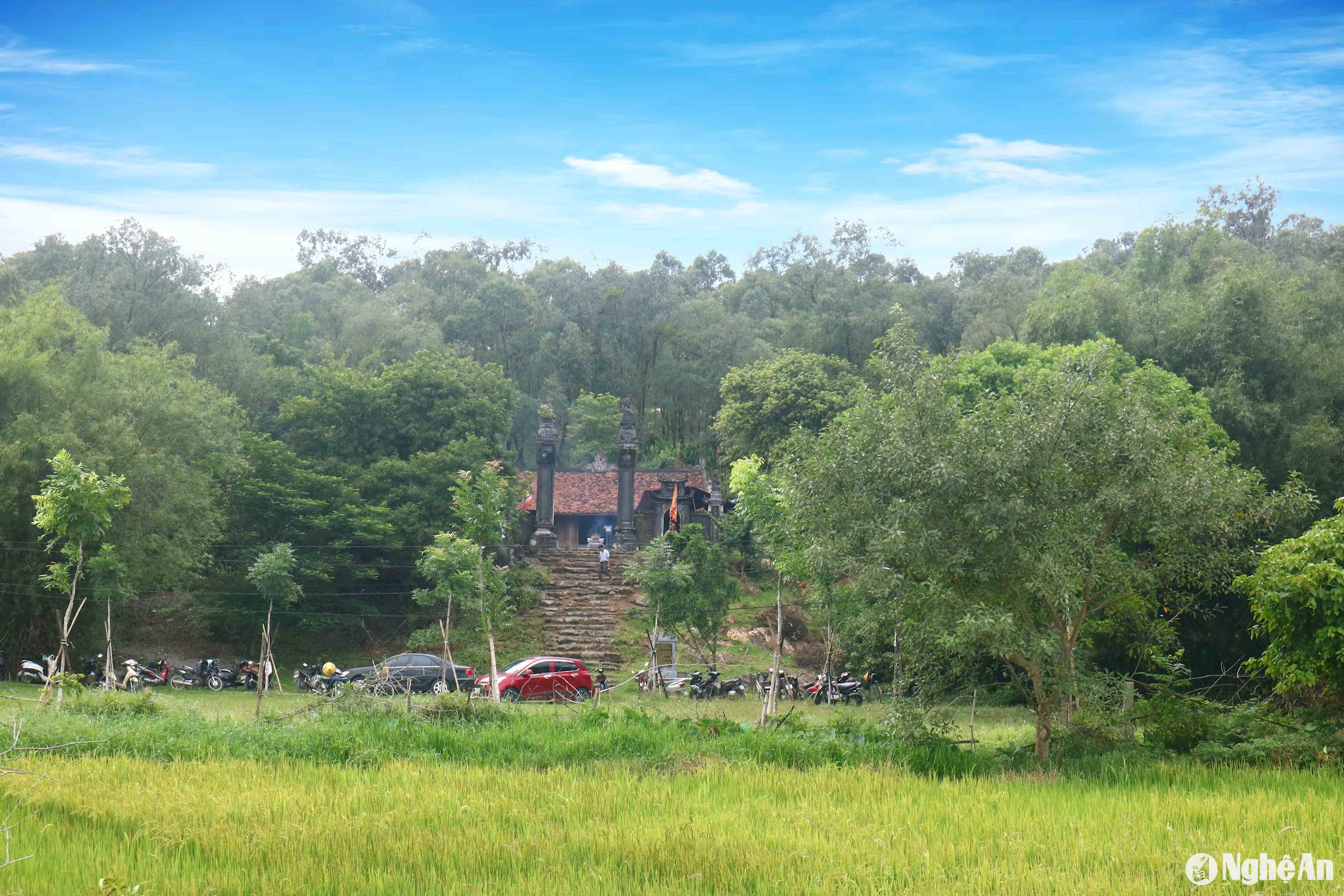
The Nguyen Bieu Temple on Lam Thanh Mountain in Xuan Lam commune was built during the Le Dynasty to worship Nghia Liet Dai Vuong Nguyen Bieu (from Yen Ho commune, Duc Tho district, Ha Tinh province). He passed the Thai Hoc Sinh (Doctorate) examination during the Tran Dynasty, assisted King Tran Trung Quang in fighting against the Ming invaders, and held the position of Dien Tien Thi Ngu Su (Imperial Censor). When the Ming army attacked Nghe An, Nguyen Bieu went on a diplomatic mission to sue for peace as ordered by the king. The Ming general, Truong Phu, could not subdue Nguyen Bieu and killed him on July 1st, 1413 (the year of Quy Ti). Photo: Huy Thu
bna_2.jpg
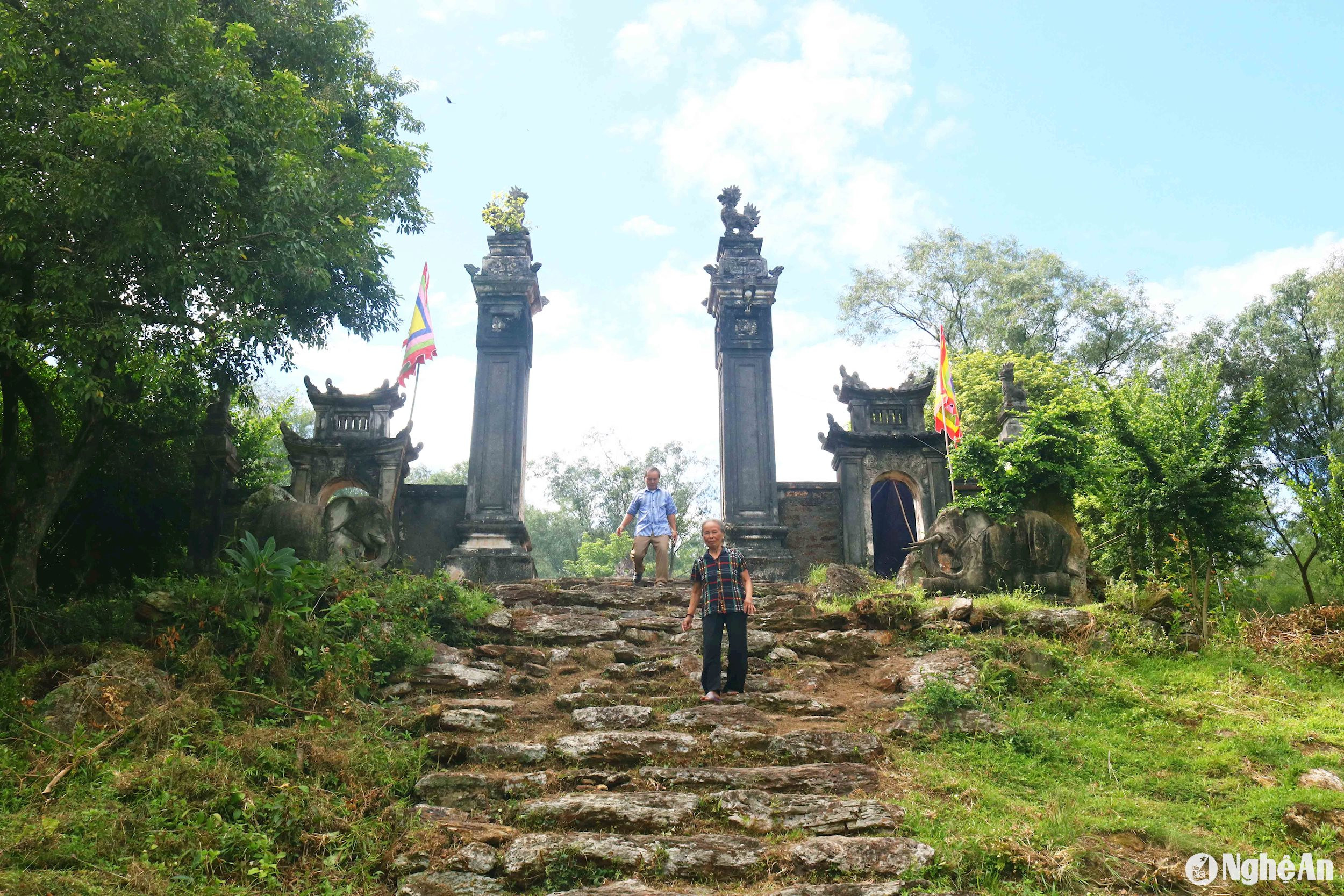
After Nguyen Bieu's death, in recognition of his contributions and admiration for his integrity, the people erected a temple in his honor on Lam Thanh Mountain. Initially, the temple was just a small shrine made of thatch, bamboo, and reeds; it was only during the Later Le Dynasty that it was built with sturdy bricks, tiles, and wood. In 1913, the main hall and two rear chambers were constructed. In 2007, the local people renovated the temple. Nguyen Bieu Temple was recognized as a Provincial-level Historical Monument in 2009. In the photo: The path leading up to and down in front of the temple gate is paved with laterite stones, still bearing the marks of their ancient origins. Photo: Huy Thu
bna_3.jpg
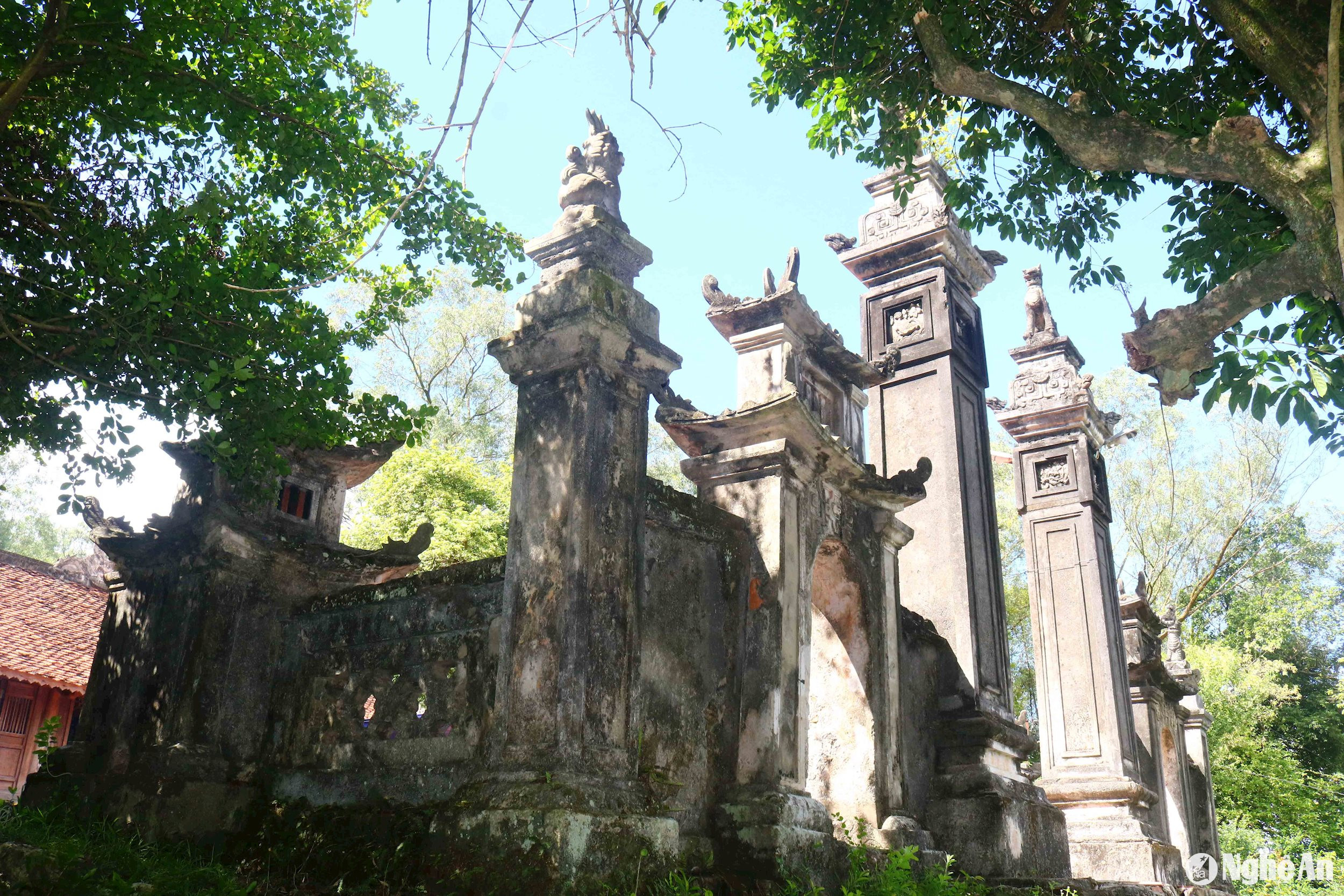
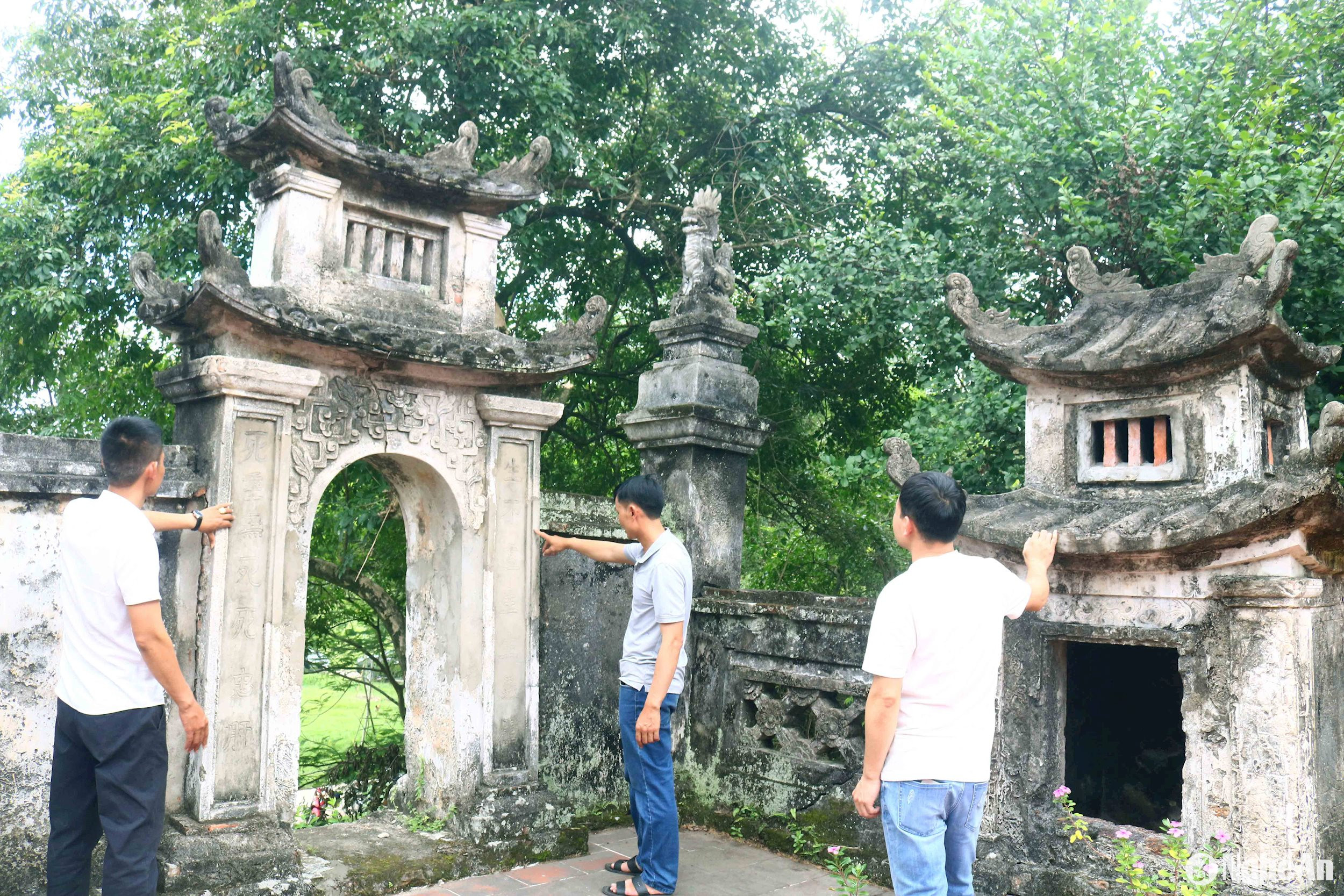
Currently, the temple grounds, covering approximately 3,000 square meters, include main structures such as: the triple-arched gate, the main hall, the sanctuary, and a historical stele. The triple-arched gate has four tiered pillars forming three interconnected walkways, closely linked by ornate walls and two incense burning houses on either side. Photo: Huy Thu
bna_4..(1).jpg
In front of the triple-arched gate, statues of elephants stand on either side, bowing in reverence. Two of these "elderly" elephants rest on ancient laterite stones. Photo: Huy Thư
bna_5.jpg
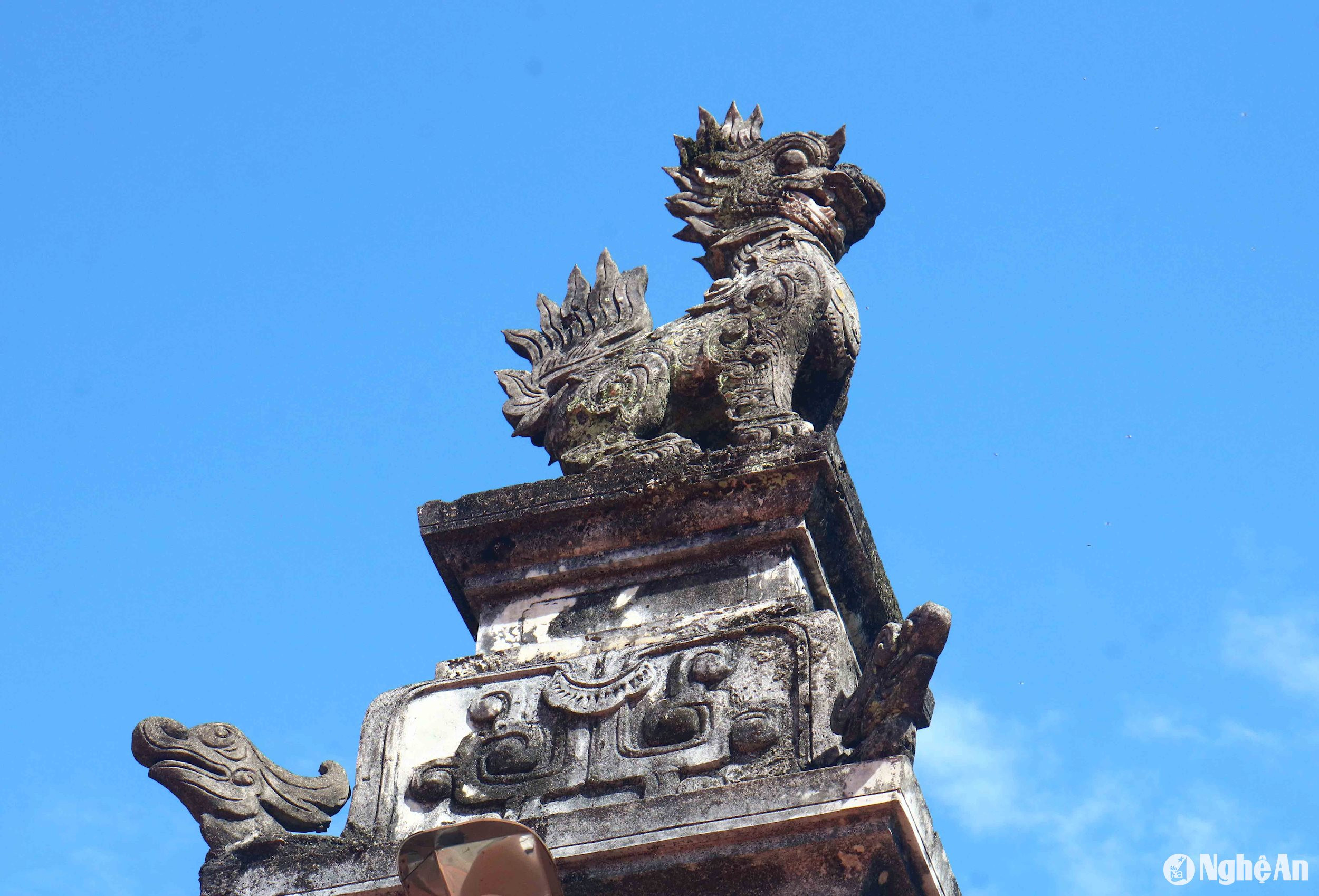
The pillars of the triple-arched gate are elaborately decorated, each adorned with a kneeling mythical creature (Nghê). Particularly noteworthy are the two central pillars, which are not only tall and imposing, but also feature phoenix heads at each corner, topped with majestic kneeling Nghê figures. During the 2007 restoration and renovation, the leaning pillars were straightened. One of the two Nghê on the central pillar, damaged, was also restored. Photo: Huy Thư
bna_6.jpg
The two side gates of the main entrance and the two incense burning houses are built in a two-story, overlapping style with curved roofs, creating a harmonious and balanced layout. Photo: Huy Thu
bna_7.jpg
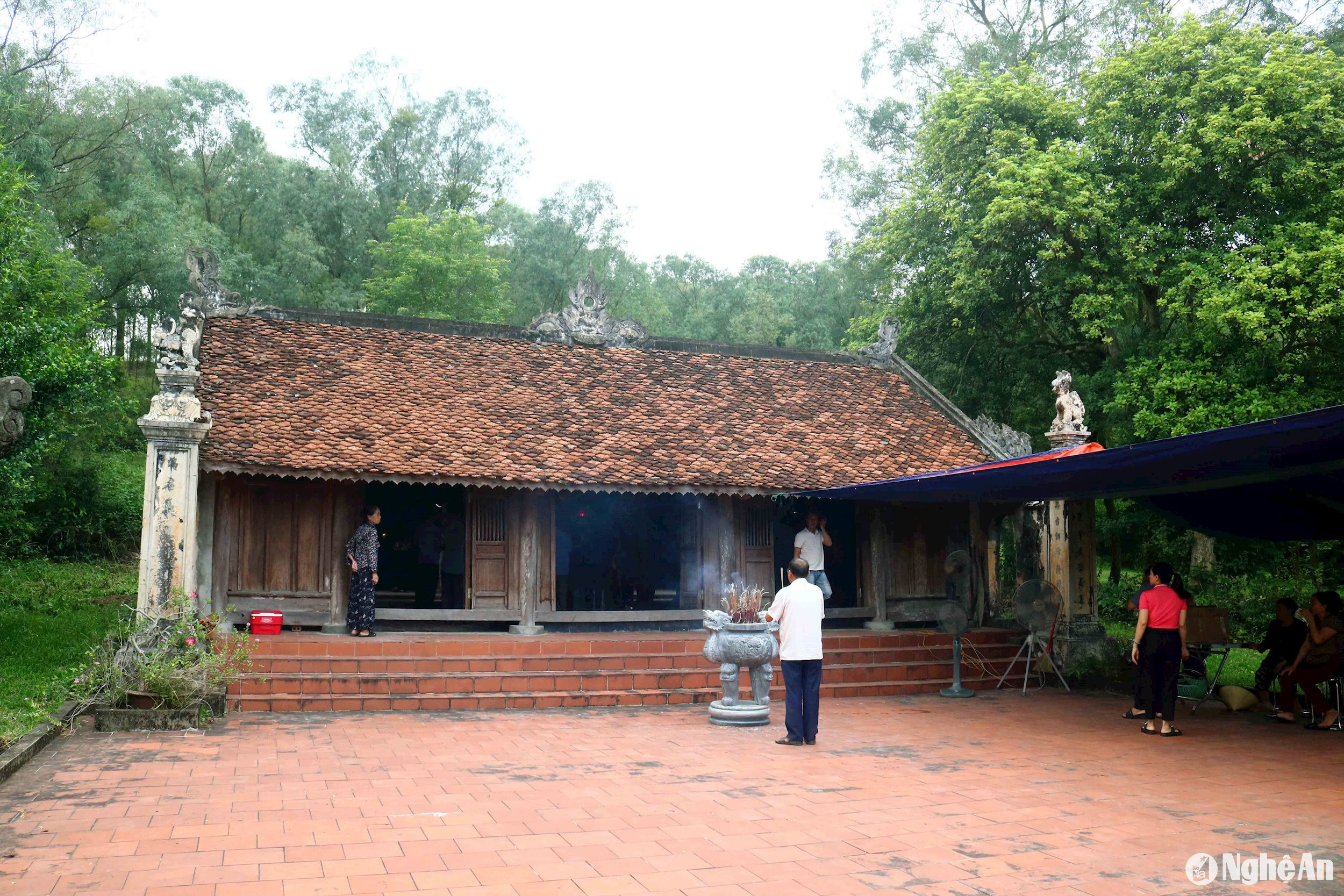
The main hall of the Nguyen Bieu temple has three bays and two gables, covered with scale-shaped tiles, with tufted columns at the front. The tufted columns are adorned with sculpted mythical creatures (Nghê). During the most recent restoration, the main hall was rebuilt, but the two tufted columns remained unchanged. Photo: Huy Thu
bna_8.jpg
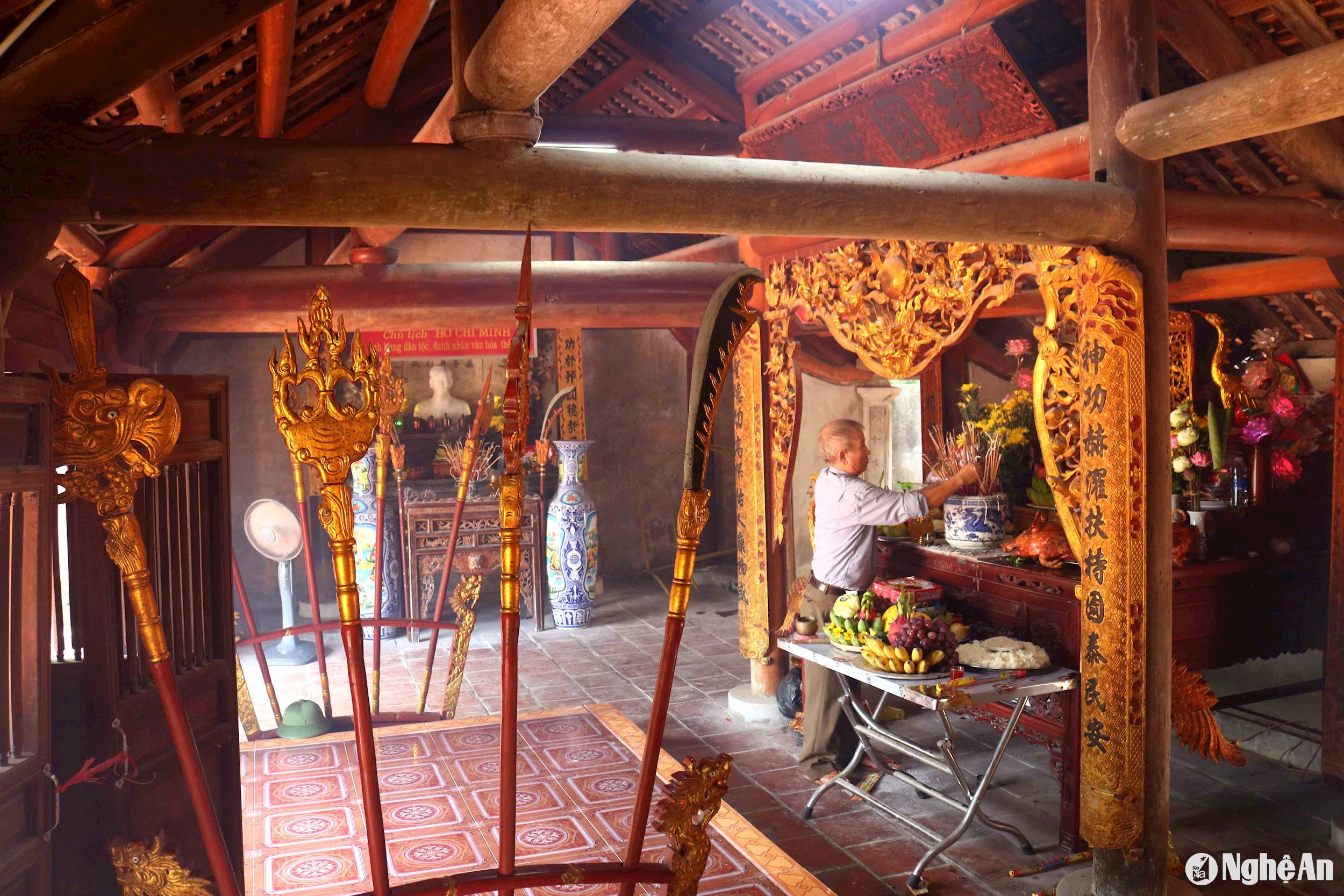
Inside the main hall, the central section houses the communal altar, while the right-hand section (facing outwards) contains the altar dedicated to President Ho Chi Minh. In the center of the hall is a horizontal plaque inscribed "Protecting the Nation, Sheltering the People" and a pair of couplets: "Thanh Lam, a sacred place of shared heritage - Yen Viet, a memorial monument to two loyal ministers." To the left is a poem by King Trung Quang bidding farewell to Nguyen Bieu on his diplomatic mission, and to the right is Nguyen Bieu's poem "Eating a Feast of Human Heads." Photo: Huy Thu
bna_9..jpg
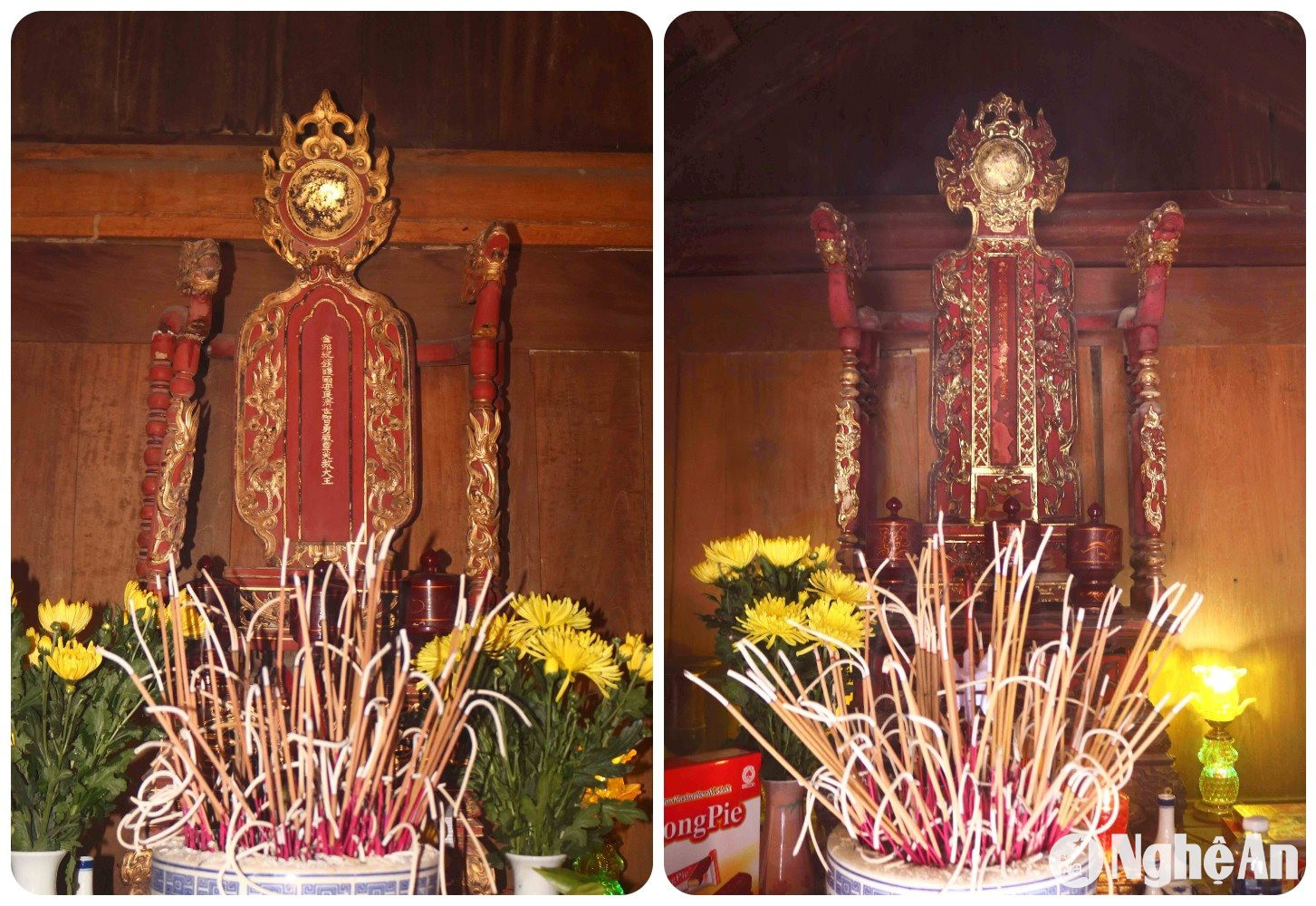
Two side-by-side rear chambers were built to worship Nghia Liet Dai Vuong Nguyen Bieu and Doctor Phan Quoc Hoa (from Duc Tho, Ha Tinh province), who died in a battle with the Mac dynasty army in 1557. Photo: Huy Thu
bna_10.jpg
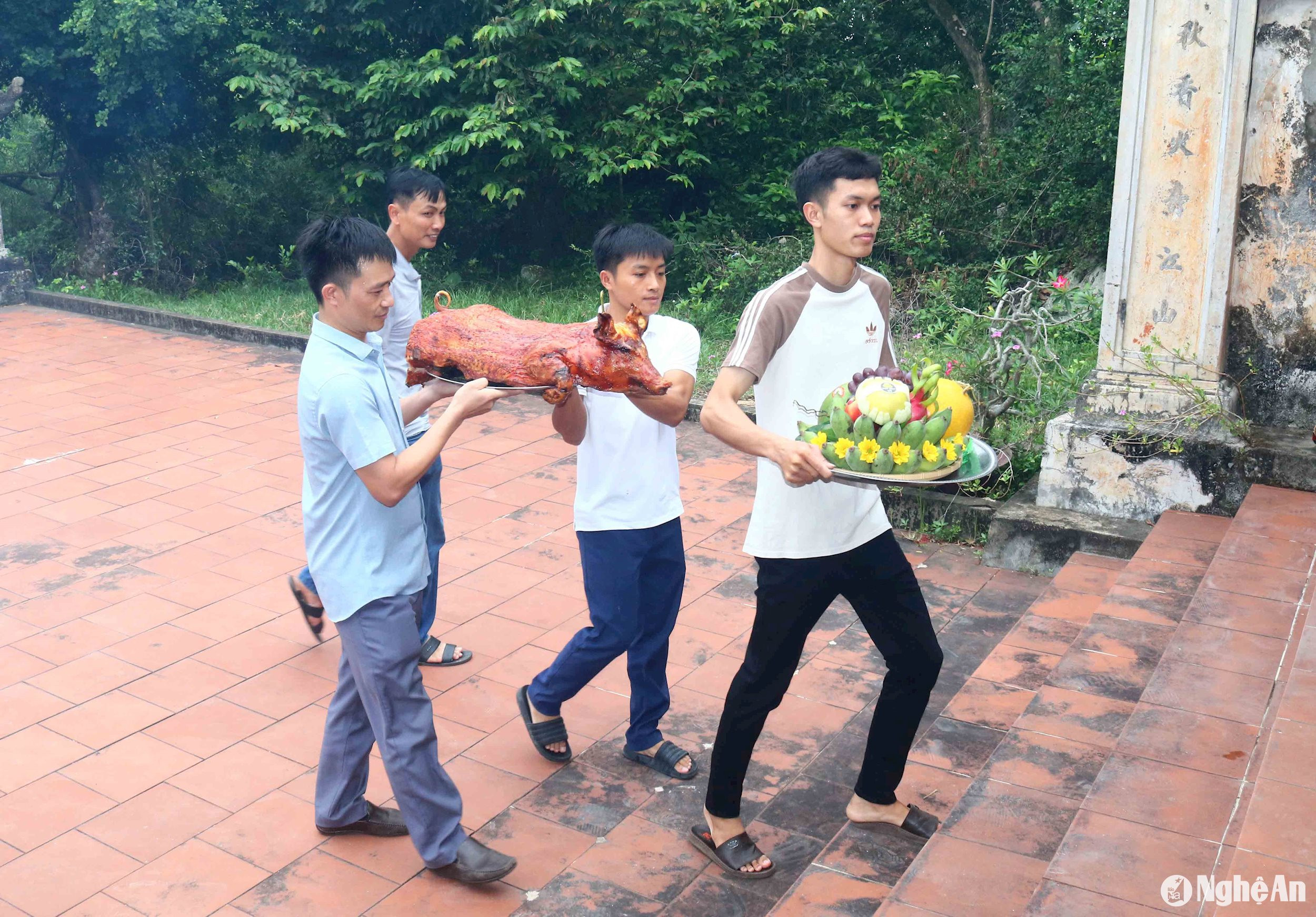
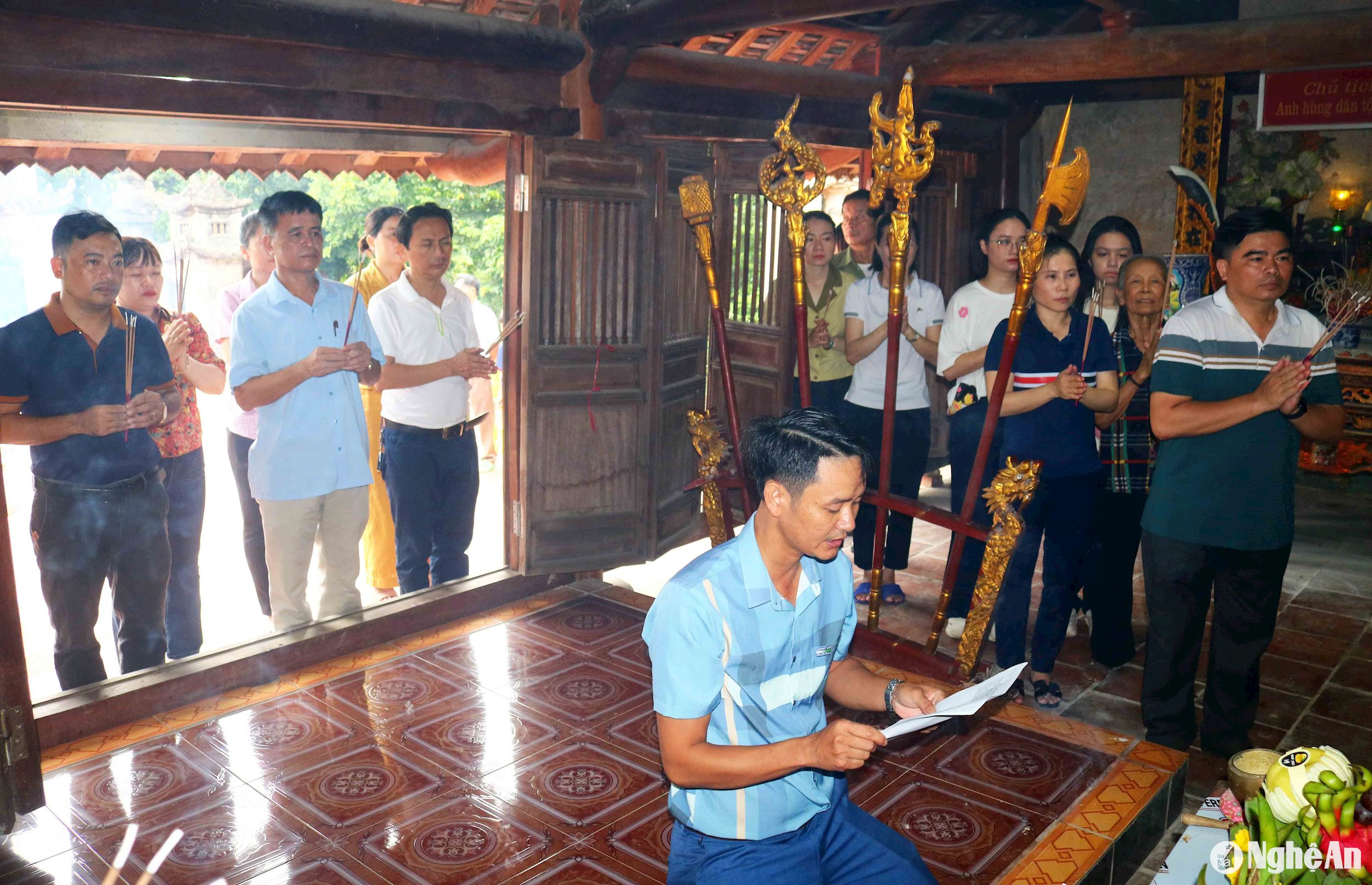
Every year on the 1st day of the 7th lunar month, the local people of Xuan Lam commune solemnly organize the commemoration ceremony for the heroic martyr Nguyen Bieu according to traditional rituals. Photo: Huy Thu
đền thờ Nguyễn Biểu là một biểu tượng của tấm lòng trung nghĩa với vua, với nước và khí phách bất khuất của kẻ sĩ đất Hồng Lam, được người dân vô cùng kính ngưỡng, và là nơi sinh hoạt văn hoá tín ngưỡng, tâm linh của nhân dân và du khách thập phương. Người dân vẫn còn truyền tụng nhiều câu chuyện về sự linh thiêng của đền thờ Nguyễn Biểu./.
The Nguyen Bieu Temple on Lam Thanh Mountain is a place of spiritual and cultural activity for the people and visitors from all over, expressing their reverence and gratitude for the loyalty to the king and the country, and the indomitable spirit in the face of the enemy of the heroic Nguyen Bieu. Photo: Huy Thu
0 0 0
x
The ancient beauty of the Nguyen Bieu temple on Lam Thanh mountain.
Google News
POWERED BYFREECMS- A PRODUCT OFNEKO