
Returning to the life-giving source of the land and sky of Nghe An province…
In February, coinciding with the anniversary of the Party's founding, I accompanied Dr. Bui Manh Cuong, the founder of the Happy Home Foundation, back to his hometown of Thanh Chuong (formerly) to distribute gifts to the local people. What seemed like an ordinary trip for a charitable foundation turned out to be a different journey the deeper I went into Nghe An province: a journey back to the revolutionary base of a region and of each individual.
Nghe An is not only vast but also "rich." Rich in history, rich in outstanding people, and rich in layers of willpower and aspirations for progress, a quality unmatched by any other region.
Traveling through the province, each (former) district appears like an open page of history, recalling the glorious years of the nation. Each region is a slice of history, contributing to the tradition of outstanding people and rich history of the homeland. Nam Dan (former) - the birthplace of President Ho Chi Minh and Phan Boi Chau. Hung Nguyen - the birthplace of Le Hong Phong and Pham Hong Thai. Yen Thanh (former) - the birthplace of Phan Dang Luu and Nguyen Kiem. Vinh (former) - the birthplace of Nguyen Thi Minh Khai and General Chu Huy Man. Thanh Chuong (former) - the birthplace of Nguyen Sy Sach, Nguyen Canh Chan, Nguyen Canh Di, Nguyen Canh Hoan, Dang Thuc Hua, Dang Nguyen Can, Dinh Bat Tuy, Phan Nhan Tuong, Nguyen Tien Tai, Ton Thi Que, Vo Thuc Dong, Professor Dang Thai Mai, Ton Quang Phiệt, and musician Nguyen Tai Tue…
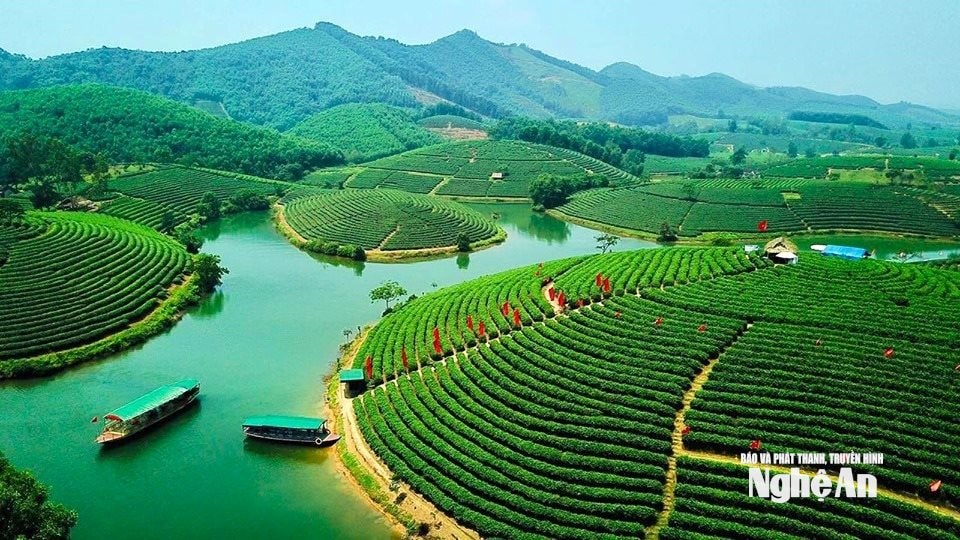
The old city of Vinh welcomed us with the dry, crisp sunshine of Central Vietnam, a sunshine that seemed to have permeated the land, the voices, and even the appearance of the people of Nghe An. Suddenly, the melody of "VinhButCity of DawnThe song "Lê Hàm" by composer Lê Hàm resonates in my memory, not boisterous but poignant, like a greeting. Today, Vinh wears the appearance of a city reaching for the horizon: wide avenues stretching to the horizon, industrial zones illuminated by lights, and a stream of people flowing back and forth through Vinh Airport growing larger every day. The rhythm of life is bustling and hurried, carrying the aspirations for progress of a land blessed with sunshine and wind. But if you pause for a moment, behind that modern facade lies a calm and enduring heartbeat. Like the Lam River silently flowing through countless seasons of change, Vinh maintains its unique character: simple yet resilient, unpretentious yet profound. The (old) city has not only "grown" with concrete, glass, and steel, but also with memories, with history, with the people who have endured war and poverty to preserve for today a solid foundation, a firm baggage to move into a new era.
Leaving the old city of Vinh, our car headed back towards the old Nam Dan on a mild sunny afternoon. The road to Kim Lien was shaded by bamboo groves, their slender yet proud stalks like the stance of generations of people from Nghe An province. The wind blew across the rice fields, recently sown by the villagers, carrying the scent of damp earth and straw. Before the simple thatched house in Hoang Tru village, Kim Lien – the birthplace of President Ho Chi Minh – the atmosphere seemed to quiet down. Not because of the stillness of the historical site, but because of the weight of history. From this humble place emerged a man who changed the destiny of the nation, as General Secretary Le Duan put it:"Our nation, our people, our land and country gave birth to President Ho Chi Minh – the great national hero, and it was he who brought glory to our nation."our, our people and"Our country and its land."
But the deepest anchor of this charitable trip of gratitude was Thanh Chuong (formerly) - the quiet, peaceful countryside that embraced the childhood of Dr. Bui Manh Cuong. The section of the Lam River flowing through here is not as noisy as at the estuary, nor as powerful as upstream. The water flows gently along the alluvial plains, passing through small villages still faintly smelling of freshly burned straw. On the embankment, the wind blows long like folk songs. That space reminded me of the poem by the outstanding son of Thanh Chuong - poet Le Huy Mau in his epic poem "A time of longing" (later set to music by composer Nguyen Trong Tao as the song)Song of the Homeland River" famous):"My homeland is very poor."We slaughter a pig, and the crow sits waiting for its share of the meat / The fish in the river also celebrate Tet like humans./…"
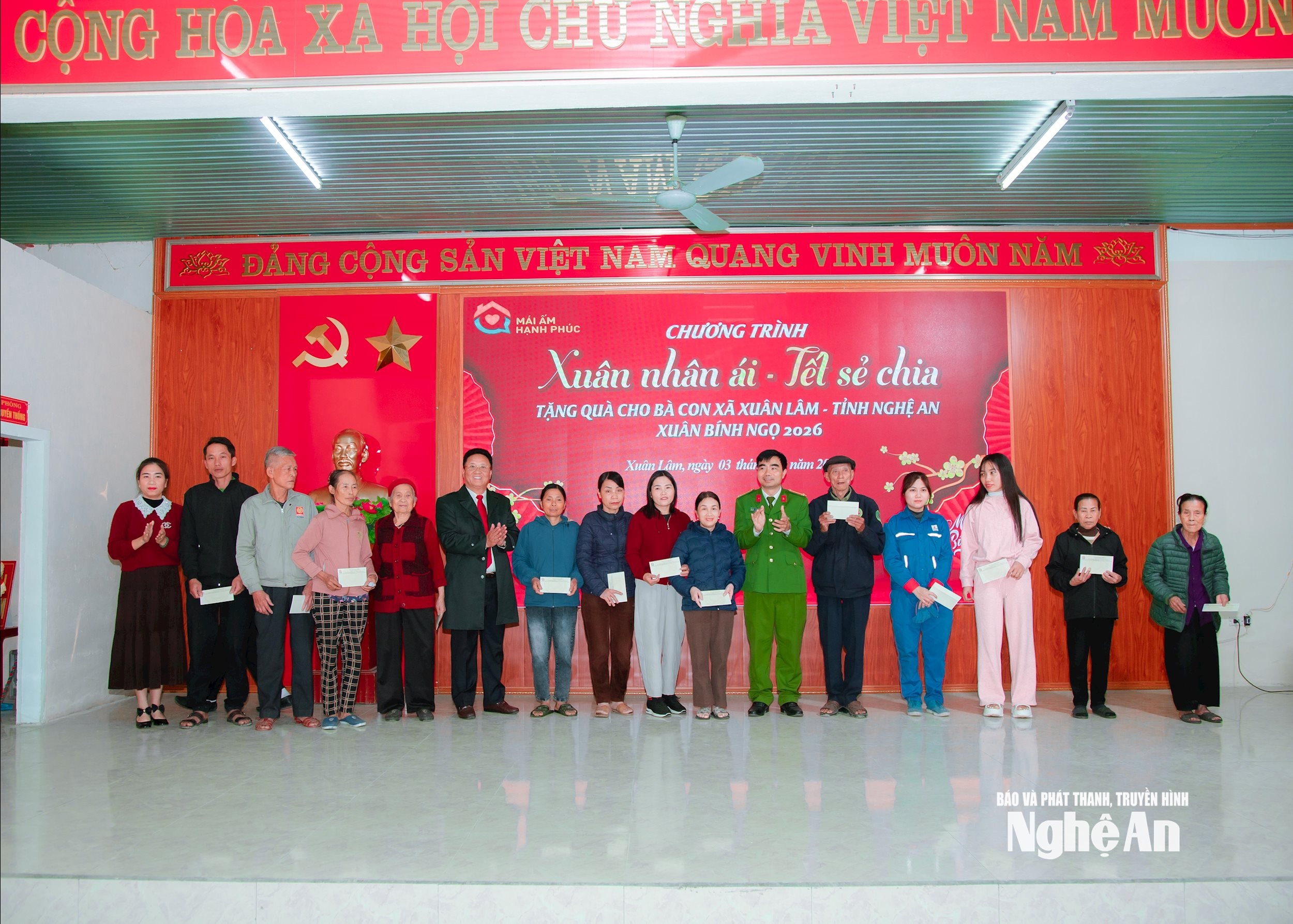
Poverty is not something to lament. It is a resilient poverty, the poverty of barren, rocky land, yet the people here stand tall and refuse to bow down. Despite their poverty, they maintain their self-respect, their literacy, and their aspirations for their children to transcend the confines of their village. Thanh Chuong (formerly) is not an easy place to live. There are many mountains, scorching sun, dry, harsh winds from Laos, and during the rainy season, the Lam River rises, sometimes changing the color of the alluvial plains and causing landslides overnight. But perhaps it is precisely this harshness that has forged the character of its people: resilient, taciturn, yet deeply committed. Is this not as expressed in the heartfelt verses of the epic poem "A time of longing"That son of Thanh Chuong; isn't it a continuation of the timeless spirit of the people in this land of hardship and compassion?""I don't know how I've treated the land."/Oh, the river is collapsing!Where is the place where we used to herd buffalo and fly kites?Where has the soil of our homeland gone now? I don't know.Are there any villages that give birth?/Are there any islands that give birth to/From the crumbling soil of our homeland's riverbank, like our own lives, we build and mend, restoring our radiance."In the early mornings, our children and grandchildren chirp and chatter..." which This creates boundless acts of gratitude and charitable giving across the country, like the Happy Home Fund today.
The founder of the Happy Home Foundation was born in the countryside."Who knows if the water of the Lam River is clear?",If you are like a chisel, then you know that living a life with teeth is shameful.,"It is an honor..."("The Song of the Lam River" by composer Dinh Quang Hop). His childhood was filled with fermented bamboo shoots, tomatoes, and ripe persimmons, with meals that were never enough to satisfy his hunger, with flood seasons where water rose and covered the riverbanks, and with nights listening to the wind howling along the river. From that alluvial plain, he grew up, went far away, and built his career in a foreign land, but the connection to his homeland was never broken. My heart stirred in an indescribable way, as if merging with the melody and lyrics of the song.Go back to your hometown."which he himself – an amateur author – had just written."
Today, in the days leading up to the Lunar New Year, he, along with his wife, Associate Professor Dr. Nguyen Thi To Quyen, their children, and members of the Happy Home Foundation, joyfully and eagerly returned to give gifts to the poor. Their journey over the past 10 years has been quiet and unassuming, like the Lam River flowing steadily. This return is not only a personal act of kindness but also a way of repaying a debt of gratitude to the land, to their homeland, and to the days of poverty that forged their character. They have been busy showing their appreciation not only to their former hometown of Thanh Chuong but also to the people of the former districts of Nam Dan, Hung Nguyen, Yen Thanh, Anh Son, Tan Ky, Nghia Dan…
There's a particularly special place for this year's gift-giving – Giai Pagoda. The ancient pagoda nestles beneath the shade of a banyan tree, its white blossoms falling softly on the old brick pavement. This is also a project that his family has devoted their hearts to restoring, building, renovating, and expanding, and it was inaugurated at the end of 2024. The air is filled with the lingering scent of incense, the slow, rhythmic chime of the pagoda bells echoing through the moss-covered roof tiles before dissolving into the small riverside village. In the center of the pagoda stands a statue of the Thousand-Eyed, Thousand-Handed Goddess of Mercy, carved from a single block of rare jadeite (collected from Canada, sculpted by Thai artisans, blessed with Indian incantations, and then brought to the pagoda), looking majestic yet gentle and benevolent. Its gaze seems to look down upon each house, each humble life. Locals say that since the pagoda was renovated and made more spacious, they not only have a place to worship but also a spiritual anchor – a place to entrust their daily worries.
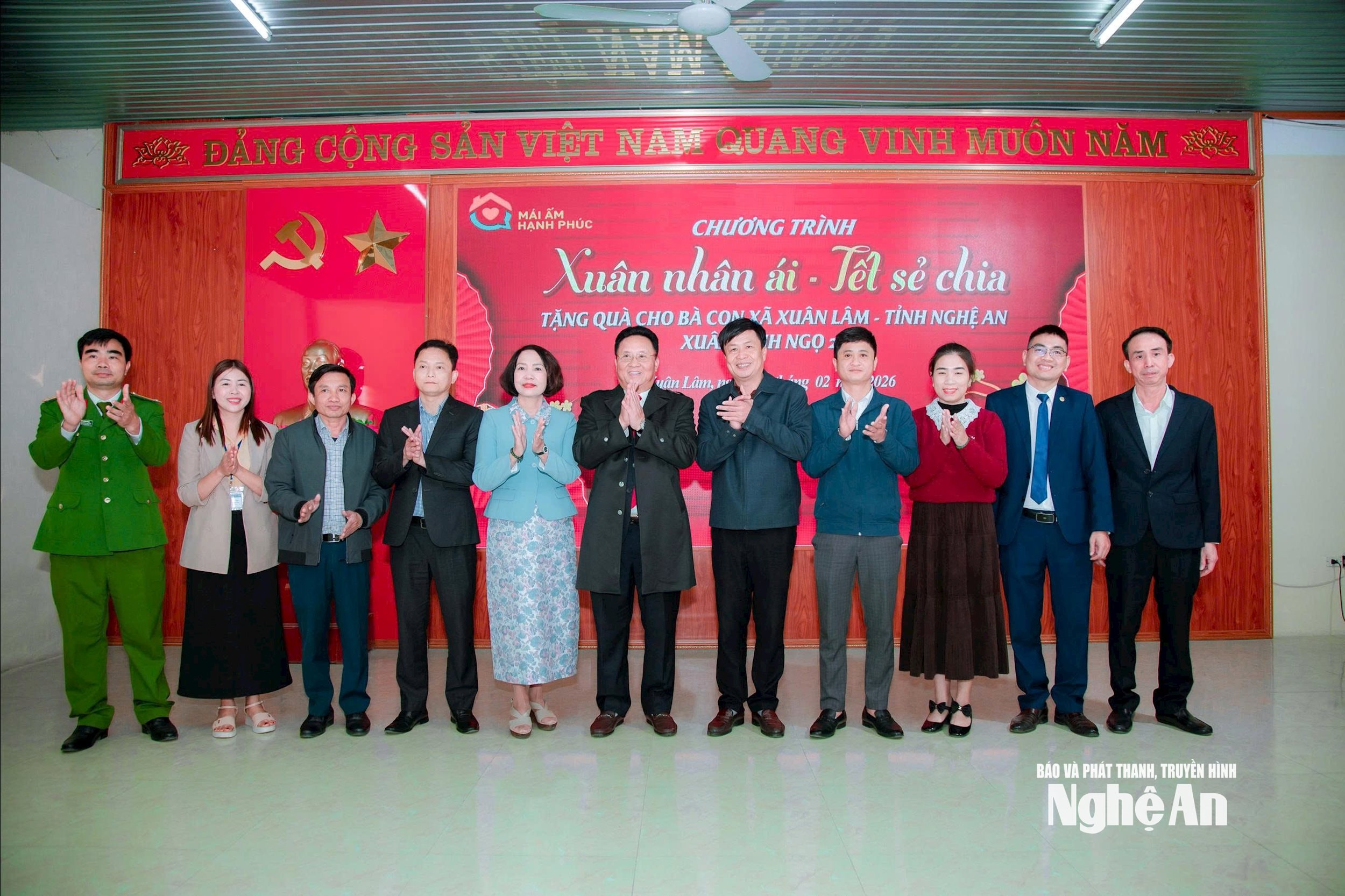
The gift-giving ceremony was so simple that, without paying attention, one might mistake it for a village meeting. There was no stage, no flashy banners. Only elderly people, leaning on canes, arrived early; women wrapped in dark brown scarves weathered by sun and wind, chewing betel nut; and children huddled behind their mothers, their eyes a mixture of shyness and eagerness. As each gift was handed out, the atmosphere suddenly became somber. Some quietly turned away to wipe away tears. Others simply uttered a single, unadorned sentence:"That's already very precious."!"
Surrounded by his neighbors, Mr. Cuong stepped onto the stage and spoke in his deep, yet firm, Nghe An accent:"I'm far away, but my hometown..."alwaysIt's in my heart. Whatever I can do for my homeland, I must do.”No slogans. No conventions. Just a simple sentence that sounded like a promise to the land. And in that moment, I realized: Returning home may not lie in geographical distance, but in how deeply one cherishes their homeland in their heart.
Standing under the roof of an ancient 15th-century pagoda in Thanh Chuong (formerly), listening to the sound of the bell fading away at noon, I was reminded of President Ho Chi Minh's letter to the Party Committee, government, and people of Nghe An, dated July 21, 1969 – his last words to his homeland before his passing. In the letter, he instructed them to preserve the close relationship between the Party and the people, to care for the lives of the people, and to build Nghe An into one of the most prosperous provinces in the North. This was not just a message, but a political and moral covenant, laying the foundation for a development mindset linked to responsibility and love for the people. More than half a century has passed, yet that instruction remains like a lamp shining in the heart of Nghe An. It illuminates every policy, every decision, every project built on this land. And every son and daughter of Nghe An, whether they remain or have gone far away, seems to carry that light in their hearts – the light of faith, of affection, and of an unceasing aspiration for progress.
That spirit has been concretized in the Resolution of the 20th Congress of the Nghe An Provincial Party Committee, term 2025-2030, with the goal of making Nghe An the center of North Central Vietnam in education and training, healthcare, science and technology, industry, and high-tech agriculture. Three breakthroughs: strategic infrastructure, administrative reform, and human resource development have been identified as the spearheads paving the way. Projects are becoming increasingly evident: the North-South expressway shortens distances; Cua Lo Port is expanding to accommodate larger ships; Vinh Airport is being upgraded to connect more distant regions; the Southeast Economic Zone attracts new capital and creates new livelihoods. The Kim Lien heritage site is preserved as a treasure; and the cultural, spiritual, and ecological tourism space along the Lam River, Cua Lo beach, and the vast western region of Nghe An is gradually taking shape. But all of this is not just dry text on a resolution. It is a silent dialogue with the past. This is how today's generation responds to Uncle Ho's advice from the past with concrete actions.
Development without sacrificing memories. Modernity without abandoning roots. Because Nghe An, more than anywhere else, understands that its strength lies not only in newly opened highways but also in the thatched houses of Kim Lien, in the Lam River, steeped in love and loyalty, and in its people who have left their homeland but whose hearts remain with their motherland.
During that simple lunch, Comrade Le Dinh Thanh – Secretary of the Party Committee and Chairman of the People's Council of Xuan Lam commune (formed by the merger of Minh Tien, Xuan Duong, and Ngoc Son communes in Thanh Chuong district) – spoke enthusiastically about the future of his hometown in a simple yet warm voice. Not grand pronouncements or eloquent speeches, he simply recounted the roads that would be opened, the bridges that would be built to connect Nam Dan with Dai Dong, the Thanh Thuy border gate, and the road along the Lam River that would carry the river breeze further, bringing opportunities closer to every home. On the surface, it seemed like a story of planning, economic development, and improving the lives and incomes of the people. But the more I listened, the more I realized that behind those seemingly dry plans lay a deeply human aspiration: the aspiration for future generations not to have to leave their homeland too early, and for the lights to still shine on the homes at night, symbolizing family reunion. I also heard from the leader of Xuan Lam commune that, just one week before today's charitable appreciation event at Giai Pagoda, Mr. Cuong, along with the Happy Home Fund and the Charitable Fund, had also given thousands of gifts to his hometown as a token of gratitude for Tet, visited and extended New Year greetings to Phuc Yen Parish (Xuan Lam commune), the Bui, Nguyen Duy, and Van families; and offered incense and flowers at the Nguyen Canh Hoan temple…
Over the past period, Xuan Lam has been determined to build a new rural area, and thankfully, the commune's policy has received unanimous support from the people. Thousands of square meters of land have been quietly donated by the residents. These include fences being moved inwards, familiar trees being relocated, and gardens that once nurtured generations now becoming common pathways for the village. Thousands of man-days of labor have been contributed. After a busy day of earning a living, the villagers still come out to the village road: some carrying hoes, others mixing concrete, and still others working until nightfall. Without being told, they simply understand that if this road is widened by even one meter, the village's future will be one step closer.
In the late afternoon, we boarded the bus back to Hanoi. Standing on the banks of the Lam River, we felt the wind from the Mekong Delta sweeping in, carrying the crisp chill of late winter and the earthy scent of alluvial soil; the sea breeze from Hon Ngu Island brought with it the refreshing hope of international integration in the nation's era of progress. The river spoke nothing, flowing silently as it had flowed through countless storms, wars, years of poverty, and even the days of opening up and reform. On the other side, newly built houses gleamed in the setting sun, standing out against the vast green of the rice fields of Ha Tinh – a land of outstanding people and rich cultural heritage, which, along with Nghe An, has shaped the character and rich traditions of the Nghe An region… A picture different from the past, yet still sharing the same land, the same origin.
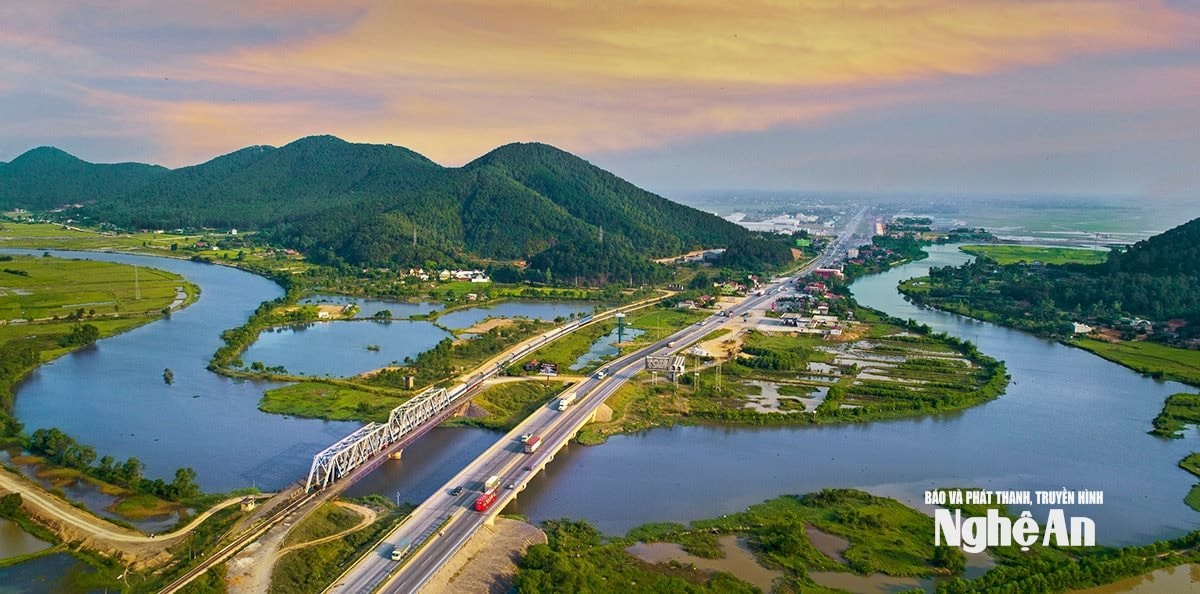
In that moment, I understood that this trip was not just a charitable return of gratitude. It was a vivid glimpse into the "blood and flesh" relationship between the Party and the People that President Ho Chi Minh had emphasized in his letter to his hometown in 1969. It was when a son who had been away from home returned to share with his village with unwavering dedication and perseverance. It was when the government and the people worked together to concretize resolutions through projects and social welfare programs. It was when revolutionary traditions did not remain dormant in a glass case but transformed into simple actions: handing out gifts to the elderly, contributing to the renovation of a temple, expanding a village road. These simple things have found their way into poetry and music in a profound and subtle way."On the riverbank we plant fresh mustard greens."We eat the leaves while butterflies and bees suck the nectar.The rice has been harvested.ButThe remaining straw is fragrant / the buffalo leisurely chews on it throughout the cold winter…same riverbankbelow the buffalo wallowUp above we take a bath/...” (The epic poem "Time of Anguish" by poet Le Huy Mau); "I passed through Con Market, Giang Market, Rang Market, Phuong Ferry/And I hear the voices of my mother and sister waiting somewhere nearby.ta about; “"Oh, my dear, returning to my hometown/I hear the echoes of my grandmother's wishes/Oh, the lullabies of my parents/The folk songs of Nghe An/That my life, as I grew up, always sought to return to..."(The song""Returning to England" by Dr. Bui Manh Cuong).
"The road to Nghe An is winding..."The ancient folk song still flows across mountains and hills, meandering along the riverbanks, and permeates the memories of generations. The geographical path may still be winding, but the path of development for Nghe An today is clearly open. Along this journey lies the spiritual essence of the land; the presence of revolutionary pioneers; the words of Uncle Ho from years past; the fervent spirit of the Nghe Tinh Soviet; the will and aspirations of the Party Committee, government, and people of the province; and the quiet footsteps of those deeply devoted to their homeland.
Nghe An, Hanoi, February 2026.


