
Why does Germany want to establish a rapid reaction force in the Baltic?
German officials have just announced plans to establish an international rapid reaction force in the Baltic Sea region. This move comes amid increasing NATO military activity near Russia's borders, prompting diverse analyses from observers regarding the risk of escalating security tensions in the region.
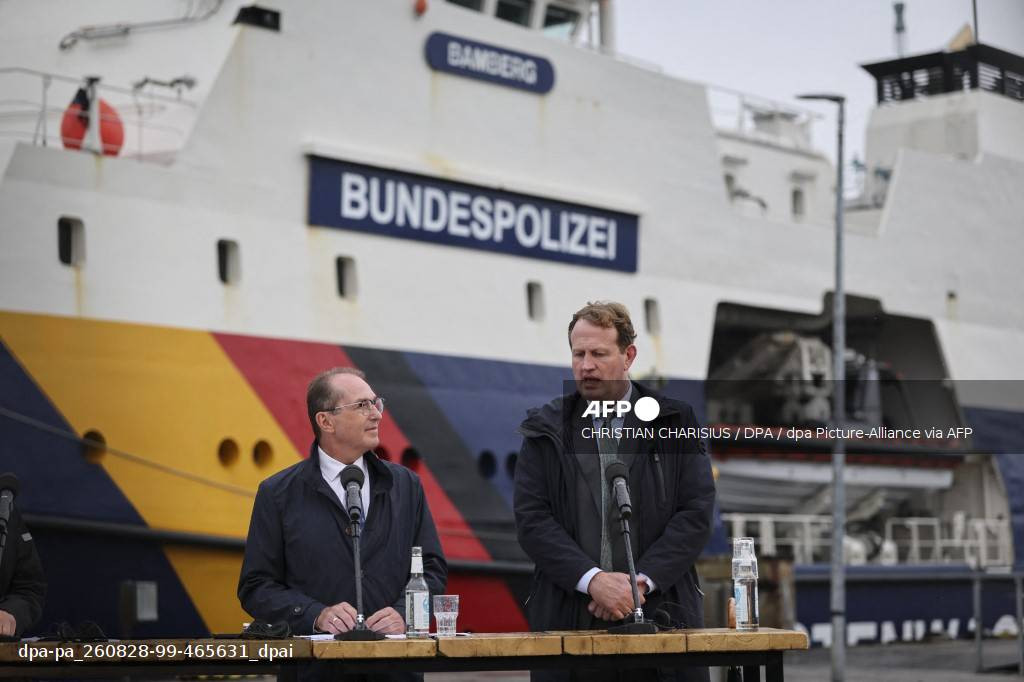
According to RT, German Interior Minister Alexander Dobrindt recently announced Berlin's plan to establish an international rapid response force. The initiative aims to address perceived threats in the Baltic Sea region. RIA Novosti, citing the German news agency DPA, reported that German officials aim to create a flexible task force. This structure will allow the countries involved to exchange information quickly and efficiently in the region.
These statements from Berlin were made just ahead of a high-level conference in Flensburg, attended by representatives from the interior ministries of the Baltic states and Ireland. During the event, Minister Dobrindt called the Baltic Sea a space of shared threats. The official emphasized his desire to reshape the region and transform it into a shared security space for all parties.
Earlier, European media had noted several signs of increased military activity. The German newspaper Merkur reported on a large-scale, surprise NATO exercise. More than 50 military aircraft appeared simultaneously in Polish airspace and over the Baltic Sea, near Russia's Kaliningrad region. Experts from the publication believe this move was a clear military message aimed at Moscow.
Following this development, Polish Defense Minister Władysław Kosiniak-Kamysz announced on social media that his country had deployed 28 South Korean-made K2 tanks to the Kaliningrad border region.
In addition, NATO member states are continuously conducting military exercises in Poland and the Baltic states. A large-scale military exercise has been planned from September 2nd to October 8th across Latvia. Approximately 12,000 people will participate in this operation, including soldiers from the host country along with forces from Canada, the United States, Estonia, Lithuania, and many other NATO countries.
Leading analyst Sergey Ermakov from the Russian Institute for Strategic Studies (RISI) points out the practical challenges facing Germany. He argues that Germany will not easily realize its ambition to build a multinational rapid response mechanism. Differences in core interests and security approaches among a number of European countries will make unifying a common mechanism in the short term impossible.
Despite the current fragmentation of Europe's overall military capabilities, this initiative is seen as an attempt to impose Western political influence in the Baltic region, and it will undoubtedly plunge the area into new tensions.
Professor of Political Science Pavel Feldman argues that the initiative to establish an international rapid reaction force in the Baltic Sea should be seen as one of many signs of Europe's militarization. The exercises taking place so close to the Kaliningrad region's borders, along with a potential Russian blockade of the area, represent a real and undeniable threat.


