
Why do Thai F-16A/B aircraft dominate Cambodian airspace?
During the five days of airstrikes following the launch of Operation Sattawa on December 10th, the Royal Thai Air Force's F-16A/B aircraft operated almost freely due to Cambodia's lack of medium- and long-range fighter and air defense aircraft.
Royal Thai Air Force F-16A/B fighter jets have reportedly conducted numerous airstrikes over the past five days targeting objectives in Cambodia, following the launch of Operation Sattawa on December 10th aimed at suppressing several areas in northern Cambodia. The noteworthy aspect of this series of operations lies not in the fact that the F-16A/B is a modern platform, but in the air defense-air force balance between the two sides, which allows this aircraft, considered inferior by modern standards, to still provide a significant advantage.
Deployment context and pace of operations
According to the information provided, Thailand began fielding F-16s in the early 1990s, with the aircraft being surplus from the US Air Force's inventory after the Cold War. In 2005, Thailand received an additional 7 F-16s as aid from Singapore.
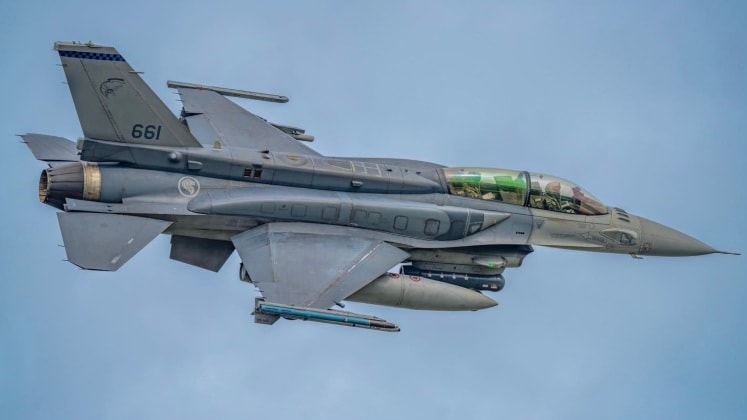
The F-16 combat operations were recorded beginning around 7:15 a.m. on December 10, with the mission of providing fire support for heavy artillery, targeting the Ta Moan Thom, Thmar Doun, and Ta Krabey temples with airstrikes using unidentified weapons.
The intensity escalated at 9:40 a.m. when multiple F-16s dropped bombs on a series of targets including Mom Bei, An Ses Phnom Kmoch, and the Preah Vihear temple. By 9:45 a.m., F-16 formations flew over O'Bei Choan commune and Poipet city. About five minutes later, more F-16s were recorded flying over the Stueng Bot roundabout in Poipet city and dropping two bombs on Slakram village in Svay Chek district, Banteay Meanchey province. Air strikes continued to be reported that day and for the next four days; numerous images from the scene showed F-16s frequently circling in Cambodian skies.
The timeline of the milestones is presented.
| Time | The events were recorded. | The area/target mentioned in the source. |
|---|---|---|
| Around 7:15 AM on December 10th | F-16s begin airstrikes, providing fire support for heavy artillery; weapons are yet to be identified. | Ta Moan Thom, Thmar Doun, Ta Krabey |
| 9:40 AM, December 10th | Multiple-target airstrikes | Mom Bei, An Ses Phnom Kmoch, Preah Vihear |
| 9:45 AM, December 10th | The flight formation flew over populated/urban areas. | O'Bei Choan Commune, Poipet City |
| Then about 5 minutes later | Continue flying over Poipet; drop two bombs. | Stueng Bot roundabout; Slakram village, Svay Chek, Banteay Meanchey |
| 4 days after December 10th | Air strikes continue; F-16s patrol regularly. | No further details were given. |
F-16A/B platform characteristics and source limitations
The F-16 fighter jet officially entered service in 1978. Even at that time, its capabilities were considered significantly more limited compared to rivals such as the F-15 (a heavy, long-range air superiority fighter), the MiG-23ML, and the Soviet MiG-25 interceptor.
The source also emphasizes that the F-16's international standing is declining and it is being widely phased out. However, in the context of the Thailand-Cambodia conflict, the F-16 was still described as maintaining "absolute dominance," primarily reflecting its air defense capabilities and interception abilities.
Why can the F-16 operate almost freely?
The main reason cited was that Cambodia "completely lacked fighter aircraft" and also had no air defense system other than very short-range point defense complexes. Under such conditions, enemy fighter aircraft faced little pressure from air interception or threats from medium- and long-range air defenses.
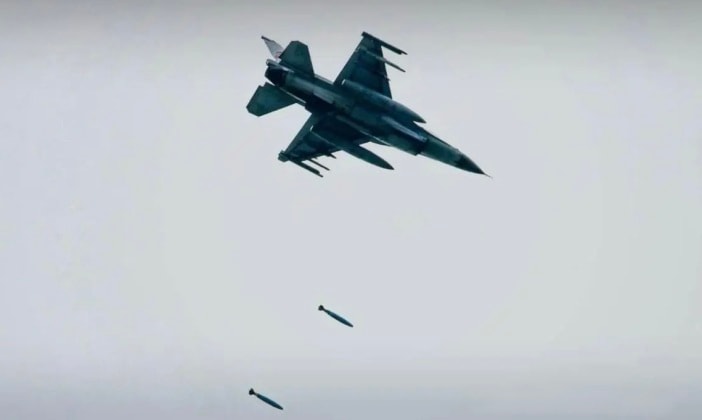
The source cites the example that earlier medium- and long-range air defense systems like the S-125 and S-75 proved capable of threatening even more modern fighters than Thailand's F-16s. However, when airspace lacks such layers of air defense, the risk to an aging platform is significantly reduced, allowing the F-16s to maintain their sortie and engagement rate.
Technical implication: advantage comes from "air defense gaps".
Sources describe the F-16A/B variant as having weaknesses: a lack of stealth capabilities, poor electronic warfare capabilities, and an outdated radar system, making the aircraft “extremely vulnerable,” especially without support from advanced electronic warfare aircraft. In a layered air defense environment, these shortcomings could significantly reduce survivability; but in an environment lacking interception and medium- to long-range air defense, these limitations are less “punished” tactically.
Therefore, the overwhelming level mentioned in the source is interpreted as a consequence of Cambodia's "almost complete lack of preparation" in intercepting the airstrikes, rather than due to the F-16A/B's technological superiority.
The scenario of changing air defense capabilities and its impact on the F-16.
The source suggests that the current conflict raises the possibility that Cambodia may in the future invest in air defense systems such as the Chinese HQ-16 medium-range or HQ-9 long-range aircraft. According to the source, even in limited numbers, these systems could significantly hinder the combat capabilities of the F-16.
The reason given is that ground-based air defense systems can be attractive due to their much lower maintenance costs and shorter training time compared to equipping fighter jets. This is a factor that could alter the "freedom of operation" of platforms like the F-16A/B, by creating significant risks for bombing and dogfighting operations.
The future of the Thai air fleet within the export policy framework.
Sources indicate that the future of the Royal Thai Air Force's squadron remains "a question mark." The information cited includes: the United States under the previous Biden administration refused to supply the fifth-generation F-35 fighter jet; while signals of a more relaxed export policy under the Trump administration "could" pave the way for a sale before the end of this decade.
Based on the available data, assessments regarding the next deployment direction are limited to policy possibilities, lacking details on configuration, quantity, or deployment timeline.


