
Why was Hungary exempted from US energy sanctions?
Hungarian Prime Minister Viktor Orbán's visit to the United States attracted particular attention as Budapest secured an exemption from energy sanctions and hinted at the possibility of receiving financial assistance from Washington. This move carries multiple layers of significance for both Hungary and the strategic calculations of the United States.
Political victory
According to sources, Prime Minister Viktor Orbán returned to Budapest with a statement that the US administration had agreed to provide Hungary with a “financial shield” to mitigate risks if Brussels continues to suspend aid due to concerns about the rule of law. He described this as “a step that neutralizes the financial tools the EU could use to pressure Hungary,” and asserted, “we have resolved this with the Americans.” While Washington has not confirmed the details, analysts suggest that this statement implies a potential financial agreement, possibly in the form of a currency swap or credit assistance similar to the recent aid package the US provided to Argentina under President Javier Milei.
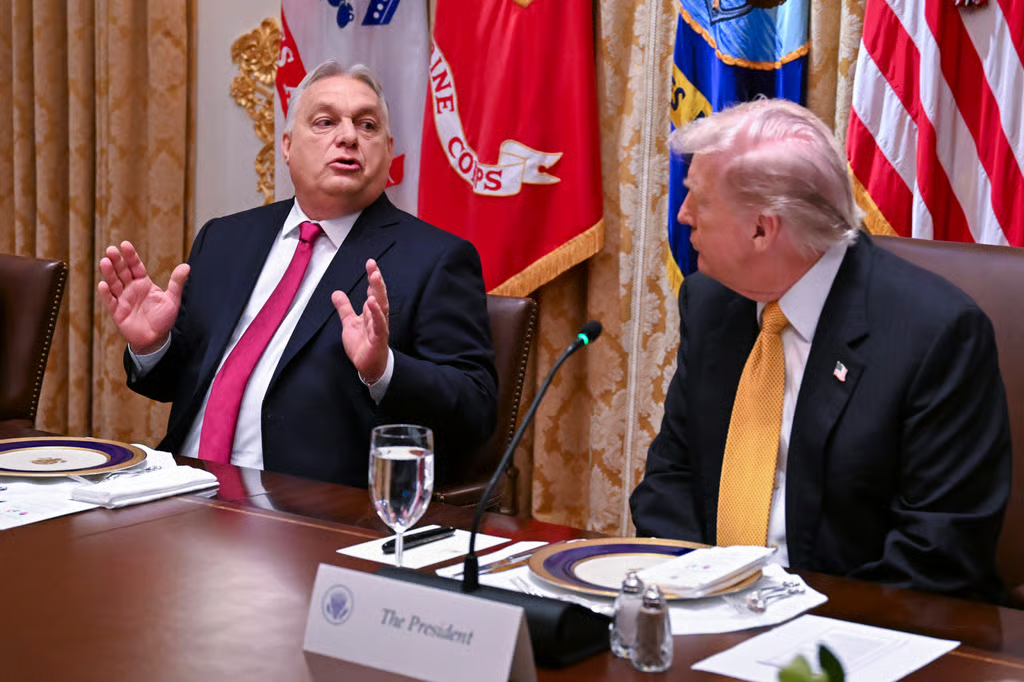
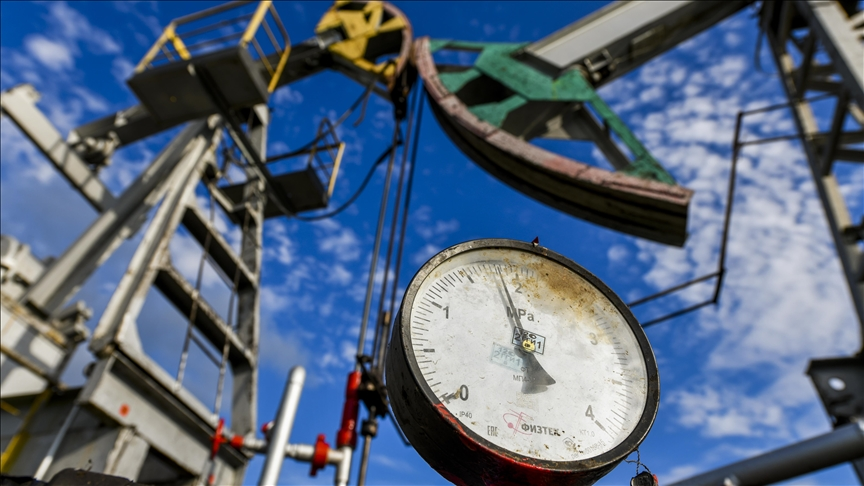
In particular, one of the most concrete results from the meeting was Hungary's exemption from US sanctions related to Russian oil and gas. According to Mr. Orbán, Budapest received a complete exemption for oil and gas supplied via the Druzhba and TurkStream pipelines. Under the agreement, Budapest also committed to purchasing liquefied natural gas (LNG) from the US, with a total contract value of approximately $600 million, seen as a gesture of goodwill and balance between the two sides.
With such results, this trip to the US can be seen as a political victory for Orbán. After 15 years in power, his Fidesz party is trailing in polls for the first time, as a wave of protests led by the opposition is gaining increasing public support. Therefore, the image of Orbán being given a warm welcome by the US President, along with the announcement of a "major financial deal," is a significant leverage to help him consolidate his position and affirm his governing capacity on the international stage.
Beyond economic considerations, another goal pursued by the Hungarian leader is to promote his role as a mediator in efforts to end the Russia-Ukraine conflict. Prime Minister Orbán suggested Budapest could be the venue for a summit between Trump and Russian President Vladimir Putin, a controversial initiative but one that aligns with his cultivated image: a "pragmatic negotiator" willing to go against the EU's common stance. A source from a Hungarian foreign policy organization commented: "Orbán wants President Trump to come to Budapest before the election. This is the top priority. They will discuss the issue of Russian gas, but Orbán's main concern remains the election." Sharing this view, Zsuzsanna Végh, a political analyst at the German Marshall Fund, believes such a visit would be "a major political privilege" from the US President. Previously, Trump rarely attended important international events in Budapest. However, many experts believe the realistic prospects of this idea are not high, especially given that Washington under President Trump is taking a rather tough stance towards Moscow.
Overall, this visit to the US helped Prime Minister Viktor Orbán achieve at least three goals: reaffirming the special relationship with President Donald Trump, raising hopes of resolving financial difficulties amidst the EU's continued freeze on aid, and strengthening the image of a strong national leader capable of guiding Hungary through external pressure.
Reasons for the exception
Hungary has long been seen as the "rebellious child" of the European Union, frequently challenging the bloc's common policies. Yet, under President Donald Trump, Budapest has been treated as an "exception," a partner that has been tolerated, even favored. The question is: What makes Washington willing to ease sanctions and expand cooperation with a European ally that is not easily controlled?
First, Hungary holds a unique geopolitical position within the European security structure. As a member of the European Union (EU) and the North Atlantic Treaty Organization (NATO), Hungary simultaneously maintains close ties with Russia and China – making it a strategic gateway in the US balancing act. From Washington's perspective, keeping Hungary within the Western sphere of influence, through limited concessions, remains a wiser option than pushing Budapest closer to Moscow or Beijing.
Secondly, President Trump has a close personal and ideological relationship with Prime Minister Viktor Orbán. The two leaders share populist, conservative, and skeptical views on globalism. In President Trump's eyes, Orbán is a testament to the "strong national sovereignty" model he often extols. Therefore, favoring Hungary is not only diplomatic in nature but also a domestic political message, affirming the stance that "America can decide its own partners," not bound by the collective direction of the EU or NATO.
Third, Hungary has practical value in regional energy and security matters. Despite criticism for its dependence on Russian oil and gas, Budapest controls a significant portion of the Central European energy pipeline network, including the TurkStream pipeline carrying gas from the Black Sea and the Druzhba pipeline directly from Russia. With the US expanding its liquefied natural gas (LNG) exports to Europe, an agreement with Hungary would not only increase the US's energy market share but also weaken Russia's energy position. Hungary's commitment to purchase $600 million worth of LNG can be seen as a win-win situation – Budapest gains an exemption, while Washington secures additional contracts and influence.
Ultimately, the US needs to maintain influence within the EU, particularly with countries that tend towards "policy independence" such as Hungary, Slovakia, and Serbia. In the context of Europe's increasing polarization regarding its approach to Russia and China, prioritizing Hungary helps Washington avoid Europe forming a strategically autonomous bloc detached from US interests. Prime Minister Orbán may be a controversial figure in Brussels, but for Washington, he is an effective channel to understand and influence "non-mainstream" ideologies within the EU. Overall, Washington understands that, despite its small size, Hungary holds a crucial role in the European geopolitical landscape: both a member of Western alliances and a "bridge" to the Eurasian world, thus making it a beneficial partner for the US.


