
Why did Russia have to change its UAV attack tactics in Ukraine?
Ukraine's flexible and adaptable air defense system has forced Russia to change its tactics for attacking with UAVs.
Instead of launching a few Iranian-made Shahed-136 suicide drones, Russia is deploying large numbers of drones simultaneously, carefully routing them to avoid Ukrainian defenses.
According to expert Justin Bronk at the RUSI research institute in the UK, Russia is now "capable of launching 30-40 UAVs" simultaneously in a single attack.
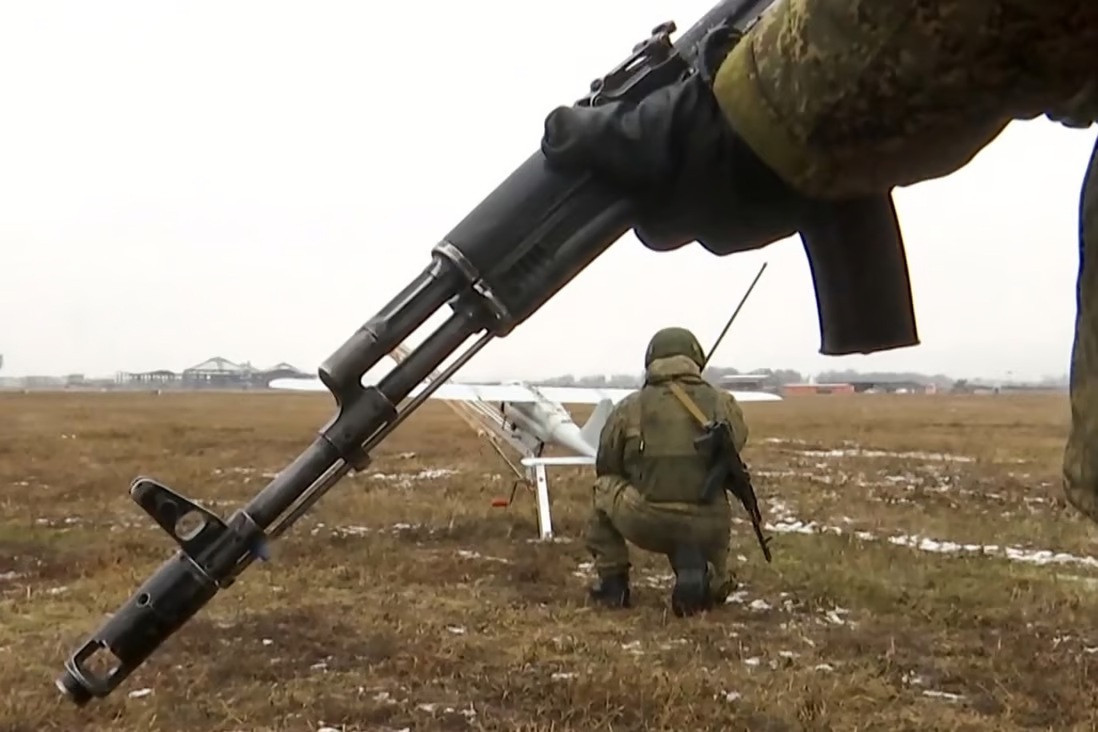 |
Russian soldiers prepare to launch a UAV. Photo: Russian Ministry of Defense. |
This marks a turning point in the UAV war between Russia and Ukraine. After Russia launched a special military operation in Ukraine in February 2022, Ukraine used UAVs equipped with anti-tank missiles or improvised explosive devices to attack Russian armored vehicles.
In late summer 2022, Russia began attacking Ukrainian infrastructure and overwhelming Ukrainian air defenses by launching a barrage of inexpensive Shahed UAVs.
"The Shahed drone attacks over several months have depleted Ukraine's stockpiles of anti-aircraft missiles and artillery shells," Business Insider quoted Bronk as saying.
In response, Ukraine established mobile air defense units equipped with a variety of short-range weapons such as the Soviet-era Shilka self-propelled anti-aircraft gun, the German Gepard, the American Stinger shoulder-fired missile, and the Soviet DShK heavy machine gun. According to Bronk, Ukraine's tactics proved effective.
In addition, Ukraine has mobilized its citizens to participate in the fight against UAVs. Specifically, Ukraine has used several applications that allow civilians to quickly report sightings of UAVs, missiles, and aircraft.
In the early stages of the conflict with Russia, Ukrainians also used a redesigned government application to report the movements of Russian troops on the ground.
Because Ukraine is relatively large, Russian UAVs have to fly a long distance to strike targets deep inside enemy territory.
According to Bronk, the Shahed-136 UAV has an operational range of nearly 2,500 km, but its maximum speed is only about 185 km/h. This means the UAVs fly quite slowly, making them vulnerable to detection and shooting down by Ukraine.
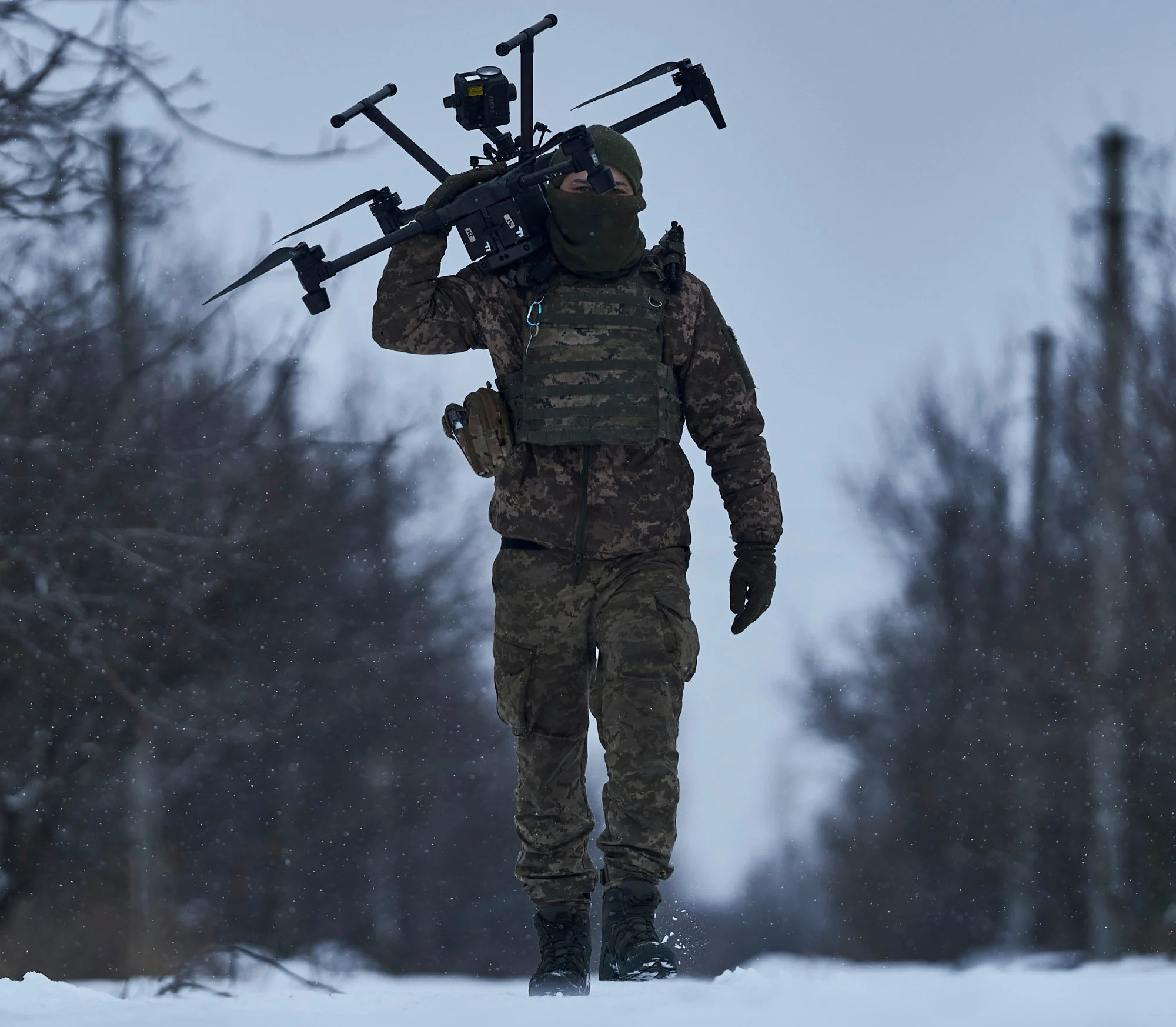 |
Ukrainian soldiers carry a drone on their shoulders near the Avdiivka frontline in the Donetsk region. Photo: AP |
This is why Russia was forced to change tactics. Specifically, before the main attack, Russia often used a few UAVs to launch an opening strike to draw the attention of Ukrainian air defense positions.
"If Russia locates the Ukrainian air defense system in a specific area, they will change the flight paths of the UAVs involved in the main attack, thus avoiding being shot down. This shows that Russia has learned from experience and changed its attack methods, but at the same time, it is evidence of the effectiveness of the defensive measures that Ukraine is deploying," Bronk said.
Ukraine's mobile anti-UAV groups are most effective when preventing low-flying Russian UAVs from penetrating deep into Ukrainian territory.
On the front lines, Russia can use a variety of UAVs, from small ones to the Orlan-10, which is capable of flying at altitudes of 1.5-4.8 km and collecting real-time data to guide Russian artillery.
“The Orlan UAV is one of the biggest problems, because it can fly beyond the range of mobile anti-aircraft missiles and anti-aircraft guns. To shoot down the Orlan UAV, Ukraine has to use radar-guided surface-to-air missile systems like the Osa or Buk. This is affecting Ukraine’s ammunition reserves,” Bronk stated.
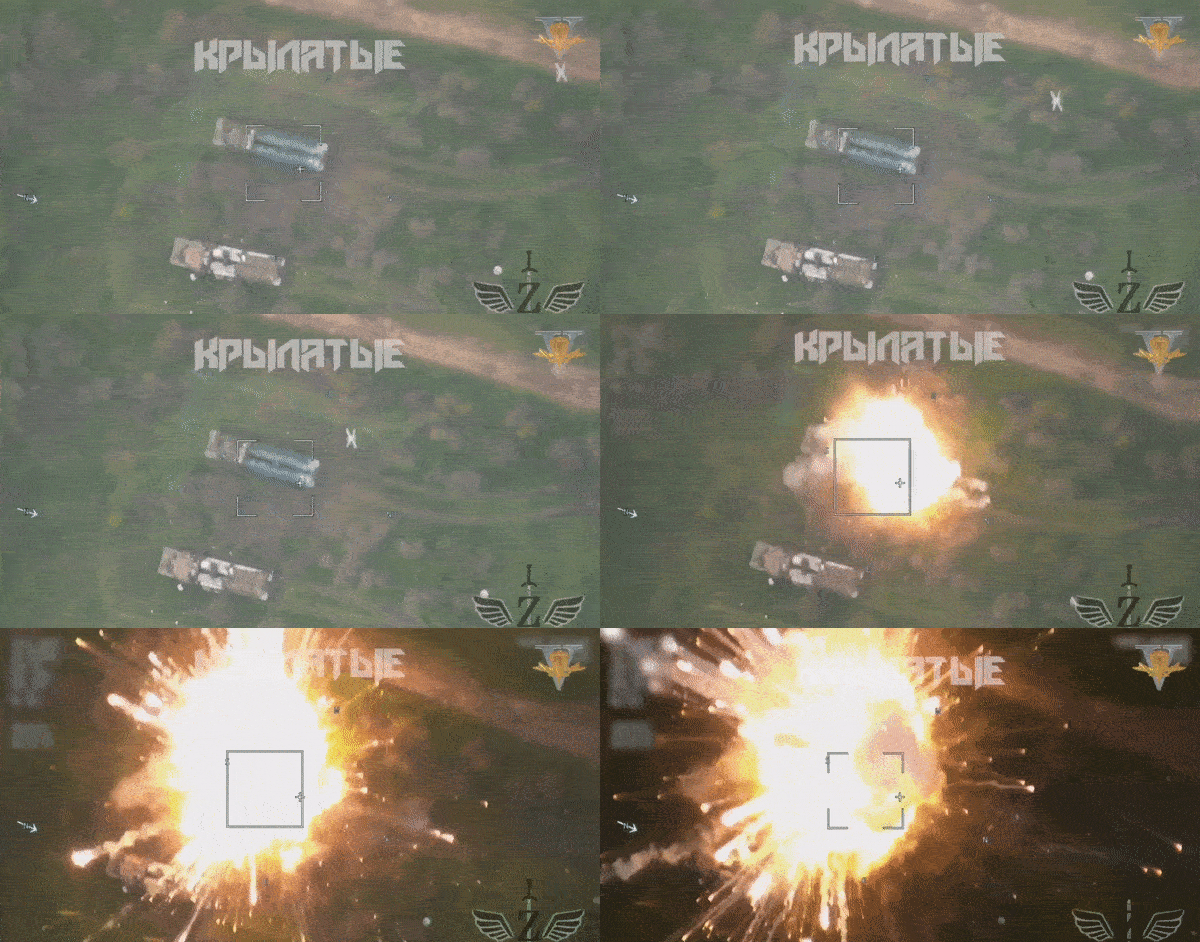
Russian UAV attack tactics are eroding Ukraine's air defense system.
04/05/2023


