
Why didn't I report a false incident?
(Baonghean.vn) - No matter what you do, you must always respect the truth. This is especially true for journalism. But is a partial truth the whole truth? Let me tell you a story about something I witnessed in my neighborhood that was wrong, but I didn't write about it, and I don't regret it.
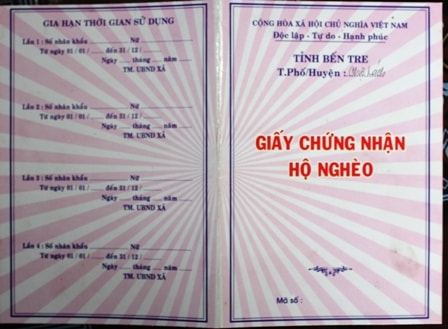
Two years ago, I went to my friend's house and saw her father riding an expensive motorbike, carrying a bundle of rice. He said it was rice given to the poor by the neighborhood. I was surprised, and my friend jumped up, asking, "Why would Dad do that?" At that moment, so many questions popped into our heads.
 |
My friend's father said, "Hold on, let me tell you something, don't get so worked up."
He said: "Our village has always been united and supportive of each other. Everyone shares, helps, and cares for one another; the community spirit is very high. Our village has five truly poor households. When assessed, these five truly poor households 'gave up their five poverty alleviation slots' to five households whose children were studying at universities in Hanoi. Because they were all farmers, having children studying at university consumed a lot of money. Even though they weren't poor, whenever their children asked for money, they would borrow from everyone in the village, and everyone knew about it. Knowing this was wrong, the village head raised the issue and asked for opinions at the village meeting."
At the village meeting, everyone was impressed and sympathetic to the five truly impoverished households who steadfastly yielded their positions to five households with children attending university. They reasoned that if these households were recognized as impoverished, the village would have five students who would surely overcome difficulties and graduate from university. Being recognized as impoverished would also allow them to access loans and benefit from certain exemptions and reductions in government services. Everyone agreed to this arrangement, as it was a way of showing "mutual support" in the simple, honest way of thinking of the villagers for generations. The matter was settled peacefully.
When the authorities decided to provide rice subsidies for five impoverished households, they stipulated that anyone on the list recognized as poor would receive the rice. The five households with children attending school were automatically entitled to receive rice because they were officially recognized as poor. However, the five households with children in school said they had already been given the "title" of poor household, and that the rice should now be given to the five truly impoverished households. The village invited the five genuinely poor households to receive the rice, but they said they appreciated it but refused because they were not eligible. They warned that if the authorities found out they were ineligible, they would be severely punished.
At the village meeting, some suggested dividing the spoils equally; if there was a mistake, the whole village would share it, out of compassion for one another. This opinion was accepted by the majority, as it was considered the most advantageous decision. Whether it was a small or large share, it had to be divided equally among the entire village.
He continued, "I accepted it, but people were whispering that they would automatically transfer it to those five genuinely poor families. So either way, it worked out. Everything went back to normal, and nobody felt offended or embarrassed." My friend's father said that was the reason he accepted the bundle of rice.
I think, if I were to insist they were wrong (and that's quite possible), I could write headlines like: "Village leader receives rice from poor people and distributes it equally to the whole village?" Or "The whole village receives rice from poor people?" Or I could find a really rich family in the village, a two-story house, maybe even a car, take some pictures, and then write: "Rich people receive subsidized rice intended for the poor." Honestly, there's no way they could escape. Who would dare sue or argue that I wrote something wrong?
But you know what? I didn't write it.
I think there's another, more profound truth: let the people resolve things themselves. They know how to ensure fairness better than we imagine. Fairness is also relative; it's about time, like "things will work out," whereas people in the countryside don't seem to perceive fairness in the sense of immediate unfairness.
Later, I still visited my friend's house; the neighborhood remained peaceful, warm, and economically prosperous. I'm satisfied that I didn't write any articles. Because, just because I have access to information while others don't, I shouldn't hastily and carelessly publish news. Nor should I, just because I have the advantage of being a media outlet, say whatever I want.
Chi Linh Son
| RELATED NEWS |
|---|


