
Why is China aggressively trying to 'buy up all of Europe'?
Analysts have examined and assessed the reasons behind the surge in Chinese investment in Europe, a region that offers some of the world's best technologies.
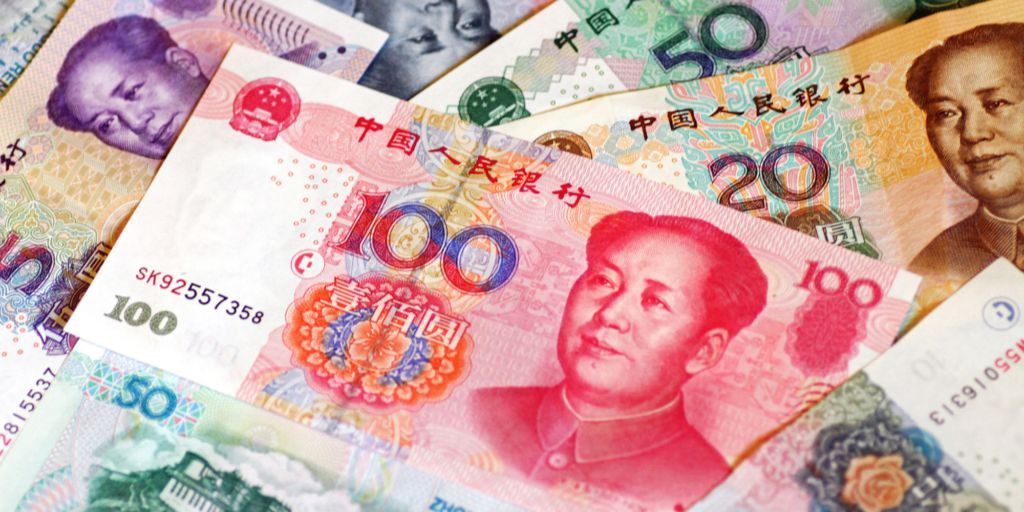 |
| China is aggressively acquiring companies and assets in Europe. |
Unlike trade and tourism, investment requires a longer-term commitment and a stable, legally secure environment. In the first decade of the 21st century, China invested very little in Europe, but figures from 2010 onwards show a significant surge. Over the years, Europe has become a favorable arena for Chinese foreign investment. The continent consistently attracts both state-owned and private Chinese enterprises seeking investment opportunities despite historical, geographical, legal, linguistic, social, and cultural obstacles.
According to a report published by the law firm Baker & McKenzie and the Rhodium Group (based in New York), the total value of Chinese investments in Europe surged from $6 billion in 2010 to $55 billion in 2014.
One of China's most aggressive investors in Europe is the China National Chemical Corporation (ChemChina). In 2015, the company acquired one of the world's most renowned tire manufacturers, Italy's Pirelli, for $7.7 billion. Then, in February of this year, ChemChina announced a $46.7 billion acquisition of the Swiss agricultural group Syngenta, the largest Chinese acquisition in Europe to date.
 |
| ChemChina spent $46.7 billion to acquire Swiss agricultural giant Syngenta, its largest-ever Chinese acquisition in Europe. Photo: Reuters. |
In their 2016 book, "China's Offensive In Europe," co-authors Philippe Le Corre and Alain Sepulchre explained five reasons why Europe has become so attractive to Chinese investors.
Firstly, the European debt crisis of 2008 was a pivotal moment, when the Chinese government began buying European bonds and investing in infrastructure companies at extremely competitive valuations. One prime example is the Greek port of Piraeus, which is now entirely under the management of the Chinese company Cosco Holding. Cosco Holding acquired 67% of the shares from the Greek port authorities.
Secondly, countries like Germany, Italy, France, and the United Kingdom are home to a range of small and medium-sized enterprises (SMEs) that provide some of the world's best technologies. For Chinese companies operating in the automotive, food, energy, transportation, luxury brands, entertainment, and tourism sectors, acquiring these European companies is a way to gather manufacturing expertise and, consequently, build world-class businesses.
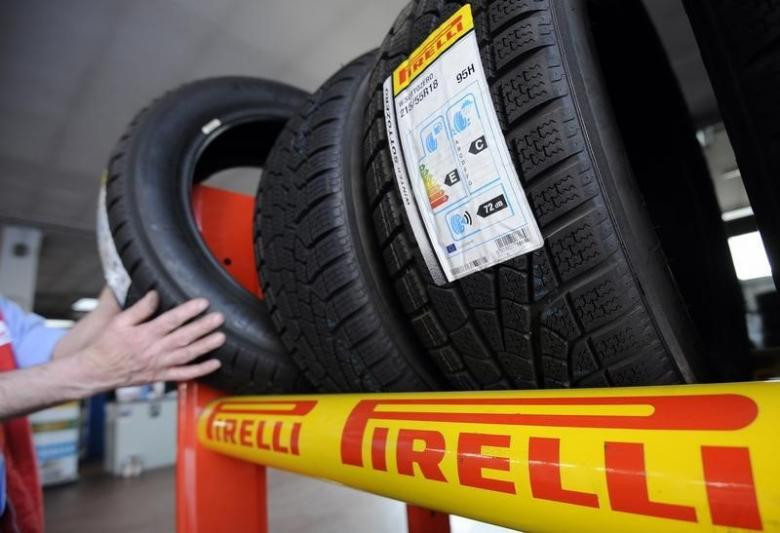 |
| In 2015, ChemChina also acquired one of the world's most renowned tire manufacturers, Italian company Pirelli, for $7.7 billion. Photo: Reuters. |
Third, relations between China and Europe appear to be far less tense than those between the US and China. Unlike the US, which has a Committee on Foreign Investment that reviews national security issues in transactions, European countries do not have such a mechanism.
Fourth, Chinese private enterprises are driven by Beijing's policy of deploying capital from overseas since the late 1990s. In Africa and Asia, China primarily targets natural resources. In European countries, China seeks to acquire brands, technology, and expand its influence, with massive financial support from its state-owned and commercial banks.
Fifth, the increase in Chinese transactions is also closely linked to the bilateral relations between China and individual European countries. The countries receiving the most Foreign Direct Investment (FDI) from China are the United Kingdom, France, Germany, Italy, and Portugal, all of which have their own established relationships with China.
 |
| One of the reasons for this heavy investment is that relations between China and Europe are far less tense than other global relationships. |
There is no doubt that the Chinese government is very good at "inciting" competition among countries for personal gain, and they use FDI as a tool to do so. As a result, as we have seen many times, European countries are vying for a share of the Chinese consumer market, which is undoubtedly very beneficial to the world's second-largest economy.
However, the wave of Chinese investment in Europe also faces many challenges. One of them is the reaction of the public and social organizations to the "invasion" of China.
For example, in Europe as well as several other major economies, there is growing debate between governments and civil society organizations. They constantly discuss the long-term benefits of welcoming Chinese investment. In Germany and Italy, two of the top recipients of Chinese FDI, people still have many negative thoughts when they think of the word "China".
According to Dan Viet
| RELATED NEWS |
|---|


