
Why are conflicts in the Middle East causing gasoline prices to skyrocket?
Whenever tensions escalate in the Middle East, the global energy market is shaken. Disruptions to oil production and transportation cause gasoline prices to rise rapidly worldwide.
Conflicts in the Middle East often lead to significant volatility in global energy markets. This is primarily because the region plays a particularly crucial role in the world's oil supply chain.
According to experts, when attacks or political instability occur, oil extraction, transportation, and export activities are often disrupted. This narrows the supply on the market, leading to a rapid increase in oil and gasoline prices.
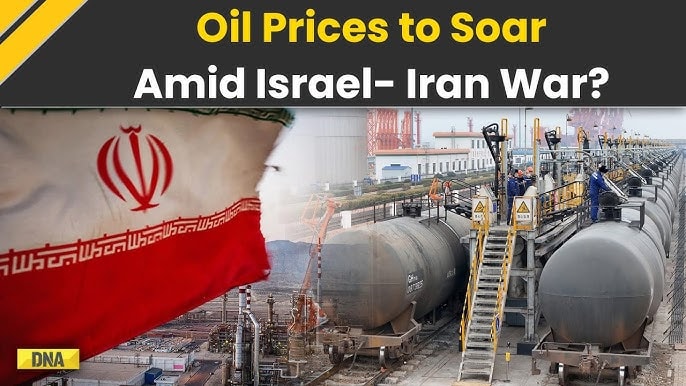
During the recent crisis involving Iran, many oil tankers were stranded in the Persian Gulf due to safety concerns while navigating the strategic shipping lanes.
The Strait of Hormuz – a “bottleneck” in the oil market.
One of the factors driving up oil prices is the disruption in the Strait of Hormuz, the world's most important shipping lane for crude oil.
It is estimated that approximately 20 million barrels of oil per day, equivalent to about one-fifth of global oil consumption, are transported through this strait.
As tensions escalated, oil tankers were unable to safely navigate the area, disrupting the international oil supply. Faced with this risk, many major oil producers were forced to reduce production during the conflict.
American oil analyst Tom Kloza told CNN that supply disruptions have caused wholesalers and energy traders to worry about the risk of oil shortages.
"When supply is disrupted, wholesalers usually react very quickly because they fear that oil prices will rise sharply in the short term," he said.
Oil prices could continue to rise if the conflict drags on.
It is still too early to predict the exact extent of the increase in fuel prices. However, many experts believe that price movements will largely depend on the duration of shipping disruptions in the Strait of Hormuz.
Jay Young, CEO of King Operating Corporation, a US-based oil and gas exploration and production company, believes that if the conflict lasts for about a month or longer, crude oil prices could very well continue to rise.
Meanwhile, analyst Patrick De Haan of GasBuddy, a US-based fuel price tracking platform, warned that if the Strait of Hormuz remains closed, oil prices could even rise to $150 per barrel.
According to Young, energy markets typically react very quickly to geopolitical risks. "It will have an impact almost immediately, not waiting until oil production or consumption runs out, if the conflict continues to escalate," he said.
Oil prices could cool down as shipping routes are restored.
However, some experts believe that a scenario of record-high oil prices is not yet certain to happen.
According to analyst Tom Kloza, while the Middle East is an important source of oil, the global market still has many other major producers who can supplement supply if needed.
If tensions ease and the Strait of Hormuz reopens, oil prices are likely to fall. However, experts believe it may be difficult for prices to fully return to pre-crisis levels.


