
Vietnam after reaching the upper-middle income milestone
The Vietnamese economy has reached a historic milestone as the World Bank officially classified the country as an upper-middle-income economy (GNI projected at $4,970 in 2025, surpassing the current threshold of $4,636). Thus, after nearly 40 years of implementing the Doi Moi (Renovation) policy, Vietnam has achieved historically significant accomplishments, elevating the size of its economy and the living standards of its people to a new level.
.jpg)
17/7/2026
*****
The Vietnamese economy has reached a historic milestone as the World Bank officially classified the country as an upper-middle-income economy (GNI projected at $4,970 in 2025, surpassing the current threshold of $4,636). Thus, after nearly 40 years of implementing the Doi Moi (Renovation) policy, Vietnam has achieved historically significant accomplishments, elevating the size of its economy and the living standards of its people to a new level. However, to become a developed, high-income country, the economy requires more substantive, far-reaching, and comprehensive reforms than ever before.

Statistics for the first half of 2026 show that Vietnam has demonstrated remarkable macroeconomic resilience despite global headwinds. Prolonged geopolitical conflicts in the Middle East triggered supply shocks, driving up global transportation costs and energy prices. Against this backdrop, the country's cumulative GDP for the first six months of 2026 still achieved a strong growth rate of 8.18%, significantly surpassing the 7.63% growth rate of the same period in 2025.
The success in further integrating into the global supply chain stems not only from outstanding growth in the export of high-tech goods, but also from the international community's confidence in Vietnam's development prospects. This is confirmed by registered FDI capital reaching US$34.65 billion, a sharp increase of 61.0% compared to the same period last year; at the same time, the actual disbursed FDI capital also reached its highest level in the past 5 years at US$13.03 billion.
Vietnam's upgrade to the upper-middle-income group according to the World Bank's classification has also placed it alongside the largest and most dynamic economies in the ASEAN region.
However, from an economic and development policy perspective, this milestone is not a place for complacency, but rather a challenging new starting point. We are facing contemporary challenges such as the limitations of traditional advantages in cheap labor and natural resources, the risk of reaching a growth ceiling, and the looming threat of the middle-income trap.
To realize the aspiration of becoming a developed, high-income nation by 2045, the shift from an extensive growth model to one based on efficiency, innovation, and a solid institutional foundation is no longer an option, but a historical imperative.

In modern economic theory, growth is not just about increasing the size of existing industries, but rather about the shift of resources from low-productivity industries to those with higher added value, such as high-tech industries and knowledge-based services. Without a firm commitment to transforming the growth model, the risk of falling into the middle-income trap is very real.
The concept of the middle-income trap first emerged in 2007, referring to a situation where a country has escaped poverty but then remains stuck in the middle-income bracket for an extended period, unable to reach developed status. The key to this trap is the gradual depletion of existing "static advantages" (natural resources, cheap labor, capital-intensive industries, or raw FDI flows) as labor costs rise. If the economy does not promptly shift its growth model from extensive (input-intensive) to intensive (based on efficiency and total factor productivity - TFP), its price competitiveness will be lost, while its technological capacity will not be sufficient to compete with developed countries.
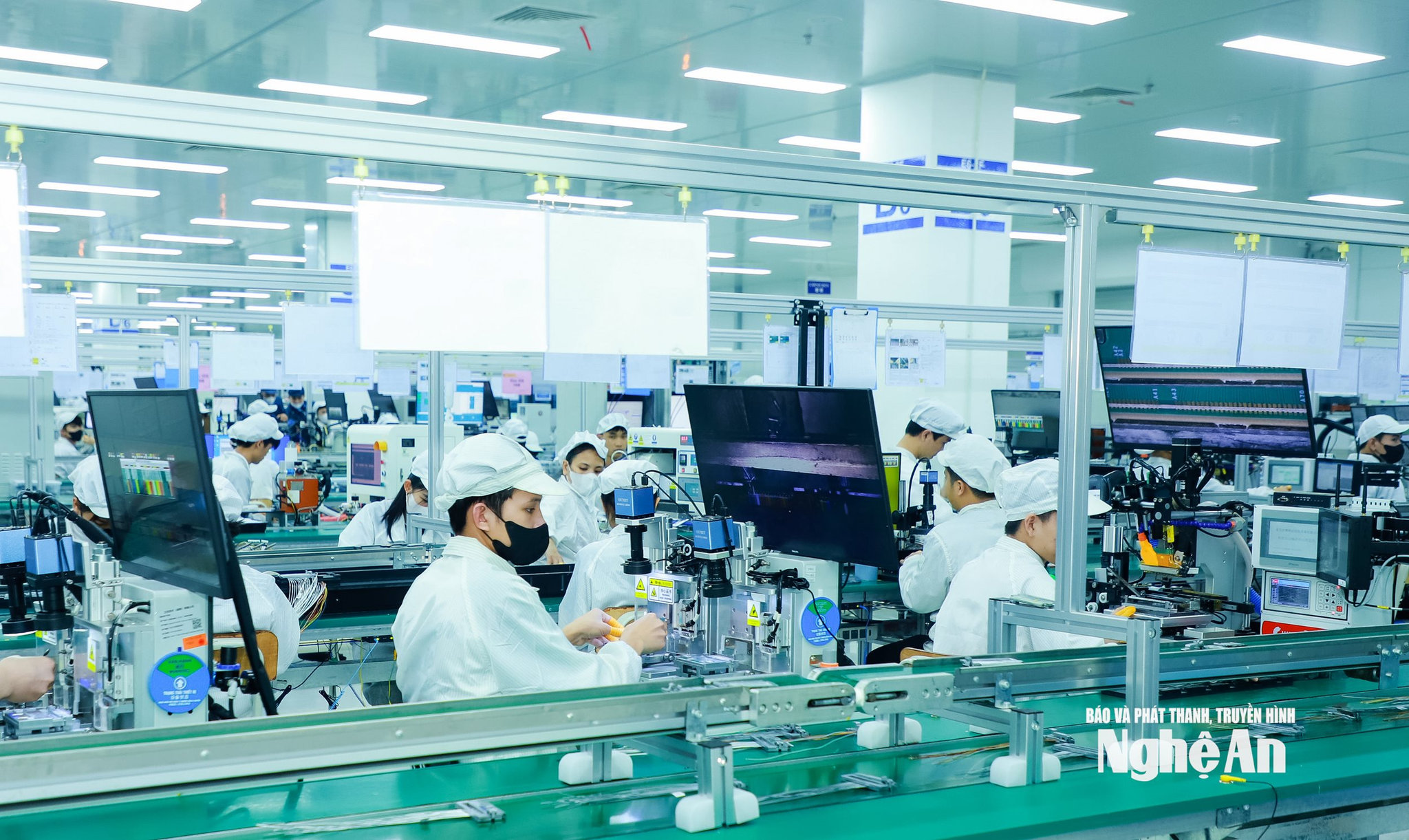
In reality, Vietnam's economic growth rate in recent years has still relied heavily on extensive development factors such as capital-intensive industries and cheap labor. While the manufacturing industry accounts for a large proportion of exports, it remains heavily dependent on imported raw materials and components. Domestic businesses primarily operate in low-value-added processing and assembly stages.
The profound divergence in the trade structure, with the domestic economic sector experiencing a trade deficit of $24.95 billion in the first half of 2026, while the FDI sector recorded a trade surplus of $8.3 billion, has exposed a core weakness in the competitiveness of domestic businesses.
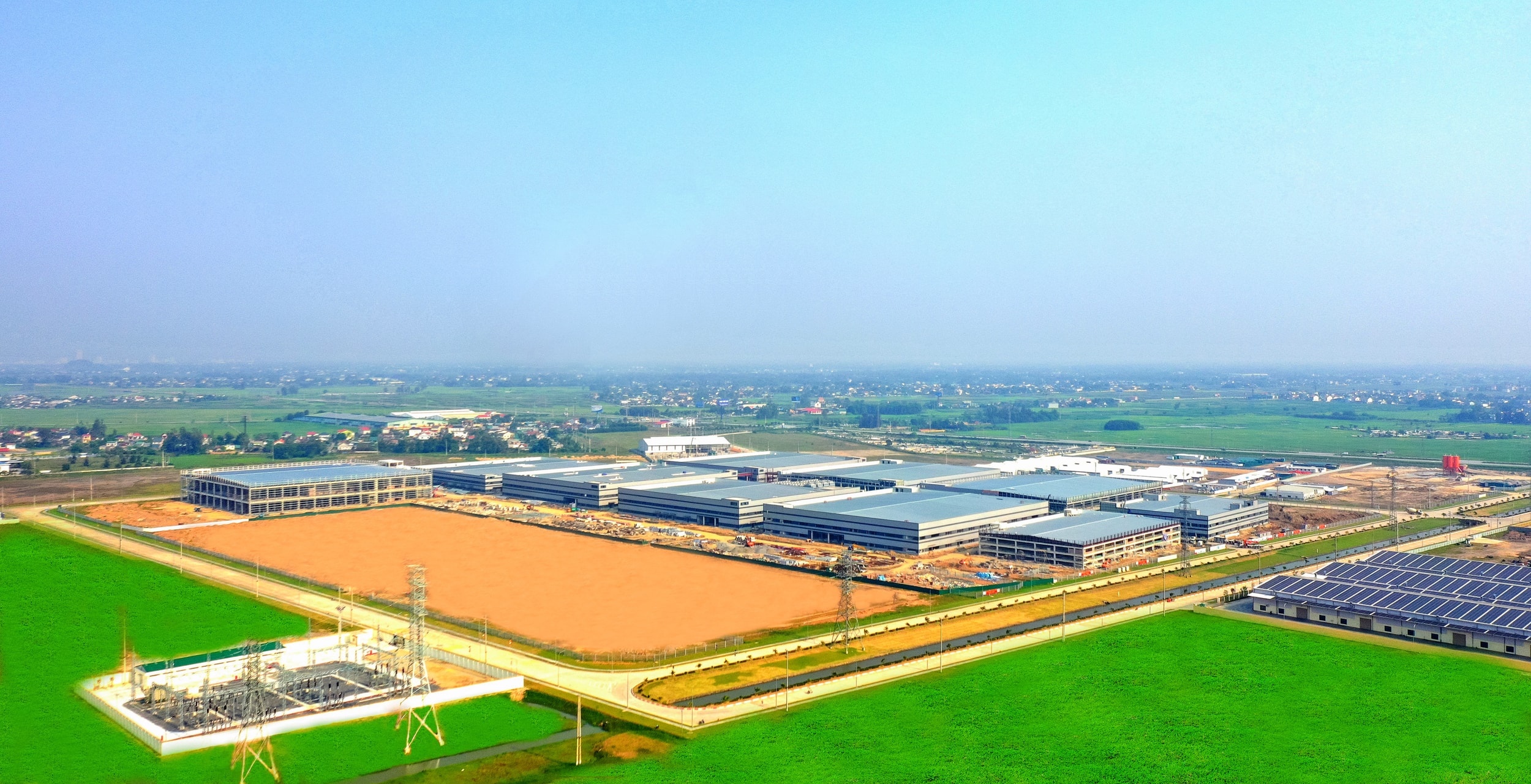
Therefore, if Vietnam cannot achieve technological self-reliance and increase the localization rate, it will struggle to improve social labor productivity and enhance the quality of growth. Furthermore, the middle-income trap is often accompanied by the middle-technology trap. This occurs when domestic businesses are limited to processing and assembling raw materials with extremely low domestic added value, lacking local R&D (research and development) activities, experiencing disruptions in technology transfer from foreign to domestic sectors, and having an education and training system that fails to meet high-level skill standards and the demands of the digital economy.
Substantive growth means resolutely refusing to sacrifice quality and sustainability for mere growth speed; saying no to "illusory" figures that are merely for the sake of achievement. Substantive growth also demands that each percentage point of GDP growth contains a higher level of knowledge.
To achieve this, a qualitative shift in the growth model is necessary, based on total factor productivity (TFP). The goal is to increase TFP's contribution to GDP to at least 60% by 2045, whereby science, technology, and innovation must become "endogenous variables" that determine the nature of the economy. Vietnam needs to focus on high-value segments in the global electronics supply chain, such as semiconductor chip design and AI applications, instead of relying solely on cheap labor.
In particular, today's growth must not jeopardize the foundations for tomorrow's development. Natural resources need to be viewed from the perspective of a green and circular economy, where exploitation must go hand in hand with conservation to avoid depleting resources for future generations. If we only pursue speed while neglecting quality and the environment, the price to pay will be very high, as evidenced by the pollution and resource depletion that many countries are currently facing.
Therefore, to become a high-income developed country, the economy requires more substantive, far-reaching, and synchronized reforms than ever before. The economic restructuring plan for the period 2026-2030 has set ambitious macroeconomic targets. To achieve them, fundamental and long-term solutions are needed, such as removing institutional bottlenecks, transforming the growth model to be based on efficiency and innovation, upgrading TFP, and investing heavily in domestic R&D capabilities... With new development opportunities opening up, coupled with a strong aspiration to rise, we can absolutely continue writing the miraculous story, leading the Vietnamese nation into the ranks of developed countries by 2045.


