
Vietnam wins against Laos: dependent on Xuan Son, U22 team in a deadlock.
Xuan Son's penalty goal helped Vietnam overcome Laos but exposed an old problem: reliance on individual talent. The U22 team only scored 1 goal in 3 matches at the Panda Cup 2025. A wake-up call.
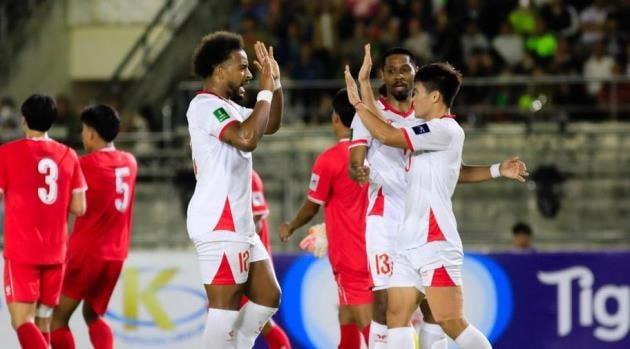
Nguyen Xuan Son's penalty goal secured three points for the Vietnamese national team against Laos in the 2027 Asian Cup qualifiers. But after the relief came the unavoidable reality: the attacking style still relies heavily on one individual, and when Xuan Son is absent, the finishing ideas and quality of the final touches are noticeably lacking.
Key moments and developments
The first half revealed a disjointed attack: a lack of a leader to connect the lines and organize the attacks. Tien Linh missed a golden opportunity when his close-range shot went over the crossbar, reflecting the pressure and eroding confidence.
At the start of the second half, coach Kim Sang-sik made four substitutions simultaneously, including Xuan Son. The impact was immediate: not only did he score a penalty, but the Brazilian-born striker also played a pivotal role in the team's coordination, giving the attacking moves more rhythm and depth. His wall pass that led to Tuan Hai's shot hitting the crossbar is a prime example.
Tactics: Why is Vietnam so easily dependent on Xuan Son?
Since being praised by the FIFA World Cup for his explosive debut at the 2024 AFF Cup, Xuan Son has consistently been central to the team's attacking play. He holds the ball well in tight spaces, turns effectively under pressure, and creates game-changing plays. With him on the pitch, Vietnam possesses a key attacking player upfront: teammates can build up play, exploit passing sequences, and penetrate the space behind them.
The problem lies in habit: the attacking play has become a default strategy, with Xuan Son being the one to break through. When the striker was absent for 10 months due to injury, the team immediately lacked a coherent solution for the final stage. The two matches against Nepal last month are a clear example, with the attack only scoring one goal and most opportunities lacking sharpness.
In the victory against Laos, incursions from the second line were rare, wing attacks lacked players to finish them off, and the threat in the penalty area wasn't sustained long enough. This isn't just the story of an individual, but rather a need to build a more versatile attacking structure.
Aftershocks at the U22 level
Similar shortcomings emerged at the 2025 Panda Cup. The Vietnam U22 team only scored one goal in three matches, and that goal came from an opponent's mistake. Against physically strong and pressing opponents like Uzbekistan U22 or South Korea U22, Vietnam U22 often had their attacking tempo stifled, and their counter-attacks lacked precision in the final touch.
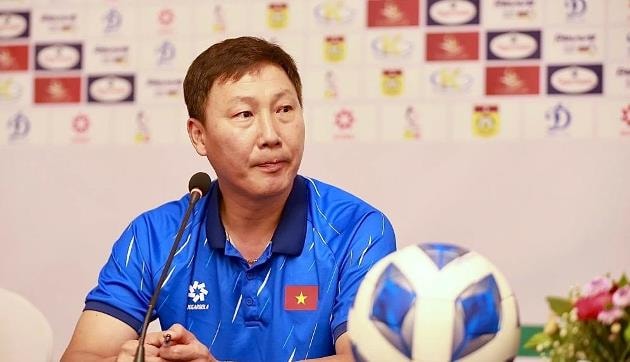
Although many players have played together since youth level, the difference in skill level is evident when they step onto the continental stage. Coach Dinh Hong Vinh acknowledges that the team has spirit and discipline but lacks quality in finishing and decisive moments. The overall picture: a lack of a confident striker, a lack of a playmaker, and a lack of diversity in attacking strategies.
The numbers are noteworthy.
| Indicator | Value | Context |
|---|---|---|
| Vietnam's goal against Laos | 1 table from 11m | Xuan Son performed |
| Personnel changes at the start of the second half. | 4 substitutions | Xuan Son entered the field. |
| Xuan Son's absence | 10 months | Due to injury |
| Attacking effectiveness against Nepal | 1 goal in 2 matches | Only goals scored by the attacking line will be counted. |
| The effectiveness of the U22 team at the Panda Cup 2025 | 1 goal in 3 matches | Scoring from opponent's mistakes. |
Impact and the path forward
Three points against Laos are necessary, but not enough to bring peace of mind. When opponents analyze the situation more closely, a single-line attack will be easily neutralized. Vietnam needs multiple attacking threats simultaneously instead of putting pressure on a single player.
In the coming period, the packed schedule at the SEA Games 33 and the U23 Asian Championship demands a deep attacking system. Coach Kim Sang-sik manages both the national team and the U23 team, and his time working with them has been long enough to identify weaknesses. The challenge is not to find a new hero, but to design a structure that allows the entire team to create opportunities: adding midfield runs at the right time, diversifying attacking options on the flanks, organizing midfield linkages to create space, and improving the quality of finishing in the final touches.
Xuan Son's return brings hope, but teamwork is the key to Vietnam's further progress in Asia. When no longer dependent on a single individual, the team will be more confident in facing greater challenges.


