
Viettel Nghe An actively supports people in switching from 2G to 4G network.
On September 15th, according to the roadmap of the Ministry of Information and Communications, Vietnam will cease providing 2G services nationwide. To facilitate the transition from 2G to 4G phones, Viettel Nghe An has been implementing many practical support programs.
Increase customer support capacity.
Accordingly, mobile phones that only support 2G (2G Only) will be unable to make or receive calls from September 15th onwards. To prepare for this crucial moment, Viettel Nghe An is actively assisting customers before the network shutdown to ensure user rights are protected and the telecommunications network remains uninterrupted.
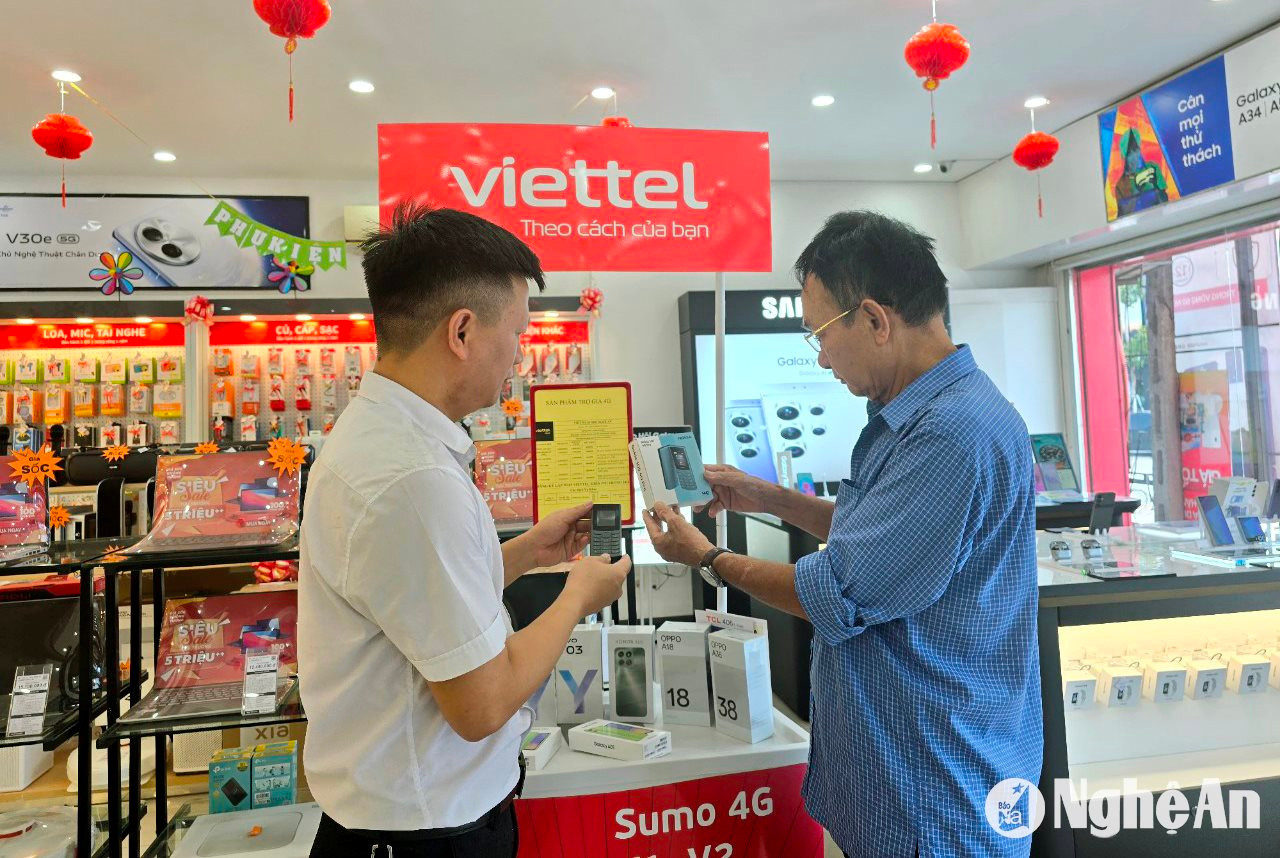
Observations at the Viettel Store (No. 16, Nguyen Thi Minh Khai Street - Vinh City) show a sudden surge in customers switching to 4G phones in recent days. The majority of customers needing to upgrade to 4G at this time are elderly people, or those who cannot afford to switch, and are currently using feature phones that do not support 4G technology.
Ms. Tran Thi Lan (Dong Vinh Ward, Vinh City) has been using a traditional "brick" keypad phone for many years. Hearing that her phone would no longer be able to make or receive calls after September 15th and that she needed to switch to a 4G phone, she asked her grandchild to take her to a Viettel store to exchange it for a new one. Fortunately, the store had many 4G keypad phones available, which were easy to use and suitable for elderly people like Ms. Lan.
In addition to increasing support staff at stores, Viettel Nghe An is now also organizing many support points for converting and upgrading to 4G devices at village cultural centers to disseminate information and provide assistance to people, especially the elderly who lack the means or means of transportation.
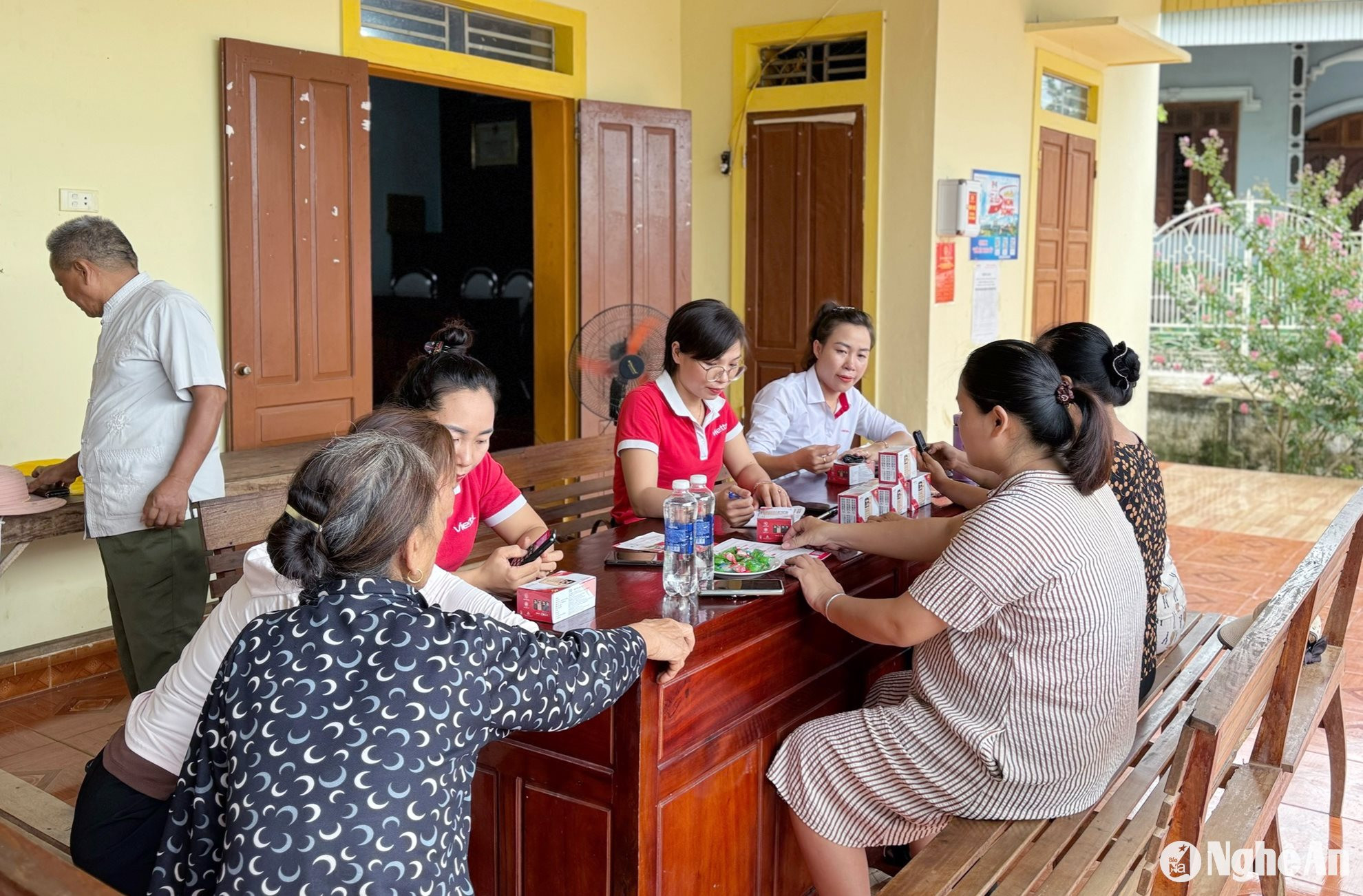
Ms. Nguyen Thi Sam (Dong Hieu, Thai Hoa Town) shared: “Previously, I used an old keypad phone for over 8 years. When the commune's loudspeaker announced that 2G phones would soon be unusable, I and many other residents in the neighborhood went to the community center to register to buy a discounted phone from Viettel for only 390,000 VND. This phone is easy to use and quite cheap, suitable for elderly people like me. Viettel staff also provided dedicated guidance, so I found it easy to use.”
Many policies encourage people to switch to 4G.
Following the Government's directive, the Ministry of Information and Communications has requested telecommunications service providers to develop plans to encourage and support people in switching from 2G-only devices to 4G-enabled devices; ensuring that no subscribers using only 2G-standard devices will be operating on the network from September 15, 2024.
With its social responsibility and flexible business strategy, Viettel is a pioneering network operator leading the way in supporting people to upgrade from 2G to 4G.

Accordingly, Viettel is offering free 4G mobile phones to customers who register for prepaid packages with a term of 6 months or more, with the package price remaining unchanged. In addition, customers who do not wish to commit to a package will still receive a discount of up to 50% when purchasing certain 4G smartphone models offered by Viettel.
In particular, Viettel also has preferential policies to support poor and near-poor households when purchasing 4G devices. In addition, users who successfully upgrade from 2G to 4G also receive free high-speed 4G data and access to online TV streaming applications…
At this time, Viettel is also actively coordinating with the Department of Information and Communications and local authorities at all levels to disseminate information and raise awareness among the public about the government's policies and the deadline for ending 2G services on September 15, 2024, so that people can promptly switch to 4G devices.

In addition, Viettel Nghe An has proactively prepared network resources and human resources. Accordingly, Viettel Nghe An invested in adding nearly 200 more 4G base stations in 2024 to increase 4G coverage to match 2G coverage.
From the beginning of 2024 until now, Viettel has supported the conversion of more than 100,000 2G phones to 4G for people in Nghe An province. Currently, the percentage of Viettel network customers in Nghe An using 4G phones is approximately 90% and is expected to increase rapidly in the near future.
These activities not only facilitate citizens but also contribute to supporting localities in improving their digital transformation indicators.
Mr. Nguyen Van Dien, Vice Chairman of the People's Committee of Tay Hieu commune, Thai Hoa town, said: “Regarding the policy of switching from 2G to 4G, it is very convenient for using advanced technology and services. To coordinate the implementation of the State's policy, the locality has actively propagated and encouraged people who have not yet switched to cooperate with Viettel staff to do so. At the same time, Viettel has been very active in accompanying the locality to support people such as free installation, discounted prices on mobile phones… and providing thorough guidance to each person. In addition, for customers with difficult travel conditions, Viettel staff even come to their homes to provide support.”
In order to accelerate progress towards the government's goal, Viettel is strengthening its support policies to facilitate the transition to 4G for the public.
According to Mr. Nguyen Trong Tinh, Deputy General Director of Viettel Telecom, in order to achieve a 2G user rate of less than 5% by September 2024, as a basis for shutting down 2G networks, Viettel is strengthening 4G coverage, lowering prices to suit customers' affordability; and simultaneously supporting 50% of the phone price for customers switching from 2G to 4G, providing the market with a line of affordable smartphones (around over 1 million VND).
With synchronized solutions, Viettel's efforts to successfully transition mobile technology from 2G to 4G/5G will contribute to improving the province's digital infrastructure and digital transformation index, supporting people, especially in remote and disadvantaged areas; and at the same time, promote the fourth industrial revolution, helping people access public services and conduct online transactions at high speeds.


