
A Hmong doctor couple silently dedicates themselves to the border region of Nghe An.
Amidst the undulating mountains and clouds of Nam Can - Muong Xen, where winding slopes stretch like threads across the sky, a Hmong couple of doctors quietly safeguard life in this border region. They are doctors Lau Ba Hua and Ho Y Chua. One is dedicated to the frontline of international health quarantine at the Nam Can border gate. The other is steadfastly working in the Outpatient Department of the Ky Son Medical Center... Their story is not boisterous, but deeply moving.
19 years of acting as a quarantine "shield" at border crossings.
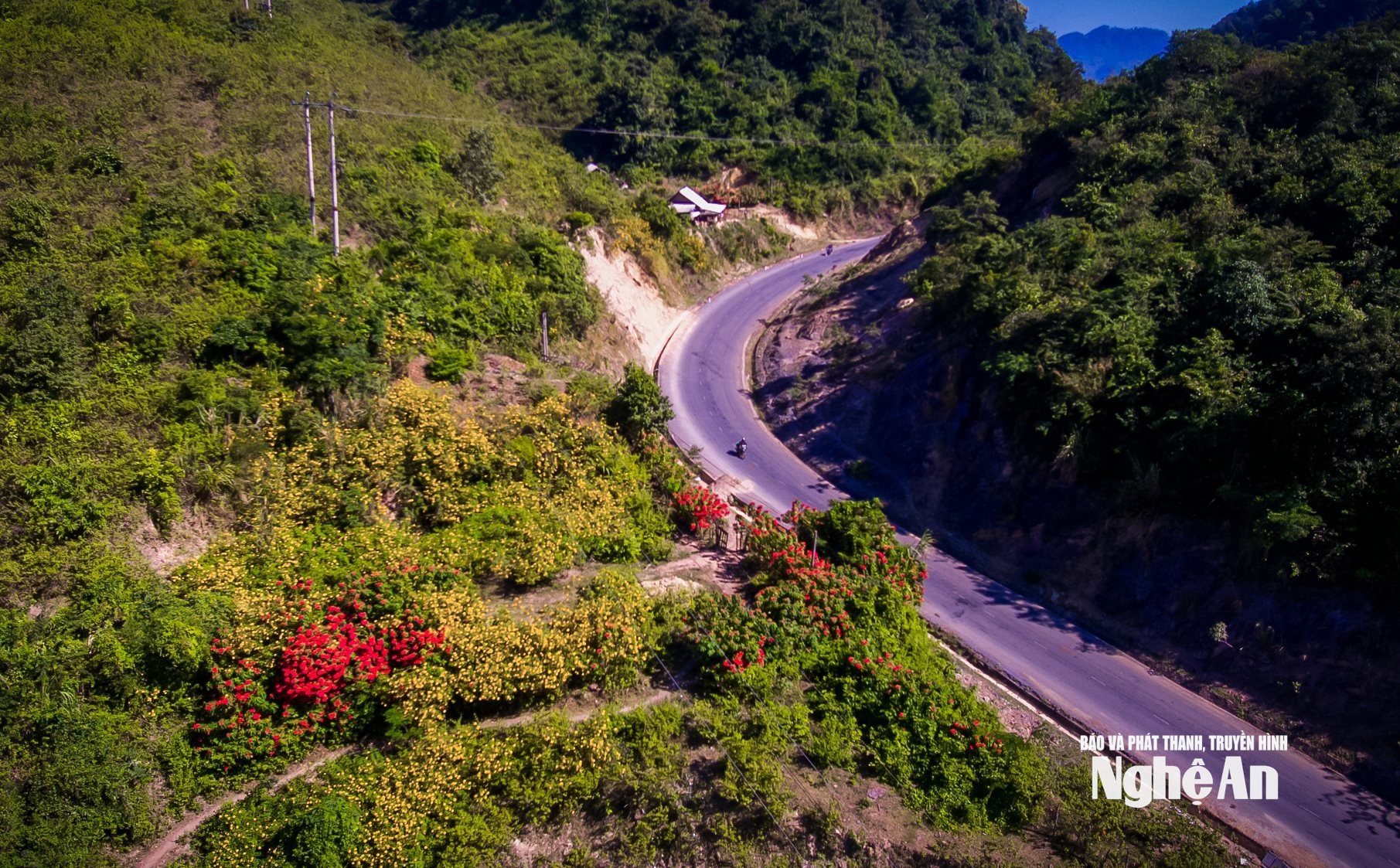
For Dr. Lau Ba Hua, Deputy Head of the International Health Quarantine Department at the Nghe An Center for Disease Control, the first days of the new year in 2026 were as quiet as any other. It was a seemingly endless cycle of work: updating epidemiological information both domestically and internationally; coordinating with border management, customs, and border guard forces to implement quarantine activities – checking documents, measuring body temperature, collecting health declarations, and screening passengers and vehicles passing through the Nam Can International Border Gate…
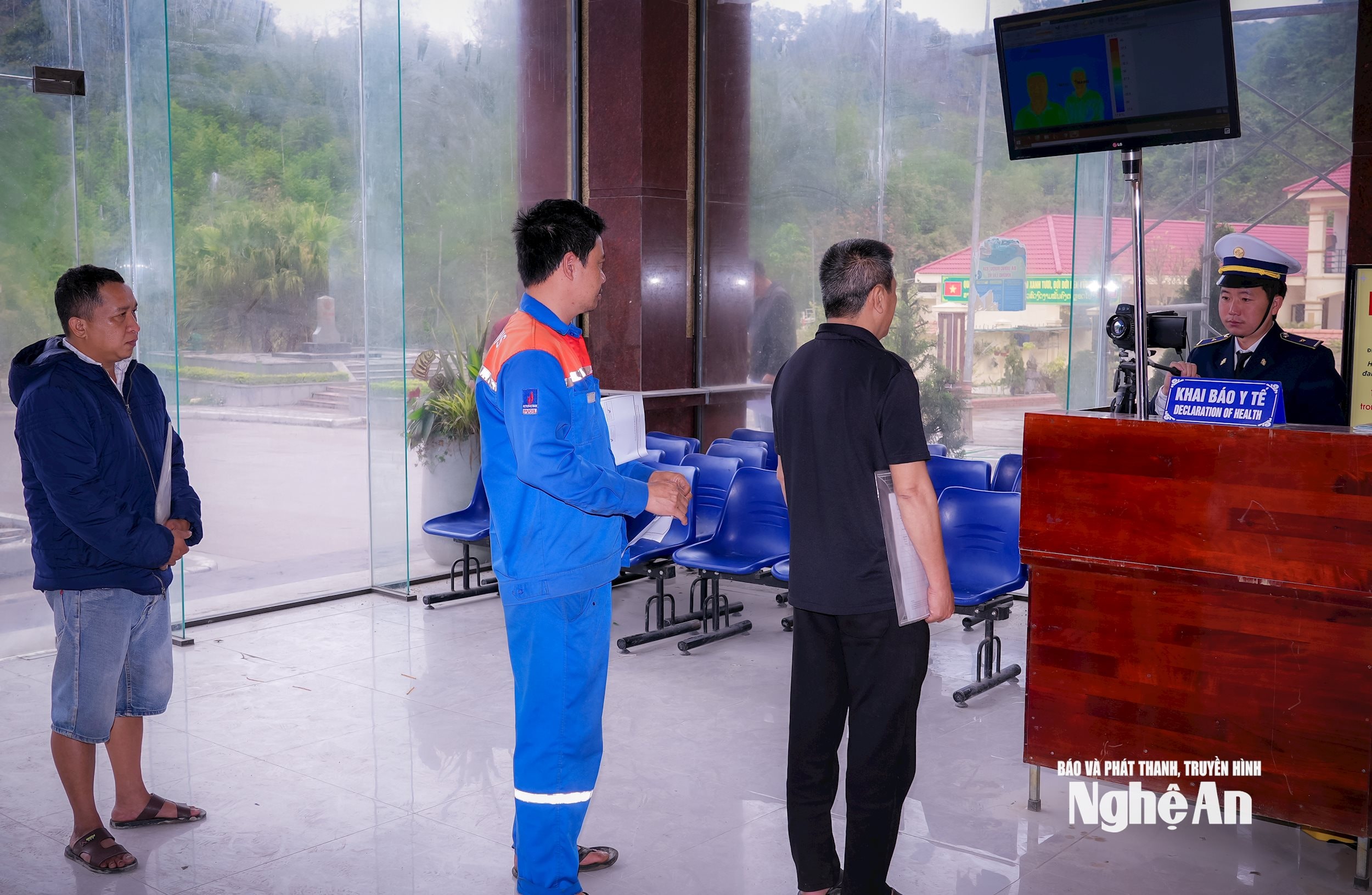
The work schedule is almost non-existent. The quarantine force here works 24/7, including holidays. There are nights when they receive unexpected assignments at 1 or 2 a.m., and the entire quarantine team immediately puts on protective gear, carries specialized equipment, and approaches people and goods to assess the risk.
Doctor Hua shared: “These days, the volume of goods and vehicles passing through the border gate is quite large, posing a risk of carrying pathogens. Therefore, the quarantine force must be on constant duty and strictly implement in-depth professional measures... These measures are essential to contribute to maintaining epidemiological safety for Nghe An in the context of a volatile international situation.”
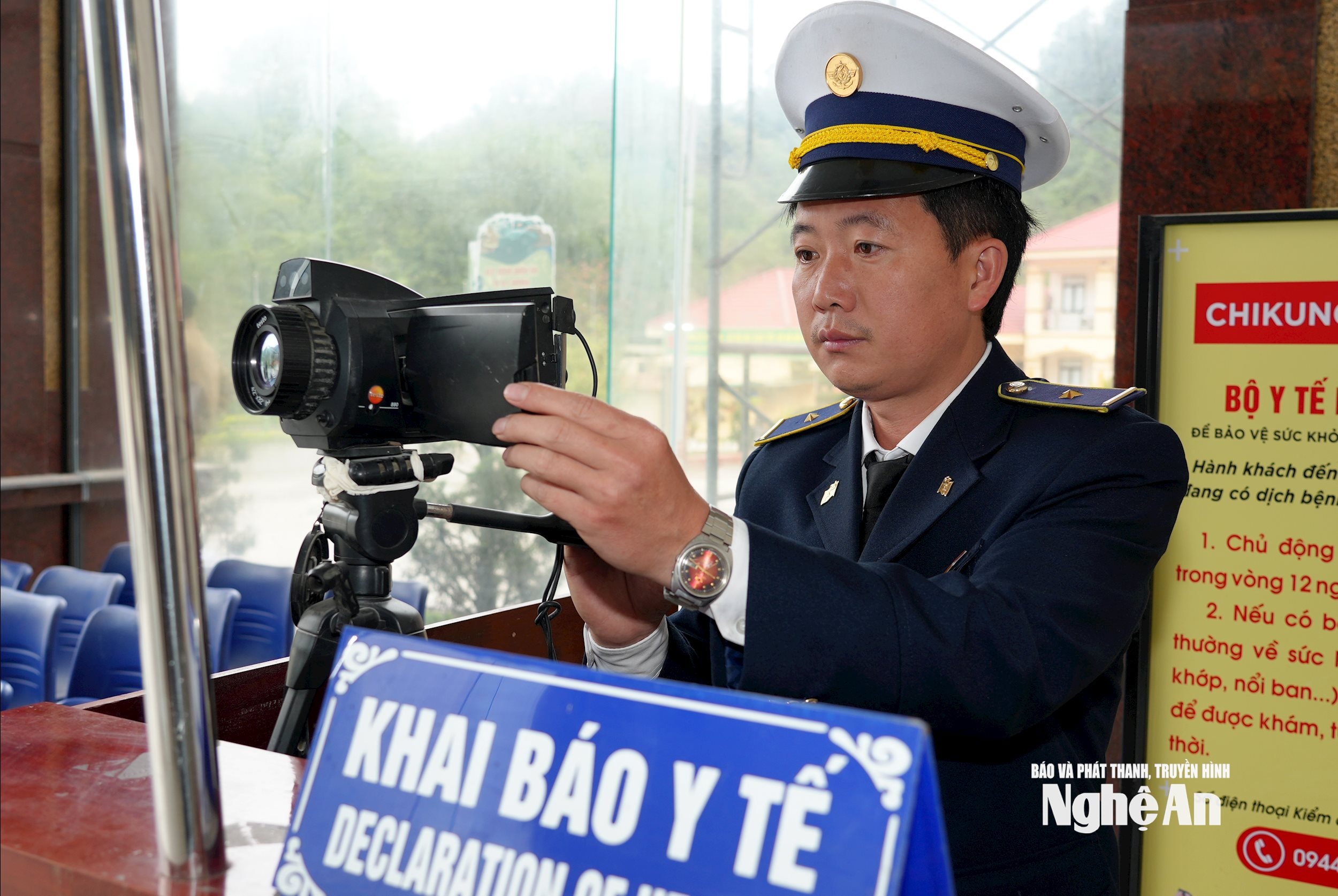
The work of quarantine officers is very quiet, little known to the public, but the pressure is immense. They are the "shield" at the border. For Dr. Hua, after 19 years working at the Nam Can International Border Gate, eating leftover cold meals, the constant ringing of the walkie-talkie, and the ever-present fear of infection... all have become familiar.
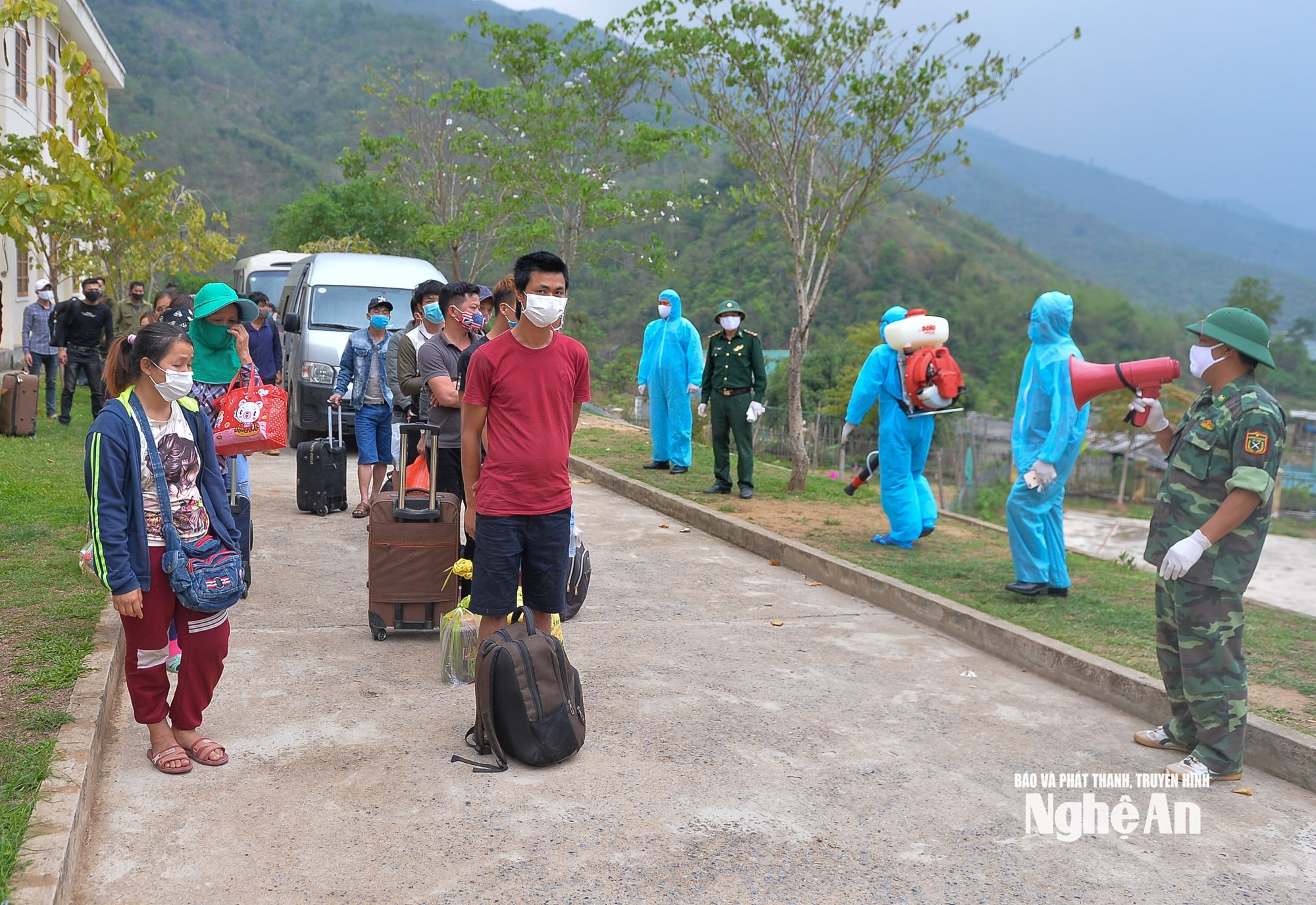
According to Dr. Lau Ba Hua, these early spring days are truly peaceful compared to the months spent fighting the Covid-19 pandemic. Like many officers and soldiers in the border gate area, he was also unable to go home for many months (even though it was only 2 km away). During that time, each workday for quarantine officers started at 7 a.m. and there was no concept of ending.
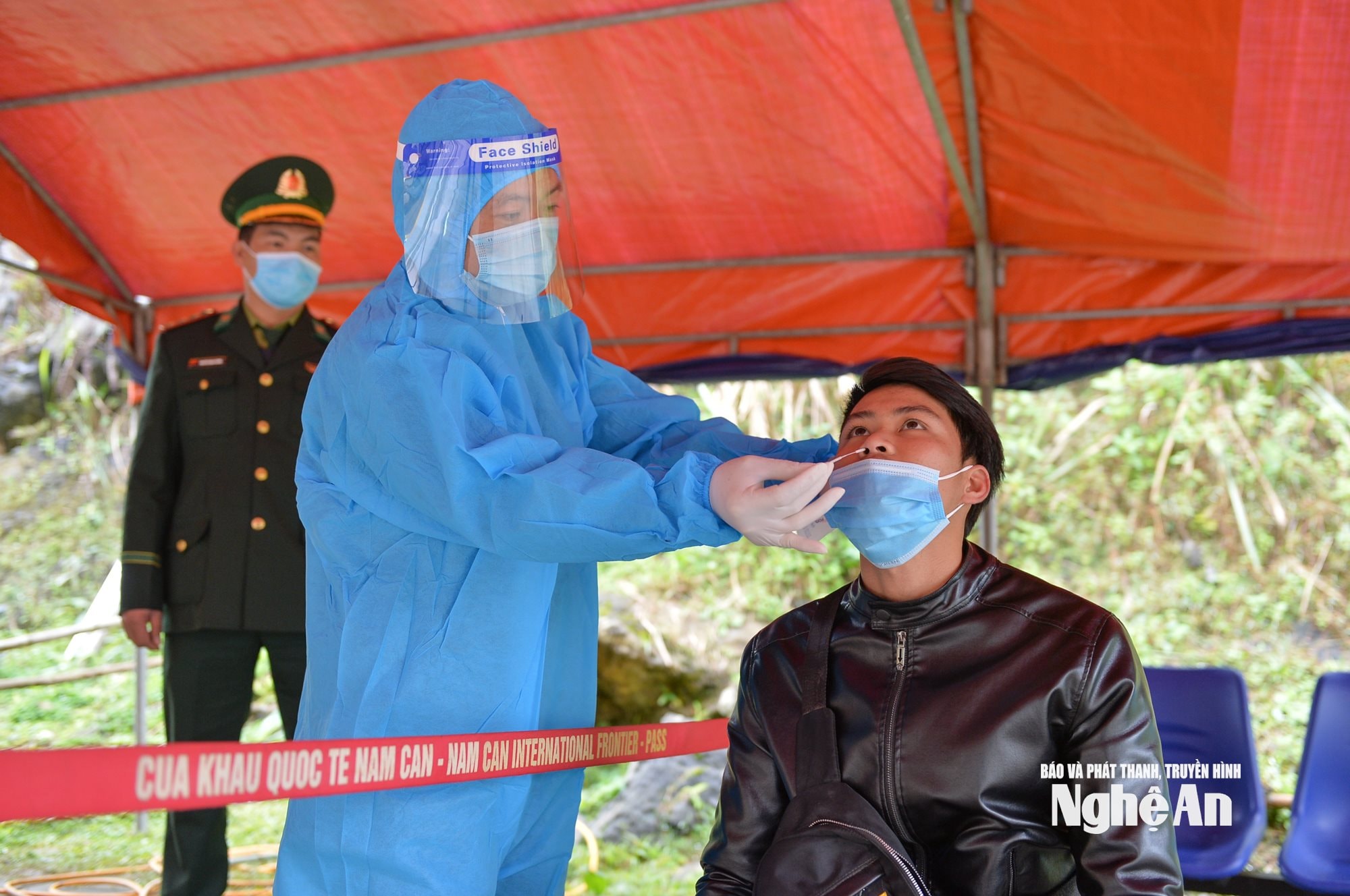
He and his teammates carried out all the necessary steps: disseminating information on disease prevention, guiding people in making health declarations, checking documents, measuring body temperature, screening for symptoms, assessing epidemiological factors, classifying patients for isolation, and transferring them to treatment centers... They were always in full protective gear amidst the sweltering heat of summer and the biting cold of winter, their backs drenched in sweat. Speaking about those months fighting the Covid-19 pandemic, Doctor Hua confided: “We had direct contact with people returning from affected areas. The risk was very high. But if we faltered, who would stand here?”
Sharing his story about his profession, Dr. Lau Ba Hua said: “The medical profession has been my dream since childhood. It has given me so much, including meaning in life and a sense of responsibility… I was born in Truong Son village, Nam Can commune, into a family with ten siblings. My parents were very concerned about education and provided opportunities for their children to study. They taught me that only literacy could help my family and village escape poverty. Growing up in a village plagued by poverty, disease, and social ills, I nurtured the dream of becoming a medical professional and returning to contribute to my village and homeland…”
Driven by his dream, since the 6th grade, Lau Ba Hua has persistently traveled back and forth along the 24-kilometer dirt road from his village to the Ky Son district center to attend boarding school every week. During the rainy season, the red soil was thick with mud, making every step slippery. In winter, fog covered the path, and the cold was biting. Sometimes he would leave at dawn and arrive after the sun had set…
The path to school continued to lengthen and broaden. In 2004, Lau Ba Hua went to Vinh City to study at a medical vocational school. In 2007, he graduated and returned to his hometown to work at the quarantine team at the Nam Can International Border Gate under the Nghe An Center for Disease Control. Not stopping there, in 2009, he continued his studies at a medical university in Hai Phong. Becoming a doctor, he returned to his beloved profession. Doctor Lau Ba Hua confided: "I chose to return because of my responsibility to my homeland and to the medical profession."
Building trust among the people.
Few people know that Dr. Lau Ba Hua was the driving force behind his wife, Dr. Ho Y Chua, pursuing a career in medicine. Dr. Ho Y Chua (currently working at the Outpatient Department, Ky Son Medical Center) recounts: "We got married when Dr. Hua was studying at medical school, and I had just graduated from high school. After getting married, Dr. Hua encouraged me to continue studying and take the university entrance exam. From my husband's encouragement, I understood and fell in love with the medical field, and then passed the exam and studied at Thai Binh Medical University from 2011 to 2016. During that period when both of us were studying, the economic pressure was immense. We even had to sell our house to cover tuition fees. Then, in my third year, I became pregnant and gave birth. However, I didn't defer or drop out; I continued studying while being a mother."
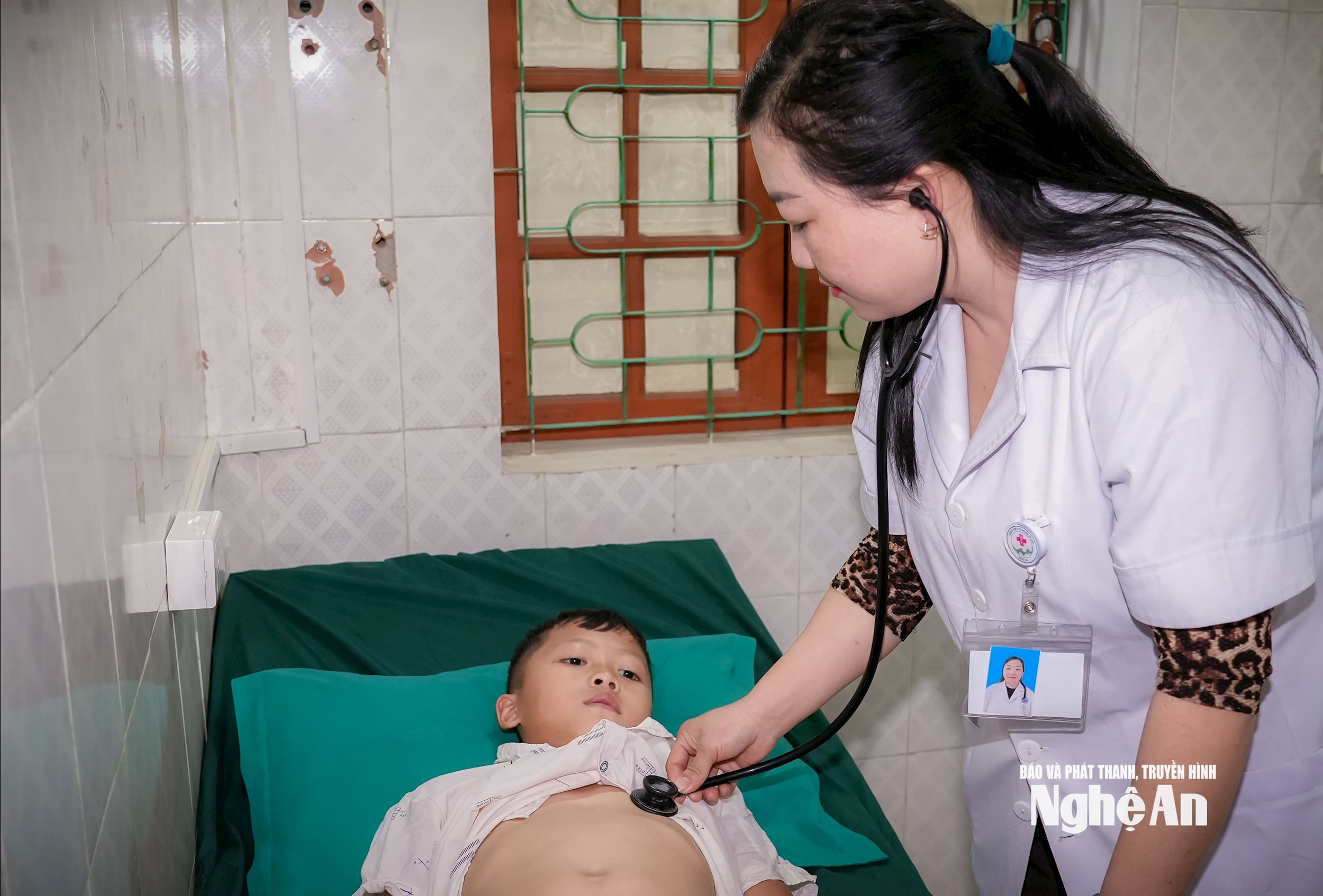
Three years after graduating, due to the lack of a permanent position, Dr. Ho Y Chua stayed at home to help her family. In 2019, she officially started working at the Outpatient Department of Ky Son Medical Center. There, Dr. Ho Y Chua dedicated herself to examining, diagnosing, classifying patients, guiding treatment, and providing emergency care. As a Hmong person, Dr. Ho Y Chua understands the psychology of the local people, including their hesitations about seeking medical care and the lingering customs; at the same time, she always maintains close relationships with the people in the highlands. This closeness has fostered trust – something that is sometimes even more important than medicine.
Dr. Hờ Y Chùa's medical ethics are highly appreciated by the leaders of the Health Center. Dr. Moong Thị Thắm, Deputy Director of the Kỳ Sơn Health Center, said: “Dr. Chùa has solid expertise, works responsibly, and is very dedicated to the health of the people. She is very proactive, not afraid of difficulties, and eager to learn. Dr. Chùa has left a positive impression on the local people.”
In the remote border regions, the presence of ethnic minority doctors "on-site," like the doctor couple Hua and Chua, is of special significance. They not only treat illnesses but also contribute to changing perceptions, gradually removing outdated customs and bringing people closer to modern medical services.
.jpg)
Amidst their busy work schedules, Dr. Lầu Bá Hùa and his wife, Hờ Y Chùa, don't have much time for themselves. Their on-call schedules are packed. Their children are in boarding school. Sometimes they only see each other briefly for an entire week. But amidst the fatigue, they are each other's support. Dr. Hờ Y Chùa confided: "During the pandemic, sometimes just a few minutes looking at each other through our masks is enough to bring peace of mind"... During sleepless nights at the border, Dr. Hùa knows he has an understanding wife behind him. In stressful emergency cases, Dr. Chùa knows her husband is facing just as much pressure.
Now that life is less stressful than during the peak of the Covid-19 pandemic, doctors Lầu Bá Hùa and Hờ Y Chùa are planning to further their education to improve their skills. “Next time I go to school, I hope I won’t have to sell my house again,” Dr. Hờ Y Chùa said, half-jokingly. But behind that statement lies a spirit of relentless learning, a desire to affirm their value through knowledge, and a wish to serve their fellow citizens better and more systematically.
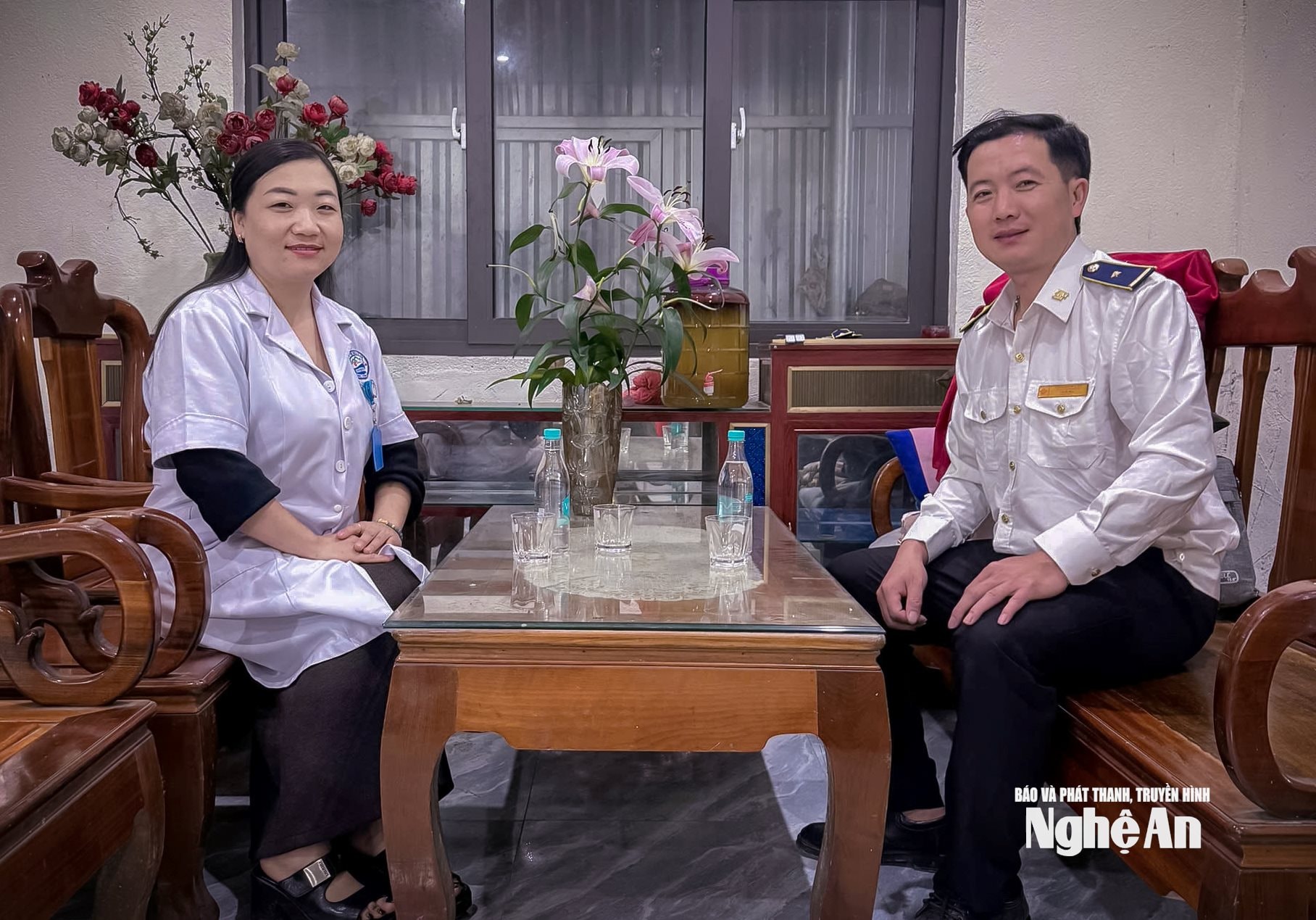
Amidst the towering mountains and the winding roads leading to the Nam Can Border Gate, two figures in white lab coats have persevered through the years. They were once children who braved the jungle in search of knowledge. Today, they keep the flame of life burning on the front lines of the border...


