
Volvo EX60 and the solution to the safety problem of electronic door handles on electric vehicles.
The new Volvo EX60 electric SUV features a backup mechanical door opening mechanism and a dual power supply system, effectively eliminating the risk of doors getting stuck in the event of an accident or power outage.
In recent years, electronic door handles on cars, especially electric vehicles, have become the focus of safety debates. Many tragic accidents have occurred when the vehicle's electrical system malfunctions, preventing passengers from opening the doors from the inside and hindering rescue efforts from accessing the vehicle from the outside. In response to this situation, Volvo has introduced a practical technical solution on the EX60 model, aiming to ensure human lives are saved in all collision scenarios.
Integrated backup mechanism: One action, two effects.
The biggest problem with current electronic door handles is their complete reliance on electricity and complex touch buttons. On the Volvo EX60, the Swedish automaker still uses the modern shark fin-shaped handle design but has completely changed the internal operating mechanism.
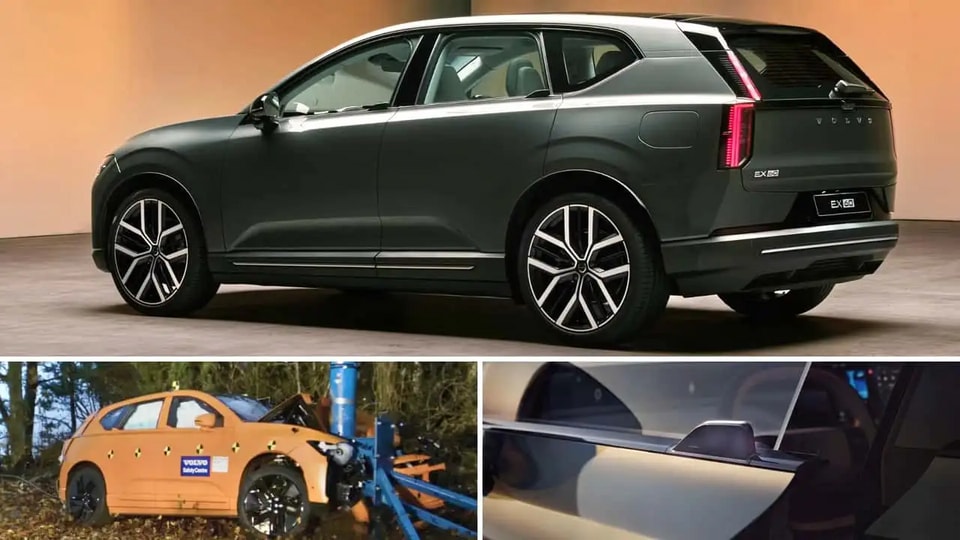
Anders Bell, Volvo's Chief Technology Officer, emphasized that the number one priority in an accident is the ability to escape quickly. Volvo's solution lies in the "dual" design of the door release lever inside the cockpit:
- Pull gently:Activate the electrical system to open the doors, just like on modern cars.
- Pull harder:A mechanical mechanism will be activated directly, allowing the door to open instantly without the need for electricity.
This design is particularly important because in a state of panic, passengers often tend to pull hard on the handles. Instead of getting stuck like with purely electronic systems, this pulling force on the Volvo EX60 becomes the key to escape.
Dual power supply system and the ability to open the door from the outside.
In addition to assisting passengers inside, the Volvo EX60 also solves the problem of access for rescue forces from the outside when the vehicle's 12V battery fails or loses connection after a collision. The vehicle is equipped with two separate DC-to-DC converters located on either side of the vehicle.
These converters are responsible for drawing power directly from the main high-voltage battery pack to maintain a 12V power supply for emergency systems, including the door locks. Because they are installed in highly protected locations, only extremely severe collisions could simultaneously damage both components. Additionally, the vehicle's software is programmed to automatically unlock all doors as soon as the sensors detect a collision.
Setting new safety standards for the electric vehicle era.
Concerns about electric door handles are not unfounded, given the numerous incidents involving Tesla and Xiaomi vehicles. Safety regulatory agencies such as the NHTSA (USA) are also beginning to tighten regulations on this design.
By combining electronic technology with traditional mechanical mechanisms, Volvo demonstrates that they don't need to abandon modern designs to achieve safety. The approach on the EX60 not only protects users but also has the potential to reshape design standards for the entire electric vehicle industry in the near future.


