
Around the world with your child: the dark side of the nomadic dream.
Selling your house, quitting your job, and taking your children on a trip around the world might sound like freedom and romance, but the experiences of two families in New Zealand and England show that the financial pressure, health, and psychological well-being of the children are not insignificant.
The idea of selling the house, quitting the job, and taking the kids on a trip around the world is increasingly appealing to many young families: working remotely while letting their children "learn from life." But behind the sunny, blue sea photos are nights spent crammed into bunk beds, dwindling savings accounts, and children exhausted from constant farewells.
Sharon Ward: When a "social experiment" becomes a series of exhausting days.
In 2020, Sharon Ward, 44, a preschool teacher, and her husband Mike, 46, a construction worker, decided to leave their stable life in Dubai. The New Zealand couple, with their two daughters, ages 5 and 8, embarked on a "social experiment": traveling around the world for a year, living together, and letting their children learn from the experience.
Three years of working 50 hours a week helped them accumulate enough savings to get started, but it also created high expectations for a year of relaxation. In reality, living entirely on their savings forced the whole family to cut back on almost every expense.
Cheap accommodations are often not child-friendly. Sometimes my two daughters had to share a bed in a dorm room in Marrakech (Morocco), or four of us squeezed onto a bunk bed in Türkiye. Each time we packed, moved, found new accommodation, and prepared meals for the whole family, time for rest almost completely disappeared.
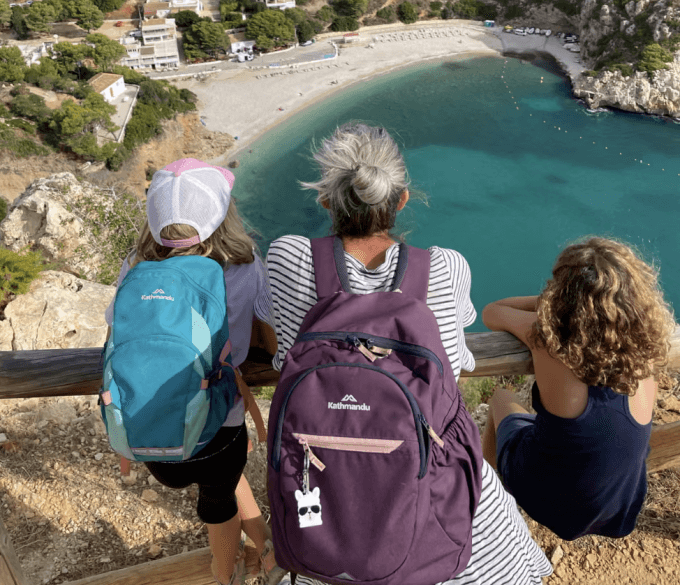
As their money dwindled, Sharon and her husband had to take on manual labor jobs to pay for shelter, juggling work, their children's education, and daily living expenses. What was supposed to be a peaceful respite gradually turned into a prolonged period of stress.
Children on the road: more than just smiles in photos.
The ones most affected were the two children. Sharon's youngest daughter became increasingly irritable and sad whenever she had to leave a place she had become familiar with. Many planned trips were canceled, and the family had to stop for months to allow the child to recover emotionally.
The crisis peaked in the summer of 2022 in Morocco. In the 40-degree Celsius heat of the Sahara Desert, with no clean water or air conditioning, Sharon's husband and two children fell ill one after another, becoming bedridden. For the first time, the 44-year-old mother wondered if she was putting her children in danger.
After the ordeal, the family moved to Bali, Indonesia, and enrolled their children in an international school to find stability. Sharon still wonders whether her children will remember that nomadic life as a gift or a burden in their childhood.
Worldschooling and digital nomadism: Seemingly free, but actually full of pressure.
Sharon is not an isolated case. There are currently around 40 million digital nomads globally, mostly young freelancers working on laptops and traveling between continents. Many families combine this lifestyle with worldschooling – teaching children through travel experiences rather than being tied to a fixed school.
On Instagram, hashtag#travelfamilyThere are 1.3 million posts, and...#worldschoolingOver 350,000 posts. Common images include parents working in front of laptop screens, with blue beaches and children playing in the sand under the sun in the background.
But the actual data reveals a different picture. A survey by Bunq Bank (Netherlands) of 4,729 digital nomads showed that 38% experienced mental health problems. Loneliness, lack of community support, and the pressure of working across time zones are silent killers. When young children are added to the mix, the burdens multiply: worrying about income, education, health, and the emotional well-being of their children.
The Davis family: 7 countries, 14 flights, and the decision to return home.
Josy and Joe Davis, from Gloucestershire, England, also once believed in the dream of escaping their old routine. Late last year, the 35-year-old couple sold their house, withdrew their two children, aged 4 and 6, from school, and prepared to leave, hoping to escape the exhaustion of work back home.
In February, they left England with three suitcases, without a fixed schedule. In the beginning, the feeling of freedom was palpable: no more work hours, no more familiar routes. But after just a few weeks, reality changed: the whole family was together 24/7, with no personal space and no stable routine.
In Sri Lanka, Josy and Joe tried to maintain a 90-minute morning study session for their children. However, the unfamiliar environment and unappealing food often left the children exhausted. Their initial excitement for the new destination gradually gave way to homesickness and tantrums.

The biggest blow came in Thailand, when Joe received news of his father's sudden death in an accident back home. Their plans for Bali and Australia were immediately canceled. After a 36-hour flight back to attend the funeral and then return to Sri Lanka, the Davis couple realized their nomadic lifestyle had been shattered.
Lola, the eldest daughter, was no longer eager to explore; she just wanted to FaceTime with family. When her parents asked about their next destination, both children replied, "Home." In July, after traveling through seven countries with 14 flights, the Davis family decided to stop and return to England, even though they had already booked tickets for the next leg of their journey.
"Nomadic life isn't as glamorous as it appears on Instagram. Children are still children, no matter where you are," Josy said.
If you also dream of taking your children around the world.
Sharon Ward's story and that of the Davis family show that long-term travel with young children is not just about choosing a beautiful destination. It's a complex balancing act of finances, health, education, and the emotional well-being of all family members.
Young children need stability more than adults realize: a familiar bed, friends, teachers, a repetitive routine. When constantly having to say goodbye, get used to new places, new foods, new languages, excitement can quickly turn into fatigue and anxiety.
For adults, balancing income while managing travel, paperwork, and caring for sick children in an unfamiliar place can easily lead to burnout. Unexpected shocks – illness, loss of a loved one – can cause all plans to collapse with just one phone call.
If planning similar trips, many families choose to slow down, stay longer at each destination, or combine longer vacations with periods of stability to allow children time to make friends, attend school, and establish routines. More than a schedule or a list of countries, it's crucial to listen to your child's and your own real needs, rather than chasing the perfect photos on social media.


