
BYD Seal car fire in Hong Kong: Cause determined to be a personal backup battery.
Investigations into the BYD Seal electric vehicle fire in Hong Kong have revealed that the fire originated from a short circuit in the backup battery. The Blade's battery system and chassis remained safe after the incident.
At 2:01 PM on March 3, 2026, a silver BYD Seal electric sedan caught fire while traveling on Tuen Mun Road towards Hung Shui Kiu, Hong Kong. The incident caused significant traffic disruption in the area. Firefighters arrived promptly and completely extinguished the fire at 2:19 PM the same day.
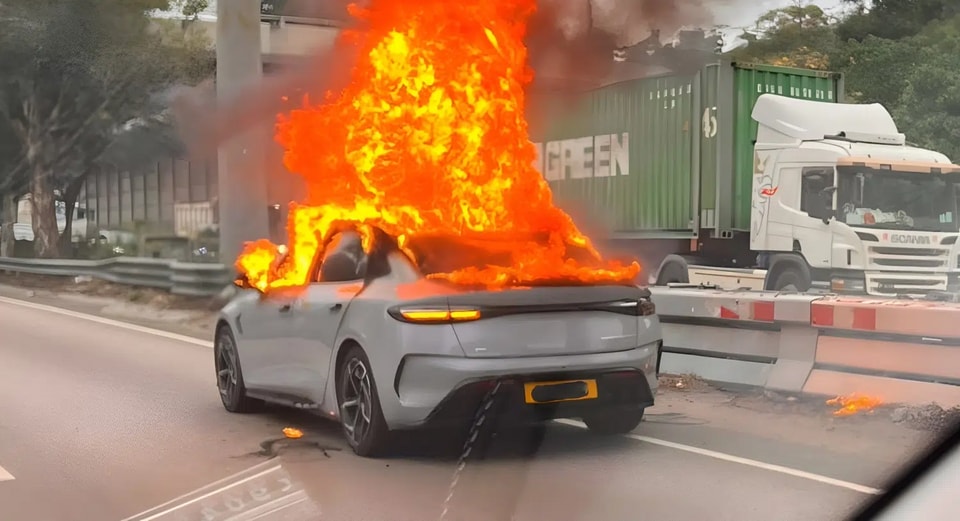
The cause was personal items inside the cabin.
According to a report from HKET, the female driver managed to escape the vehicle safely before the fire spread. After conducting a technical investigation at the BYD service center, experts confirmed that the fire did not originate from a mechanical or electrical fault in the vehicle. Instead, the source of the fire was a power bank placed on the passenger seat that short-circuited or overheated.
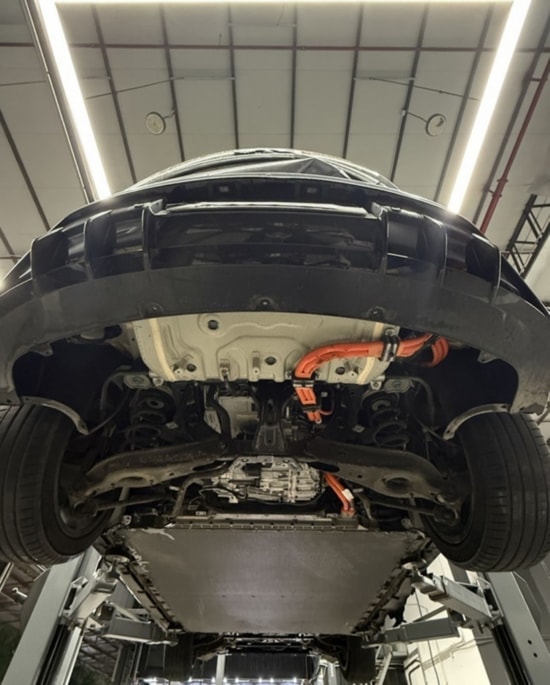
BYD representatives have issued an official statement confirming that the vehicle's high-voltage electrical system was not involved in the initial fire. Although the upper cabin structure suffered significant damage due to high temperatures melting the plastic and interior glass, the core components underneath remained well protected.
Blade battery protection capabilities and CTB technology
Real-world testing revealed that the Blade battery pack and integrated chassis of the BYD Seal remained intact. The battery cells did not overheat thanks to the chemical properties of LFP (Lithium Iron Phosphate). This type of battery has a stable temperature threshold of over 500°C, significantly higher than the 200°C of traditional NMC batteries.
The BYD Seal is developed on the e-Platform 3.0 with Cell-to-Body (CTB) technology, allowing the battery pack to be integrated as part of the chassis structure. This design not only provides an impressive torsional rigidity of 40,500 Nm/°C but also creates a "sandwich" structure with high-strength aluminum panels, acting as a thermal barrier to prevent fire from the cabin from entering the battery compartment.
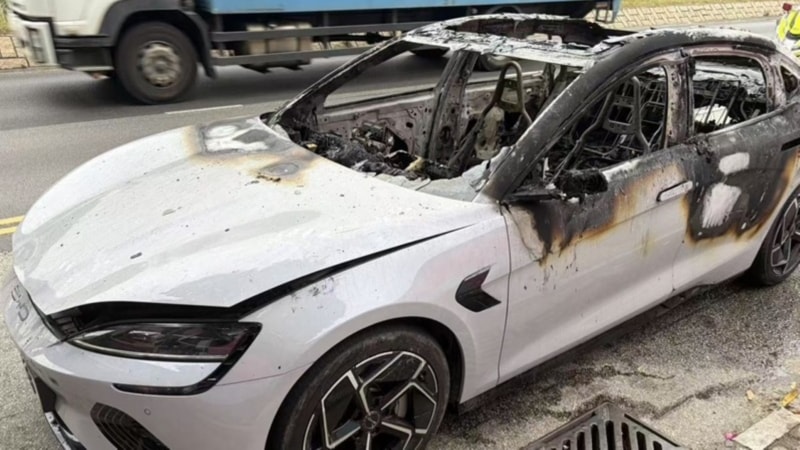
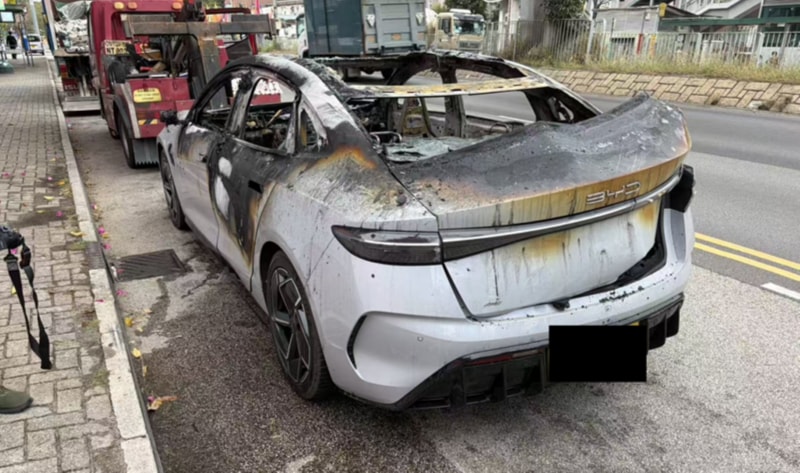
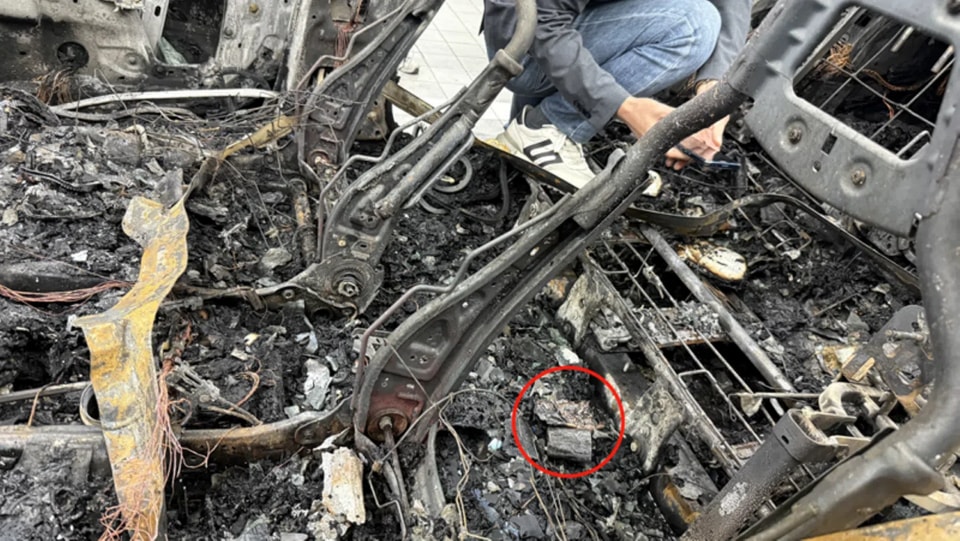
BYD Seal's position in the Hong Kong market
In Hong Kong, the BYD Seal is a direct competitor to the Tesla Model 3. Both models have achieved a 5-star safety rating from Euro NCAP, but employ different structural solutions. While Tesla uses a hybrid of LFP and NMC batteries depending on the version, BYD focuses entirely on Blade LFP batteries, which offer advantages in thermal stability.
As of March 2026, BYD Seal still maintains a competitive price advantage over its American rivals. Below is a basic comparison table between the two models in this market:
| Comparison parameters | BYD Seal | Tesla Model 3 |
|---|---|---|
| Starting price (after discounts) | ~30,000 USD | ~34,500 USD |
| Projected sales for 2025 | 4,200 units | 5,800 units |
| Main battery technology | LFP Blade | LFP and NMC |
| Euro NCAP Rankings | 5 stars | 5 stars |
In addition to its rigid chassis structure, the BYD Seal is equipped with a central airbag system and an eCall feature that automatically alerts passengers to emergency services, enhancing passenger protection in severe collision situations.


