
Sabiya plant attack: Kuwait faces water security risks.
Allegations of attacks on energy infrastructure in Kuwait highlight the Gulf region's reliance on desalination plants, which are vulnerable to military actions in the area.
Kuwait has accused Iran of involvement in an attack targeting critical civilian infrastructure. The incident not only caused casualties and property damage but also raised concerns about the stability of the Gulf nation's electricity and water supply.
Details of the attack at the Sabiya power plant.
According to Fatima Abbas Jawhar Hayat, spokesperson for Kuwait's Ministry of Electricity, Water and Renewable Energy, the attack, believed to have been carried out by Iran, killed an Indian national. The attack caused significant damage to a service building at the scene. However, Kuwaiti authorities have not yet disclosed which facilities were directly affected or whether electricity and water production was disrupted.
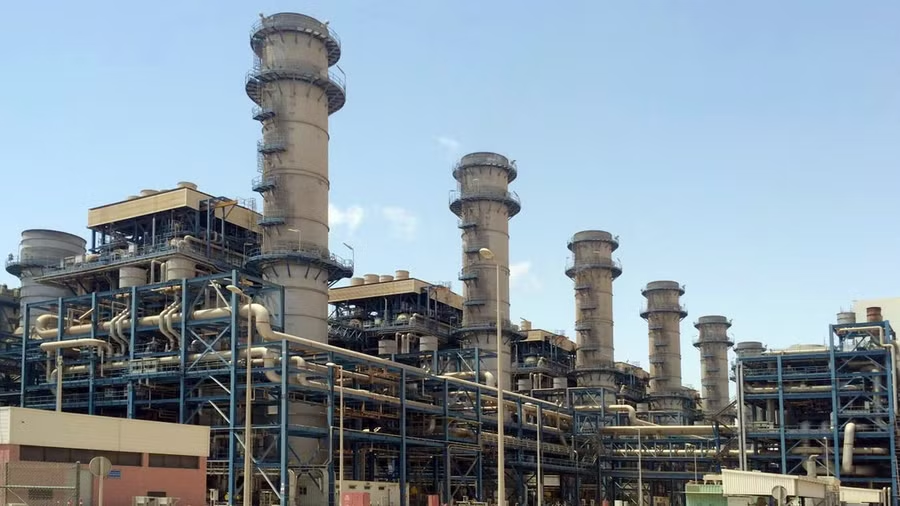
Iran has not yet issued an official response to these allegations. Notably, Iranian media reported a fire at the Sabiya plant based on NASA satellite data, but mistakenly identified the location as the Doha West facility – another power and desalination plant located about 50km away.
The strategic role of energy infrastructure
The Sabiya facility plays a pivotal role in Kuwait's energy network. Begun in 1998 and undergoing several upgrades, the plant now produces approximately 5,300 megawatts of electricity per hour and supplies around 340,000 cubic meters of fresh water daily. For comparison, the country's largest water treatment plant, Al-Zour South, has a capacity of approximately 670,000 cubic meters per day.
Like most Middle Eastern countries, Kuwait relies heavily on industrial production to meet its freshwater needs. According to United Nations data, each Kuwaiti citizen has access to only 4 cubic meters of naturally occurring, renewable freshwater per year, far below the modern standard of 1,700 cubic meters.
Gaps in desalination technology
The reliance on desalination technologies, including thermal and seawater reverse osmosis (SWRO), has become the "Achilles' heel" of the Gulf Cooperation Council (GCC) countries. Currently, there are over 3,400 desalination plants operating in the region, producing more than 22 million cubic meters of water per day, accounting for one-third of global capacity.
The concentration of water supply in large-scale facilities makes the system vulnerable to conflict. In the past, debris from drones and intercepted missiles has damaged the F1 Fujairah (UAE) and Doha West (Kuwait) plants. Targeted attacks on water infrastructure have occurred during the 1991 Gulf War, the conflict in Yemen, and military operations in Gaza, highlighting the risk of humanitarian crises when water supplies are disrupted.
Regional security challenges
Besides direct military threats, tensions between Iran and rivals such as the US and Israel also create unintended impacts on civilian infrastructure. Iranian Foreign Minister Abbas Araghchi once warned that attacks on desalination plants would set a dangerous precedent. Meanwhile, water pollution incidents and toxic fumes following airstrikes are becoming urgent environmental problems in the region.


