
The mountainous region of Nghe An is 'desperate' for doctors.
(Baonghean) - There is a contradiction in Nghe An: the province lacks medical personnel, but when doctors and nurses arrive, there are no allocated positions or recruitment quotas.
"Thirst" for doctors
HV is a student at Vinh Medical University, receiving support from a mountainous district in Nghe An province to train as a doctor through a government-sponsored program. Legally, after graduation, HV should return to serve in the local area. However, it is highly likely that he will not fulfill this commitment.
The reason given by the student was that mountainous districts face difficult conditions, with poor transportation, and healthcare facilities lacking many essential items such as infrastructure and equipment; the working environment is poor, and there are few opportunities to improve professional skills. The student stated: "In my class, there's a student from Con Cuong district who dropped out. I heard that when he/she dropped out, he/she will have to pay 200 million VND in compensation..."
The fact that the doctor is planning to leave the academy and work elsewhere, returning the money to the province and district, is a huge waste and also shows the reality that some doctors are not enthusiastic about going to remote areas.
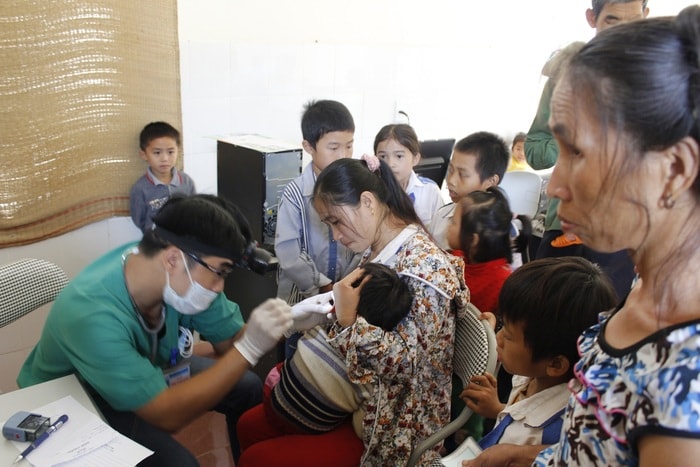 |
Volunteer doctors and medical staff organized health check-ups and consultations for residents of Yen Tinh commune (Tuong Duong district).Photo: Thanh Son |
In 2013, in the mountainous district of Con Cuong, the total number of commune health stations with doctors working there was 7 out of 13 communes and towns. At that time, the district's health sector set a target of having 11 out of 13 stations with doctors by 2015, and then 100% of stations with doctors (based on the resources of those sent for specialized medical training and those selected through recruitment programs). By 2017, the number of stations with doctors had reached 10 out of 13 communes. However, of those, 2 doctors were seconded from the Southwest General Hospital, and 1 retired doctor was hired on a contract basis. After 4 years, the number of doctors in the communes has not increased.
Dr. La Duong Thanh, Head of the Health Department of Con Cuong District, explained: "After 6-7 years of studying, newly graduated doctors don't want to go to health stations in mountainous areas where living conditions and professional development opportunities are poor. Doctors who have completed specialized training are also willing to leave the public system to work in private hospitals. The current provincial policies to attract doctors can be considered somewhat stable, but to say they are attractive is not yet true because the province is still poor, making it very difficult to increase support levels."
Dr. Thanh analyzed: "A few tens of millions of dong from the incentive policy doesn't mean much to doctors. What they need is better working conditions and professional development, which the grassroots healthcare system cannot provide. Now, with the health insurance system in place, many patients don't seek treatment at local health stations but go to second-tier general hospitals like Thanh Chuong or Vinh City for examinations. This will also make healthcare in mountainous areas less attractive."
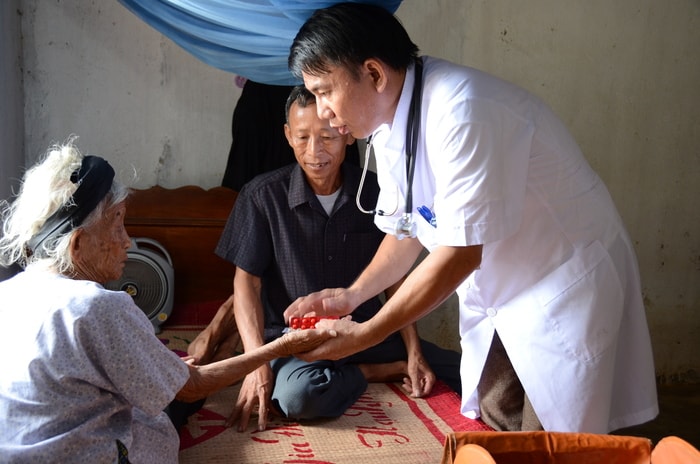 |
| With doctors available, the quality of medical examinations and treatment, and the operation of Nghia Binh Commune Health Station in Tan Ky District are well-ensured. Photo: Thanh Son |
Not only local health centers but also many well-known hospitals in mountainous areas are "thirsty" for doctors. Thanh Chuong General Hospital currently has 42 doctors. With approximately 400-600 patients per day, the doctors are under constant pressure to work.
“Due to a shortage of doctors, anyone who graduates and applies for work at the hospital is immediately hired. The hospital has many policies such as providing accommodation and meals, and allowing them to work in their area of expertise and skills. The district also creates favorable conditions such as arranging family arrangements so that spouses can work near home. However, the hospital only manages to recruit 1-3 people per year, all of whom are local residents,” said Dr. Nguyen Thinh Khuyen, Deputy Director of the hospital.
Obstacles related to the mechanism.
A shortage of doctors is also occurring at medical facilities in Quy Chau district. Dr. Dang Tan Minh, Director of the District Health Center, said: The center currently has 202 staff but only over 30 doctors (including 9 doctors at the health stations), which is insufficient to perform its duties.
At this time, the Center has 5 doctors who graduated from reputable medical universities in the country and are undergoing training. All of them are from Quy Chau. The Center wants to hire all 5, but the quota only allows for 2 people (1 doctor at the center and 1 at the clinic).
In Que Phong district, Dr. Le Quang Trung, Deputy Director of the District Health Center, said: Previously, the Center had "placed an order" with the Nghe An Department of Health - if any doctor registered to come, the district would send a vehicle to pick them up immediately, as well as provide additional support and incentives. This year, there are 8 doctors coming, but the Center cannot accept contracts or probationary periods for anyone because there is no staffing quota or recruitment policy.
The situation regarding the shortage and surplus of healthcare in mountainous regions is quite contradictory: Districts and communes desperately want doctors to work there. However, when doctors arrive, there are no more available positions. Although the Ministry of Interior and the Ministry of Health issued Joint Circular 08 on June 5, 2007, guiding the staffing norms for state-owned healthcare facilities, relevant provincial departments have yet to implement this circular.
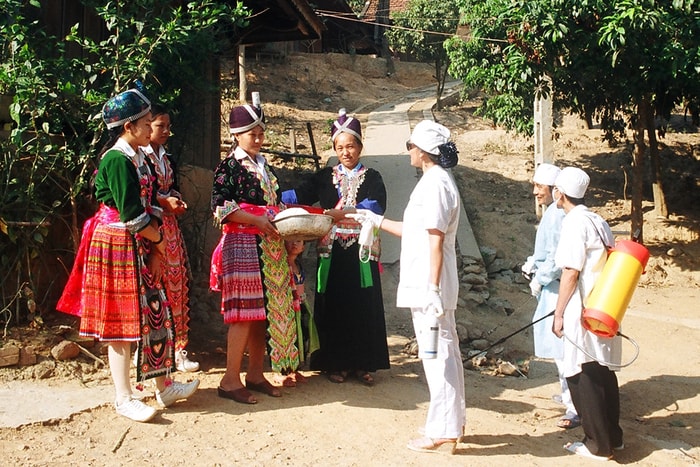 |
| Raising awareness about disease prevention and control in Nam Can commune (Ky Son district). Photo: Thanh Son |
As of the end of 2016, the total number of personnel in public health units in the province was 10,042, including 1,892 doctors (in 2016, 112 doctors were recruited; 10 doctors were sent to pursue further university studies; and 75 people were laid off).
In the first six months of 2017, the health sector sent 13 doctors for further training; recruited 44 doctors, and downsized 16 people... Currently, the ratio of doctors per 10,000 people in Nghe An is still low compared to the national average (7.6% compared to 7.8%).
Pharmacist Hoang Van Hao, acting Director of the Nghe An Department of Health, acknowledged: “Medical personnel are both insufficient and limited in quality, especially at the grassroots level, leading to a failure to meet the requirements and tasks in the new situation. Policies to attract personnel to work in disadvantaged areas still have many shortcomings. In the near future, the Department of Health will provide specific advice to the Provincial People's Committee to implement Decision No. 2348 dated December 5, 2016, of the Prime Minister approving the Project on building and developing the grassroots healthcare network in the new situation to change the current situation.”
| Decision No. 2348 dated December 5, 2016, of the Prime Minister approving the Project on building and developing the grassroots health network in the new situation clearly states the objectives: By 2020, at least 90% of commune health stations will have the conditions to provide health insurance-covered medical examination and treatment, and will be able to perform at least 80% of the technical service catalog at the commune level; 95% of district health centers will be able to perform at least 80% of the technical service catalog at the district level; 70% of communes will meet the national criteria for commune health; striving for 90% of the population to have their health managed and monitored; and completing the investment in health stations in communes with difficult and especially difficult socio-economic conditions. |
Thanh Son


