
WEF Davos 2026: The heat from President Trump's return.
Unprecedented geopolitical shifts, the powerful return of US President Donald Trump, and the challenges posed by artificial intelligence (AI) will be the central focus of the 2026 World Economic Forum annual meeting.
This week, the town of Davos (Switzerland) continues to welcome the world's political, economic, and cultural elite to the annual meeting of the World Economic Forum (WEF).
Taking place from January 19th, this year's event, themed "The Spirit of Dialogue," is considered one of the most important conferences in the forum's history.

The US delegation was of unprecedented size.
The conference is taking place against the backdrop of US President Donald Trump taking aggressive steps to reshape the international order. His presence at Davos this time – six years after his last in-person attendance – is expected to significantly increase the intensity of the discussions.
Ahead of the conference, the Washington administration made some shocking foreign policy moves, from issues related to Venezuela to the relaunch of ambitions for Greenland. Notably, the warning of imposing tariffs on NATO allies if it did not receive support on strategic issues in the Arctic met with strong reactions from European countries.
President Trump's policies, which are seen as challenging international rules that have existed since World War II, will be the overarching theme throughout the five-day event.
Dialogue is not a luxury in times of instability, but a pressing need. At a critical juncture for international cooperation – marked by profound geoeconomic and technological transformations – this year's conference will be decisive.
Mr. Borge Brende - President of the WEF
President Trump led the largest US delegation ever to Davos, including five cabinet ministers and numerous senior officials. Among them were Secretary of State Marco Rubio, special envoy Steve Witkoff, and senior advisor Jared Kushner. This move demonstrates Washington's focus on shaping high-level discussions on global hotspots such as Ukraine, Venezuela, and the Middle East.
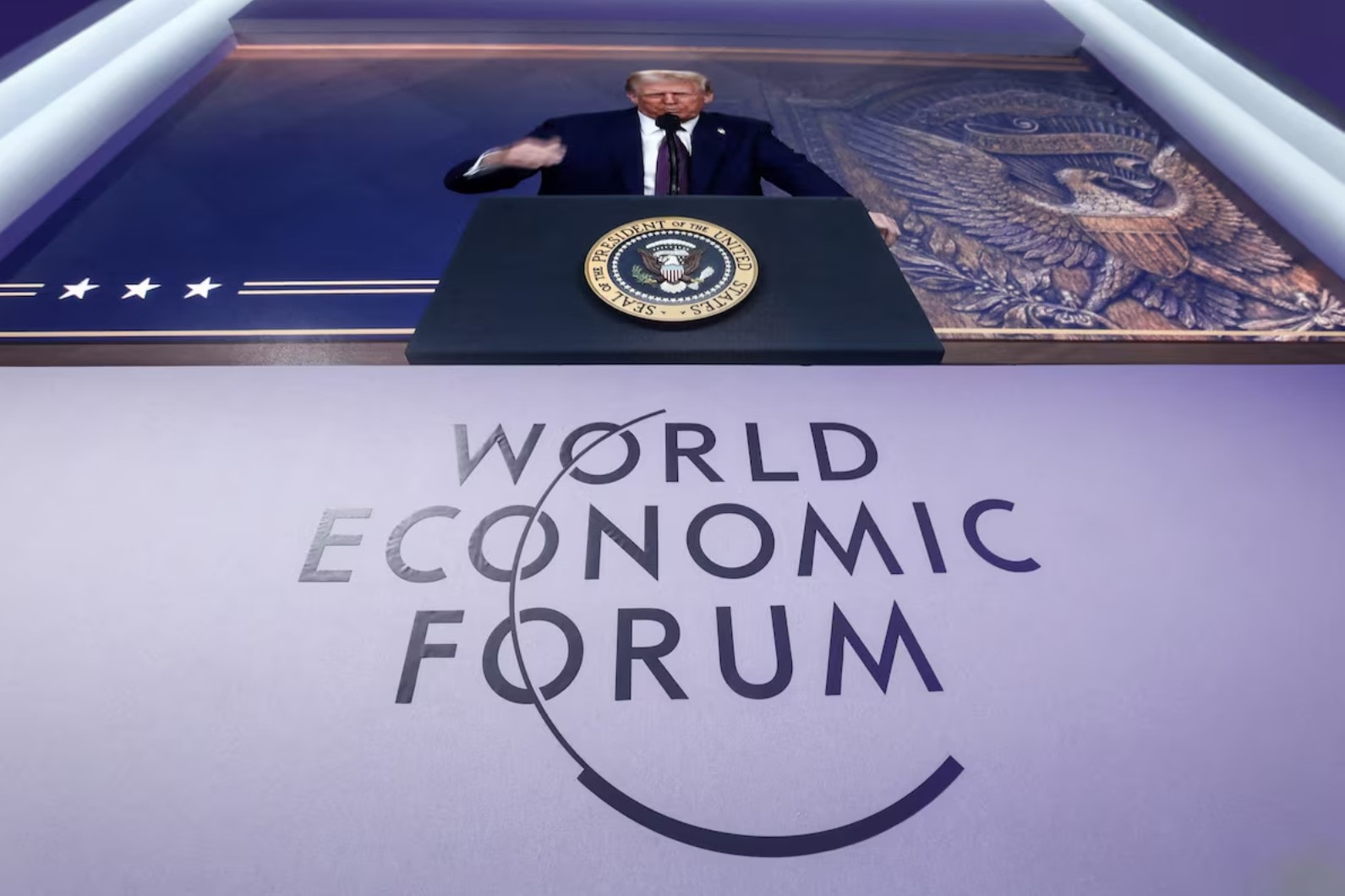
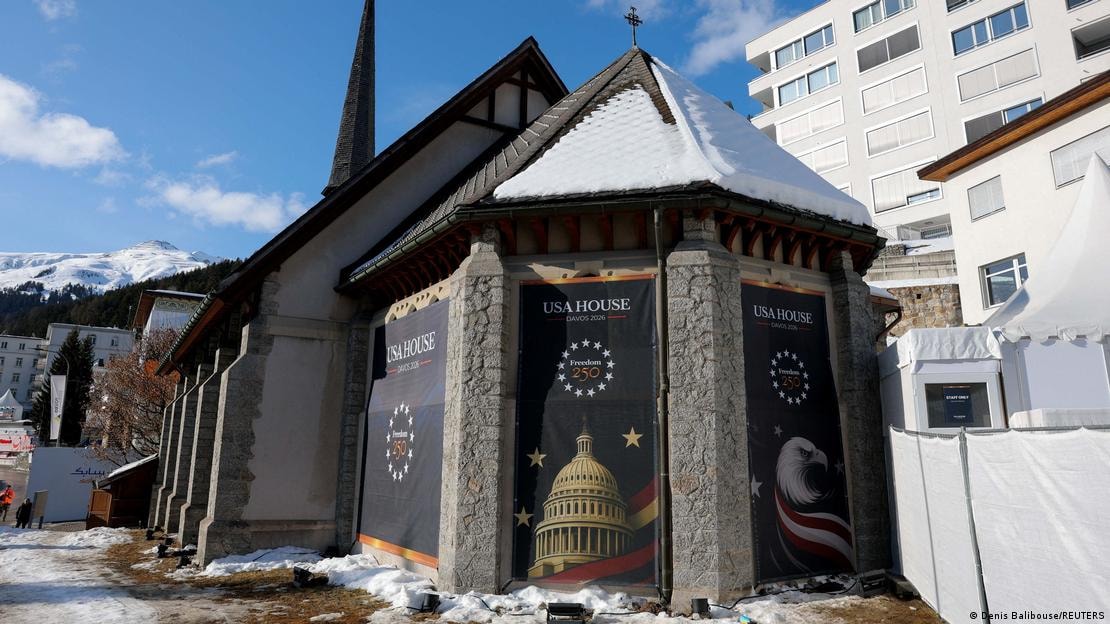
On the sidelines of the summit, Mr. Trump is expected to meet with Ukrainian President Volodymyr Zelensky and G7 leaders including German Chancellor Friedrich Merz, Canadian Prime Minister Mark Carney, the French President, and the British Prime Minister to discuss security commitments amid consideration of a potential peace agreement with Russia. Notably, this year's US presence is further highlighted by the launch of the first "American House" in Davos – a dedicated venue for US officials to hold events and network with international investors.
A perplexing economic problem
Beyond geopolitics, policymakers also face a thorny economic challenge. While the global economy remains resilient thanks to a boom in artificial intelligence (AI) investment in the US, the projected growth rate of 3.1% in 2026 falls short of expectations.
The International Monetary Fund (IMF) is particularly concerned about global public debt, which is at a record high since World War II, especially in African countries. In addition, global trade is under significant pressure from protectionist trends, unilateral tariffs, and tightening supply of strategic minerals. The WEF's Global Risks Report also ranks "economic confrontation" as one of the top threats.
Opportunities and challenges from AI
Artificial intelligence continues to be a key technology focus at Davos 2026. The event brings together leading technology executives such as Satya Nadella (Microsoft), Jensen Huang (Nvidia), and Demis Hassabis (Google DeepMind).
Although AI promises breakthroughs in healthcare and education with trillions of dollars in investment, experts also warn of negative impacts on the labor market. Dario Amodei, CEO of Anthropic, predicts that AI could replace half of all low-level office jobs within the next 1-5 years, creating an urgent need for retraining. Furthermore, the risk of widening the digital divide between countries, the issue of fake news and misinformation, and cybersecurity are also classified as pressing global risks requiring effective regulation.
This year's conference also marks a significant milestone as it is the first meeting without founder Klaus Schwab in his executive role. The German economics professor resigned in April 2025. His successors are two co-chairs, Larry Fink (CEO of BlackRock) and Andre Hoffmann (Vice President of Roche Holdings). The large participation of over 60 heads of state, including leaders from Germany, Canada, Argentina, China, Pakistan, and more, is expected to provide momentum for the WEF amidst the challenges facing multilateralism.


