
Windows 11 tests Low Latency Profile: A solution to help apps open as fast as a MacBook.
Microsoft is rolling out the Low Latency Profile feature in Windows 11, which allows the CPU to unleash its full power for a few seconds to help applications launch more instantly and smoothly.
Windows 11 users have long been familiar with the slight lag when interacting with the Start menu or launching system applications, something rarely seen on macOS. To bridge this gap, Microsoft is currently testing a technical solution called Low Latency Profile, which aims to optimize system-wide responsiveness without requiring hardware upgrades.
The mechanism boosts the CPU clock speed to eliminate interface lag.
In technical terms, the Low Latency Profile functions as a smart, background-running scheduler. Instead of maintaining a stable clock speed, this feature automatically forces the processor (CPU) to operate at maximum power for a very short period, usually only 1 to 3 seconds, upon receiving a command from the user. This process is triggered by actions such as clicking the Start menu, opening the right-click menu, or launching productivity software.
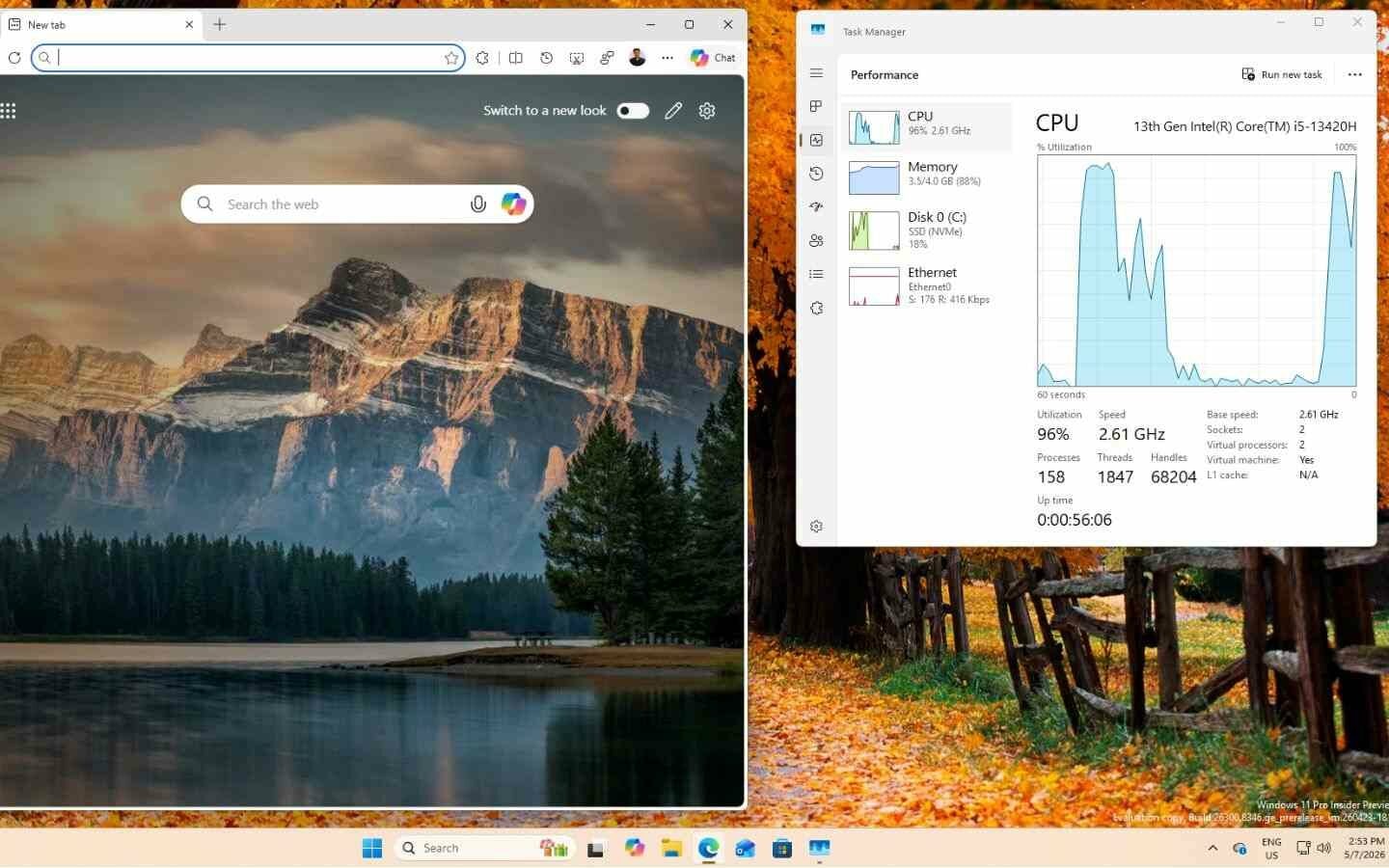
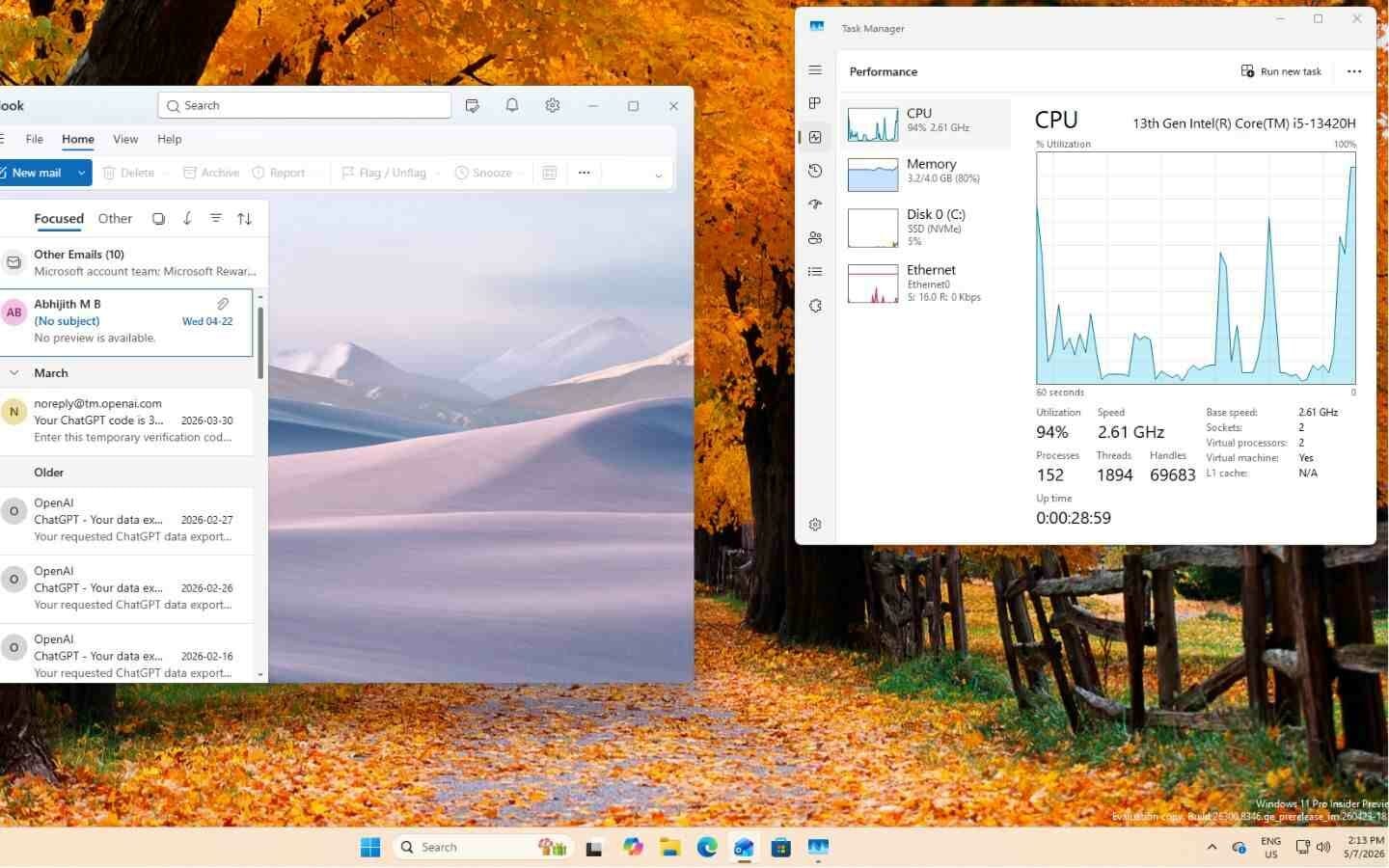
Results from internal tests show a clear improvement: application launch speeds like Microsoft Edge and Outlook are up to 40% faster. In particular, the responsiveness of the Start menu—one of the common complaints about lag on Windows 11—has improved dramatically by up to 70%. Importantly, this sudden speed increase is designed not to affect the overall device temperature or reduce battery life.
Optimal performance on low-configuration computers.
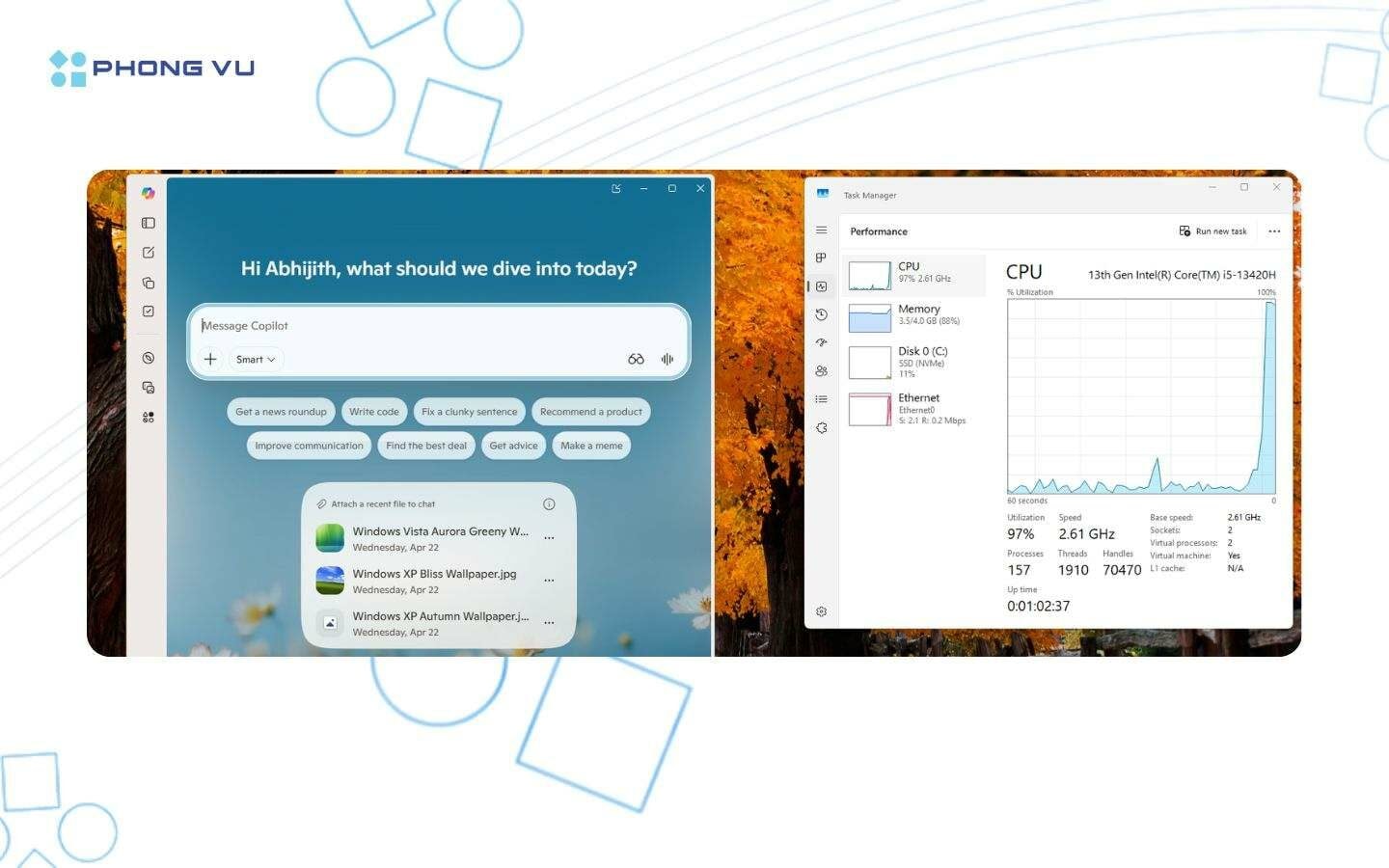
Notably, the greatest value of the Low Latency Profile lies in its ability to support inexpensive Windows 11 devices or those with limited hardware configurations. In tests on virtual machines equipped with only a dual-core Core i5 processor and 4GB of RAM, this feature helped the system run smoother than expected.
The instant response mechanism allows the CPU to jump to 94-97% usage to quickly process heavy workloads when opening demanding applications, then immediately drop the load to below 17% in just 3 seconds. This helps the device complete tasks as quickly as possible and then swiftly return to power-saving mode, an efficient resource management technique similar to how Android and macOS operate.
Part of the Windows K2 rebuilding strategy.
Although some skeptical opinions suggest that CPU overclocking is a "quick fix," it is actually part of Microsoft's broader optimization strategy. The Low Latency Profile is considered a crucial component of the Windows K2 project—the company's effort to rewrite old source code from the Windows 95 era to build a lighter and more modern operating system.
Allowing the CPU to unleash its full power for a few seconds is a practical solution to bridge the experience gap between older mainstream laptops and high-end MacBooks. If widely implemented, this would revolutionize the smoothness of millions of Windows 11 devices worldwide, providing a "click-and-open" experience without requiring additional hardware investment.


