
World Cup 1930: The great beginning of a football empire and Uruguay's historic championship.
From Jules Rimet's dream to the final in Montevideo, the 1930 World Cup transcended geographical barriers to become the origin of the most captivating tournament on the planet.
In 1930, the world of football witnessed a revolutionary turning point when the International Football Federation (FIFA) organized its first independent world championship. Overcoming geographical skepticism and the impact of the Great Depression, the 1930 World Cup in Uruguay laid a solid foundation for what is now the most watched sporting event on the planet.
The aspiration for an independent league.
At the beginning of the 20th century, international football was confined solely to the Olympic Games. However, the resounding success of the 1924 and 1928 Olympics spurred FIFA President Jules Rimet to realize his ambition for a more professional league. At the 17th FIFA Congress in Amsterdam in 1928, this proposal was officially adopted with a strong declaration from Vice President Henri Delaunay: "International football cannot be limited to the Olympic Games anymore."
Uruguay was chosen as the host for two symbolic reasons: the 100th anniversary of the promulgation of the first constitution and the dominant position of its national team, having just won two consecutive Olympic gold medals.
The Transatlantic Expedition
The 1930 World Cup was the only tournament in history without a qualifying round. However, geographical barriers and the high cost of travel during a time of economic crisis deterred many European teams. It was only thanks to the personal intervention of Jules Rimet that four teams from the Old Continent – France, Belgium, Romania, and Yugoslavia – agreed to undertake the long journey on the ocean liner SS Conte Verde to South America.
| Category | Detail |
|---|---|
| Host country | Uruguay |
| Time | July 13 – July 30, 1930 |
| Number of participating teams | 13 teams |
| Top scorer | Guillermo Stábile (8 goals) |
| Total number of goals | 70 goals (3.89 goals per match) |
The tournament officially opened on July 13, 1930. Lucien Laurent (France) made history by scoring the first goal in a World Cup match against Mexico, a 4-1 victory. At the same time, Bert Patenaude of the United States also set a record with the first hat-trick in the tournament's history against Paraguay.
The historic final: A battle of two balls
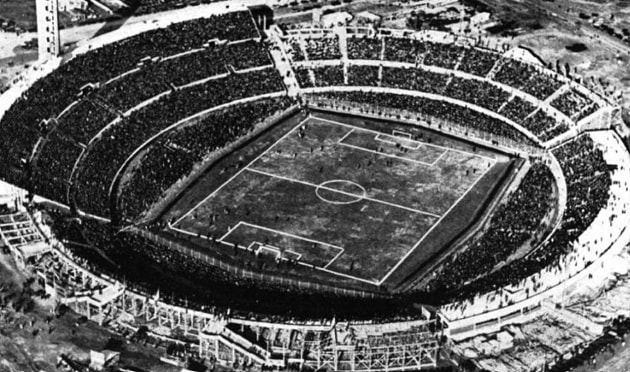
The final match took place at the Estadio Centenario – which Jules Rimet called "The Temple of Football". The intensity of the match between Uruguay and Argentina lay not only in technical skill but also in psychological warfare. A rare incident occurred when the two teams argued over whose ball to use. The final decision was made: Argentina used their ball in the first half and Uruguay used theirs in the second.
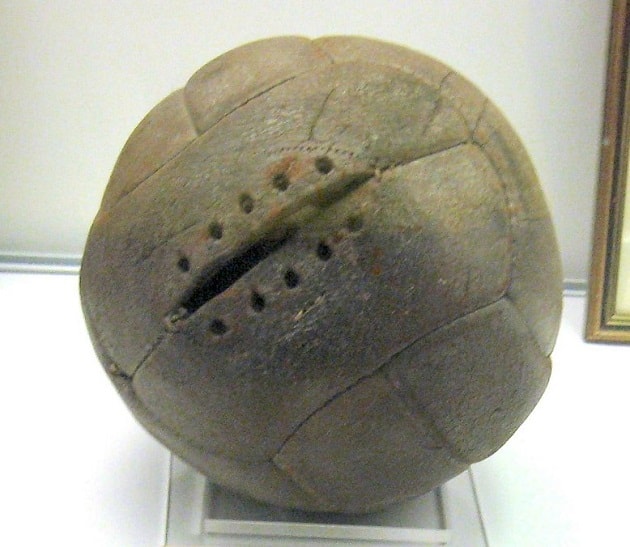
Argentina led 2-1 after the first half thanks to brilliance from Carlos Peucelle and Guillermo Stábile. However, when the second half began with the home side having the ball at their feet, Uruguay staged a strong comeback. Pedro Cea equalized, Santos Iriarte restored the lead, and finally Héctor Castro – the talented striker despite having lost a hand – headed in the winning goal to make it 4-2, securing Uruguay's first World Cup victory.
The enduring legacy of the 1930 World Cup
Despite having only 13 participating teams and rudimentary facilities, the 1930 World Cup demonstrated the great vision of its founders. The tournament not only separated football from the Olympic sport but also created a new global sports culture.
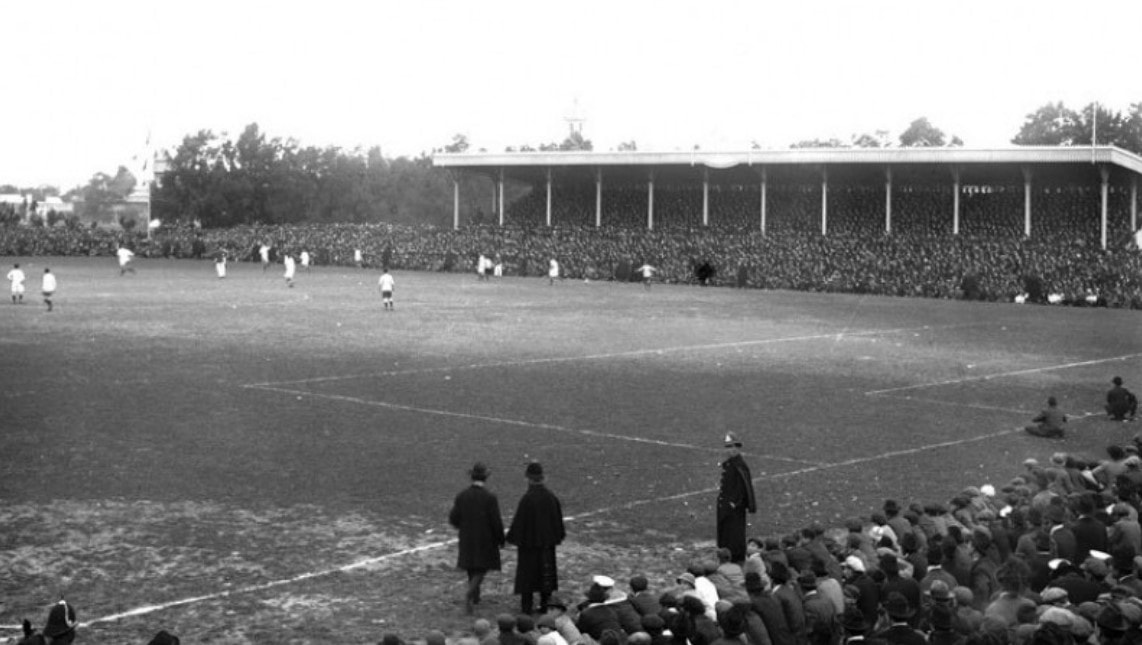
The Uruguayan champions finished the tournament with a goal difference of +12, the highest ever achieved by a champion. The legacy of 1930 continues to be celebrated as, in 2030, the Centenario Stadium will once again witness history in the centenary matches commemorating this great tournament.


