
U20 World Cup: A European launching pad for Asian talents.
Coach Hoang Anh Tuan and the Vietnam U19 team probably didn't realize they had just stepped onto a special stage. The U20 World Cup is not only the pinnacle of youth football in the world, but also the world's largest "supermarket" for young players, where Asian players can realize their European dreams.
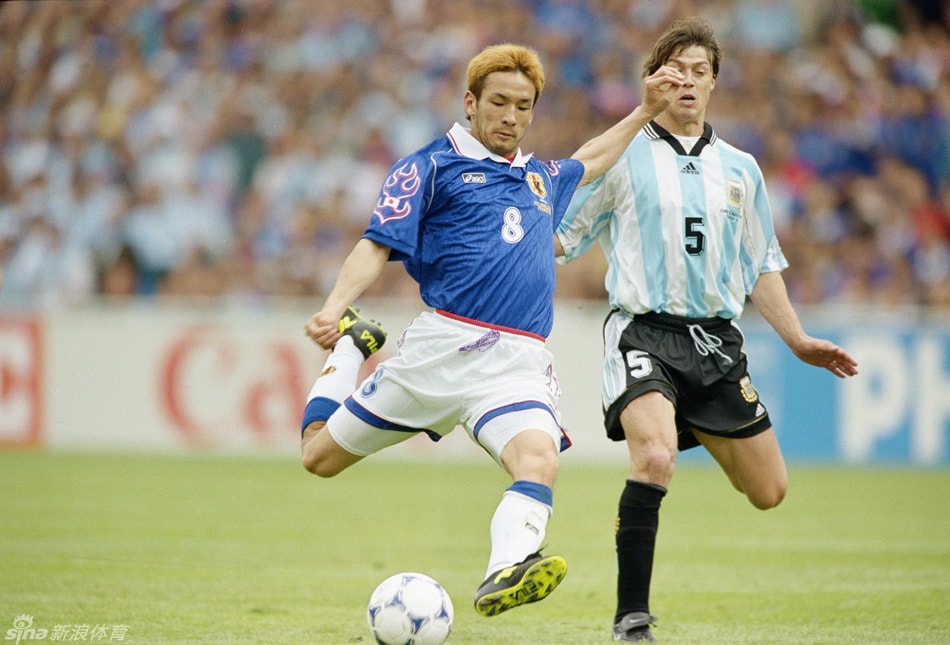 |
| The U20 World Cup has launched the careers of many Asian players who have moved to Europe. |
Hidetoshi Nakata, Shunsuke Nakamura, Kim Bo-kyung... and many other Asian stars have caught the eye of European clubs and moved to Europe after impressive performances at the U20 World Cup. Shining at the U20 World Cup is also the quickest way for Asian players to secure a place in their national teams.
Perhaps the first Asian player to shine at the U20 World Cup was Choi Soon-Ho. The striker, born in 1962, scored a brace in South Korea's 4-0 victory over Italy on October 3rd at the 1981 U20 World Cup. Exactly eight days later, Khalid Salman (Qatar's U20) became the first Asian player to score a hat-trick against a Brazilian team in the quarter-finals. Later, both Choi and Salman became legends of South Korea and Qatar, respectively.
But back then, when intercontinental transfers were not yet developed, Choi Soon-Ho and Khalid Salman did not have the means to move to Europe to play. Nearly two decades later, their successors began their conquest of the old continent.
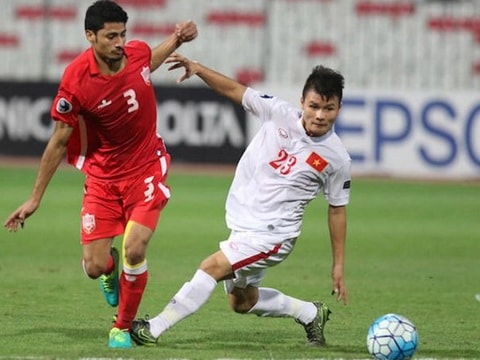 |
| Vietnam U19 and the formidable opponents they could face at the 2017 U20 World Cup. |
A 1-0 victory against Bahrain U19 helped Vietnam U19 achieve a historic feat by qualifying for the U20 World Cup in South Korea next year. Qualifying for the World Cup is something only the Vietnamese futsal team had previously accomplished.
Japanese star Hidetoshi Nakata is a prime example of this trend. At the 1995 U20 World Cup, Nakata scored against Chile and Spain, leading Japan to the quarter-finals, where they were only eliminated by the giant Brazil. Three years later, Nakata moved to Perugia. The rest of Nakata's time in Europe became history. He played for six different clubs in Italy and England, shining in Serie A during its golden age. In 2004, Pele included Nakata in his list of the 100 greatest living football players.
Following Nakata, Japanese and Korean players successively advanced to Europe thanks to the U20 World Cup as a springboard. In 1997, the trio of Shunsuke Nakamura, Shinji Ono, and Atsushi Yanagisawa shone before joining Reggina, Feyenoord, and Sampdoria respectively. In that tournament, Yanagisawa scored 4 goals, ranking above Michael Owen and Thierry Henry in the race for the Golden Boot.
Two years later in Nigeria in 1999, Naohiro Takahara scored 3 goals, leading the Japanese U20 team to the runner-up position before joining Hamburg. The list of East Asian stars continues with a host of big names such as Park Chu-young (South Korea, U20 World Cup 2005), Shinji Kagawa (Japan, 2007), Kim Bo-Kyung (South Korea, 2009), Ryu Seung-woo (South Korea, 2013)...
 |
| The dream of playing football in Europe through the U20 World Cup is now a reality. Photo: Thanh Ha |
In the "great exodus" following the U20 World Cup, Japan and South Korea were the ones who best capitalized on the opportunity. This achievement also corresponds to their record as the best-performing Asian teams in the history of the Youth World Cup.
Compared to teams from the Middle East, East Asian teams perform significantly better. This trend has become even stronger over the past decade. This is clearly an interesting suggestion for Coach Hoang Anh Tuan's Vietnam U19 team.
If they perform well at the U20 World Cup, Vietnamese players could certainly attract the attention of European clubs. The dream of playing football in Europe, therefore, is a reality.
According to thethaovanhoa


