Keng Du Commune: Turning difficulties and challenges into driving forces for development.
Keng Du is one of the most remote border communes in Nghe An province. Determined to develop based on its potential and advantages, preserve and promote its traditional cultural identity, and gradually overcome difficulties, Keng Du commune has set its future development goals based on the motto "Unity - Democracy - Discipline - Innovation - Development".
A border region rich in cultural identity.
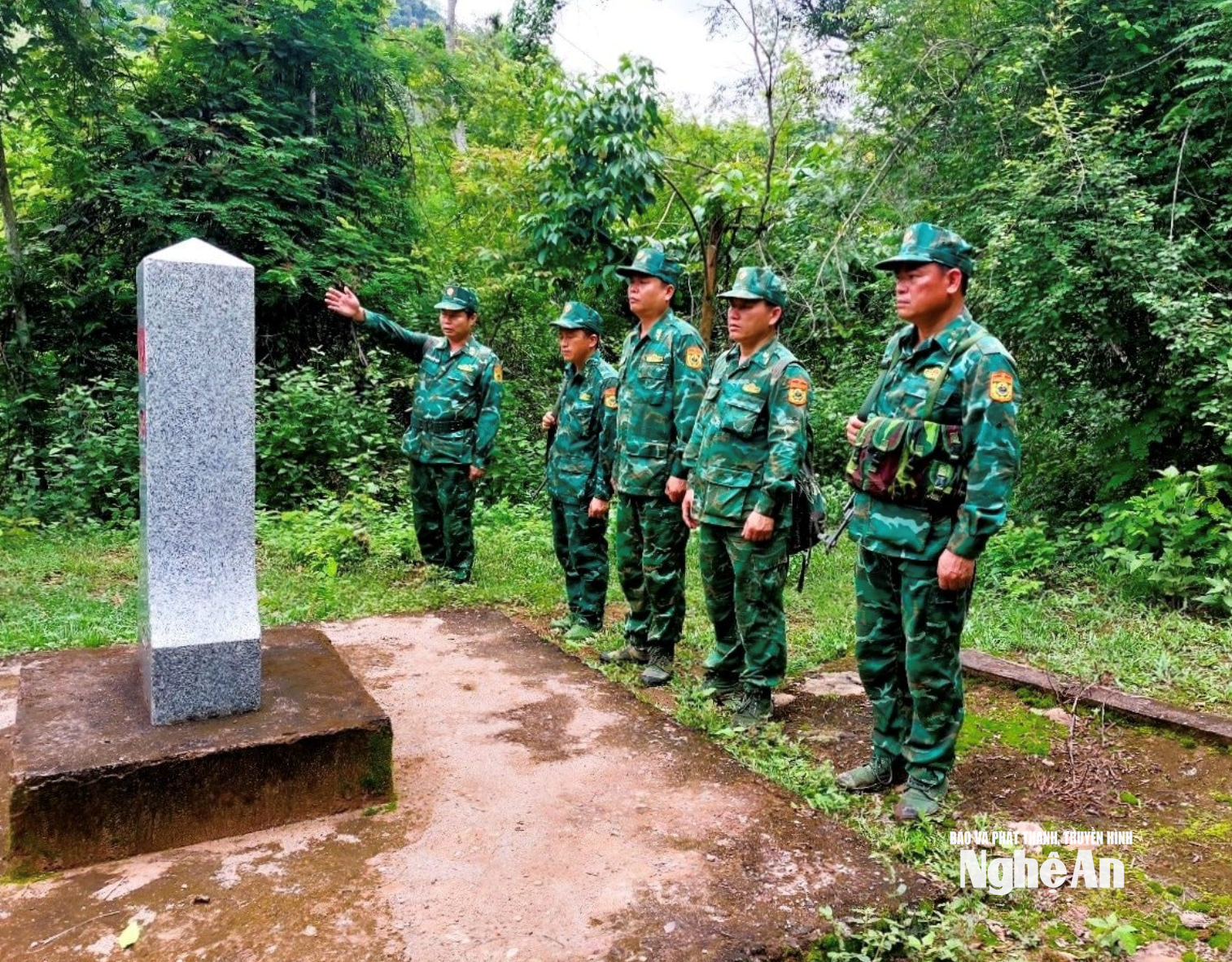
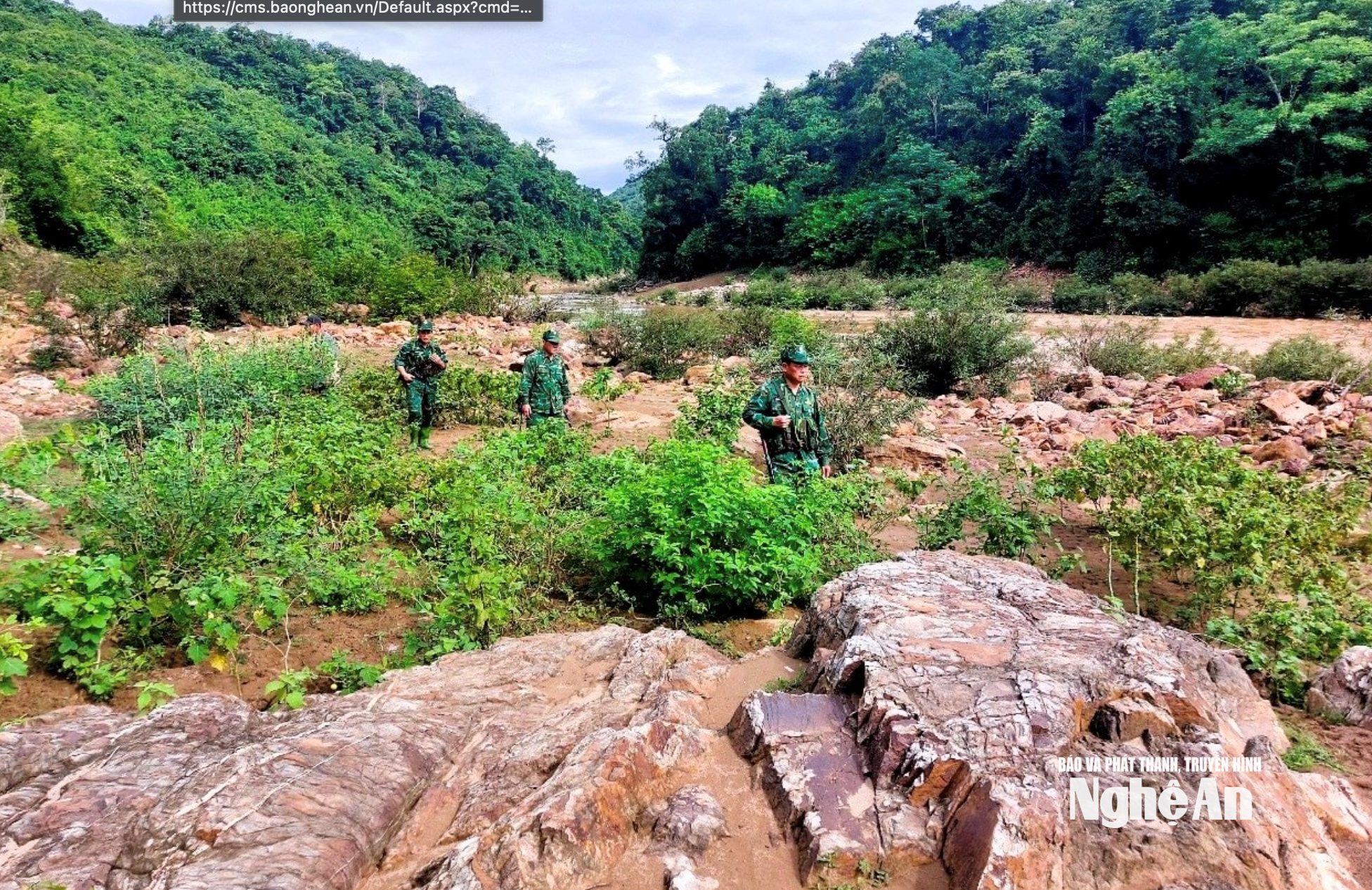
With a natural area of 9,824.07 square kilometers and a border length of 29.909 km adjacent to Nong Het District, Xieng Khouang Province, Lao People's Democratic Republic, Keng Du possesses both rich potential and the mission of serving as a "bulwark" protecting national sovereignty. Currently, the commune has a Border Guard Post stationed within its boundaries, working closely with the Party Committee, government, and people to effectively carry out border protection, maintain political security and social order, and contribute to building a peaceful and friendly border.
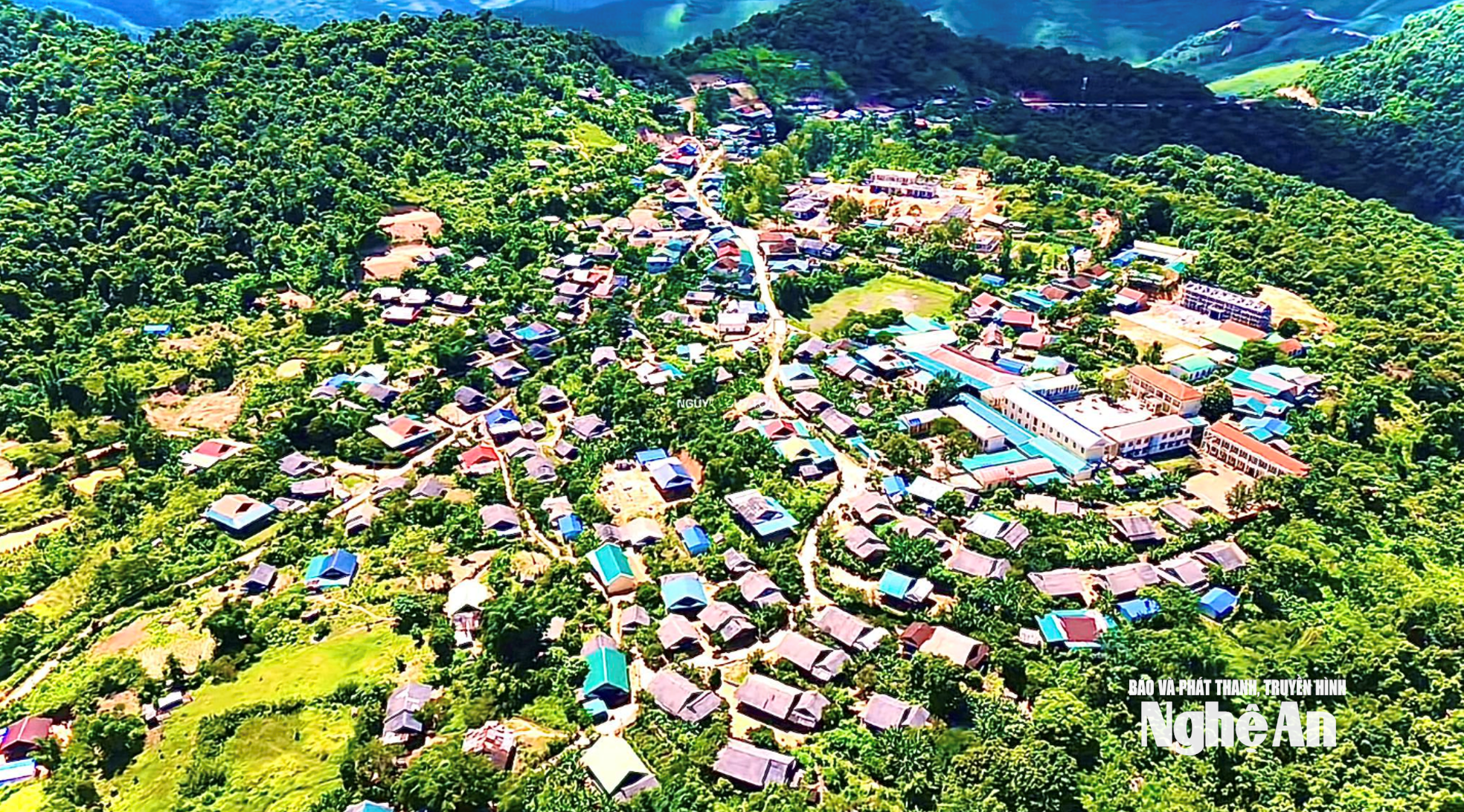
Keng Du currently has over 5,000 inhabitants, living in 1,002 households across 10 villages, eight of which are located close to the border. The population mainly consists of the Thai and Khmu ethnic groups, communities with long-standing traditions of solidarity and close ties, rich cultural identities, and a fervent patriotic spirit. For generations, the people of Keng Du have been closely connected to their fields, terraced rice paddies, and vast forests, both resiliently battling the harsh natural environment and constantly striving to overcome poverty and build a prosperous life.
The terrain of Keng Du is mainly mountainous, steep, and filled with streams; transportation remains difficult, especially during the rainy season. The climate is typical of high mountainous areas, with cold winters, scorching summers, heavy rainfall, and frequent flash floods. These harsh natural conditions create significant challenges for socio-economic development, but also offer certain advantages, such as the potential for developing medicinal plants, livestock farming, aquaculture, and ecotourism linked to the pristine landscape of the border mountains and forests.
Keng Du possesses several important advantages. These include the attention, guidance, and investment support from the central government and Nghe An province, especially programs and projects on poverty reduction, rural development, and infrastructure development. The people have a tradition of unity, diligence, and resilience, with a strong desire to improve their lives. Abundant forest and land resources provide a foundation for developing forestry, agriculture, and medicinal plant cultivation. The special friendship with neighboring villages in Laos facilitates trade, cooperation, and the development of international solidarity.
Alongside the advantages, there are also significant difficulties and challenges. The commune's economy is still underdeveloped, and the poverty rate remains considerable. Infrastructure does not meet development requirements, and many remote villages are inaccessible. Natural disasters occur frequently, especially flash floods and landslides, causing damage to production and livelihoods. Farming practices remain outdated, and while child marriage and consanguineous marriage have decreased, they have not been completely eradicated. Some social ills, particularly drug abuse, still pose complex risks. These factors have significantly impacted the overall development of the commune.
Key milestones
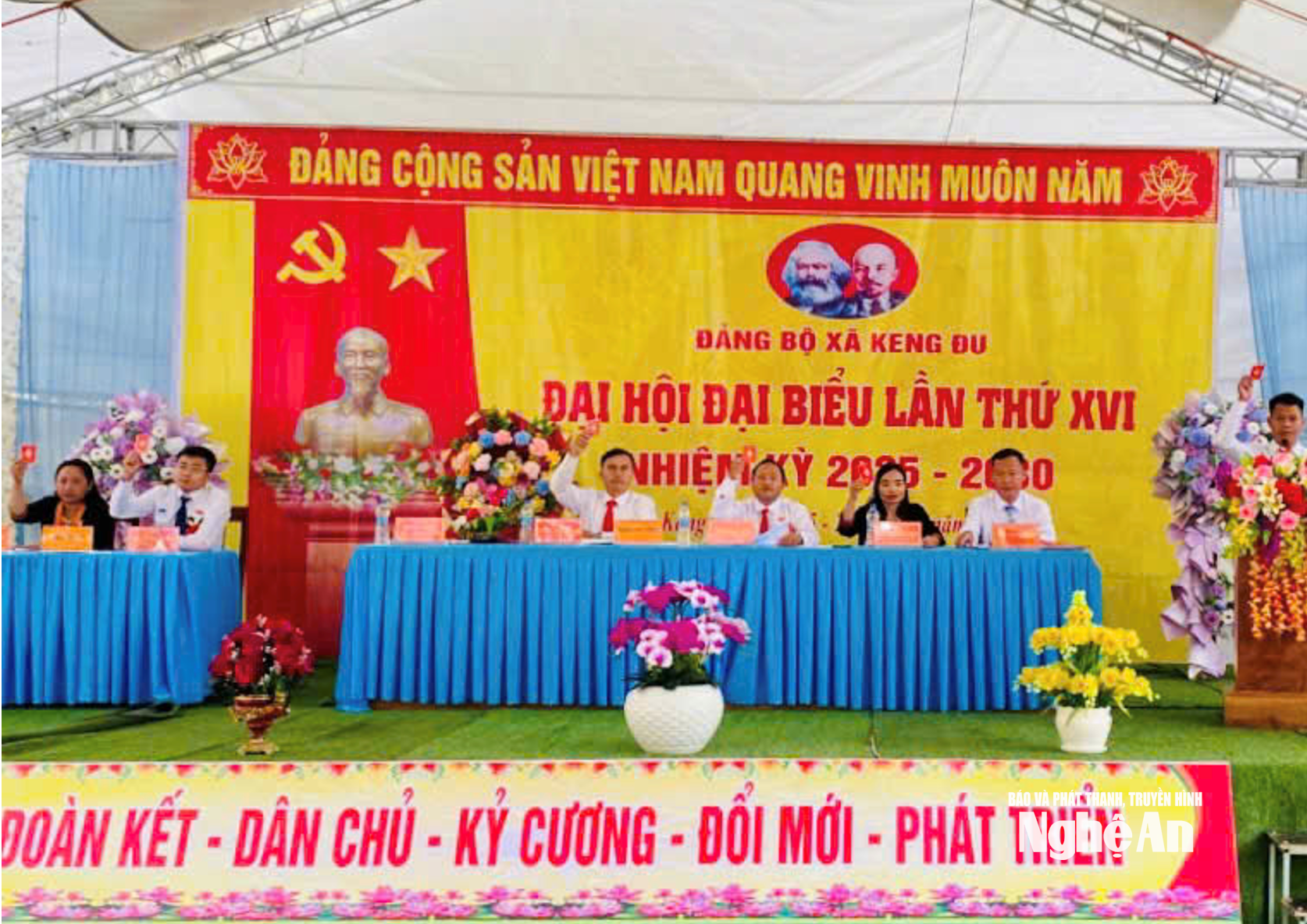
During the 2020-2025 term, under the leadership of the commune Party Committee, with the support of higher levels and the unity and determination of the people, Keng Du has achieved many important results in various fields. Regarding Party building and the political system, over the past five years, the commune has admitted 58 new Party members, exceeding the target set in the Resolution. The commune Party Committee has been recognized as clean and strong for many consecutive years.
Political and ideological work, personnel work, inspection and supervision, and mass mobilization have all been strengthened, contributing to enhancing the leadership capacity and fighting strength of grassroots Party organizations. The political system has been consolidated and improved, operating with increasing effectiveness and efficiency, affirming its role as the political nucleus at the local level.
Socio-economic development has progressed. The average growth rate for the period 2021–2025 is estimated at 5.8%. The total value of products in the commune by 2025 is expected to reach 94.2 billion VND. In the agricultural sector, the area of upland rice cultivation remains at 403 hectares, while the area of paddy rice cultivation is 41.6 hectares. People are gradually shifting from low-yield upland rice production to high-yield paddy rice production, while expanding the area for growing hybrid corn, taro, peanuts, green squash, and some medicinal plants under the forest canopy. Vaccination for livestock and poultry has reached 90% of the total herd, contributing to disease control. In animal husbandry, despite fluctuations due to African swine fever, the buffalo, cattle, and goat herds generally continue to develop, becoming an important source of livelihood.
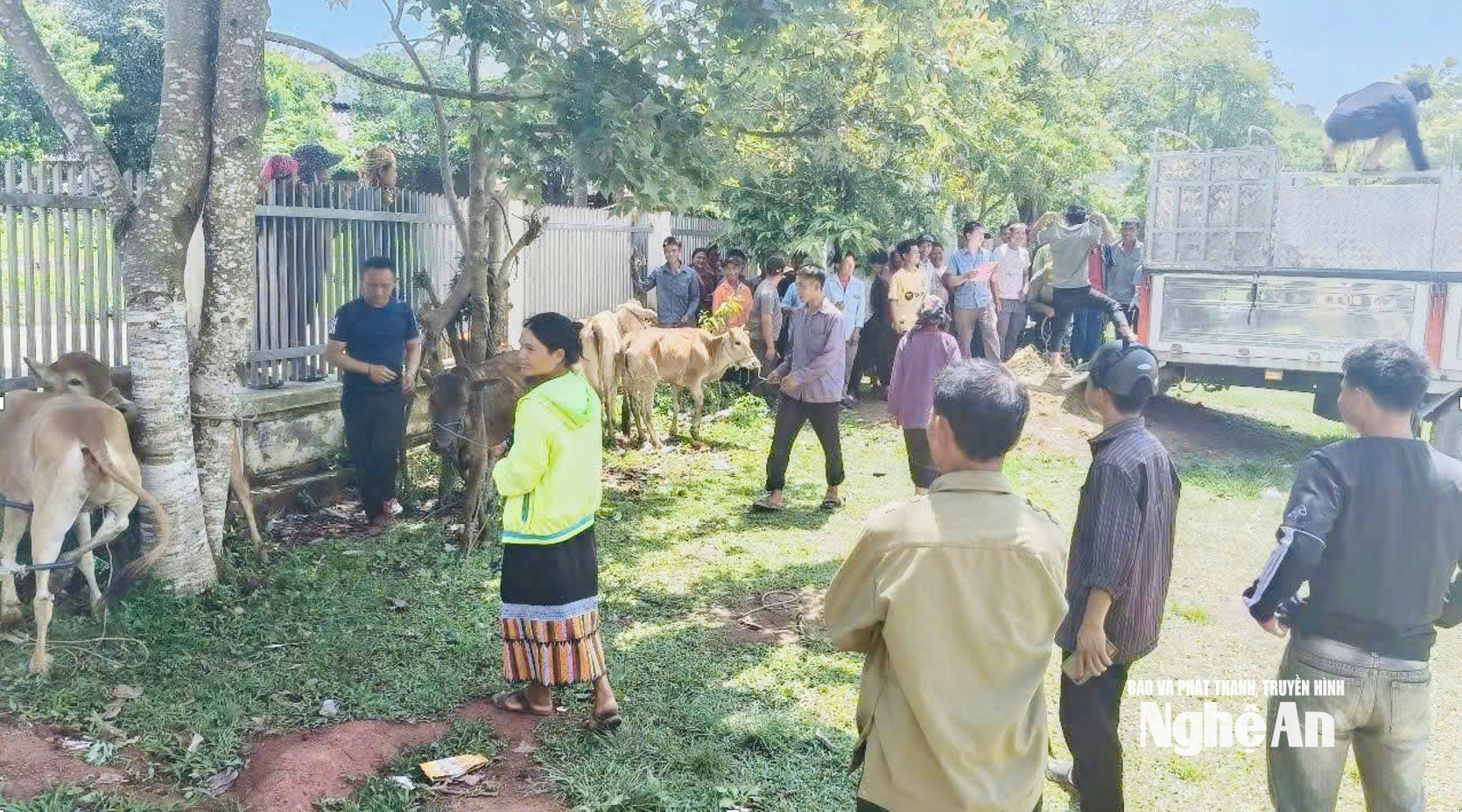
The forestry sector continues to play a leading role. The entire commune manages and cares for 3,200 hectares of forest, maintaining a 100% forest cover rate. During the term, 8.07 hectares of forest were newly planted with economically valuable tree species. Forest protection and fire prevention and control are regularly maintained, contributing to ensuring ecological environment and sustainable livelihoods. Aquaculture is also beginning to develop with 4.9 hectares of fish farming area, producing approximately 20 tons per year, serving consumption within the commune and supplying a portion to neighboring areas. In the industrial and handicraft sector, some small-scale mechanical workshops have begun to emerge to serve production needs, along with the maintenance and development of the traditional brocade weaving craft.
During the past term, the commune has received investment for the construction and upgrading of 17 public works projects, with a total capital of over 22.4 billion VND. Many important projects such as schools, health stations, pedestrian bridges, embankments to prevent landslides, and water supply projects have been put into use, significantly improving the living conditions of the people. The national power grid has reached almost all households, creating momentum to boost production, daily life, and improve living standards.
The socio-cultural sector has seen many positive changes. The quality of education has improved significantly. 100% of 5-year-old children attend school, and 100% of students graduate from lower secondary school. The commune's kindergarten has been recognized as meeting national standards at level 1. The socialization of education is emphasized, and the movement to promote learning and talent development is thriving in most villages. The "All People Unite to Build a Culturally Rich Life" movement has been widely implemented, with 8 out of 10 villages maintaining their status as cultural villages, and over 61% of households achieving the title of cultural family. Cultural, artistic, and sports activities are regularly maintained, including 5 amateur performing arts groups and a club for singing Tơm songs, playing the bamboo flute, and flute, contributing to the preservation and promotion of traditional cultural values. Healthcare and public health care are prioritized. Expanded immunization programs and population and family planning programs are implemented comprehensively. The rate of malnourished children has been decreasing over the years.
In the field of national defense and security, the commune has fulfilled 100% of its annual military recruitment targets. In 2023, the commune organized a defensive combat exercise and was assessed as having excellently completed its mission. Political security and social order and safety have been basically maintained. The movement of the entire population protecting national security has developed strongly. External relations with the Bo Nhia and Huoi Lom clusters of Nong Het district, Xieng Khouang province (Laos) have been increasingly strengthened through cultural exchange activities and village-to-village twinning, contributing to fostering the special solidarity and friendship between Vietnam and Laos.
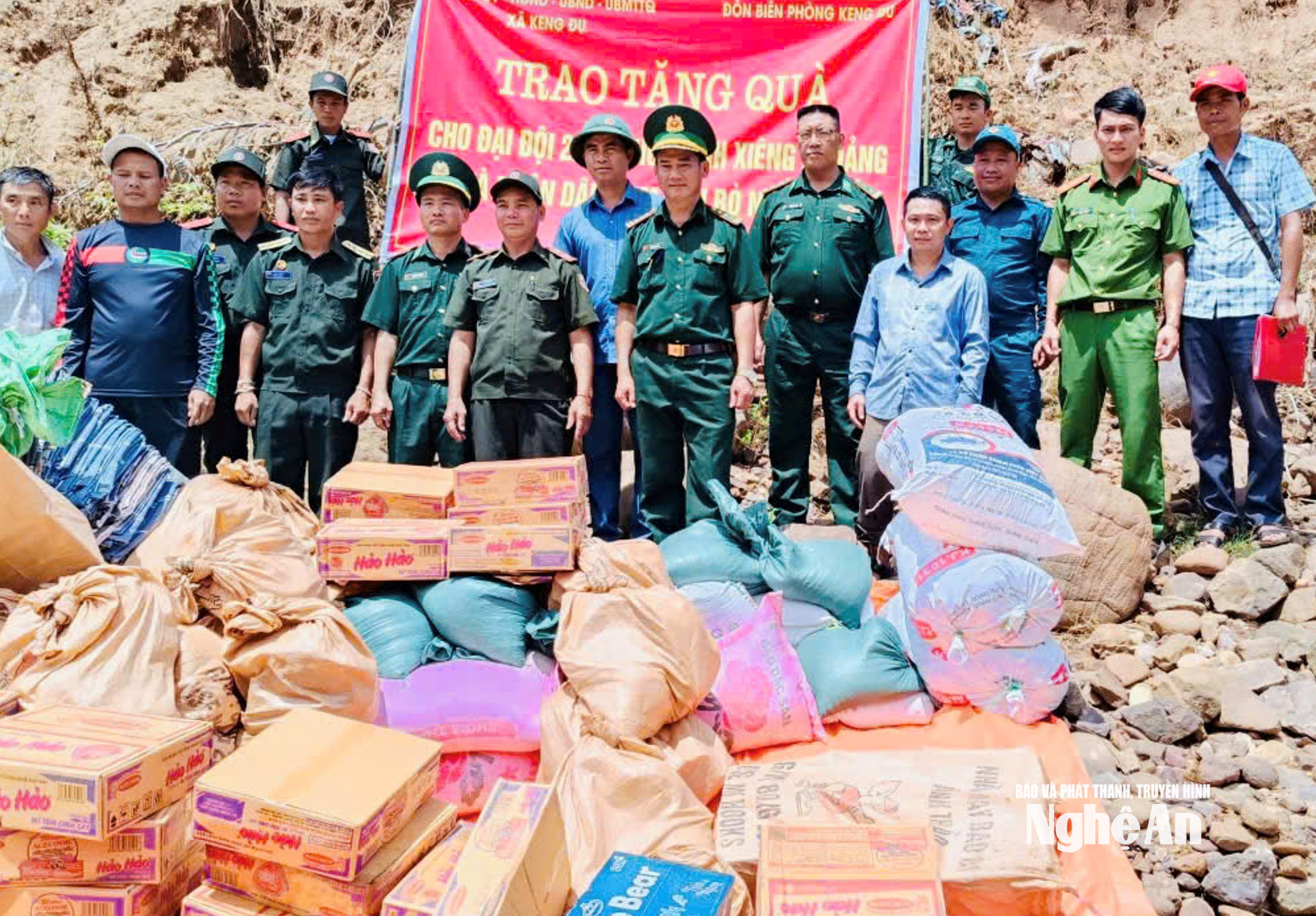
Despite its achievements, Keng Du still faces several challenges. Economic development remains slow and has not yet reached its full potential. The poverty rate remains high. Transportation infrastructure does not meet development requirements. Some criteria for the new rural development program have not been completed. Livestock diseases and labor migration still affect production and livelihoods. Outdated customs and traditions, social evils, especially drug abuse, still pose potential risks. The main reasons for these challenges are a low starting point, harsh natural conditions, limited investment resources; uneven capacity of officials; and a lingering mentality of dependence and reliance among the people.
Transform difficulties and challenges into driving forces for development.
The 16th Party Congress of Keng Du Commune has set forth directions and tasks for the 2025-2030 period with specific goals for 2030: average per capita income reaching 23-25 million VND/year; reducing the poverty rate by an average of 5%/year; 100% of the population participating in health insurance; building at least one village to meet the standards of a new rural area; having one to two OCOP products (forest leaf-fermented rice wine, brocade weaving); 10 out of 10 villages achieving the title of cultural village; 100% of inter-village roads being paved; maintaining border security and keeping the commune free from drugs.
Keng Du commune has identified three key areas for breakthrough implementation:
Firstly, planning and constructing a rural market in Keng Du commune.
Secondly, improve the management, protection, and development of watershed forests; enclose, protect, care for, and promote the regeneration of natural forests; and replicate successful forest planting models throughout the area.
Thirdly, develop the cultivation of medicinal plants in the area.
With a tradition of unity, a spirit of overcoming difficulties, and the attention and support of all levels and sectors, Keng Du commune is gradually rising up, transforming difficulties and challenges into driving forces for development.
In this new phase, the Party Committee, government, and people of Keng Du commune are determined to leverage their potential and advantages, striving to build their border homeland into an increasingly prosperous, beautiful, and civilized place, contributing to maintaining national sovereignty and border security. In particular, according to Decision No. 3618-QD/TU dated June 18, 2025, of the Nghe An Provincial Party Committee, the Keng Du commune Party Committee is officially directly under the Provincial Party Committee. This is an important milestone, demonstrating special attention and affirming Keng Du's strategic position in the cause of national construction and defense.