
Develop indicators to evaluate the effectiveness of anti-corruption, anti-waste, and anti-negative practices.
Over the past period, the Party and the State have issued many guidelines, policies, and laws aimed at strengthening the prevention, detection, and handling of corruption, waste, and negative practices; recovering assets obtained through corruption; controlling power; enhancing the accountability of leaders; and building an open, transparent, and honest public administration.
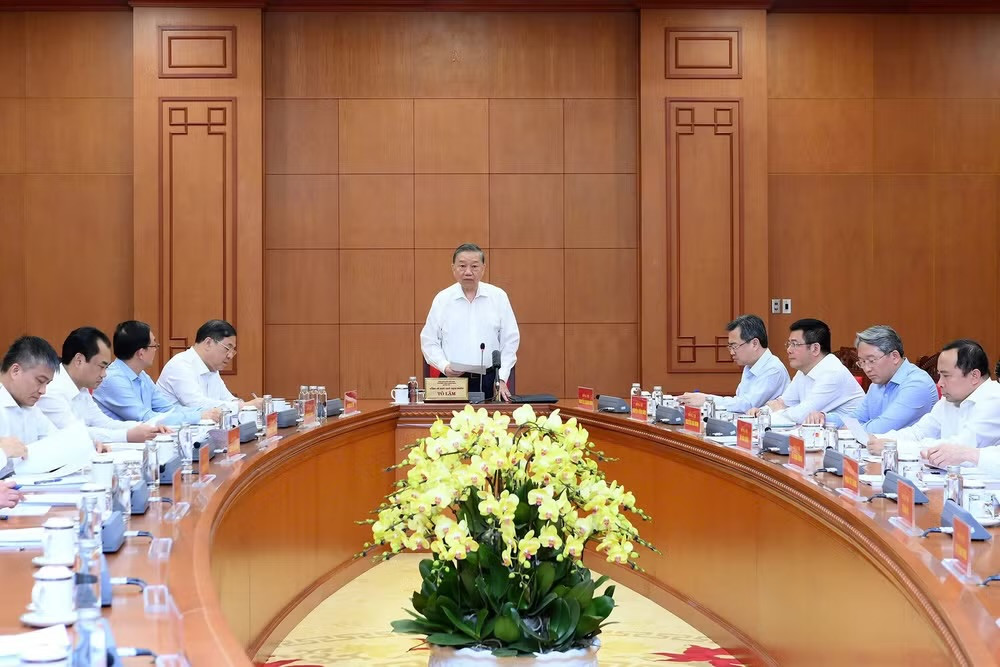
The practical implementation of evaluating the work of preventing and combating corruption, waste, and negative phenomena in the past has shown that the evaluation has contributed to enhancing the responsibility of ministries, sectors, and localities, creating a basis for monitoring, comparing, and identifying achievements, shortcomings, and limitations in this work.
However, according to the Government Inspectorate, the evaluation still has some limitations such as: the criteria are not truly consistent, some content is still qualitative, the collection of data and supporting documents is not uniform, and the scoring method needs further standardization to accurately reflect the actual results.
Therefore, the issuance of a set of indicators for evaluating the work of preventing and combating corruption, waste, and negative practices is necessary to create a unified, transparent, and feasible legal basis for organizing annual evaluations of ministries, ministerial-level agencies, and people's committees of provinces and cities.
The issuance of a set of indicators for evaluating the work of preventing and combating corruption, waste, and negative practices is necessary to create a unified, transparent, and feasible legal basis for organizing annual evaluations of ministries, ministerial-level agencies, and people's committees of provinces and cities.
However, in the context of streamlining the organizational structure and implementing the current two-tiered local government model, a change in mindset is needed in evaluating the work of preventing and combating corruption, waste, and negative practices.
For ministries and ministerial-level agencies, the evaluation must reflect the specific characteristics of state management by sector and field, including the responsibility for developing and improving policies and laws, controlling power in specialized fields with risks of corruption, waste, and negative practices, and organizing the implementation of preventive measures within their scope of management.
For provincial and city people's committees, the evaluation must reflect the specific characteristics of state management in their respective areas, including the results of directing, managing, and organizing the implementation of laws on preventing and combating corruption, waste, and negative practices in departments, agencies, units, and commune, ward, and special zone governments.
The content of the index set must ensure objectivity, scientific rigor, ease of understanding, ease of application, ease of monitoring, inspection, and evaluation; be consistent with the functions and tasks of each agency, organization, and unit; and combine quantitative and qualitative assessment, prioritizing criteria measured by specific data to ensure accurate evaluation of the results of anti-corruption, anti-waste, and anti-negative practices, linked to the responsibility of agencies, organizations, units, their leaders, and officials and employees.
It is important to ensure a proper distinction between general and specific criteria, reflecting the differences between state management by sector and field of ministries and ministerial-level agencies, and state management by geographical area of localities; while ensuring that no additional administrative procedures are created, and maximizing the use of available data and documents from reports, state management systems, inspection, supervision, investigation, prosecution, trial, and enforcement of judgments.
More importantly, the evaluation must specifically identify limitations, causes, and responsibilities of agencies, organizations, units, heads, and officials and employees in order to improve the quality of leadership and management and to further refine policies and laws on preventing and combating corruption, waste, and negative practices.


