
Building a streamlined and professional team of grassroots officials.
With a high degree of consensus, the Third Plenum of the 14th Central Committee adopted many major policies of strategic significance.
The policies enacted all aim to enhance the Party's leadership and governing capacity; strengthen the effectiveness and efficiency of national governance; leverage resources for development; and build a streamlined political system that operates smoothly and efficiently, thereby improving the people's lives.
Many officials and Party members believe that these policies will only be truly effective when implemented by a team of capable, courageous, and responsible officials. Therefore, personnel work continues to be identified as a key factor in improving the implementation capacity of the apparatus and quickly bringing the Party's policies into practice.
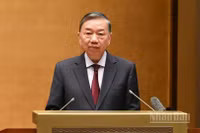
Speaking at the National Conference on the Implementation of the Resolution of the 3rd Plenum of the 14th Central Committee, General Secretary and President To Lam affirmed that cadres are the decisive factor in the quality of implementation. A correct resolution and sufficient resources are essential, but if cadres lack competence, responsibility, and courage to act, the work will remain stagnant. At the same time, Party committees and localities must assign cadres with the right skills and expertise, especially at the commune level and in positions directly implementing policies; and provide training according to job positions.
In strong agreement with the directives of the General Secretary and President, Associate Professor, Dr. Nguyen Hoang Hien, Deputy Director of the Academy of Social Sciences, stated that in the coming period, the necessary action is to implement many solutions simultaneously, shifting the focus from reducing the number of administrative units to increasing operational capacity and the quality of results.
Besides reviewing the functions, tasks, and authority of each merged agency and unit to avoid overlapping and gaps; redesigning work processes to eliminate intermediate steps, digitize, and connect data between agencies, it is necessary to quickly strengthen the staff of officials and civil servants, restructure the organization along with rearranging personnel, retraining, and ensuring that the right person is assigned to the right job. Particular attention should be paid to practical capabilities, as many merged units have excess staff in some areas but shortages in others.
In practice, building a streamlined and professional grassroots workforce is a crucial factor in determining the implementation capacity of the restructured apparatus, because the effectiveness of all policies and initiatives is ultimately reflected in the quality of work performed and the level of public satisfaction.
Based on this, many localities have proactively reformed their personnel management in a way that aligns with practical requirements, prioritizing effective implementation as the goal, and considering the consolidation, training, and placement of the right people in the right jobs as crucial solutions to improve the quality of service to the people.
The Standing Committee of the Bac Ninh Provincial Party Committee has issued Resolution No. 58-NQ/TU on improving the quality of commune and ward officials to meet the requirements of tasks in the new period.
Resolution No. 58-NQ/TU sets out the overall goal of building a team of commune and ward officials with strong political convictions, moral character, discipline, responsibility, and dedication to serving the people; possessing high implementation capacity, adapting quickly to digital transformation, and effectively handling development issues.
The focus is on building a streamlined and rationally structured leadership and management team, in which the Standing Committee of the Party Committee and the leaders of the People's Council and People's Committee at the commune level are truly the leading core, possessing innovative thinking, modern management capabilities, and the courage to think, act, and take responsibility, meeting the requirements of the two-tiered local government model.
The specific goals are that by 2030, the workforce will be standardized according to job titles and positions; more than 90% of key officials at the commune level will be capable of effectively resolving complex issues at the grassroots level; emphasis will be placed on developing a pool of female and young officials; and the rotation, transfer, and secondment of specialized officials in key areas will be implemented.
A notable aspect of Resolution No. 58-NQ/TU of the Standing Committee of the Bac Ninh Provincial Party Committee is its approach, which not only focuses on standardizing the cadre but also strongly shifts towards improving implementation capacity.
Accordingly, the evaluation of officials is determined by outputs, task performance results, and digital data, using work efficiency and public satisfaction as the main measures, instead of qualitative evaluation methods.
This also concretizes the overarching guiding principle of General Secretary and President To Lam regarding cadre evaluation. That is, there needs to be a strong shift towards evaluating cadres based on their qualities, abilities, reputation, concrete products, results of task performance, work data, and the trust of the people.


